Newsletters




Last December, Washington opened a massive $800 million consulate in Erbil—not just the largest U.S. consulate in Iraq, but anywhere in the world.
The mega-project traces back to the height of America’s military footprint in the region, when the Pentagon was heavily backing Peshmerga forces in Iraq alongside non-state partners in Syria.
Against that backdrop, the Department of Defense signed its first train-and-equip agreement with the Peshmerga in 2016 and renewed it in 2022 with a memorandum to help bankroll the regional security forces. But buried in that agreement was a hard expiration date that has dictated U.S.-Kurdish defense relations ever since: Sept. 30, 2026.
When the clock strikes midnight on that deadline, the Pentagon’s current arrangement with the Kurdistan Regional Government (KRG) officially lapses. And this time around, the Department of War officials aren't eager to simply re-up the old playbook of the Department of Defense authorities.
None of this comes as a complete surprise. The U.S. and Iraq have been laying the groundwork for a broader transition away from the international coalition’s military mission, even announcing a joint timeline back in 2024.
Yet today, both Washington and Baghdad are eyeing a different future together, one that leaves Erbil wondering where it fits into the new blueprint.

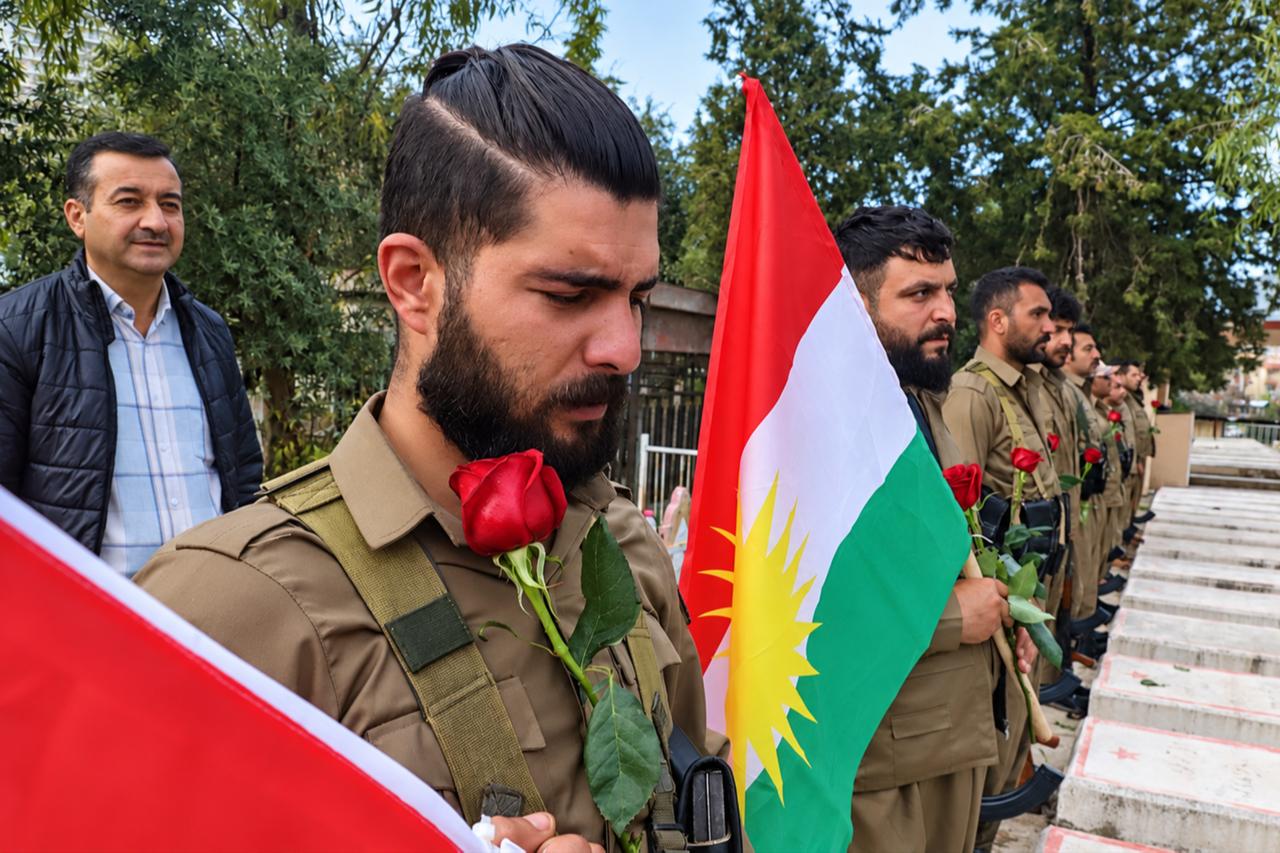
The construction of the largest-ever U.S. consulate began in a different era. Kurdish armed and political formations were at their height, and much of that height came from Pentagon backing. The YPG in Syria and the Peshmerga in Iraq both enjoyed the full attention of U.S. Central Command.
Now, in Syria, the YPG has been integrating into the state. Meanwhile, the Turkish government recently stated that it will entrust counterterrorism to Baghdad while the PKK terrorist group is laying down its arms after decades. As the conflict winds down, Erbil is left managing a shrinking U.S. footprint.
The movements that once set the pace for Kurdish politics have either folded into existing states or put down their weapons. Erbil was the last one still holding a Pentagon contract.
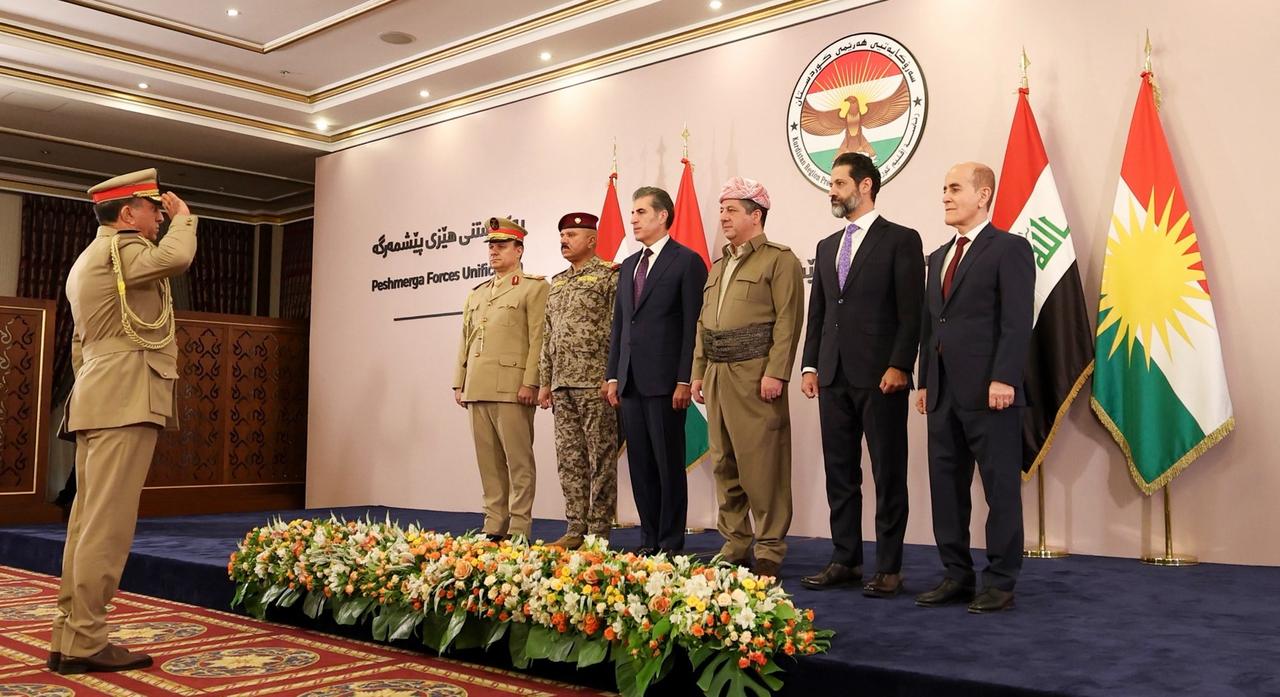
Reading the room, KRG officially confirmed last week that the Peshmerga have finished their unification process. After years of efforts to overhaul and merge the Kurdish troops, who have spent decades split by political party loyalties, the sides are wrapping up just before the deadline.
Mahmood Khoshnaw, a senior Patriotic Union of Kurdistan (PUK) member and political adviser to the KRG Parliament's Presidency, said the question needs a correction first: the money does not flow the way it sounds.
"The U.S. does not pay these salaries directly," Khoshnaw told Türkiye Today. What Washington provided was a $61 million operational assistance grant in the 2026 budget, meant to support Peshmerga readiness. Salaries went through Baghdad: Peshmerga payroll is part of the federal public-sector budget and is paid out alongside KRG civil servants' pay.
Washington's position, as voiced by its regional envoy Tom Barrack, is that a sovereign state needs a "united single military operation." The U.S. deals with states, not militias, and no non-state actor should run a parallel security arrangement of its own.
Iraqi political analyst Atheer al-Sharaa, told Türkiye Today that the change is less a loss of American power than a relocation of it. U.S. salary assistance, he said, has been phased down step by step and is set to end in 2026, with financial responsibility passing to the Iraqi government under the 2022 memorandum.
He does not expect the American role to vanish with the paperwork: training, advisory support and logistics "can readily continue under alternative frameworks."
His warning is about what Baghdad does with the new duty. Funding, he argues, should come with clear command-and-control structures and strict integration into the national defense apparatus. It should not become a cash handout to partisan units.
The Peshmerga's problem isn't only financial, Sharaa noted. Reports still describe partisan divisions inside the force despite the unification push. He also sees a second front. Armed factions in Iraq have demanded that the Peshmerga and other groups be included in any talks on bringing weapons under state control.
Using the Peshmerga's status as an excuse to keep those factions' weapons outside the state, he said, solves nothing. The real test after September 30 is who has the authority to use force. Who physically holds the weapons matters less.
He sees two outcomes. If Baghdad standardizes payroll and command across all armed formations, salaries could stop being a friction point and become an instrument of state authority. If the money turns into political currency among the central government, the KRG and local factions, "the crisis will simply shift" from US funding to internal fights over capital, command and sovereignty.
Munqith Dagher, president of the Iraqi polling firm IIACSS and former advisor to the Iraqi prime minister, is blunter about who gains. Cutting the fund, he says, gives Baghdad a strong hand over decision-making in the autonomous region, and through Baghdad, the Coordination Framework.
In an interview with Türkiye Today, the analyst says that he expects Kurdish decisions to become "more elastic toward Baghdad claims." That has upsides, since tensions between the capitals may ease, and it has costs. "It will depend heavily on who is controlling the politics in Baghdad," he says.
Dagher also expects Kurdish politics to rearrange itself. The parties will need new alliances, he says, and the pressure may push Sulaymaniyah and Erbil under one umbrella as that already happened on the military side.
Asked whether the Peshmerga could fold into the Iraqi army, he does not see it "in the near future or even in the middle range future." His reason has little to do with barracks or budgets: "It's a more deep issue with the political attitudes of Kurds and those who are controlling decision-making in Baghdad."
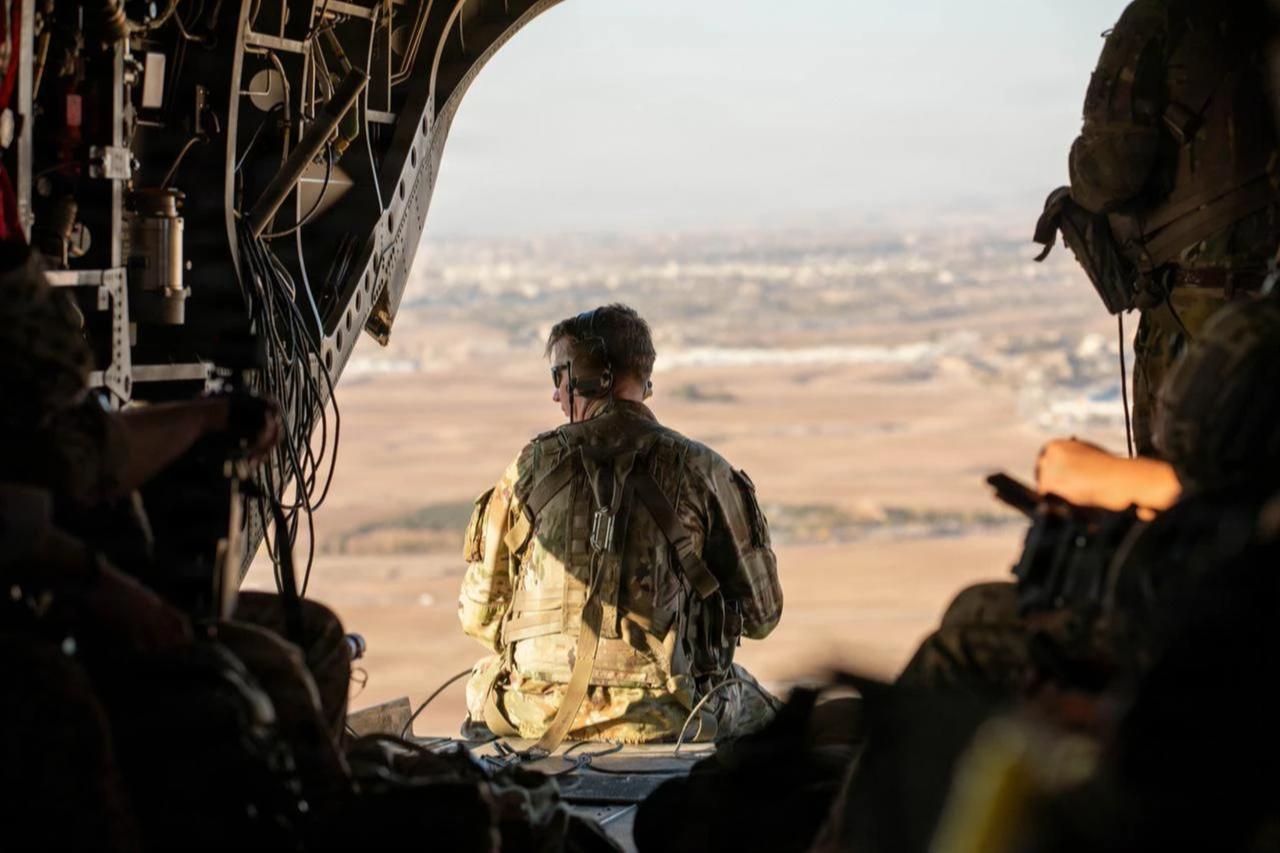
Khoshnaw's concern is more practical, and it is about air. The KRG, he says, has legitimate anxieties about the security fallout from a Coalition withdrawal, because political instability continues and Iraqi forces have not reached the readiness Erbil wants.
"Erbil still lacks radar coverage and air defense systems to counter drone and missile threats," he says. The KRG hopes a new memorandum will commit Baghdad to equipping local forces to guard energy infrastructure and regional airspace.
Khoshnaw's rule is simple: military stability is impossible without political consensus, so the two have to move together. In the meantime, he said, the Peshmerga have started redeploying and running targeted operations to cover the gaps. What is missing is air cover, which neither Iraq's federal forces nor the Kurdistan Region currently has.
Washington’s $800 million consulate still sits in the desert as a monument to a decade of foreign policy investment. But come Sept. 30, U.S. taxpayer dollars will no longer help pay the local guards. Instead, Washington is handing the checkbook and the steering wheel to Baghdad. Whether that creates a stable, unified Iraqi state is a test for Baghdad, and major players, including Türkiye and the U.S., are betting it passes.


 Set as preferred source
 Set as preferred source


 1 min read
 1 min read