Newsletters


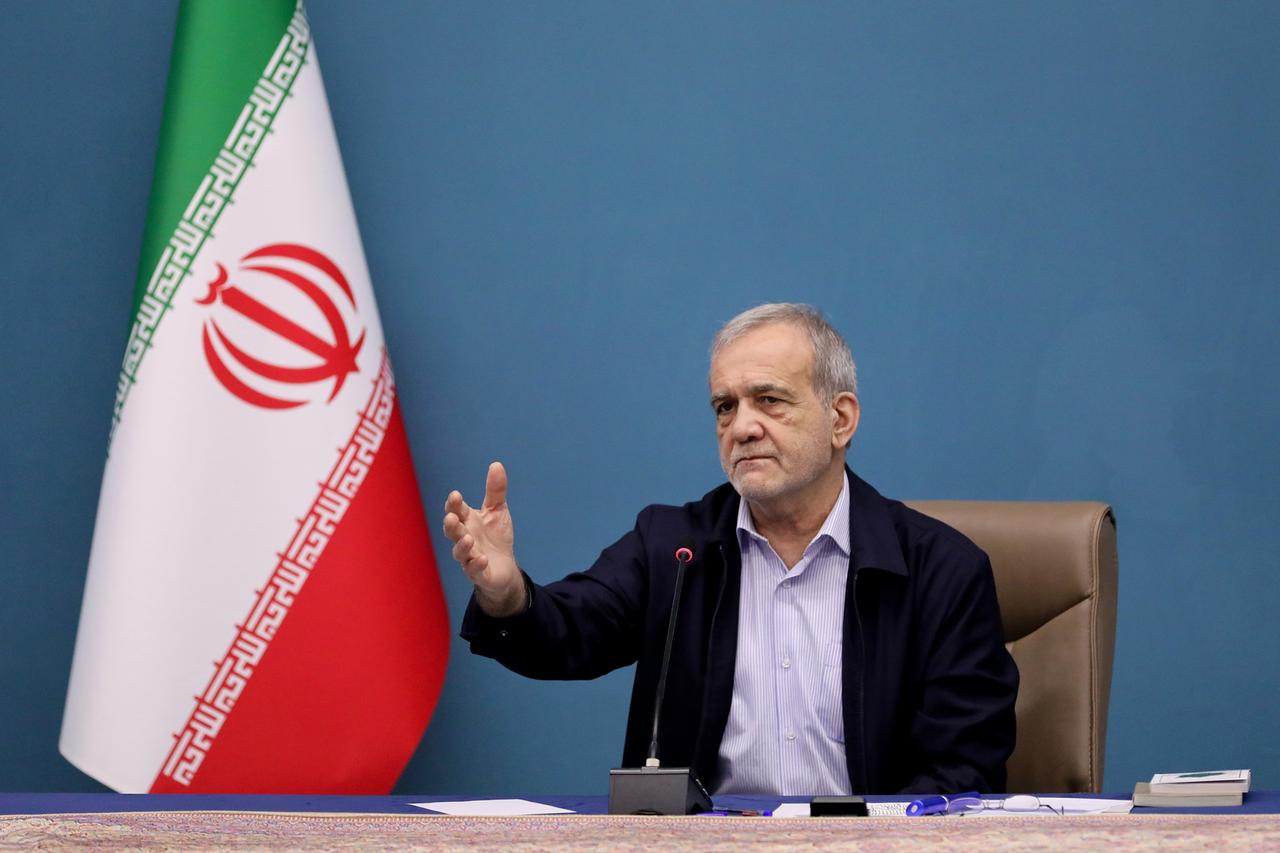


Iranian President Masoud Pezeshkian is alive and in good condition following Israeli airstrikes on Tehran, according to Iran’s semi-official Tasnim News Agency, which confirmed that strikes took place hours earlier but rejected claims suggesting the president had been killed.
The update comes after initial reports circulating from Israeli security sources suggested that Pezeshkian may have been targeted during attacks on sites in the Iranian capital, including areas linked to the presidential compound.
Iranian authorities have not reported injuries to the president, and Tasnim said he remains well following the strikes.
Earlier claims indicated that Israel, reportedly acting alongside the United States, attempted to assassinate Iran’s leadership during airstrikes targeting Tehran.
However, Iranian state-affiliated media later pushed back against those reports, stating that the president survived and was safe.
Tasnim confirmed that attacks occurred in Iran only hours before issuing its clarification regarding Pezeshkian’s condition.
The latest reports revive memories of a confirmed assassination attempt against Pezeshkian in June 2025, when Israeli strikes hit a security meeting attended by senior Iranian officials.
During that incident, missiles reportedly targeted building access points and ventilation systems in an effort to trap those inside.
Pezeshkian escaped through a pre-planned emergency route but suffered a minor leg injury while fleeing the attack, according to previous reports.
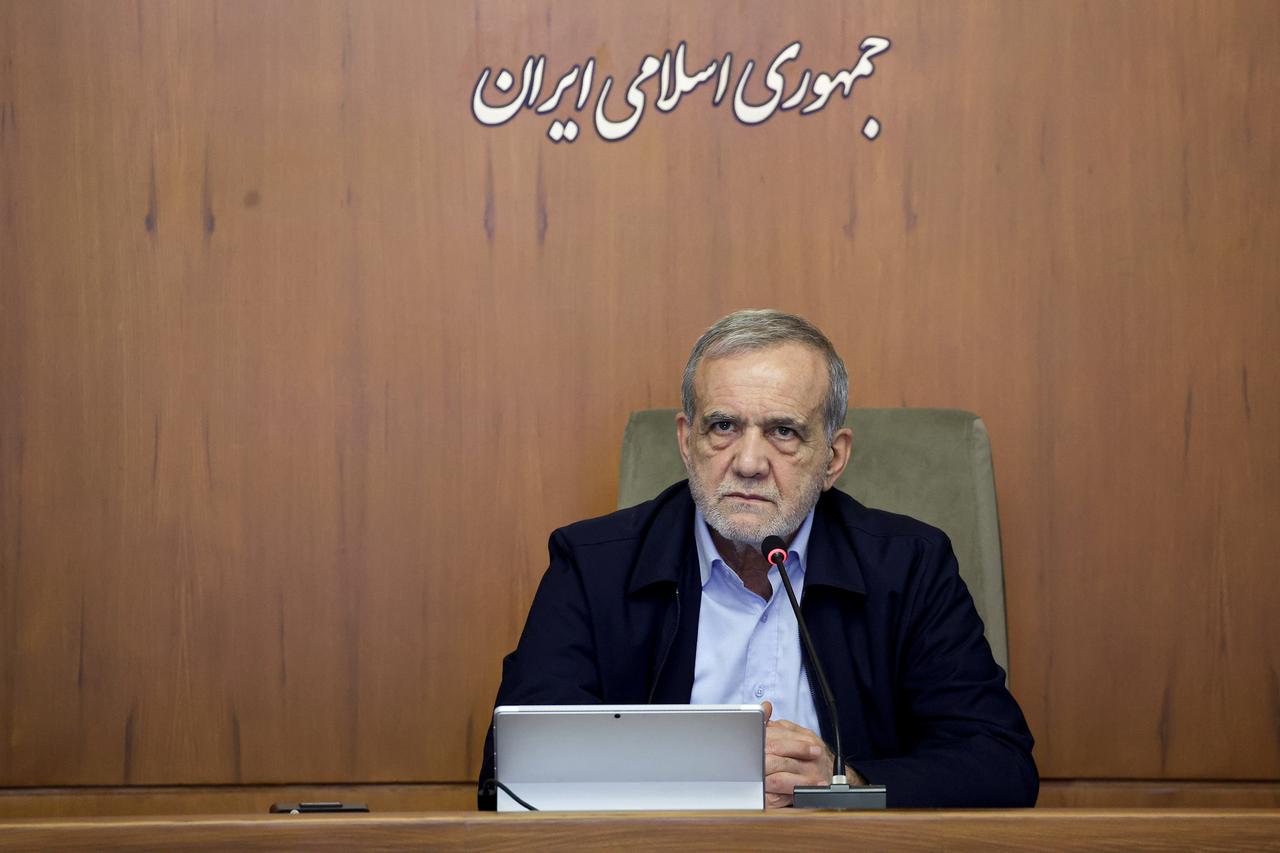

Masoud Pezeshkian, born in 1954 in Mahabad to an Iranian Azerbaijani family, served as Iran’s ninth president after taking office in July 2024. He emerged from reformist political circles while maintaining alignment with Iran’s broader security framework and regional policies.
Since assuming office, his presidency has unfolded alongside intensifying confrontation with Israel, including missile exchanges, retaliatory strikes, and diplomatic tensions tied to Iran’s nuclear program and regional alliances.
After winning the 2024 presidential election, Pezeshkian presented himself as a moderate while continuing to support Iran’s so-called “Axis of Resistance,” a term used to describe Iran-backed regional groups opposed to Israel.
At the same time, he sought to revive negotiations with the United States over Iran’s nuclear program in exchange for lifting international sanctions.
His presidency unfolded amid rising confrontation with Israel, including missile exchanges and retaliatory strikes that intensified throughout 2024 and 2025. During this period, he defended Iran’s missile program as necessary for national defense while also warning about the economic consequences of full-scale war.
Although associated with reformist factions, Pezeshkian maintained support for the Islamic Revolutionary Guard Corps (IRGC), Iran’s powerful military institution, which he described as essential to national unity. He also spoke in favor of protecting ethnic minority rights and supported education in local languages alongside Persian.
While Tasnim’s statement confirms the president is alive, Iranian officials have not yet released detailed information about the extent of damage caused by the latest strikes or whether senior officials were present at targeted locations.
As developments continue to unfold, the situation remains fluid, with competing narratives highlighting the uncertainty surrounding events during active military escalation.


 Set as preferred source
 Set as preferred source


 2 min read