Newsletters


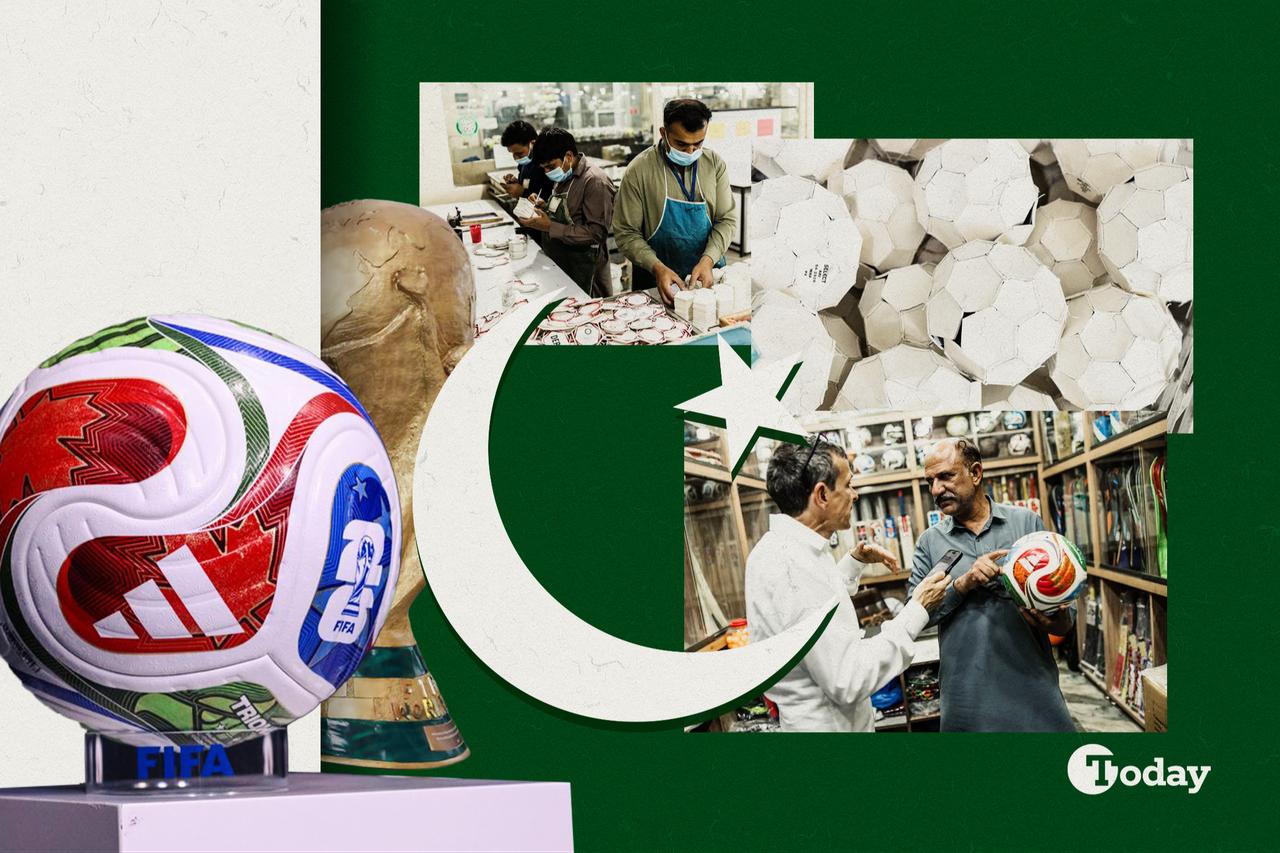


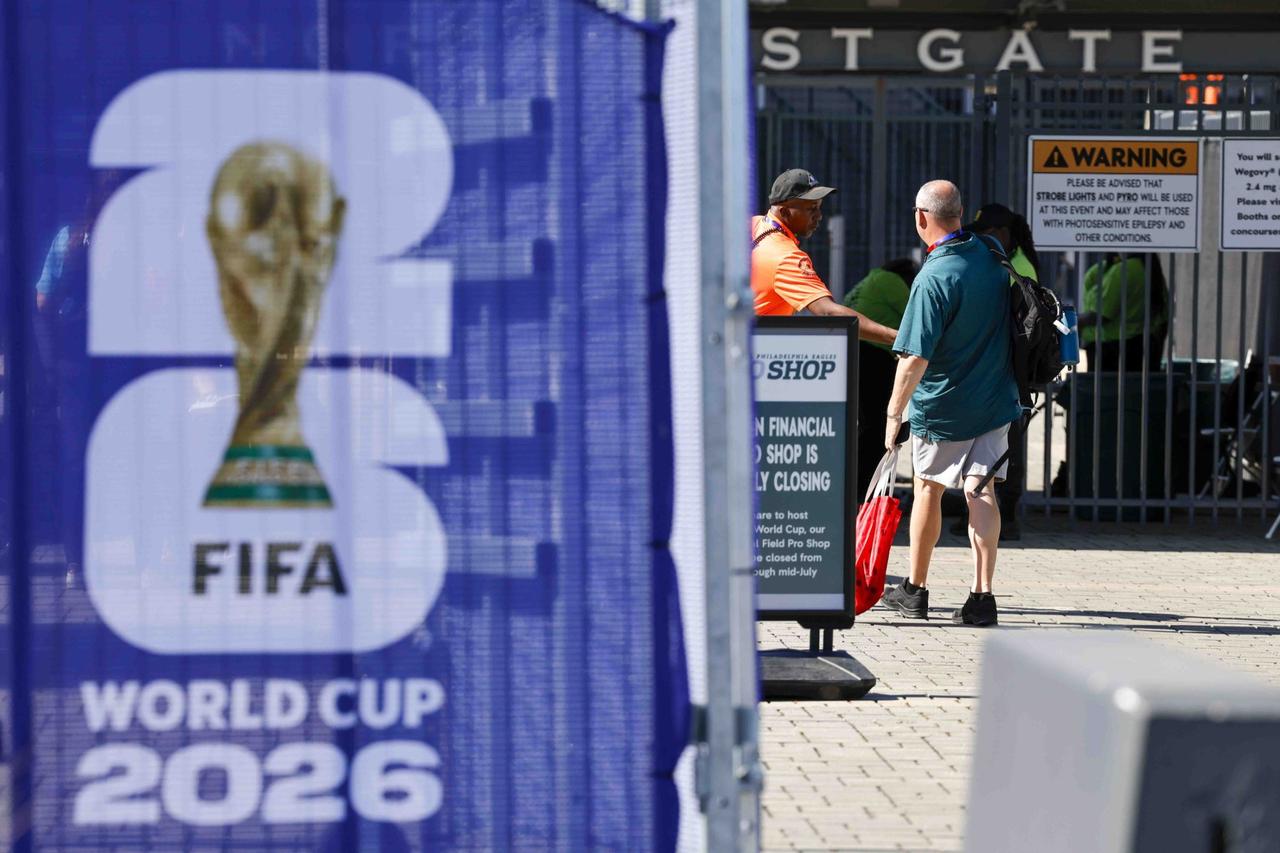
Forty-eight nations are participating in the 2026 FIFA World Cup, making it the largest tournament in history. Often called “the biggest show on earth,” this edition is being co-hosted across three countries: the United States, Mexico, and Canada.
Pakistan is not among the countries competing for the Holy Grail that is the World Cup trophy. In fact, Pakistan has never played in the tournament despite having an official football team. And yet, the country has been present on the field in every single FIFA World Cup for the last 44 years.
Although its team could never make it to the matches, the footballs made in Sialkot, a small northeastern city in Pakistan's Punjab province, have represented the country in nearly all World Cup fixtures since 1982.
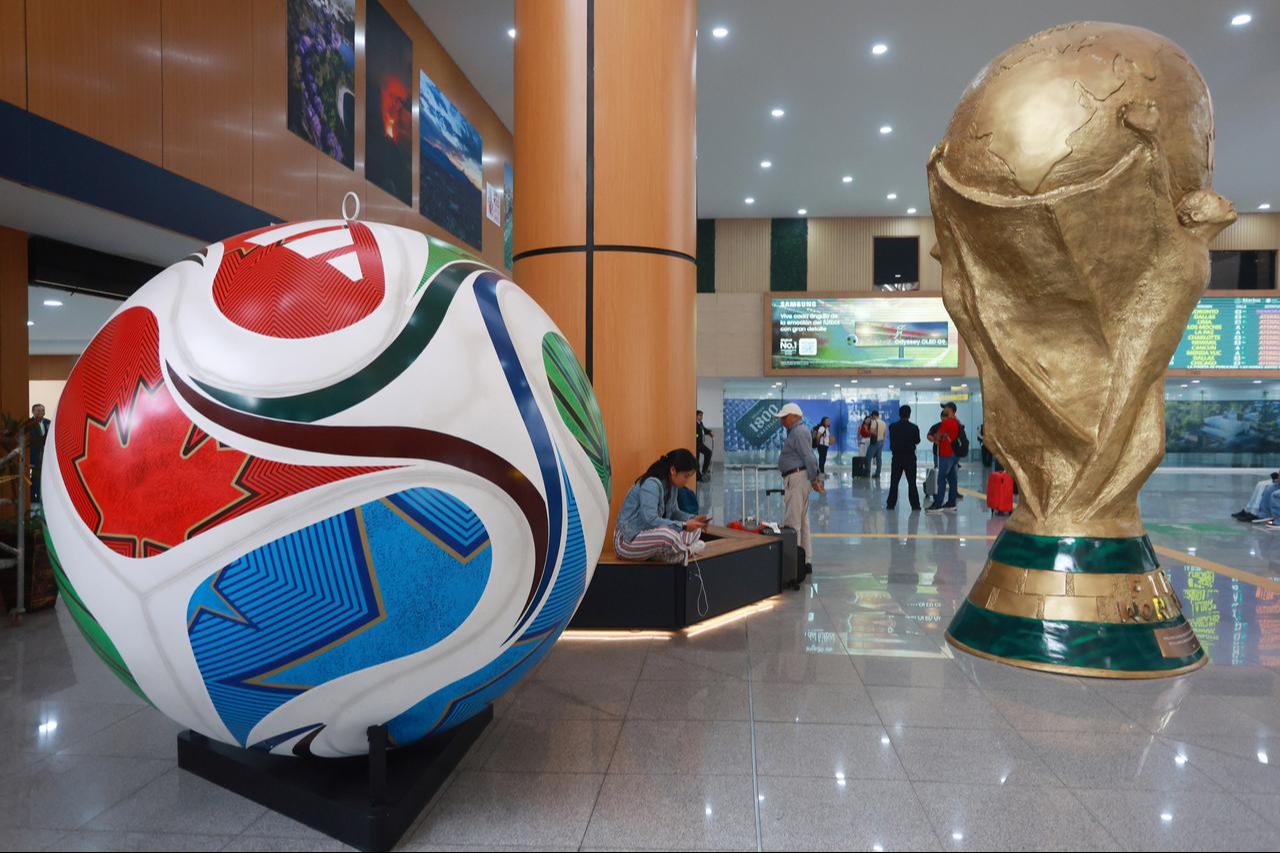

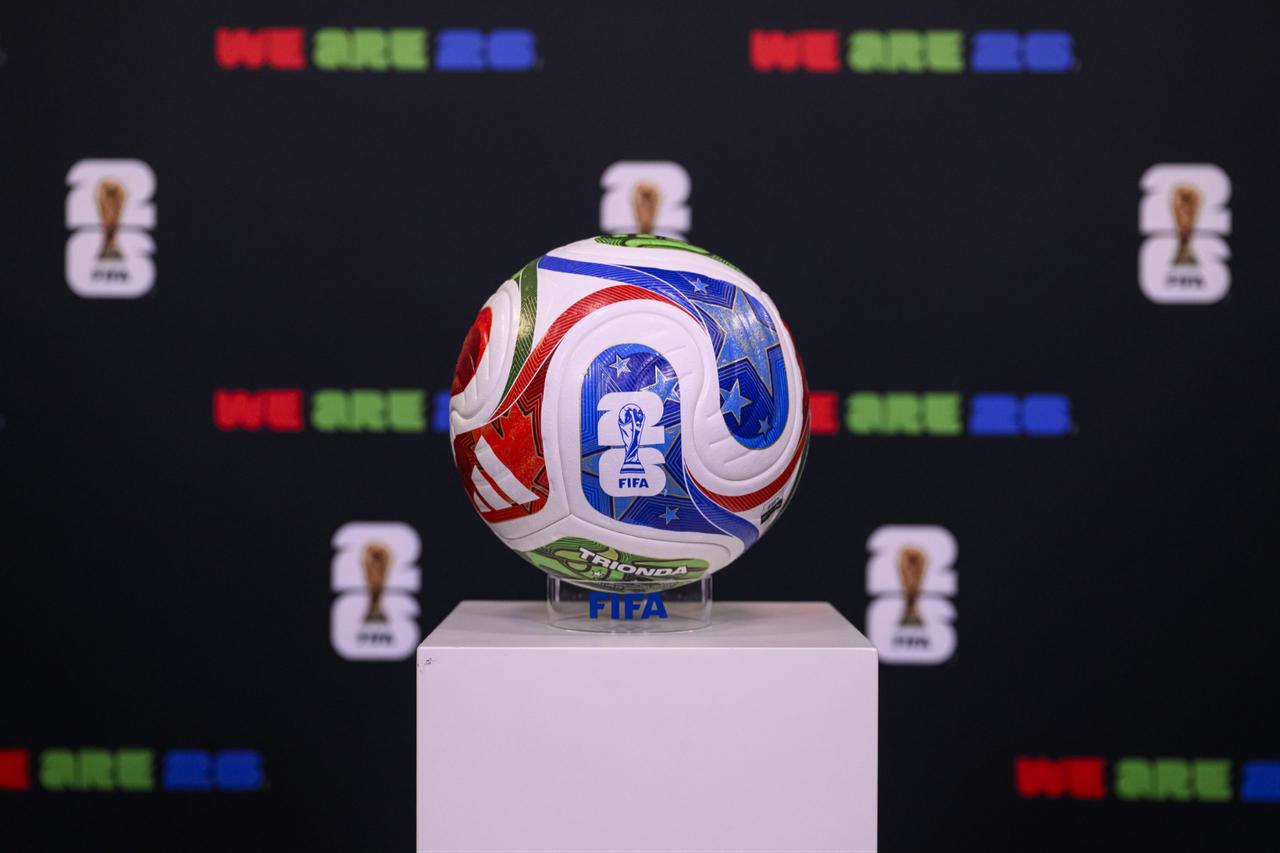
The Trionda, the match ball which is being used in the ongoing tournament, has also been manufactured by a Pakistani company, Forward Sports, which is the official supplier of footballs for the FIFA 2026 World Cup, on behalf of Adidas. The same company also made Al Rihla, the 2022 World Cup match ball.
“In addition to the ongoing and previous World Cups, our company supplies footballs to several other big games such as those played under the UEFA banner— the European football body which hosts major tournaments like the Champions League, Europa League, Conference League and Euros,” said Muhammad Saad, assistant manager at Forward Sports, while speaking to Türkiye Today.
Regardless of the country you live in, if you own a football, especially a handmade one, there is a chance it is made in Sialkot. Out of every ten footballs, approximately six are manufactured in this Pakistani city. The distinction has earned Sialkot the moniker of “the football factory of the world.”

Located in the northeast region of Pakistan’s biggest province Punjab, Sialkot is a relatively small town with a population of a little over 4.5 million. Its per capita income, however, is the highest in the country at over $3,000— even more than that of Karachi’s (between $2,400-$2,600), which is the largest city of Pakistan with a population of over 20 million and is considered the financial hub of the country.
The reason behind Sialkot’s relative prosperity is the city’s thriving small and medium enterprise (SME) sector, along with the large-manufacturing units.
“There are a total of around 150 to 200 football manufacturing units in Sialkot. Out of these around 20 to 25 are large football manufacturing units, while the number of SMEs lies between 100 to 125,” Mohsin Masood, secretary-general of Pakistan Sports Goods Manufacturers & Exporters Association (PSGMEA), told Türkiye Today.
In addition to football and other sports goods, Sialkot is also known for its medical and surgical instruments industry, as well as for producing high-quality leather products. The total export volume from Sialkot is around $3 billion. The share of sports exports is $600 to $700 million of the total. Of this, football exports account for $150 to $200 million.
“We export around 50 to 60 million football units annually. But the figures of football manufacturing and export change during the World Cup season as compared to regular periods. In a World Cup year, the number increases by 20 to 30%,” Masood said.
These figures may seem impressive in the context of a small city where more than 8% of the population, including a large number of women, work in football manufacturing; they pale in comparison with China’s massive industrial output.
With a 44% share of the global export market for all inflatable sports balls, China is the volume leader in football manufacturing in the world. Pakistan’s share is 16%.
And yet, Pakistan holds a monopoly in the hand-sewn professional match ball sector.
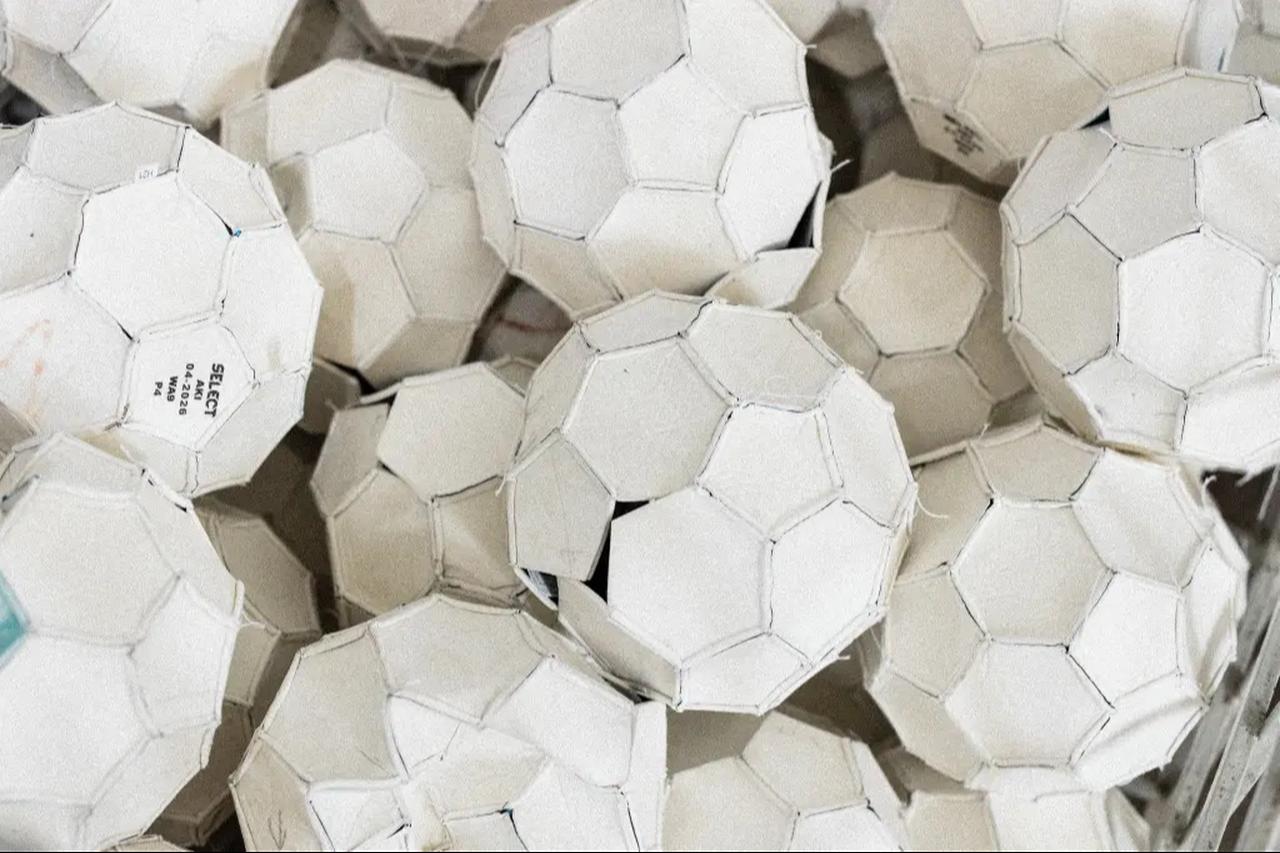
While factories in China churn out hundreds of thousands of footballs a day, stitching a football manually is a time-consuming process. It requires skill and precision.
Each football is sewn together by hand, with craftsmen using a needle and thread to join the panels. The seams, as a result, are deep and strong.
It takes a football maker 40 to 50 minutes to sew a football together. A skilled worker with years of experience, however, can do the job in 30 minutes. Pakistan’s share in the global hand-sewn football market is up to 70%.
The Sialkot-made hand-stitched footballs landed on the global football arena with Adidas’ Tango Espana for the 1982 World Cup. As the world's first water-resistant World Cup ball, it featured a rubber inlay over hand-sewn seams to block moisture during rainy matches.
The success of this hand-sewn design established a long-lasting trust between global sports brands and Sialkot’s craftsmen, paving the way for local factories to manufacture official match balls for successive tournaments.
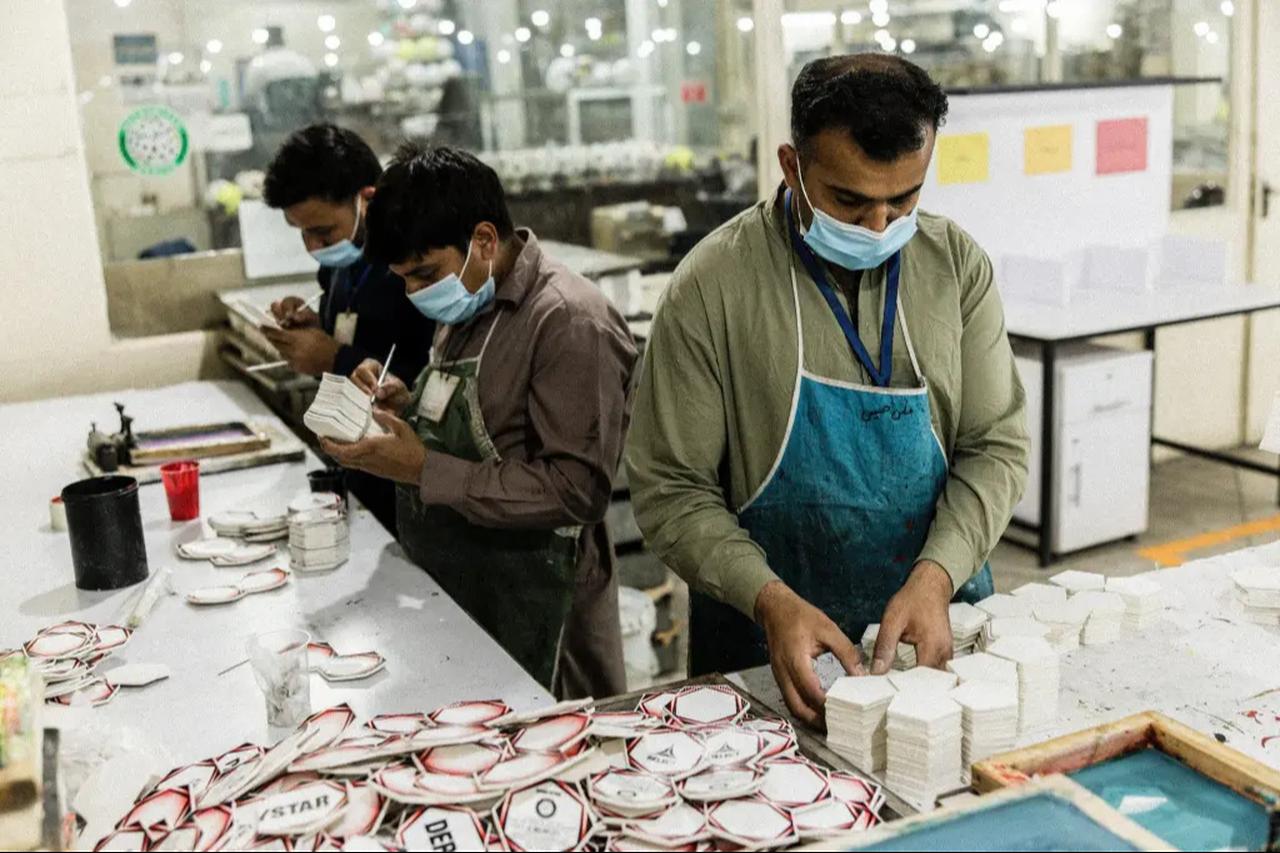
While machine-made footballs are cheaper and faster to produce, handmade footballs are considered far superior because of their exceptional durability, structural balance, and flight accuracy.
The manner in which a skilled football maker can pull and tightly knot the threads deep within the grooves of a ball’s panel—a process that protects the seams from ground friction and prevents the premature unraveling of the thread common in machine stitchin—allows the ball to retain its perfect spherical shape under high inflation pressures.
Moreover, the deeper seams create optimal aerodynamic drag for a truer, more predictable trajectory in the air, while the multi-layered cotton and canvas linings ensure a noticeably softer, more responsive touch for players.
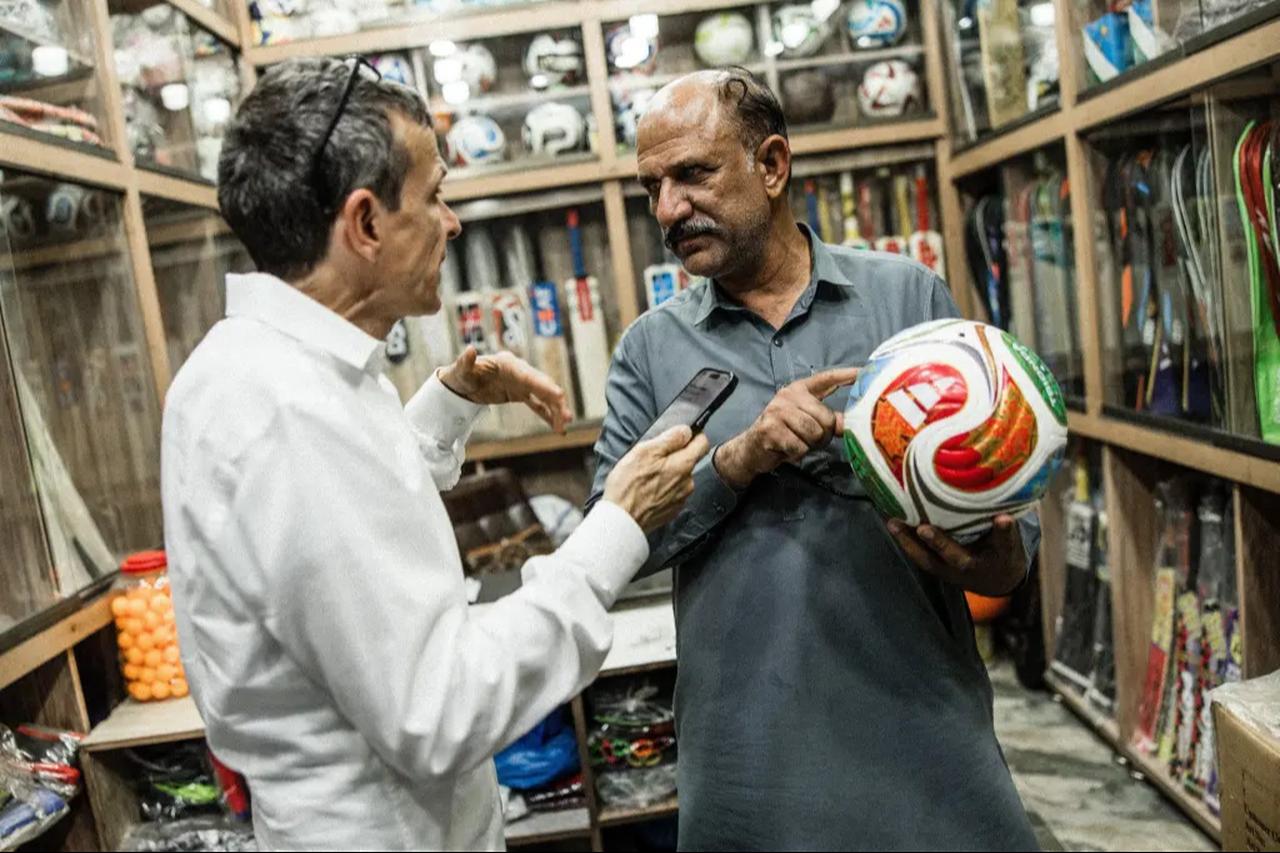
Notwithstanding the qualities and superior nature of hand-sewn footballs, the industry shifted as technological advancements allowed machines to acquire the same level of precision, with much faster production time.
Since the 2006 FIFA World Cup, official match balls—including the Brazuca (2014), Telstar 18 (2018) and Al Rihla (2022)—have shifted from traditional hand-stitching to thermal bonding technology. In the thermal-bonding method, football panels are glued together and pressed in high-heat molds. Since there are no stitched seams or holes, these balls keep water out even better and fly much more smoothly through the air.
While Sialkot was historically and traditionally a handmade football industry, it showed great flexibility and transitioned to accommodate the changes demanded by the sport and its playing nations.
All official World Cup match balls since the Brazuca were either fully or co-produced by football manufacturers in Sialkot, with the current match ball Trionda exclusively produced by Forward Sports.

The latest football is even better and technologically advanced than its predecessors.
Its most notable feature is a 500-Hertz motion sensor chip, which provides information about every element of the ball’s movement. The technology sends precise real-time data to the video assistant referee (VAR) system, which helps match officials quickly review critical incidents like offside decisions.
On the manufacturing side, what differentiates the Trionda from past match balls is the use of four panels— the fewest number of panels used in an elite match ball. To make the comparison clear, the classic World Cup match ball from 1970 to 2002 had 32 panels stitched together by hand. After 2002, the match balls were made by using the new heat-bonding technique to glue the panels together instead of sewing them. This allowed a drastic reduction in the number of panels over the years, dropping to 14 panels in 2006, 8 in 2010, and just 6 panels for the 2014 and 2018 tournaments. The panel count again increased to 20 in 2022 to improve stability.
In the ongoing World Cup tournament, the ball has an all-time low count of panels at just 4. “It is the first time this has been tried in a World Cup,” Saad said. When a new technology is used for the first time at an international event, could there be chances of malfunctioning? Saad disagrees. “We prepared thousands of samples and tested them through various methods. Every ball used in the tournament was tested individually and then approved by FIFA,” he claimed.
Now that the FIFA 2026 World Cup is underway, millions of sports enthusiasts around the world are watching every football match with renewed passion. So are the football manufacturing workers. But instead of the match, their eyes are locked on the ball, keenly following its every move, judging every bounce and taking note of its trajectory.


 Set as preferred source
 Set as preferred source


 1 min read
 1 min read