Newsletters


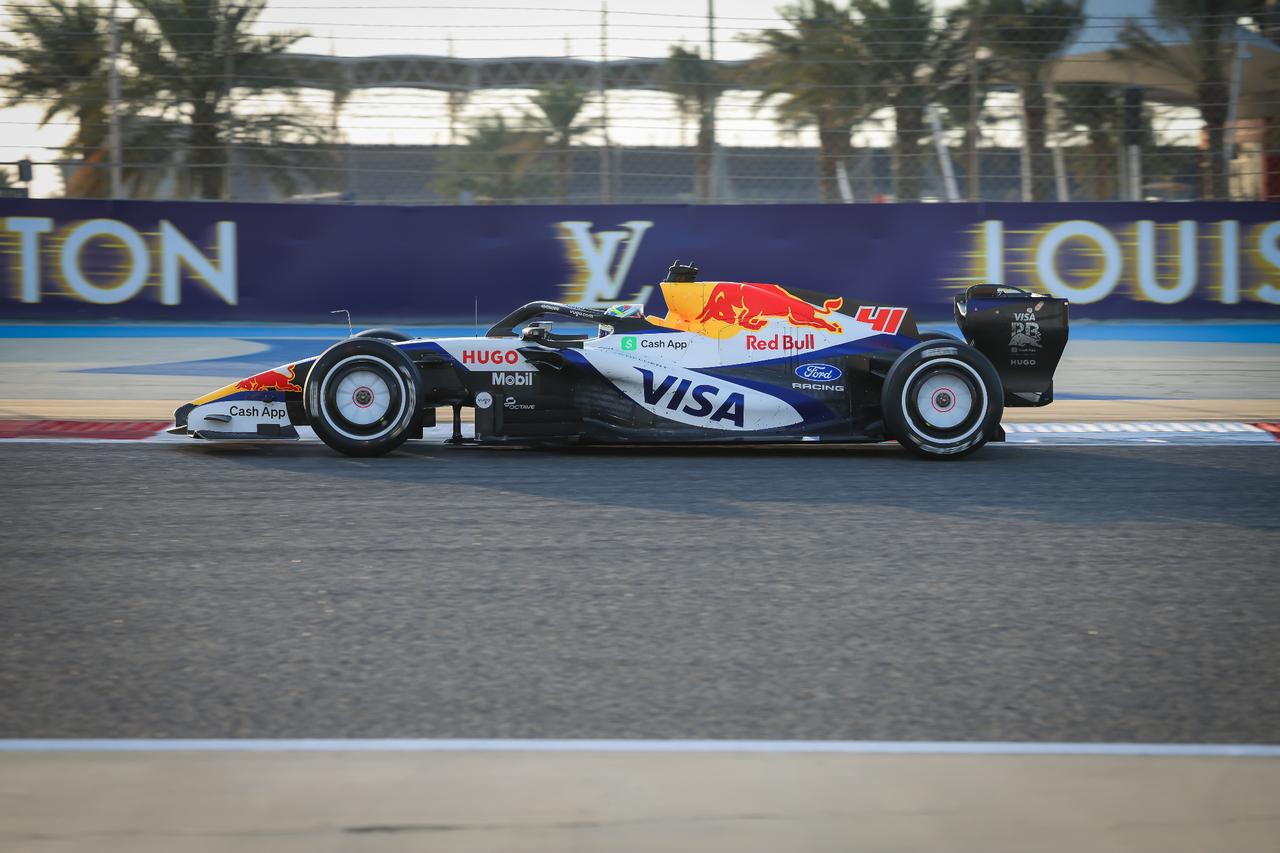


Formula 1 is set to open one of its most unpredictable seasons in recent memory at the Australian Grand Prix, where the sport’s new-generation cars will make their race debut after a sweeping reset of both chassis and power unit regulations.
The 2026 campaign begins at Albert Park under a cloud of both expectation and uncertainty, as teams and drivers try to figure out a radically reworked technical package that is expected to put a heavier burden than ever on race management, energy use and driver decision-making. In this new era, those who handle energy recovery, storage and deployment most effectively are expected to move closer to the podium.
The scale of the shift has already sparked strong reactions inside the paddock. Red Bull driver Max Verstappen, who won four straight titles from 2021 to 2024, described the new cars as "This isn't Formula 1, it's Formula E on steroids. I don't enjoy driving these cars." While Ferrari’s seven-time world champion Lewis Hamilton said they are so complex that "...it's like you need a degree to fully understand it all."
The sport’s governing structure has also rolled out a fresh set of terms that reflects how deeply the cars have been reworked. Fans will now hear phrases such as overtake mode, boost mode, active aerodynamics and recharge throughout the season.
The most visible change is the removal of DRS, the drag reduction system introduced in 2011 to help overtaking. In its place comes overtake mode, which allows a driver who closes to within one second of the car ahead to use extra power at any point on the lap rather than only in fixed activation zones.
Drivers will also control a boost mode, which is designed to help them attack or defend position by drawing maximum power from both the engine and battery through a single command.
At the same time, active aerodynamics will play a far greater role. With downforce reduced by roughly 15% to 30%, the front and rear wings will now automatically adjust depending on whether the car is on a straight or in a corner. Battery management will also become more central, with drivers able to recharge through braking, lifting off the throttle at the end of straights and carrying partial power through corners.
The new Formula 1 cars have been reshaped not only in how they generate power but also in their overall size and balance. Under the 2026 rules, power will be split evenly, with 50% coming from the internal combustion engine and 50% from electric power.
The cars have also been cut down to make them more agile and more competitive. Wheelbase has been reduced by 20 centimeters to 3.4 meters, while width has been trimmed by 10 centimeters to 1.9 meters. Overall weight has also been lowered by 30 kilograms, bringing the minimum down to 770 kilograms.
Tyres have been narrowed as well, with the front reduced by 25 millimeters and the rear by 30 millimeters in a move aimed at cutting both weight and drag. The 18-inch wheel size, however, has been kept unchanged.
Based on pre-season testing, Mercedes and Ferrari appear to have come out of the blocks in stronger shape than reigning champions McLaren and title rival Red Bull.
Ferrari, whose last constructors’ title came back in 2008, is reported to have started work on its 2026 project earlier than any other team. Its cars looked quick, durable and strong off the line in testing, while Charles Leclerc ended the final day as the fastest driver.
Mercedes also caught attention for its reliability, and if it can keep that pace together over a full race distance, the team could put either George Russell or Kimi Antonelli into title contention.
McLaren, which won both championships last season, still heads into the year as one of the main contenders thanks to the proven pairing of Lando Norris and Oscar Piastri, both of whom know how to stay in the fight and turn consistency into podiums.
Red Bull, meanwhile, enters this new rules cycle having chosen to build its own engine, a bold step in a season already full of unknowns. The team will rely on Verstappen alongside new French teammate Isack Hadjar as it looks to answer the early pace shown by its rivals.
The 2026 driver line-up underlines how much the championship is shifting at once. Alongside the leading four teams, the grid also features several notable changes, including Lewis Hamilton at Ferrari, Carlos Sainz at Williams and Sergio Perez joining Cadillac with Valtteri Bottas.
The full line-up is as follows: McLaren with Norris and Piastri; Red Bull with Verstappen and Hadjar; Ferrari with Leclerc and Hamilton; Mercedes with Russell and Antonelli; Williams with Sainz and Alex Albon; Racing Bulls with Liam Lawson and Arvid Lindblad; Aston Martin with Fernando Alonso and Lance Stroll; Haas with Oliver Bearman and Esteban Ocon; Audi with Nico Hulkenberg and Gabriel Bortoleto; Alpine with Pierre Gasly and Franco Colapinto; and Cadillac with Perez and Bottas.
The season will run across 24 races, starting in Australia on March 6-8 and wrapping up in Abu Dhabi on Dec. 4-6.
Because of Ramadan, the Bahrain and Saudi Arabian Grands Prix have been moved to April. However, the races have also drawn attention due to growing security concerns linked to the ongoing conflict in the Middle East.
The calendar has also been updated with the addition of the Madrid Grand Prix in Spain, which replaces the Emilia-Romagna round in Italy.
The championship will travel from Melbourne to Shanghai and Suzuka in the opening weeks before moving on to Bahrain, Jeddah, Miami, Montreal, Monaco, Barcelona, Spielberg, Silverstone, Spa-Francorchamps, Budapest, Zandvoort, Monza, Madrid, Baku, Singapore, Austin, Mexico City, Sao Paulo, Las Vegas, Lusail and Yas Marina.


 Set as preferred source
 Set as preferred source


 3 min read