Newsletters


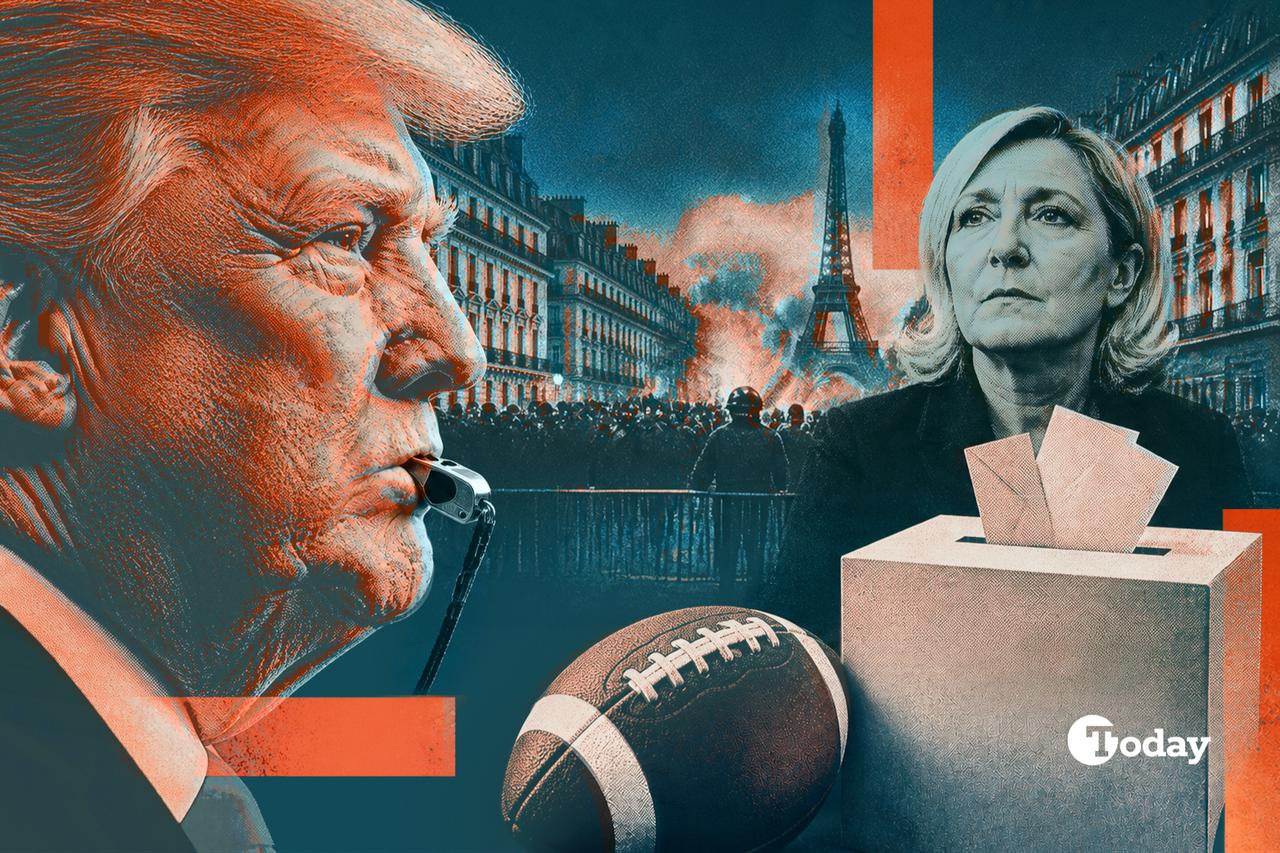


The punch-drunk democracies of the Western world are following a familiar playbook: promise victory, blame the referees, and rewrite the rules when the game goes badly.
From Paris to Pittsburgh, politics has become a contact sport. This weekend, Paris gets the American version.
Saturday brings another round of demonstrations, followed Sunday by the Steelers and Saints in the city's first NFL game.
Fans from Pittsburgh and New Orleans will find themselves navigating two kinds of unnecessary roughness: one in the streets, the other at the Stade de France.
Only the latter comes with referees, helmets, and a concussion protocol.
The trouble with fascism is that it mistakes every obituary for an invitation to return, like athlete's foot or an NFL quarterback who keeps coming out of retirement.
Fascism comes in many sizes, shapes, colors, and aromas. Sometimes it wears jackboots.
Sometimes it promises cheaper groceries, safer streets, and the restoration of a glorious past that never existed, presumably because historians were too busy suppressing it.
Beneath the packaging lies the familiar proposition: Democracy has failed you. Your enemies are everywhere. Give us power, and we will make the nightmares disappear.
In France, Marine Le Pen, the far-right leader of the National Rally party, has built a political career around that proposition.
Now the country's streets are providing her with fresh ammunition.
Protests over rising prices, deteriorating schools, and shrinking public services have exposed a population increasingly convinced that its government has stopped listening.
Students, trade unionists, and Yellow Vest veterans have filled the streets.
Hundreds of thousands marched peacefully, while smaller groups attacked public buildings, looted shops, and clashed with police.
From Paris to Marseille and beyond, the unrest has become a referendum on the authority of President Emmanuel Macron, whose government is burdened by debt, unpopular spending cuts, and diminishing public confidence.
The contrast is politically devastating. Macron must explain why his government cannot deliver the stability it promised. Le Pen needs only to point at the turmoil and ask whether France has had enough.
He carries the responsibility of governing; she enjoys the considerable luxury of criticizing the results.
French politics has become a restaurant where everyone hates the menu, nobody trusts the chef, and the woman waiting to take over the kitchen insists she can prepare a magnificent dinner without revealing the recipe.
Le Pen presents herself as the custodian of order. The protests become her campaign material, and the government's failures her credentials.
This is authoritarianism's oldest magic trick: Convince citizens that liberty is the source of their insecurity, then offer obedience as the cure.
Naturally, there will be a modest administrative fee.
The grievances, however, are real. The bills are real. The failing hospitals are real. And peaceful demonstrators demanding better government should not be confused with opportunists smashing shop windows.
Across the Atlantic, America has spent much of its cultural existence fleeing adulthood, retreating toward frontiers, battlefields, and masculine fantasies rather than confronting ordinary responsibilities.
Its fictional heroes fled down rivers and across oceans.
Today's political strongmen offer the same escape, except the wilderness has become an imaginary golden age, and the raft carries a television camera and corporate sponsorship.
The republic has never entirely outgrown its appetite for the father figure who promises to settle every argument with his fists.
And Donald Trump has discovered that France's unrest makes excellent campaign theater.
With Republicans fighting to retain Congress in the Nov. 3 midterms, Trump warns that America's future under Democrats resembles the turmoil overseas.
His rhetoric invokes immigrant enemies and national decline, with the subtlety of a man using a leaf blower to deliver a bedtime story.
The implication is poisonous: Elect my opponents and lose the country, you know.
This transforms democratic competition into a struggle against supposedly dangerous internal enemies.
Pay no attention to Americans who confront soaring fuel prices, battered farm incomes, and medical bills. They are people trying to survive until Friday, not supporting characters in somebody's political melodrama.
Here, the America of struggling farmers collides with modern political theater: working people beneath enormous flags, applauding promises of prosperity while diesel prices climb above their heads.
And the consequences extend far beyond America's borders.
The midterms will determine whether Trump retains a cooperative Congress or faces meaningful opposition.
A Democratic House could investigate his administration, subpoena officials, and block legislation. A Democratic Senate could reject nominees and obstruct legislation. Neither chamber could simply overturn executive orders, but either could constrain his agenda.
Republican control of both would preserve Trump's legislative advantage and reduce aggressive congressional oversight.
The international repercussions could be considerable. Europe would reassess American security commitments.
Ukraine would question future assistance. Russia and China would examine Washington's political constraints. Financial markets would weigh trade risks; a task Wall Street performs with remarkable confidence until reality intervenes.
A strengthened Trump would encourage nationalist movements that regard democratic checks as irritating paperwork. A weakened Trump would demonstrate that elections can impose consequences, even on leaders who regard losing as a clerical error.
Trump's warnings should therefore concern everyone from Chicago to Europe's capitals. When electoral defeat is portrayed as national betrayal, the legitimacy of democratic competition itself becomes negotiable.
The danger arises when legitimate discontent becomes an excuse to weaken the institutions through which citizens can demand change.
Democracy rarely disappears in a single dramatic moment. More often, its safeguards are weakened through perfectly legal procedures, accompanied by patriotic speeches and assurances that everything is under control.
The public may even applaud.
On Sunday in Paris, the Steelers and Saints will play until somebody wins. The losing team will accept the result and leave the field.
In Western politics, that last part is increasingly open to negotiation.


 Set as preferred source
 Set as preferred source


 2 min read

 1 min read