Newsletters




When the United States and Denmark signed the Defense of Greenland agreement in Copenhagen in April 1951, the Greenlanders themselves were not in the room.
Their island was still a Danish colony, and the document that would bring Thule Air Base, thousands of American troops, and decades of Cold War secrecy to their land was written in English and Danish only. Seventy-five years later, on the sidelines of the United Nations General Assembly in New York, a Greenlandic prime minister put his name to the record.
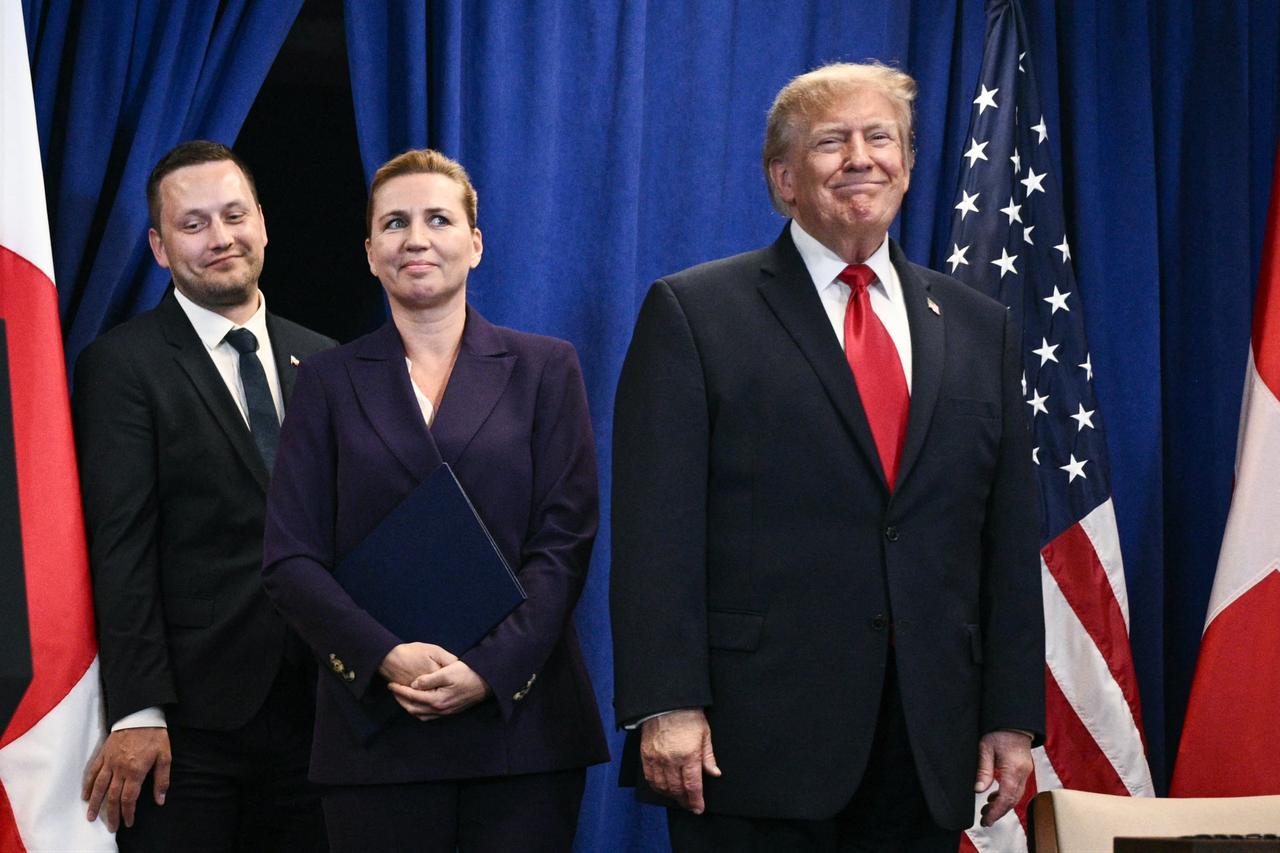
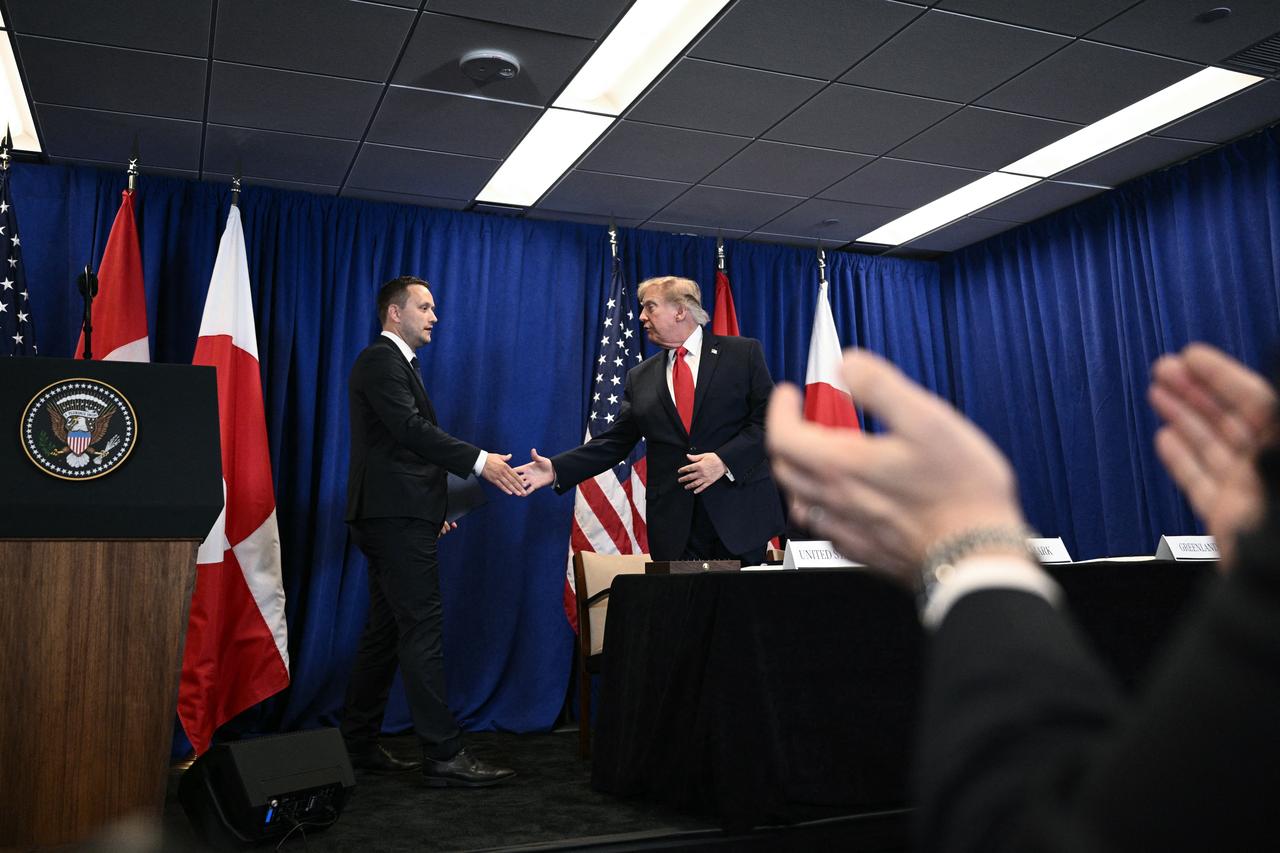
President Donald Trump, Danish Prime Minister Mette Frederiksen and Greenland's Prime Minister Jens-Frederik Nielsen signed the agreement on Sept. 22, 2026. The deal allows the U.S. to expand its military presence in Greenland while leaving the sovereignty of the Kingdom of Denmark and its autonomous territory intact. Nielsen called it a very important day for shared security, saying the text "brings the 1951 Defense Agreement into 2026" and builds on 85 years of security cooperation in which Greenland has welcomed the U.S. military.
He then made the point that may define how Nuuk reads the document. Nielsen observed that the world has changed since 1951, and that one of the most notable changes is Greenland itself sitting at the table and signing. For Greenland, he said, this is "not only an agreement about us. It is an agreement with us."
The 1951 agreement stands; the new text amends and supplements it. What follows are the five differences that separate the two documents.
The 1951 pact was a purely bilateral affair. It was signed in Copenhagen in duplicate in English and Danish, between two NATO governments that said they were acting at NATO's request.
The language used to describe the Greenlandic side has evolved in three distinct steps. In 1951, there was only the Kingdom of Denmark. In 1991 and 2004, the formula became Denmark "including the Home Rule Government of Greenland." In 2026, the Danish government acts together with the Government of Greenland, and the text is done in triplicate in Danish, Greenlandic, and English. The shift from "including" to "together with" is small in wording and large in meaning. Greenlandic now stands beside Danish and English as a language of the agreement, and the signature page carries a separate line for the Government of Greenland. Greenlandic appears as an authentic language of the agreement for the first time, although Article XII stipulates that the English version prevails in the event of ambiguity or conflict.
A precision is necessary, however. This is not the first time Greenland has signed a defense text with Washington. In the 2004 Igaliku Agreement, Greenland became a party, together with the Kingdom of Denmark, for the first time to the defense arrangement governing U.S. military activity on the island. That document was signed by Colin Powell, then-Danish foreign minister Per Stig Moller, and Greenland home rule deputy premier Josef Motzfeldt. What is new in 2026 is the level and the setting: a Greenlandic head of government signing alongside Trump and Frederiksen, on the sidelines of the world's largest diplomatic stage, the U.N. General Assembly held in New York.
The signature block also shows the limits of the change. Greenland signs beneath a joint heading with the Kingdom of Denmark, not as a third sovereign party facing Washington. Defense and foreign policy remain Kingdom competences under the 2009 Self-Government Act. The agreement takes effect only once the United States receives a diplomatic note confirming that Denmark, together with Greenland, has completed its parliamentary procedures. That gives both the Inatsisartut in Nuuk and the Folketing in Copenhagen a say before anything changes on the ground.
The 1951 text protected Danish sovereignty and said nothing about Greenlanders. Its concessions to Copenhagen were limited to recognizing Danish sovereignty and the right of Danish authorities to move freely throughout Greenland.
The 2026 preamble goes much further. It reaffirms Denmark's sovereignty and territorial integrity, and it also recognizes the people of Greenland as a people under international law with the right to self-determination. It also cites Article 21 of the 2009 Self-Government Act, which sets out the procedure for independence. For the first time, the right of Greenlanders to leave the Kingdom is written into the founding framework of the U.S. military presence on their island.
Frederiksen put this recognition at the center of her message. She said the agreement "recognizes the sovereignty and territorial integrity of the Kingdom" together with the Greenlandic people's right to self-determination. Greenland's Foreign Minister Mute B. Egede made the same point from Nuuk's perspective: he said the text respected the government's longstanding red lines, including Greenlanders' right to self-determination, while opening the way to deeper defense cooperation with the United States and other Western allies.
The same agreement also looks beyond independence. Article XI provides that if Greenland becomes independent, Copenhagen and Nuuk must together ensure that the new state stays in NATO, applying for membership if needed, and takes on all of Denmark's rights and obligations under the defense arrangements from the day of independence.
The new text also changes how long the arrangement lasts. The 1951 agreement's Article XIV tied its validity to the duration of the North Atlantic Treaty. The 2026 text has no end date and can be amended only by mutual consent. Frederiksen embraced that permanence, calling it "a deal that can last forever."
The two provisions together work as both a recognition and a pre-commitment. Greenland's right to independence is acknowledged, while the present governments attempt to carry the existing Western security alignment beyond a future independence, although NATO accession and questions of state succession could still require further legal and political decisions. Whether that strengthens or narrows self-determination is likely to be the central question when the Inatsisartut takes up the text.

In 1951, the agreement allowed Washington to keep its three main bases in Greenland, Thule, Narsarsuaq and Sondrestrom, and to set up new defense areas if NATO deemed them necessary. By 2026, only one remained active: Pituffik, the former Thule.
The new text reverses decades of drawdown. The United States may establish new “defense areas” with associated military facilities at Narsarsuaq and Mestersvig on the east coast, and expand Pituffik Space Base, currently its only active base on the island. Either party may propose further defense areas. If the Permanent Committee cannot agree within 90 days, the consultations move up to deputy-minister level and then to ministers. Requests for unmanned installations outside the defense areas are handled through an accelerated approval process. The preamble also names a mission the 1951 drafters could not have imagined: defending the American continent, including through a Golden Dome defense system.
Much of the legal access, however, is inherited rather than new. The 1951 agreement already allowed U.S. aircraft to fly over and land anywhere in Greenland, including its territorial waters, without restriction unless both sides agreed otherwise. ABC News concluded that the new access provisions do not appear to materially expand the privileges granted by the 1951 pact. The clearest additions are explicit undersea access for U.S. public vessels in territorial waters and the new sites themselves.
This supports a point raised in Nuuk on National Day. Many Greenlanders asked why Washington applied so much political pressure when the 1951 framework already gave it extensive military access. The answer appears to lie less in access than in the next two differences.
The 1951 agreement was about letting allies in. The 2026 agreement is equally about keeping others out.
Article IX bars any non-NATO state from setting up manned or unmanned military installations in Greenland, or keeping a persistent military presence there, unless the parties agree otherwise. Article X extends that logic to investment. States or investors from countries outside NATO, NATO partnerships and the Eurpean Union may not obtain control, significant influence, or access to sensitive non-public information in particularly sensitive sectors including critical infrastructure and resource extraction where this could threaten national security or public order, unless the parties agree that the activity poses no such threat.
Greenland is to enforce this through its own investment-screening laws, working closely with Danish authorities, which in turn consult with the United States.
Trump presented the clause in his own terms at the U.N., declaring that "No U.S. adversary will ever be permitted to establish a military presence in Greenland." The text is more restrained than the rhetoric. The screening test is based on membership of NATO, NATO partnership, or the EU, not on American discretion. The EU, Britain, Canada and France, the other suitors at the Nuuk "Arctic ball," are not subject to this agreement’s categorical screening restriction, although their investments remain governed by Greenlandic law and ordinary regulatory processes.
The agreement also does not transfer ownership of Greenland’s mineral resources or the authority to issue mining concessions to Washington. It assigns implementation of the investment-screening provision to Greenland, in close cooperation with Danish authorities and with consultation involving the United States.
Nielsen, for his part, used the signing to address any doubts about Greenland's allegiance. He said the agreement should settle, now and in the future, any question about "where Greenland's loyalty lies."
The 1951 agreement said nothing about the Inuit people who lived near its bases except for the term “local population”. Two years after it was signed, the Inughuit around Thule were moved to Qaanaaq. A 2005 analysis of the Igaliku process recalled that the local population was relocated against its will in 1953 to a village more than 100 kilometers north, and that the base's establishment harmed their living conditions. Their descendants pursued recognition and compensation for decades, with litigation eventually reaching the Danish Supreme Court in 2003.
The 2026 text takes a markedly different approach. U.S. military access must be exercised with respect for Greenlandic society and its way of life, including hunting, fishing and other traditional and cultural activities, as far as possible. Contracts for building, maintaining and dismantling defense sites are to be awarded to Greenlandic sources to the maximum extent possible, subject to capability and feasibility. The preamble also commits the parties to maximizing tangible benefits for Greenlanders from the defense areas, and recognizes that Greenland shares the risks and responsibilities of allied security.
Nielsen presented this as the core of the deal. He said the agreement "is about taking shared responsibility for a secure America, a secure Greenland" and that it takes into account Greenlanders, their rights and their livelihoods.
Phrases such as "to the maximum extent possible" are aspirations, not guarantees, and the Permanent Committee will have to put them into practice. Even so, the difference in approach between 1951 and 2026 is the clearest indicator of how far Greenland has come.
Outside the new U.S. consulate premises in Nuuk in May, protesters carried banners reading “U.S. OUT, NATO IN.” Articles II and VIII partly reflect that demand. All three parties support stronger NATO engagement in the Arctic, including through planning, presence, exercises, and joint intelligence gathering, while Denmark separately commits to continuing to strengthen its Arctic defense posture. Washington thus gains an expanded military presence within an alliance framework, rather than in place of one.
Trump had announced that the deal would give Washington "permanent control over security, and all other needs" on the island. Copenhagen described it as sovereignty preserved. Danish Foreign Minister Lars Lokke Rasmussen expressed hope that a long period of uncertainty would give way to a binding agreement strengthening security in the Arctic, in NATO and in Europe. Nuuk described it as an agreement made with Greenlanders rather than about them. Copenhagen’s and Nuuk’s descriptions are closer to the agreement’s legal language. Trump can plausibly claim permanent and substantially expanded U.S. security rights, but the text does not give Washington sovereign control over Greenland or unilateral authority over all military and investment decisions.
In 1951, Greenland's geography was negotiated over the heads of its people. In 2026, its people helped negotiate the terms, subject to a clause that fixes their strategic alignment even beyond a future independence. Greenland has taken its place on the dance floor. It will now have to live within rules it has signed.


 Set as preferred source
 Set as preferred source


 2 min read

 1 min read