Newsletters


A 7.8-magnitude earthquake struck off the southern coast of the Philippines on Monday, killing at least 14 people, with 7 others missing, buildings across General Santos city, and triggering tsunami warnings across six countries.
As many as 138 aftershocks followed within hours, and Philippine President Ferdinand Marcos Jr. ordered immediate coastal evacuations on what was to have been the first day of the school year.
The quake struck one of the Philippines' most populated southern cities during peak morning hours on a school day, with videos showing buildings collapsing, students screaming, and teachers sheltering children.
Earthquake-triggered tsunami warnings were issued from Indonesia and Japan to Papua New Guinea and Australia, though most alerts have since been lifted or downgraded.
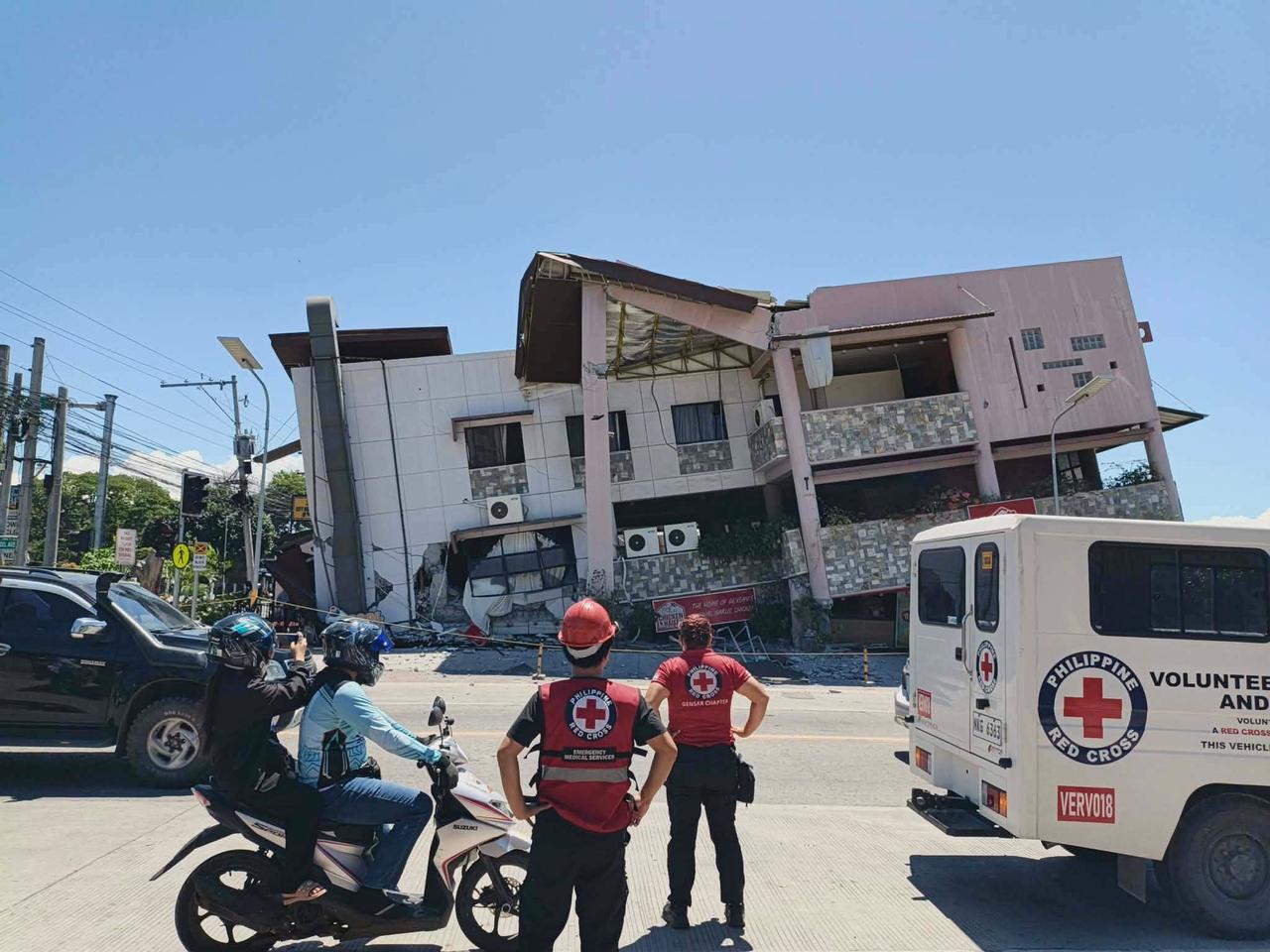

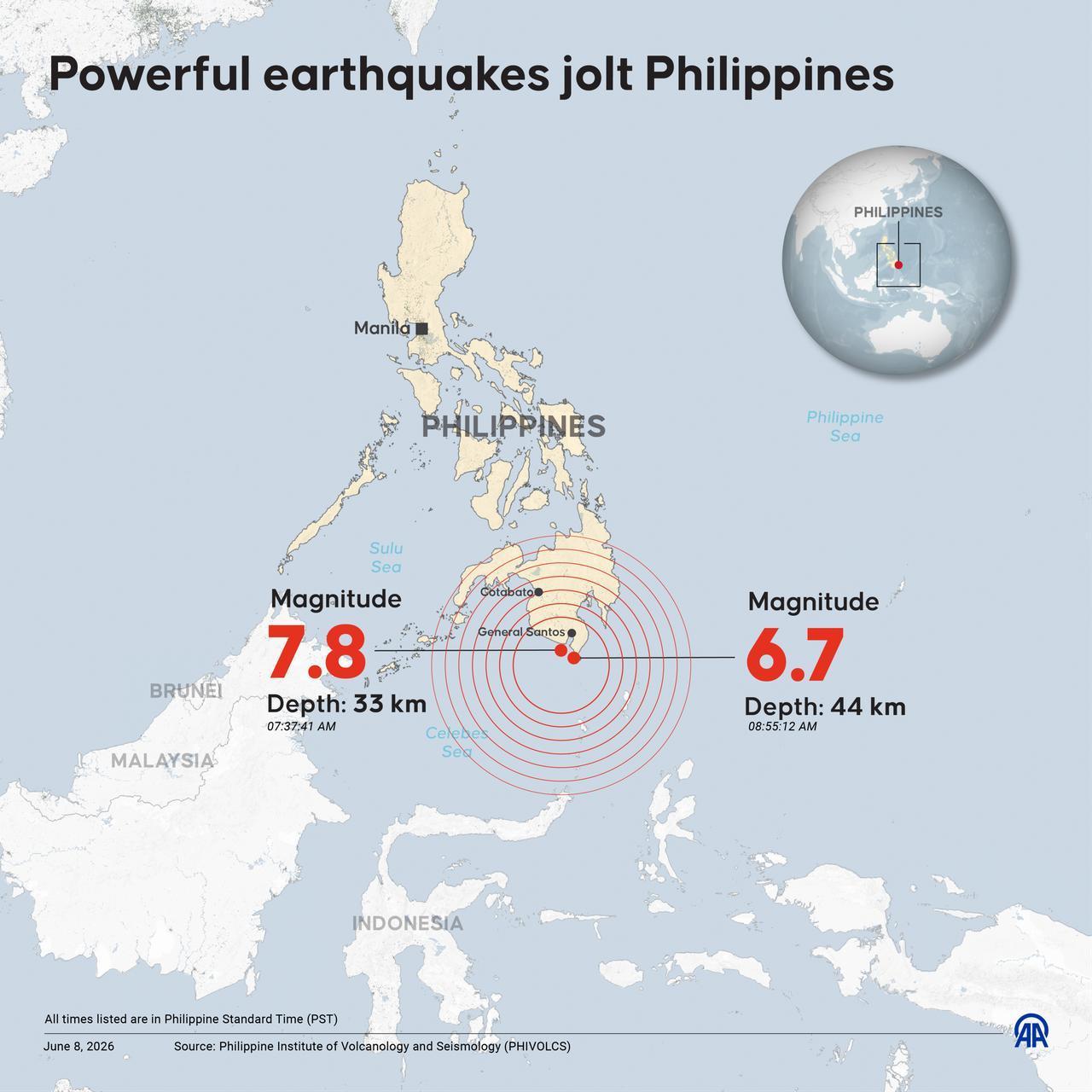
The Philippine disaster agency confirms 14 dead and 5 injured following the quake, which struck just offshore of Mindanao island's Sarangani province at 7:37 a.m. local time (11:37 p.m. GMT).
Two people were crushed to death by a collapsing wall in Alabel, a municipality near General Santos, Police Major Roland Catoburan told Agence France-Presse (AFP). "A wall fell on them," he said.
Master Sergeant Robert Dagon of General Santos police confirmed another death and four additional injuries, adding: "Many buildings were affected, but I cannot enumerate them now because we are busy with ongoing rescues."
Authorities estimated 37 buildings, mostly commercial, were damaged. Videos verified by AFP showed a shopping center with a Jollibee fast food restaurant reduced to rubble and a school building crumpled to the ground. "Lord, it has really collapsed! The building has really collapsed!" someone could be heard shouting as the school structure toppled.
Officials said the school was unoccupied at the time.
The Philippine Institute of Volcanology and Seismology recorded tsunami waves at six areas along Mindanao's southern coast, with the highest measuring 1.4 meters (approximately 4.59 feet).
The U.S. Pacific Tsunami Warning Center had warned that waves exceeding three meters above tidal level were possible along some Philippine coasts.
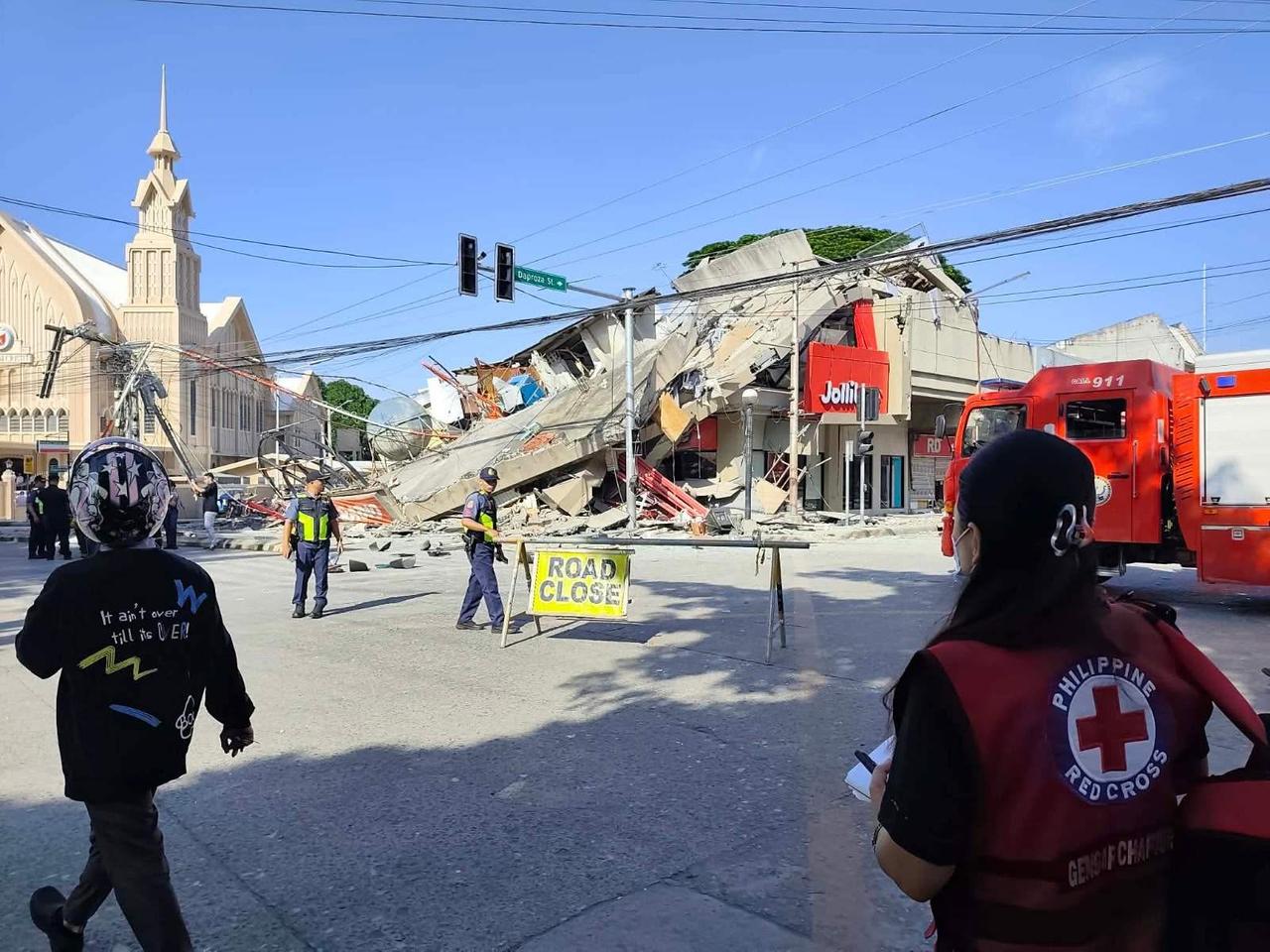
The United States Geological Survey (USGS) recorded 138 aftershocks as of 11:00 a.m. local time, ranging in magnitude from 1.3 to 6.7.
The largest aftershock hit approximately two hours after the initial quake.
The German Research Center for Geosciences placed the offshore earthquake's intensity at 8.2, higher than the USGS figure of 7.8.
The Civil Aviation Authority of the Philippines temporarily suspended operations at the General Santos International Airport. Classes at all levels in the earthquake-affected areas of Mindanao were suspended. President Ferdinand Marcos directed government agencies to "act immediately" in disaster response and relief operations.
Marcos urged all coastal residents to evacuate immediately. "Move to higher ground now. Do not wait," he said. "Your life is more important than anything left behind."
In Kiamba, a coastal town near the epicenter, approximately 50,000 residents responded to evacuation orders. "As of now, 80% of the population has moved to higher ground," said Agripino Dacera, the regional disaster chief. "All the villages along the coast were instructed to proceed to evacuation centers."

Tsunami evacuation warnings were issued for coastal areas of neighboring Indonesia and Malaysia, with Jakarta's meteorological agency subsequently lifting its alert.
Japan's weather agency issued a tsunami advisory for the Pacific coast of western and eastern Japan, forecasting waves up to 1 meter. Kyodo News Agency reported that a tsunami with a maximum height of one meter could reach Miyako Island and the Yaeyama islands in Okinawa.
The Philippines lies on the Pacific Ring of Fire, an arc of intense seismic activity, making earthquakes a near-daily occurrence. Eastern Mindanao was struck by earthquakes of 7.4 and 6.7 magnitude last October, killing at least eight people, following a 6.9-magnitude quake that killed 76 people and damaged or destroyed 72,000 buildings in Cebu province.


 Set as preferred source
 Set as preferred source



 3 min read