Newsletters


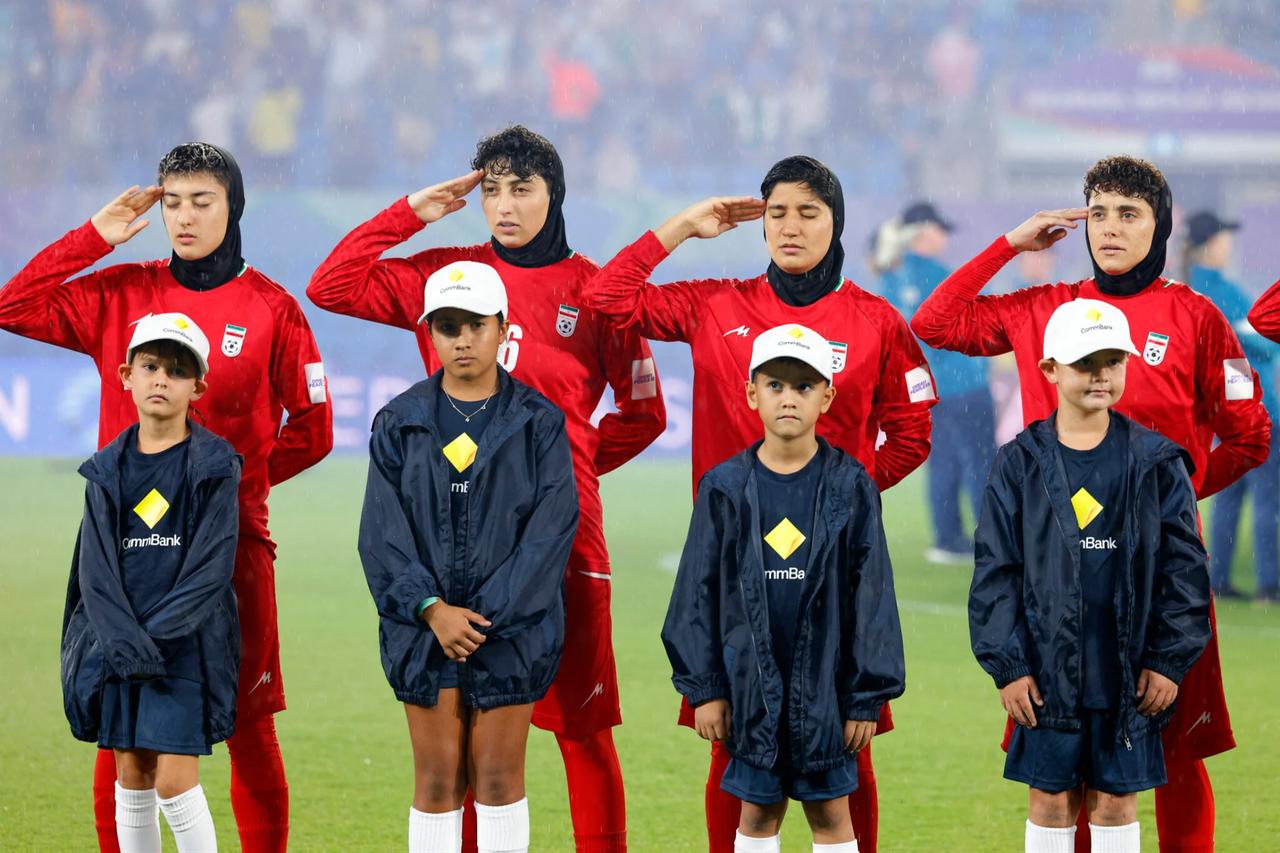


Concerns are growing about the safety of Iran’s women’s national football team after their elimination from the AFC Women’s Asian Cup in Australia.
Activists and football officials are urging authorities to ensure the players are protected if they return home.
The debate intensified after the team declined to sing Iran’s national anthem before their opening match against South Korea, a gesture widely interpreted as a silent protest.
Iranian state media later branded the players “traitors,” raising fears they could face punishment once they leave Australia.
Supporters, human rights advocates, and Iranian diaspora groups now urge the Australian government to allow the players to remain in the country if they choose to seek protection.
The Iranian team’s decision not to sing the national anthem before their first match quickly triggered political controversy.
According to reports from Iran, conservative commentators accused the players of disloyalty and demanded harsh consequences. Iranian state television described the gesture as “the pinnacle of dishonor.”
Craig Foster, a former captain of Australia’s men’s national team and a human rights advocate, said the players must receive protection and support.
“We all have very reasonable and serious concerns for their safety,” Foster told CBS. “When any team participates in a FIFA-regulated tournament, they must have the right to safety and external support to express any concerns they have around their safety now or in the future.”
In the team’s following matches against Australia and the Philippines, the players sang and saluted during the anthem. Critics and observers suggested the shift reflected pressure from Iranian officials accompanying the delegation.
Alireza Mohebbi, a correspondent for Iran International, told Australian media the players likely acted under pressure. “It’s completely obvious the regime pushed them not just to sing the anthem but to do the military salute,” he said.
The Iranian women’s team lost its final group match to the Philippines on Sunday, which ended its Asian Cup campaign.
Teams eliminated at this stage typically leave the host country within days.
However, Iranian community groups and activists in Australia say the situation requires special protection.
The Australian Iranian Council sent a letter to Home Affairs Minister Tony Burke asking the government to ensure the players remain safe while in the country. An online petition urging authorities to protect the team gathered more than 50,000 signatures.
The petition called on officials to guarantee that any player who fears persecution can seek protection safely and privately.
“Where credible evidence exists that visiting athletes may face persecution, imprisonment, coercion, or worse upon return, silence is not a neutral position,” the petition told Independent.
Human rights advocate Hadi Karimi also urged Australian authorities to intervene.
“The world should stand with Iranians now,” he said during demonstrations supporting the players.
Supporters from Australia’s Iranian diaspora gathered outside the Gold Coast stadium after the team’s final match.
Around 200 people surrounded the team bus and chanted slogans such as “save our girls” and “let them go.”
Some fans tried to block the vehicle as it left the stadium, prompting police to intervene and clear a path. Banners held by supporters read, “Stay safe in Australia. Talk to Police,” and “If your home is not safe—mine is.”
Many protesters also waved the Lion and Sun flag, used in Iran before the 1979 Islamic Revolution.
Inside the bus, several players waved or filmed the crowd with their phones. Others appeared more reserved as the vehicle drove away toward the team’s hotel.
Despite the growing international attention, the players and team officials have largely avoided public comments about their situation.
Iran’s team manager, Marziyeh Jafari, told reporters the squad wants to return home.
“We are impatiently waiting to return,” she told the BBC. “Personally, I would like to return to my country as soon as possible and be with my compatriots and family.”
Advocates say the situation is complicated because many players have families in Iran, which could make seeking asylum difficult.
Foster said the most important step is ensuring the players have the choice.
“There may be players who want to return. There may be some players within the group that would like to seek asylum,” he said. “What’s most important is that the offer is made.”
The team remains under tight security at its hotel on Australia’s Gold Coast, while discussions continue about what will happen next.


 Set as preferred source
 Set as preferred source



 4 min read