Newsletters


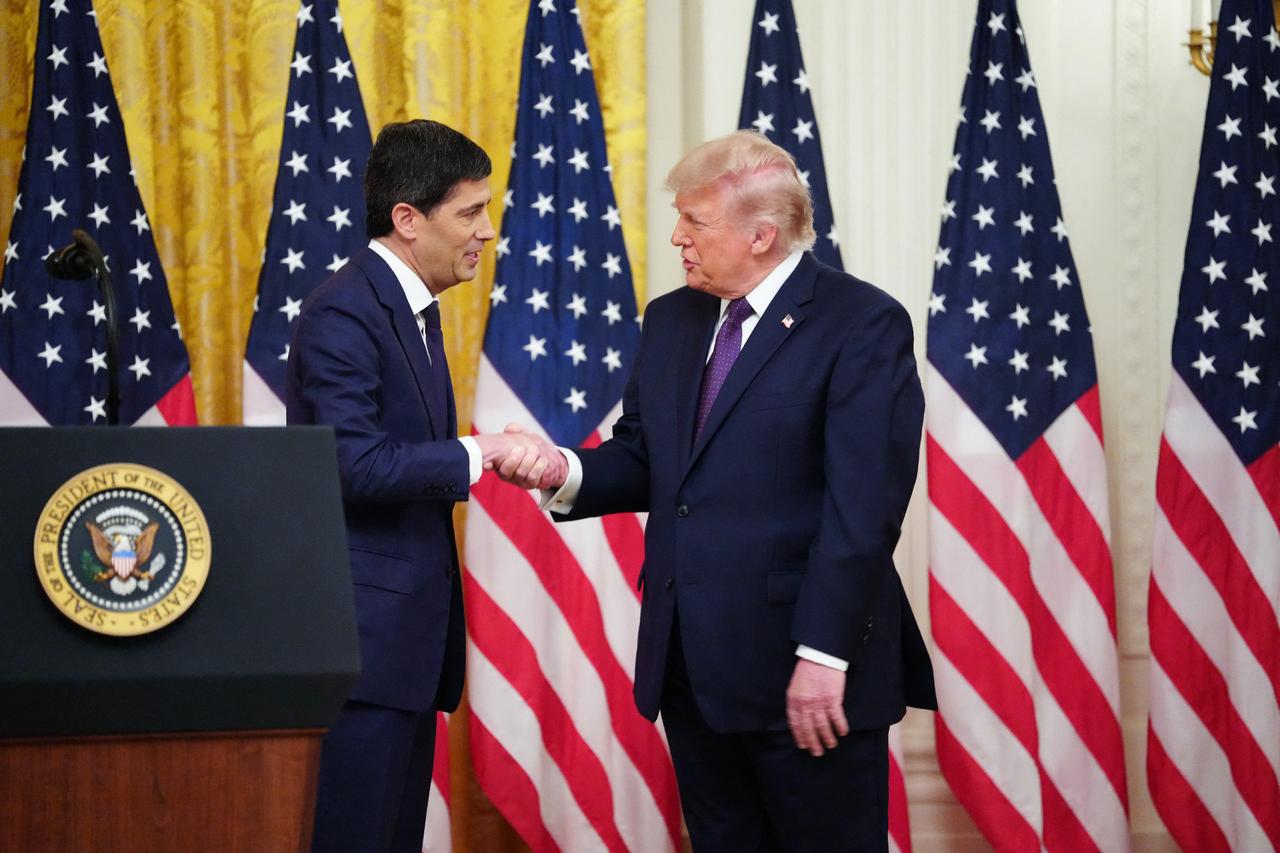


Historically, the East Room of the White House is not where Federal Reserve chairs are sworn in. Both Janet Yellen and Jerome Powell took their oaths at the Fed’s own headquarters. In fact, not since Alan Greenspan in 1987 had a chair stood in the White House for the ceremony.
On Friday, Kevin Warsh joined that short list, administered the oath by Supreme Court Justice Clarence Thomas—whom Warsh called "an esteemed friend"—while President Trump delivered lengthy remarks about the economy, independence, and what he would like Warsh to do with rates.
"I want Kevin to be totally independent," Trump said. "Don't look at me. Don't look at anybody. Just do your own thing." He then added that he wants the economy to "boom" and that Warsh "would not have gotten the job" if he hadn't wanted to cut rates. The instruction to ignore the president was, in this sense, issued by the president himself.
There is a specific kind of audacity that stops bothering to be subtle. The $400 million Qatari jet, the Emirati sovereign wealth fund pouring half a billion dollars into the Trump family's crypto venture, the insider trading whispers circling Truth Social posts—these are transactions you can argue about, at least in theory, because they involve intermediaries. After all, the paper trail bends. Besides the ceremony of the new Fed chair, what happened in Washington this week requires no such interpretive effort.
The president sued the IRS for $10 billion, and his own attorney general—previously his private defense lawyer—settled the case. Taxpayers will now fund a $1.8 billion compensation fund whose board the attorney general appoints, whose expenditures are hidden from the public, and which conveniently expires right before the next election.
The IRS settlement and the Warsh swearing-in arrived within days of each other. Taken together, they sketch the outer edges of executive reach in ways that no single event quite captures alone.
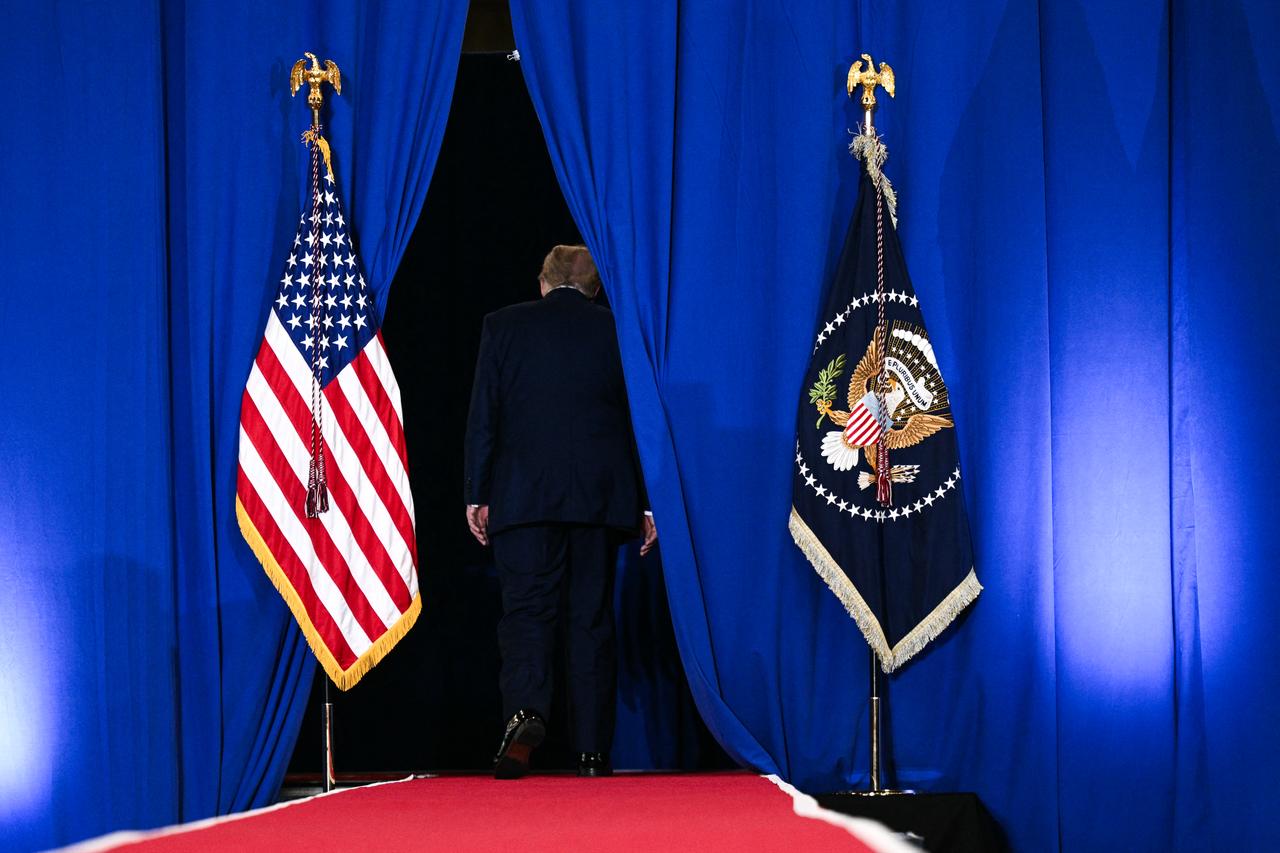

Attorney General Pam Bondi—who had previously called Trump "the greatest president in American history" and had gone to considerable lengths to keep the Epstein files sealed—was nominally representing the government when the suit was filed. She was removed in April. Her replacement, Blanche, declined DOJ colleagues' requests that he recuse himself from cases involving Trump personally. When asked recently how he would react if the president fired him, Blanche said he would respond with: "Thank you very much. I love you, sir."
For context, the standard payout for breach of confidentiality is $1,000 per violation. Trump filed for 10 million times that. Barely a week after the announcement, he said that the lawsuit had "already been won."
Neither event, in isolation, is necessarily unprecedented. Presidents have always sought to shape the institutions around them. Trump's consolidation of influence over the Fed and the DOJ is more aggressive in style than his predecessors,' but the underlying impulse—to bring independent bodies into closer alignment with White House priorities—is recognizable from prior administrations.
What is less familiar is the concentration and the speed: two of the most consequential institutional constraints on executive power—the central bank and the tax enforcement apparatus—both reconfigured in the same week, through mechanisms that are, individually, defensible.
Warsh was confirmed by the Senate in a 54-45 party-line vote, with only Senator John Fetterman crossing the aisle—the narrowest confirmation in the modern era. He inherits an inflation rate of almost 4%, a three-year high driven in substantial part by energy price surges following the February conflict with Iran, and a Federal Open Market Committee where four members dissented at the most recent meeting.
The economic picture is, in short, not the one anyone expected when Warsh was nominated. Trump selected him, having said publicly he wanted a chair who believed in "lower interest rates, by a lot." The so-called Warsh trade—a bet on a steeper yield curve and meaningful monetary easing—has since largely unwound.
PIMCO's Richard Clarida described the expected trajectory as "evolutionary, not revolutionary," and noted that any significant shift in balance sheet or rate policy would require a majority Federal Open Market Committee (FOMC) vote, which Warsh does not yet have secured.
Jerome Powell, notably, remains on the Board as a governor through January 2028, having cited threats to the Fed's independence as his reason for staying.
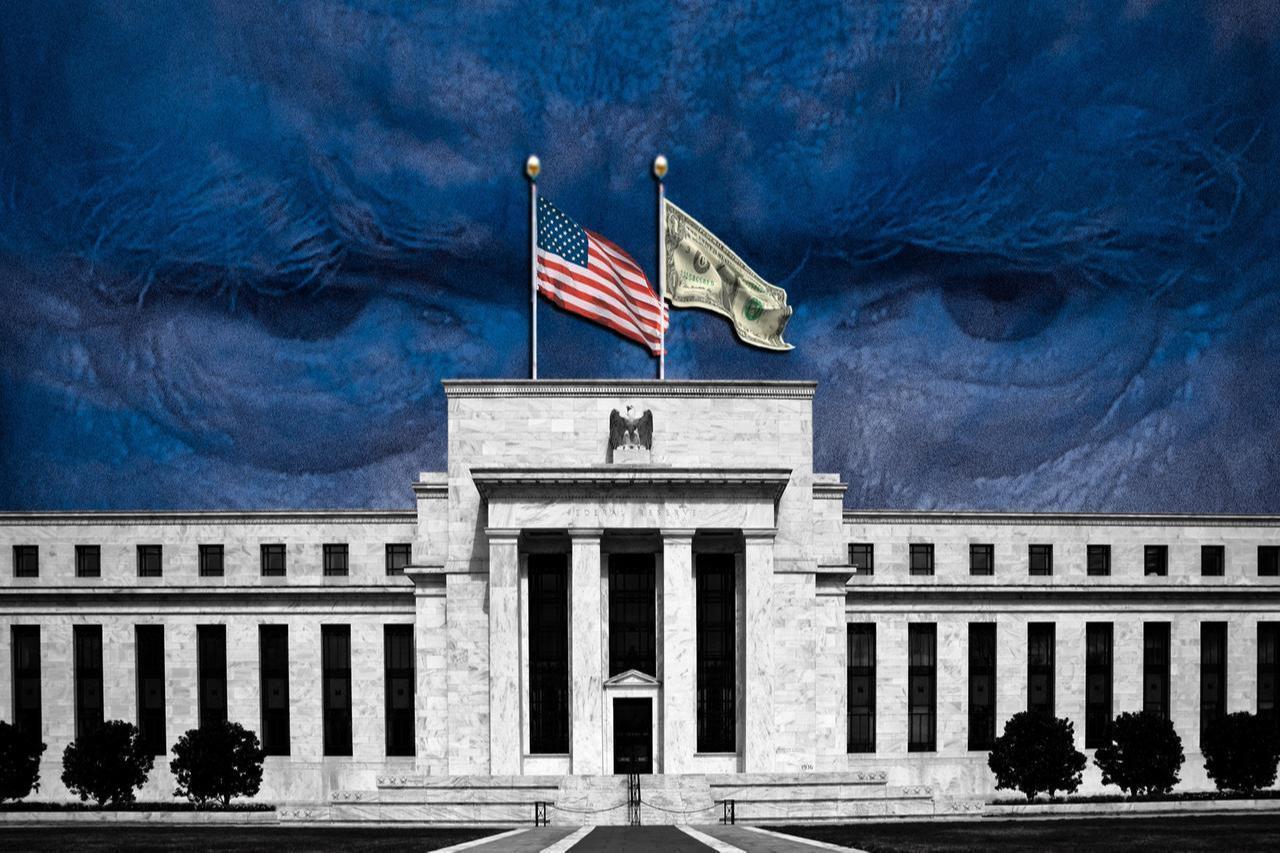
Warsh himself has pledged repeatedly to act independently, and there is no compelling reason to doubt that pledge in the abstract. His agenda—rules-based monetary policy, reduced forward guidance, balance sheet normalization—predates Trump and does not map neatly onto the president's preference for lower borrowing costs.
Michael O'Keeffe, Stifel's chief investment officer, described the likely shift as a move toward "less prepackaged guidance and less focus on being a market choreographer"—more day-to-day volatility in the near term, but potentially healthier price discovery over time.
The structural question is whether that independence holds when inflation proves stubborn. David Wessel, senior fellow at the Brookings Institution, was direct about the risk: "Kevin Warsh will not be able to deliver the rate cuts that the president wants. At some point, the president may grow impatient and will begin attacking Mr. Warsh as he did Jerome Powell."
What the two events share is a structural logic: both involve the redrawing of lines that were understood, if not always legally codified, as limits on direct presidential reach. The Federal Reserve chair is confirmed by the Senate but chosen by the White House, sworn in in the East Room, and reminded publicly that the job comes with an implicit expectation of rates. The IRS is permanently barred—by the signature of a presidential loyalist—from revisiting the tax affairs of anyone in the president's orbit. Neither arrangement required legislation. Neither required a constitutional confrontation. Both arrived in the same week, with relatively little friction.
Whether that friction re-emerges—through the courts, through the FOMC, through the midterms in November—is the open question. The institutions are intact in form. What has shifted is the operating environment inside them, and how much of that shift is permanent is something markets, voters, and the Fed itself will spend the next several years working out.


 Set as preferred source
 Set as preferred source


 4 min read