Newsletters


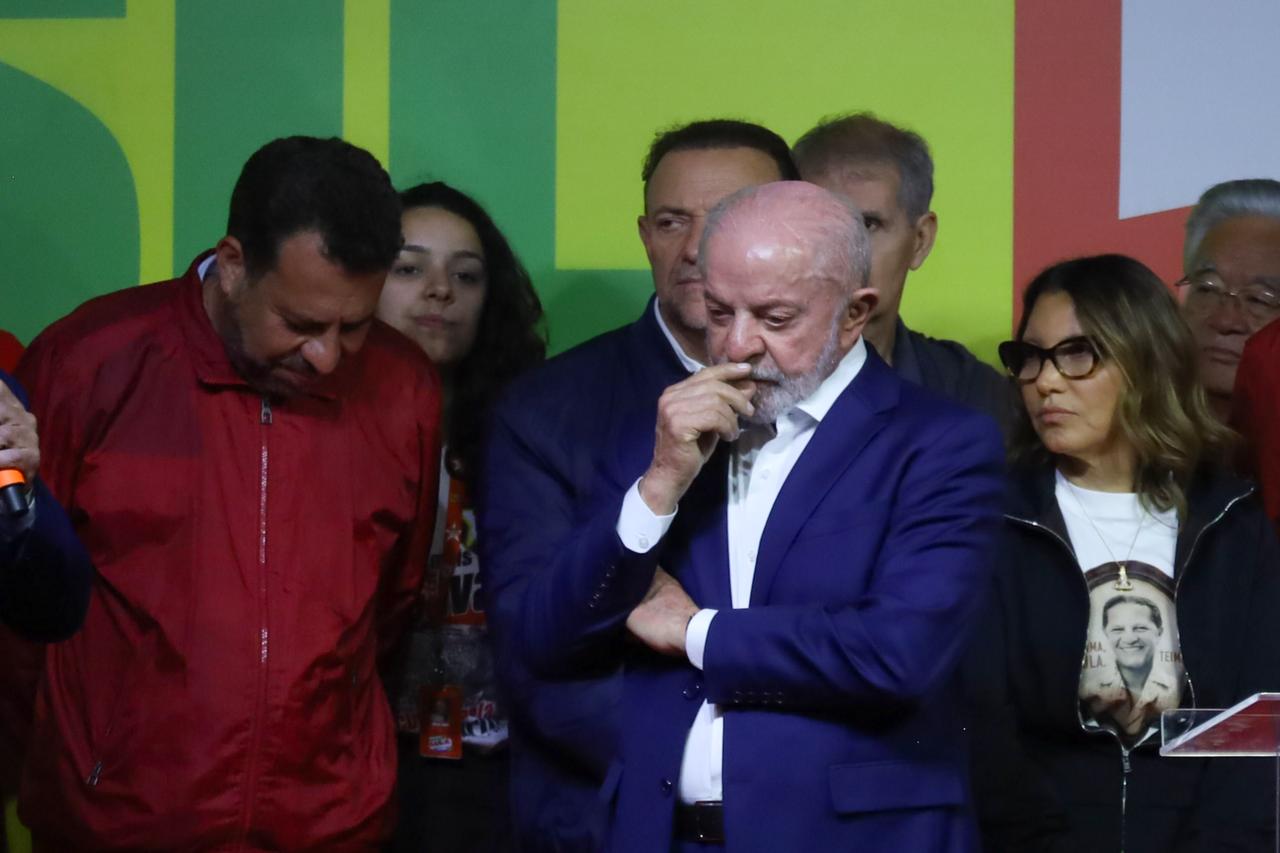


Right-wing Senator Flavio Bolsonaro pulled off a surprise first-place finish ahead of President Luiz Inacio Lula da Silva in Brazil’s presidential election Sunday, forcing a runoff later this month.
Bolsonaro will face Lula on Oct. 25 after neither candidate secured the 50% plus one of valid votes needed to win outright in the first round.
With 99.99% of ballots counted, Bolsonaro led with 47.03% of the vote, compared with 45.16% for Lula, a margin of roughly 2.2 million votes.
The result reversed the picture presented by most pre-election polls, which had shown Lula with a narrow lead in first-round voting intentions.
Bolsonaro welcomed the result in Brasilia, telling supporters he was “very happy” with the first-round showing and describing it as “the end of an era” for Lula’s Workers’ Party, or PT.
He also pointed to “a real possibility that Brazil will elect a modern government.”
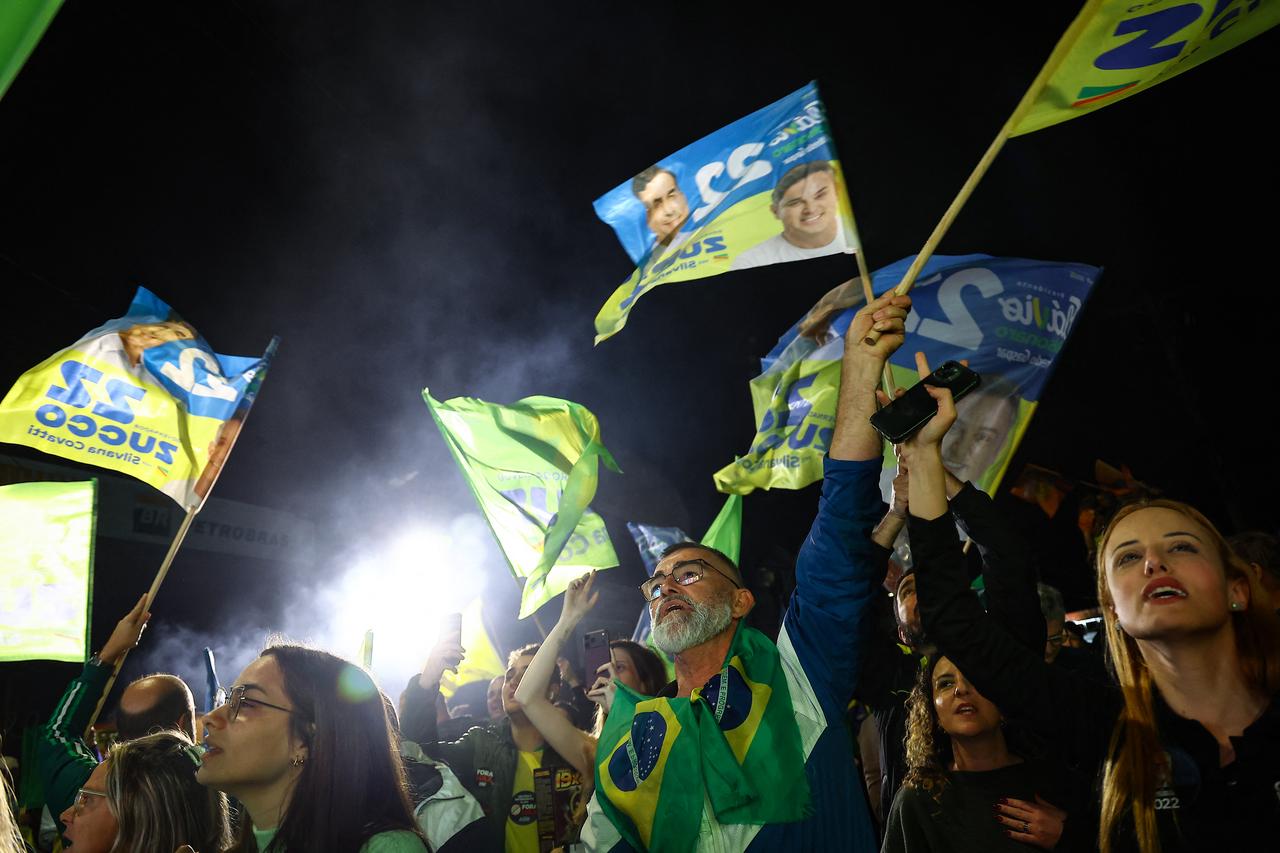

Lula, 80, acknowledged that the result fell short of expectations but struck a combative tone ahead of the three-week runoff campaign.
“The result is often unexpected. One never gets everything one wanted,” Lula said, adding that “starting tomorrow, a new campaign begins.”
“The Bolsonaros had better get ready,” he said, warning voters that “Flavio Bolsonaro represents uncertainty for the country.”
Lula is seeking a fourth nonconsecutive term after governing from 2003 to 2010 and returning to office in 2023.
Running alongside Vice President Geraldo Alckmin, Lula has campaigned on social welfare programs, environmental protection, industrial investment and multilateral trade, particularly within the BRICS bloc.
“I admit I was convinced I would win in the first round,” Lula said. “The game is about to start. In extra time, we will win over the Brazilian people.”
The veteran leftist has framed the election as a battle between democracy and “barbarism,” warning voters that Brazil’s sovereignty is at stake amid U.S. pressure.
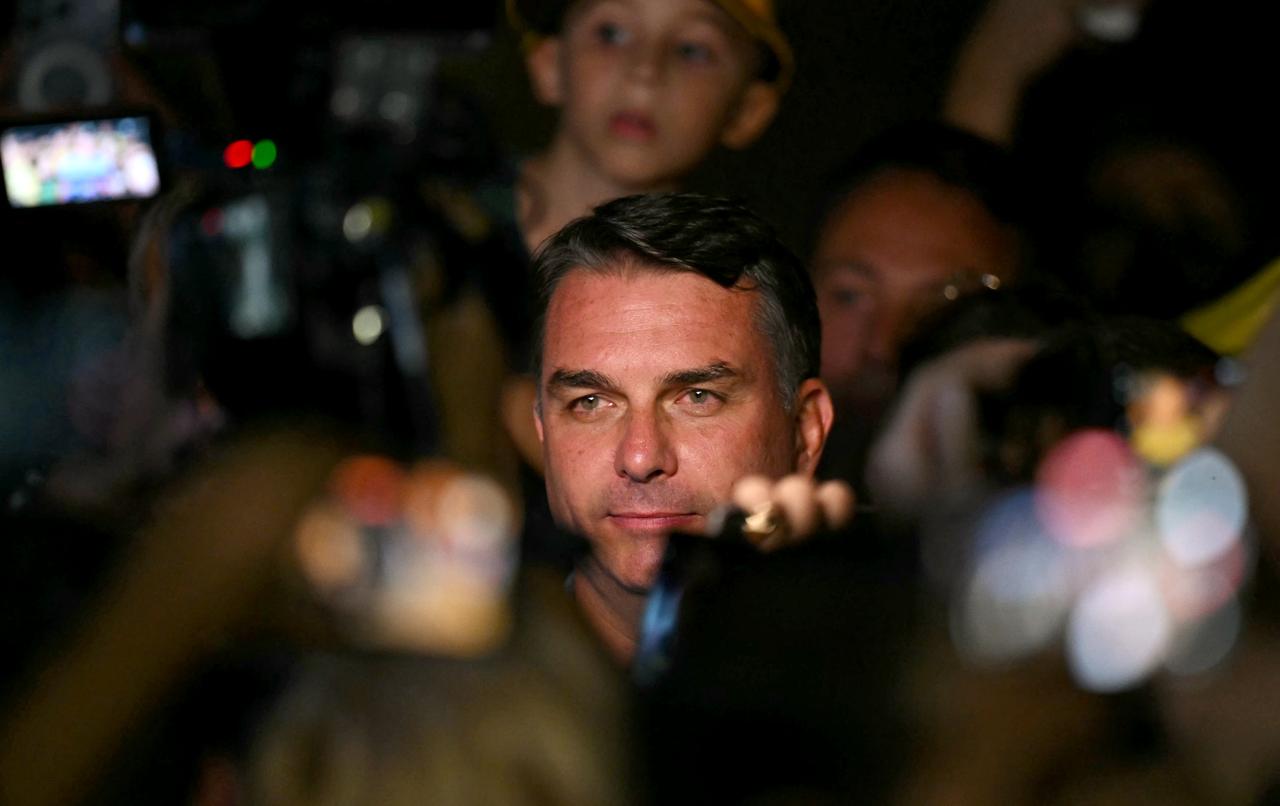
Flavio Bolsonaro, 45, a lawyer and federal senator, was chosen by his father, former President Jair Bolsonaro, to lead the conservative ticket with the Liberal Party.
He entered politics early as a Rio de Janeiro state deputy but kept a modest national profile until receiving his father’s formal endorsement.
Bolsonaro has campaigned on tough-on-crime security policies, market-oriented economics and conservative social values.
He has also faced scrutiny over investigations into alleged corruption and money laundering linked to the financing of “Dark Horse,” a biographical film about his father.
His first-round total of 56 million votes surpassed Jair Bolsonaro’s first-round performances in both 2018, when he was elected president, and 2022.
The result marked a major political comeback for the Bolsonaro family after Jair Bolsonaro lost his reelection bid in 2022, a defeat followed by riots in Brasilia and his conviction last year for attempting a coup.
Jair Bolsonaro is serving a 27-year sentence and was unable to run.
Former first lady Michelle Bolsonaro and another of Jair Bolsonaro’s sons, Carlos Bolsonaro, both secured Senate seats, while Jair Bolsonaro’s youngest son, Jair Renan, was elected as a federal lawmaker.
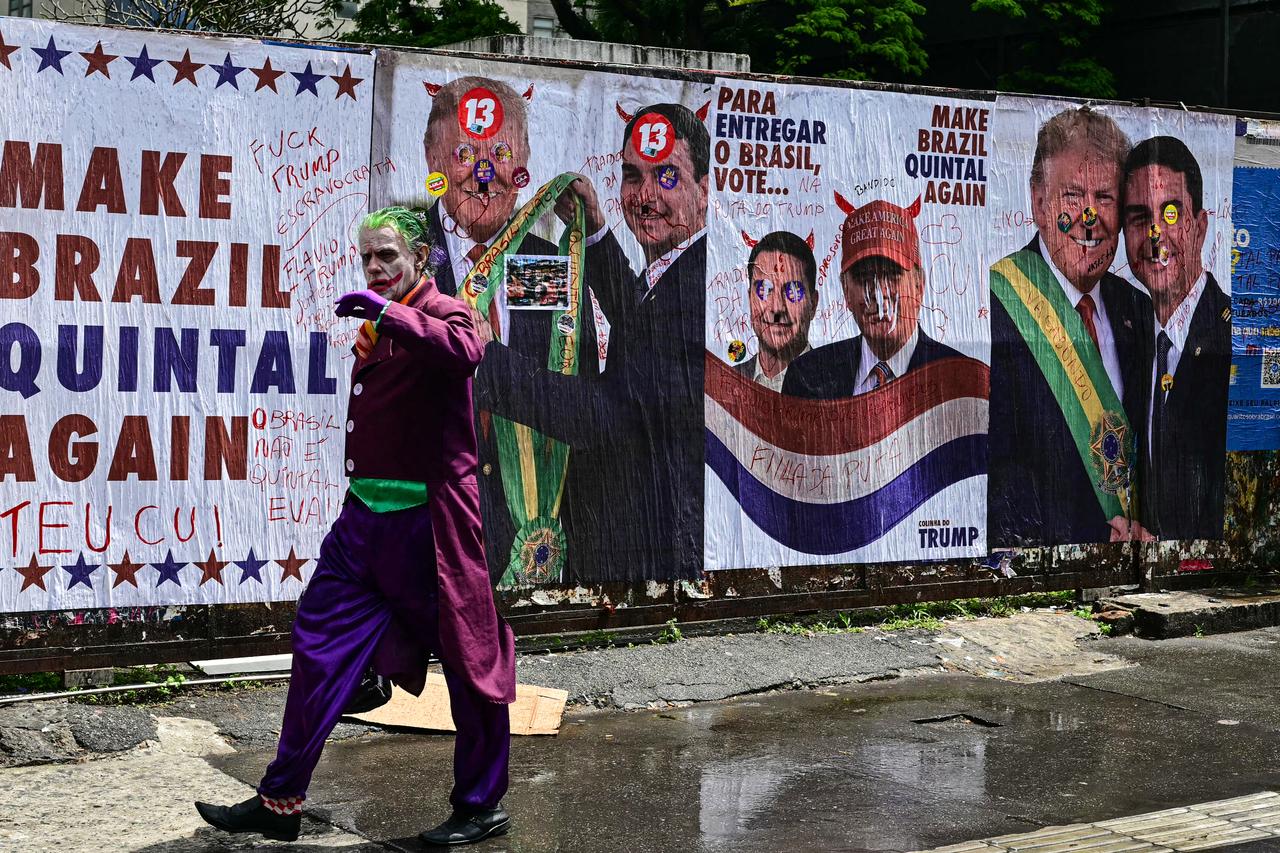
Security concerns dominated the campaign, with Bolsonaro courting voters through a hard line on crime, including support for U.S. terrorism designations for Brazilian drug cartels.
Lula’s allies have pointed to his record on social welfare programs that lifted millions out of poverty, as well as falling inflation and unemployment during his current term.
But voters have also voiced frustration over the high cost of living and persistent crime and violence, issues that have shaped elections across Latin America.
Oscarina de Oliveira, a 62-year-old caregiver, told AFP she had planned to vote for Lula, as she had in past elections, but changed her mind at the polling station.
“When I got there, I switched to Bolsonaro. Just to see what happens, to see if anything changes,” she said.
Joao Batista, a 36-year-old tech worker in the Rocinha favela, said he was frustrated by the cost of basic goods.
“Things are truly terrible. As far as I’m concerned, the left just doesn’t work anymore,” he said.
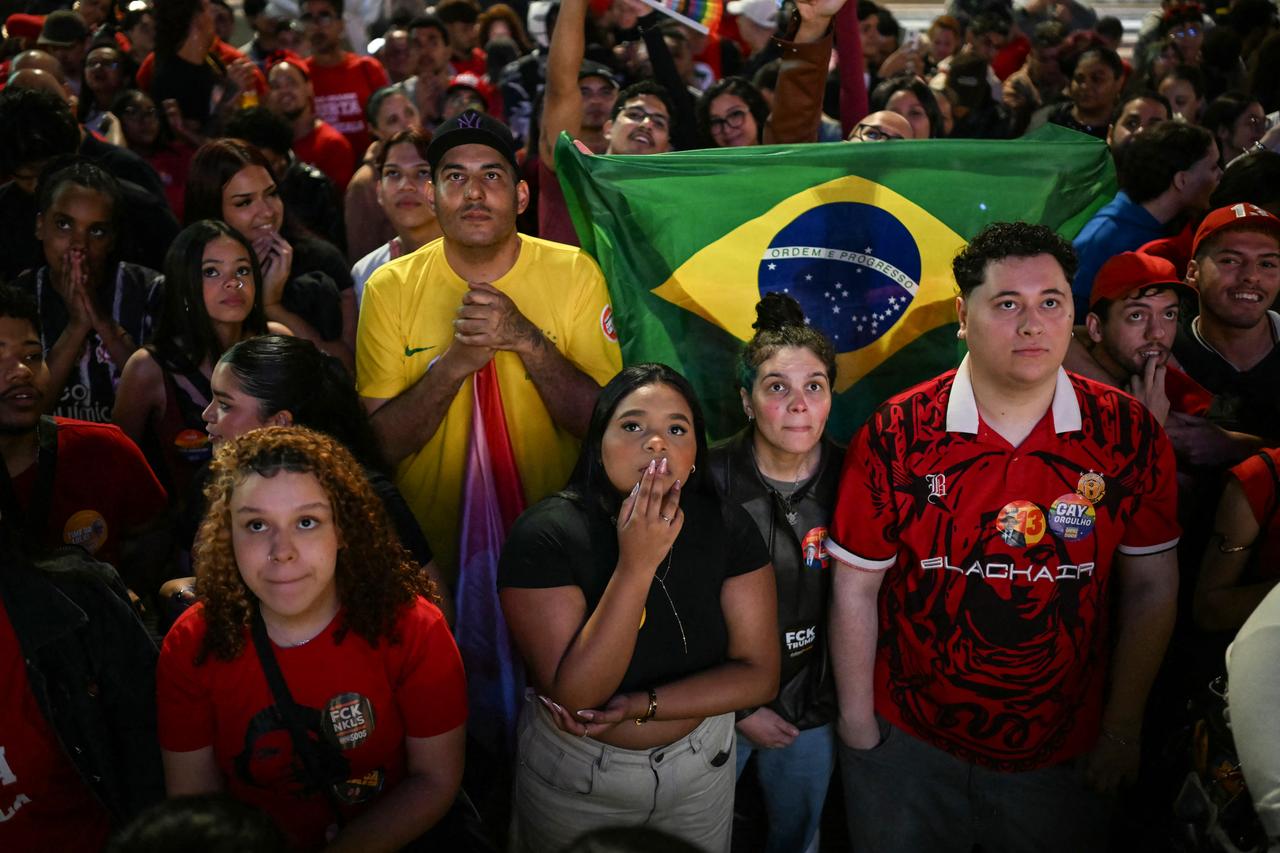
Bolsonaro’s Liberal Party also posted strong results across both chambers of Congress, dealing a major setback to Lula.
The party is set to increase its representation from 15 to 28 seats starting in 2027, reshaping the balance of power in Congress and placing the conservative bloc at the center of Brazil’s next political landscape.
If Lula wins the runoff, the stronger right-wing presence in Congress could complicate his ability to govern during a fourth term.
Bolsonaro said Sunday that, if elected president, he would have the ability to appoint four justices to Brazil’s powerful Supreme Court, which convicted his father and has played a central role in recent political and criminal cases.
Carolina Botelho, a political scientist at Rio de Janeiro State University, told AFP that the candidate leading the first round has won every Brazilian presidential election since the end of the country’s military dictatorship in 1985.
U.S. President Donald Trump said he was watching Brazil’s election “very closely,” but did not endorse Bolsonaro.
Trump has used tariffs and sanctions to pressure Brasilia over issues ranging from the trial of his ally Jair Bolsonaro to alleged unfair trade practices.
Lula has repeatedly warned Trump not to “meddle” in Brazil’s elections.
A victory for the right would extend a broader regional trend after left-wing governments in Colombia, Chile, Honduras and Bolivia were replaced by right-wing presidential contenders over the past year.
Turnout stood at just under 79% of Brazil’s 158,745,502 registered voters as of Sunday evening, according to Brazil’s Superior Electoral Court.
Voting is mandatory under Brazilian law.


 Set as preferred source
 Set as preferred source


 1 min read
 1 min read