Newsletters




Nearly 16 years ago, historian Erhan Afyoncu, now rector of the National Defense University, remarked on a television program: "Do you know what environmentalism really is? It is a system devised by developed nations to prevent undeveloped nations from developing."
Thirteen years later, then-U.N. trade chief Rebeca Grynspan echoed the sentiment almost exactly: "the rich world uses green policies to hold back the poor."
The weaponization of law as a political maneuver in global trade is hardly something new. However, the speed with which the legal rhetoric underpinning American hegemony is being stripped bare is uniquely characteristic of this moment of the second Trump era, and it will carry lasting consequences.
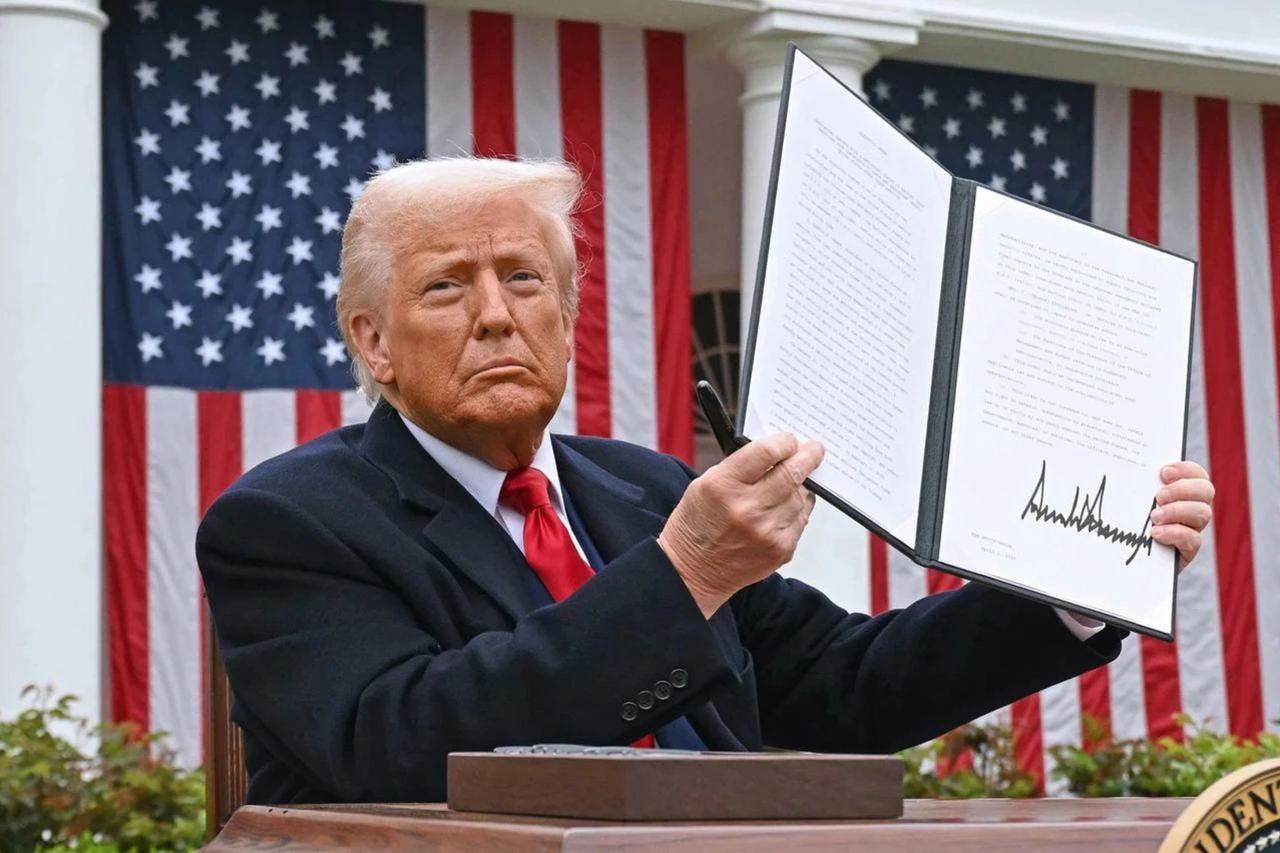
New U.S. import tariffs on 60 trading partners—including Türkiye, which faces the higher 12.5% rate—came into force Friday over their alleged failure to curb goods produced with forced labor. They replace President Donald Trump’s expiring global tariff, re-establishing the tariff wall invalidated by the Supreme Court in February.
Türkiye has a constitutional ban on forced labor. Article 18 outlaws it outright, alongside corvee. The Human Rights and Equality Institution has a working definition on the books, describing forced labor as work extracted "without a person's consent, through material or moral pressure."
None of that kept Ankara out of the 12.5% bracket when the United States rolled out its newest round of tariffs on July 24. Sixty trading partners, covering 99.4% of everything the US imports, woke up to new duties that Friday.
Argentina, Bangladesh, Britain, Canada, India, Indonesia, Jordan and eleven other countries got 10%. The European Union, Japan, South Korea, Taiwan and Switzerland got rates calibrated to bring their total tariff burden to somewhere between 10% and 12.5%, stacked on top of existing bilateral arrangements.
Everyone else, 38 countries including Türkiye, got the higher rate. The stated justification is forced labor. The legal vehicle is Section 301. Yet, the fundamental issue is not that Washington uses human rights as a pretext to impose global tariffs, but that U.S. law is broad enough to permit it, making for a true mask-off moment.
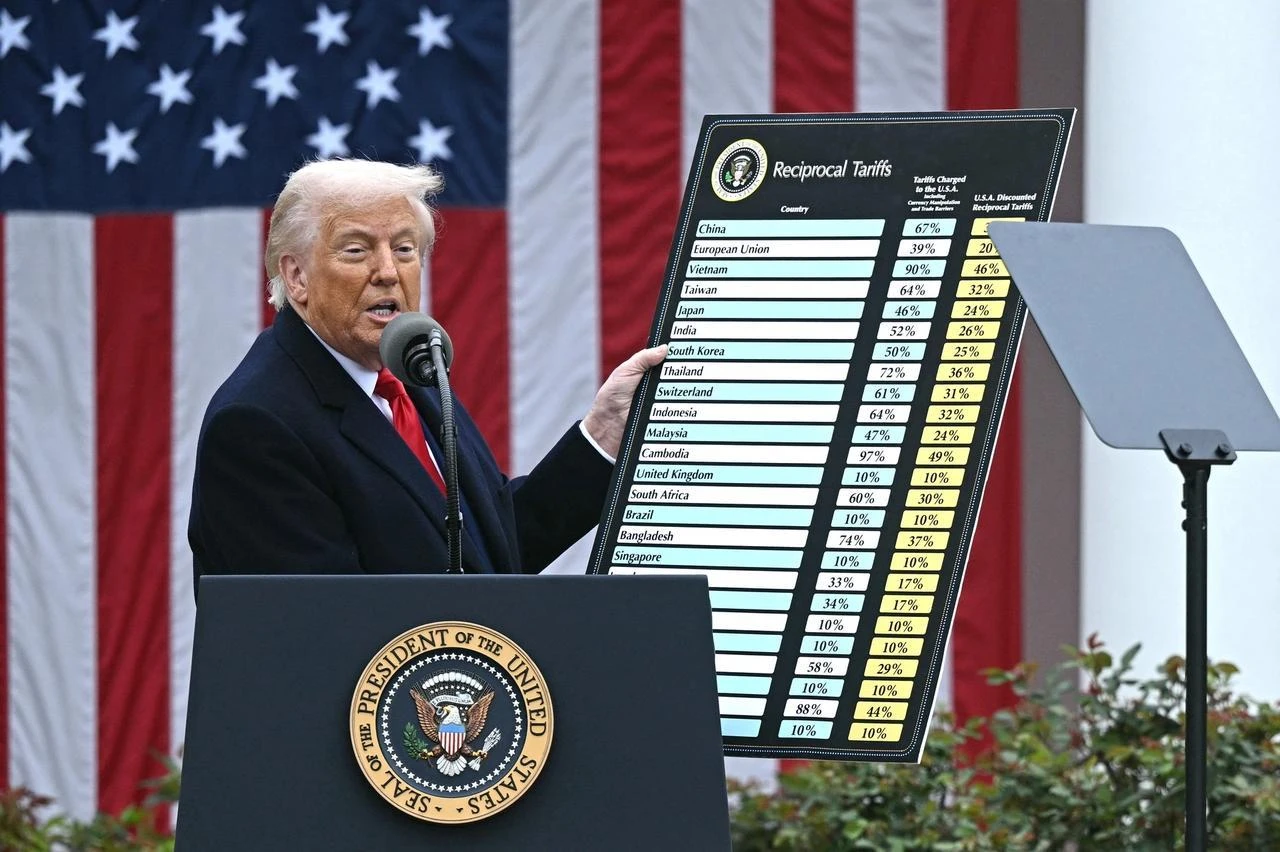

This is not Washington's first attempt at a global tariff wall this year. In April 2025, Donald Trump used emergency economic powers to impose duties as high as 50% on trading partners worldwide, a move he called Liberation Day. The Supreme Court struck most of it down in February 2026, ruling the administration had exceeded its authority under the law it invoked, and tens of billions of dollars went back out the door in refunds.
What followed was a temporary 10% global levy, built on a different legal authority and capped by statute at 150 days. That clock ran out on July 24, the same day the new forced-labor tariffs took effect. The timing is not incidental.
U.S. Trade Representative Jameson Greer had already proposed the forced-labor duties in June, pitching them as a fix for a century-old prohibition that other countries, in his telling, never bothered enforcing.
Told by CNN's Jake Tapper that the rate depends on whether a country is "on the right path," Greer put it plainly: those with adequate enforcement pay 10%, everyone else pays 12.5%.
Section 301 gives the administration room that the emergency-powers statute did not. Where the Supreme Court found the first attempt exceeded presidential authority, forced labor sits inside an existing, litigated, century-old trade law. It is a tariff regime the White House does not need a court to bless twice.
Ask Greer how Washington decides which country belongs in which bracket and the answer is revealing.
"We're not really going into each of these countries and assessing whether they have forced labor within their borders," he told Tapper. The test instead is whether a government has committed to blocking forced-labor imports and enforcing that block, a standard the U.S. applies to itself and then exports as a condition of market access.
For Türkiye, the language in Washington's own statement points to failures in enforcing the prohibition effectively, not an absence of law. Article 18 exists. The Türkiye Human Rights and Equality Institution's (TIHEK) definition exists.
What apparently does not exist, in the U.S. trade representative's assessment, is the enforcement architecture that would move Türkiye from 12.5% down to 10. That is a judgment made in Washington about Turkish customs and labor enforcement, not a finding from a joint investigation, and Greer's own description of the process makes clear no such investigation occurred.
Greer's two concrete examples of forced-labor enforcement, a company in Jordan and palm oil operations in Malaysia, both involve countries that had already signed new forced-labor commitments as part of broader trade deals with Washington over the past year. Jordan and Malaysia sit in the 10% bracket.
The lesson is not subtle: the bracket rewards countries that have already struck a trade agreement with the United States, and the forced-labor designation follows the deal rather than driving it.
For 70 years, the liberal international order ran sanctions and trade restrictions through the language of rights. A country got punished, and the punishment came wrapped in a finding, a report, a moral case. The mechanism did the same work it does now: restrict market access, extract concessions, reroute supply chains away from strategic competitors, but it needed the wrapping to function as legitimate multilateral practice rather than raw leverage.
Section 301 does not require that wrapping anymore. Greer's own account of how the bracket gets assigned—no country-specific investigation, a self-reported commitment standard, examples drawn from countries that had already inked trade deals—describes a tariff schedule built for negotiating leverage first and enforced consistency a distant second.
The European Union has functioning labor law and does not escape the bracket system either; it simply lands in the calibrated-rate group alongside Japan, South Korea, Taiwan and Switzerland, engineered so the total burden still reaches 10% to 12.5% regardless of what its labor code actually says.
None of that makes the underlying problem, forced labor in global supply chains, less real. Xinjiang manufacturing and Southeast Asian palm oil operations are documented, ongoing, and worth stopping.
The trouble is not that Washington uses a forced-labor law to reach Chinese supply chains and European trade balances at the same time. The trouble is that U.S. trade law was written broadly enough to let a single administration use a 100-year-old statute to rebuild, almost duty for duty, the tariff structure a court just struck down for exceeding its authority. Section 301 was always available to do this. What changed is that nobody in Washington felt the need to pretend otherwise.
Ankara's problem now is not persuading Washington that Article 18 exists. It is figuring out what "effective enforcement" would even need to look like to move Türkiye from 12.5% to 10%, when the standard was never defined by an investigation in the first place.


 Set as preferred source
 Set as preferred source


 2 min read
 1 min read