Newsletters


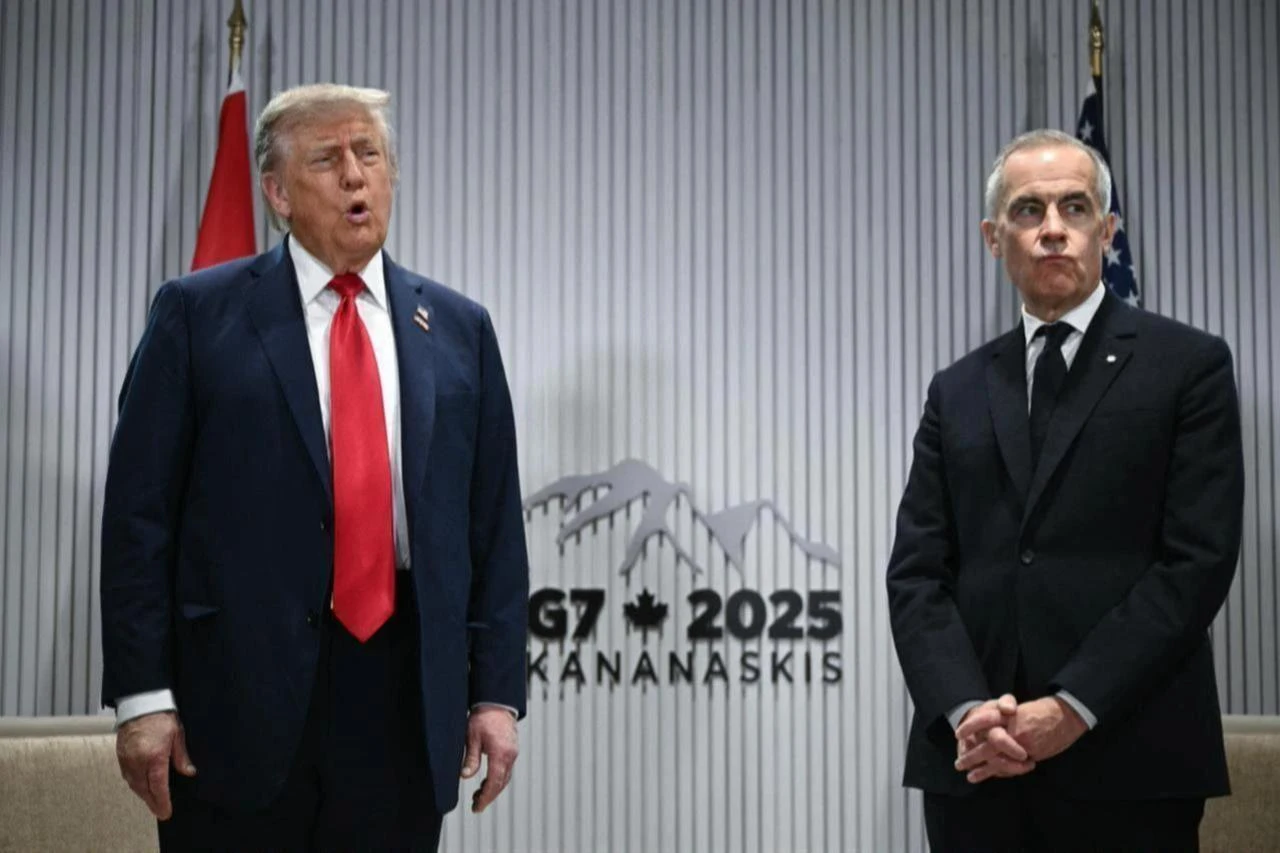


Canadian Prime Minister Mark Carney announced Saturday that Canada would impose retaliatory tariffs on the United States after negotiators walked away from what he called a "bad deal," marking a sharp escalation in tensions between the two longtime allies.
The announcement came a day after trade talks in Washington broke down, clearing the way for new US tariffs of 50 percent on roughly $20 billion worth of Canadian goods, about 5.5 percent of Canada's exports to the United States. The affected products range from hockey sticks to cement.
Speaking in Ottawa, Carney said the two sides had appeared close to an agreement earlier in the week, but that Washington's position shifted in a way Canada could not accept.
"We believed earlier this week that we were moving towards a mutually beneficial agreement," Carney said. He added that "in recent days, the United States proposed new terms that were uneconomic, unfair, and undermined the net benefits for Canada, and called into question the reliability of any deal," summing up the breakdown by saying "they asked too much and they offered too little."
"We cannot accept what they've offered, and we will not give what they've asked," Carney said. He accused President Trump of launching a trade war, arguing, "you're at war when you get attacked. We got attacked."
Canada's countermeasures, still being finalized, will target the US steel and dairy industries and are set to take effect on September 8. Carney said additional details would be released next week.
The breakdown followed a week in which Canadian negotiators had been in Washington seeking to finalize a deal. US Trade Representative Jamieson Greer said Friday that Washington had offered "significant tariff reductions on steel, aluminum, autos and lumber" in exchange for concessions from Canada. A senior US official, speaking on condition of anonymity, described the talks as candid rather than acrimonious.
But in a Saturday interview with Fox News, Greer struck a more combative tone, saying the United States was "moving forward with measures that respond to Canadian retaliation." He also said there was no indication talks would resume soon, noting, "we don't have new talks planned with the Canadians."
The dispute traces back to White House allegations of "discriminatory treatment" by Canada against US alcohol, automobile and dairy products, which Washington cited in introducing the new duties. The tariffs had originally been scheduled to take effect Wednesday, but Trump issued a last-minute three-day delay, citing progress in negotiations.
 1 min read
Canada had been pressing for relief from existing US tariffs on autos, steel and aluminum, levies that have weighed on the Canadian economy and contributed to job losses in affected industries.
Ryan Majerus, a former US commerce official now working as a trade lawyer with King & Spalding, told AFP that "both sides will face significant pressure in the coming days to find an off-ramp."
The fallout is also being felt in US border states. Senator Amy Klobuchar of Minnesota, a Democrat, warned that the escalating dispute would raise costs for small businesses, farmers and families in her state. "Canada is Minnesota's #1 trading partner," she wrote on social media platform X, adding that "Minnesotans are paying for Trump's chaos."
Beyond the immediate tariff fight, Washington and Ottawa still must negotiate revisions to the US-Mexico-Canada Agreement, the trilateral trade pact known as USMCA, after Trump declined to renew it in its current form. Relations have also been strained by Trump's repeated suggestions that Canada become the 51st US state, and by Carney's January address at the World Economic Forum in Davos, Switzerland, in which he said the global order was undergoing a "rupture," remarks that reportedly irritated Trump.
Carney reiterated Saturday that he views the relationship with Washington as permanently changed, and that Canada needs to reduce its economic dependence on the United States, which currently receives about 70 percent of Canadian exports. "We've been under no illusions. We recognized from the start that America has changed," he told reporters, adding that "sometimes, its signature was written in pencil."


 Set as preferred source
 Set as preferred source


 1 min read