Newsletters


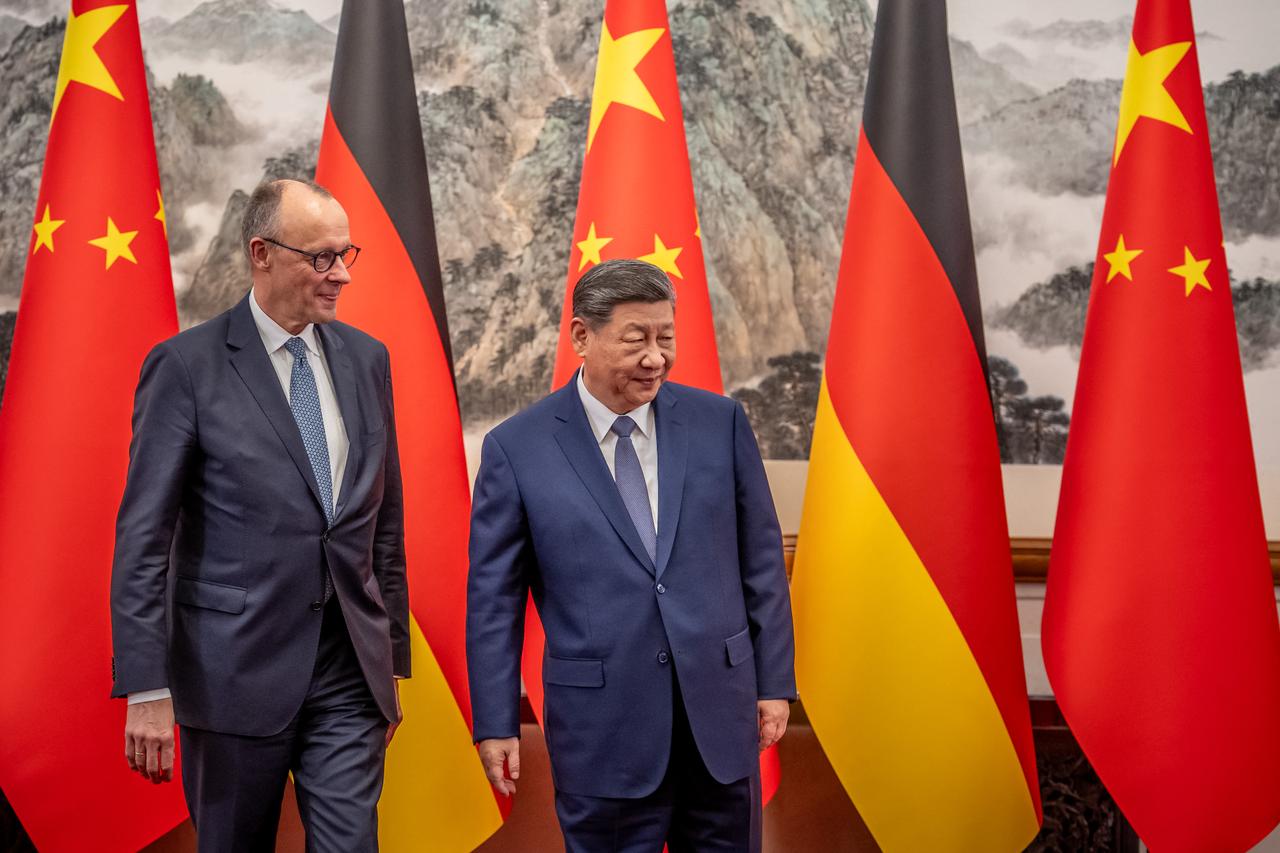


German Chancellor Friedrich Merz secured a commitment from Beijing to purchase up to 120 Airbus aircraft on Wednesday, the headline deliverable of an inaugural trip to China aimed at deepening economic ties between Europe's largest economy and its most important trading partner at a moment of mounting global uncertainty driven by Washington's tariff offensive.
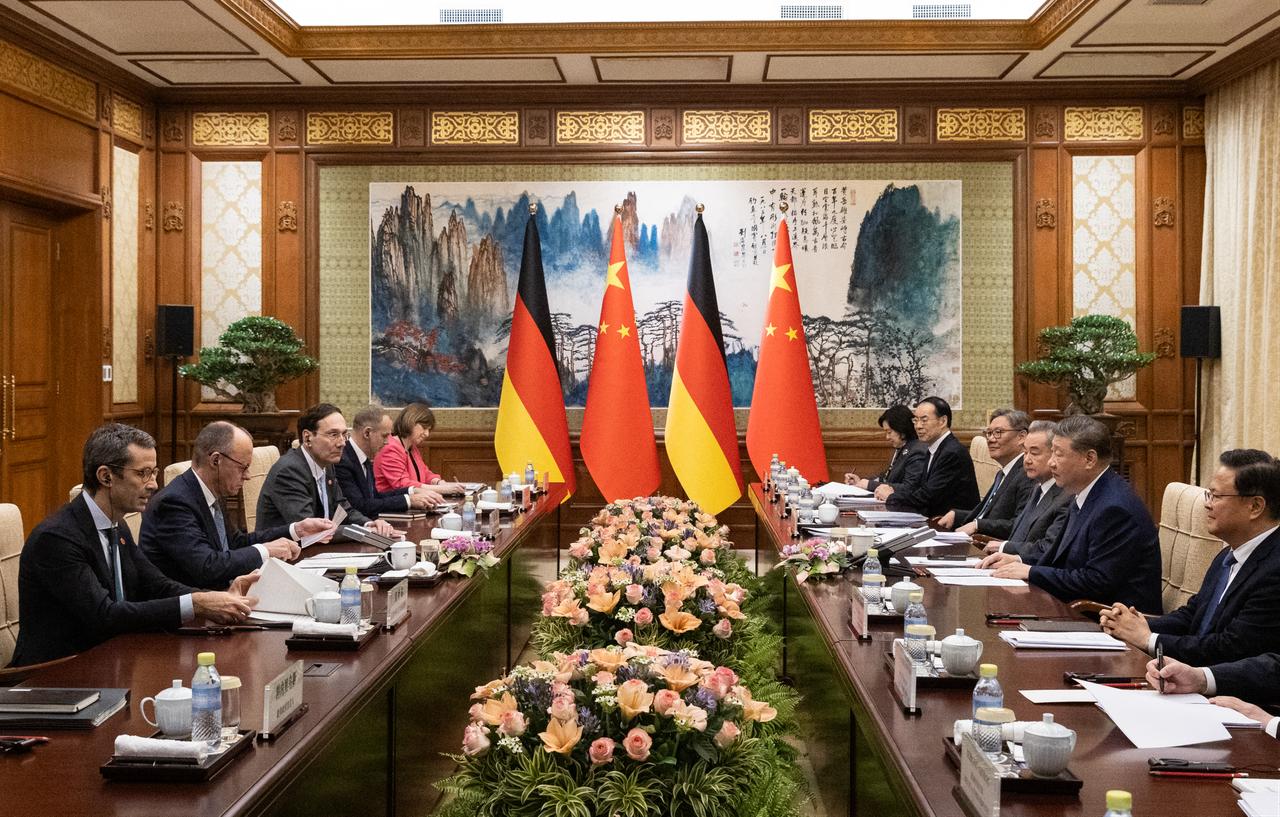
The announcement came after Merz held back-to-back meetings with President Xi Jinping and Premier Li Qiang in the Chinese capital, where the two sides also signed agreements on climate change and food security and signaled their intent to resume regular government-to-government consultations that had been interrupted by the pandemic and political upheaval in Berlin.
"The Chinese leadership will be ordering a larger number of additional aircraft from Airbus," Merz told reporters following a dinner with Xi. The deal, he added, "demonstrates how worthwhile such trips can be."

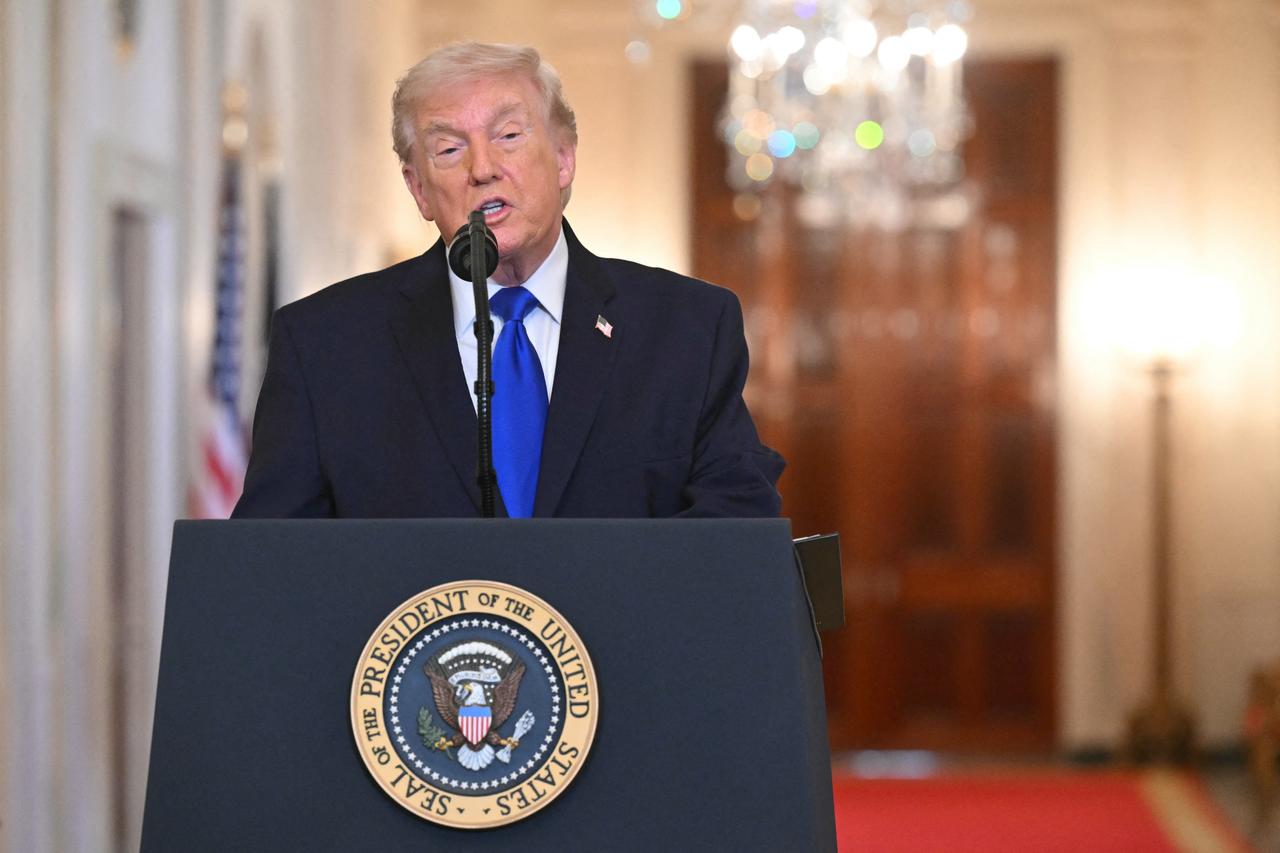
The visit unfolds against the backdrop of a rapidly shifting geopolitical landscape. US President Donald Trump's sweeping tariffs and unpredictable foreign policy posture have pushed Western capitals toward Beijing in recent months, with British Prime Minister Keir Starmer, French President Emmanuel Macron and Canadian Prime Minister Mark Carney all making their own pilgrimages to the Chinese capital. Trump himself is expected to visit starting March 31.
For export-dependent Germany, the stakes are especially high. China reclaimed its position as Berlin's top trading partner in 2025, with bilateral trade reaching 251.8 billion euros, according to Germany's Federal Statistical Office. The United States, which briefly held the top spot in 2024, slipped to second place as trade with China grew 2.1 percent while commerce with the US declined 5 percent, a divergence driven by rising Chinese imports and falling American demand for German goods.
Merz, who traveled with a large business delegation that included executives from Volkswagen, BMW and Mercedes, framed the trip as a necessity for an economy that needs "economic relations all over the world." Before departing, he set the tone by calling for a "balanced, reliable, regulated and fair partnership with China."
Xi, for his part, told the German chancellor he was prepared to take bilateral ties to "new levels" and said the two countries should be "reliable partners that support each other." The Chinese president also voiced support for European strategic autonomy, saying Beijing hoped Europe would work with China in the same direction to uphold their partnership.
Yet beneath the diplomatic warmth lies a deeply lopsided economic relationship. Germany's trade deficit with China hit a record 89 billion euros, roughly $105 billion, last year, a figure that has quadrupled since 2020. German manufacturers face intensifying competition from Chinese firms that European industry leaders say benefit from state subsidies and an artificially weak currency, flooding European markets with cheap goods at a time of sluggish domestic demand in China.
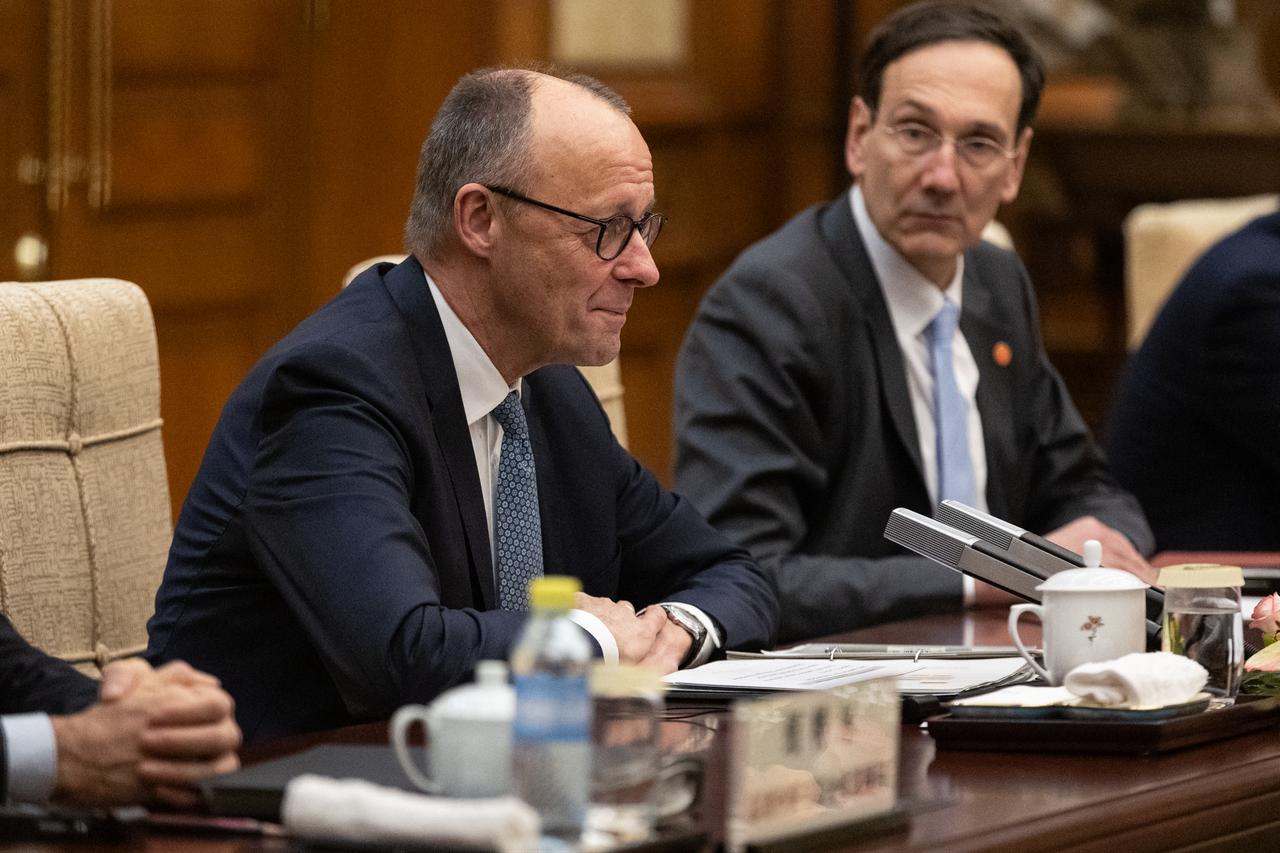
At his meeting with Li in the Great Hall of the People, Merz called for "fair" cooperation and urged Chinese companies to increase their investment in Germany while pressing Beijing to address market distortions.
Wolfgang Niedermark of the Federation of German Industries laid out the private sector's expectations bluntly, saying that the chancellor should push for "structural reforms to strengthen domestic demand and fairer competitive conditions" in China and warning that failure to act would lead to "new trade conflicts with the EU."
Li appeared to acknowledge the broader trade frictions indirectly, noting that "unilateralism and protectionism have gained ground and even become prevalent in some countries and regions," a remark widely interpreted as a reference to the United States.
Beijing has not been without its own trade provocations. China has restricted exports of critical minerals used in microchips, wind turbines, electric-vehicle batteries and defense systems, and last year temporarily halted Nexperia chip exports to Europe following a dispute with the Dutch government.
Merz also used his meetings to press China on two of the most sensitive geopolitical issues facing the international order.
On Ukraine, where Russia's full-scale invasion passed its four-year mark just one day before the visit, Merz said he urged Beijing to use its influence with Moscow to help bring the conflict to an end. Diplomacy, Xi told the German chancellor, remained the "key to the issue." The Chinese president called for equal participation of all parties in peace efforts and said the legitimate concerns of all sides must be addressed, according to the state news agency Xinhua.
Merz raised the issue of Taiwan as well, telling reporters that any "reunification" between China and the self-governed island, which Beijing claims as its own territory and has not ruled out annexing by force, must be achieved peacefully.
The chancellor's schedule on Thursday takes him from Beijing's Forbidden City to a Mercedes plant where autonomous driving vehicles will be on display. He will then travel to the eastern technology hub of Hangzhou to visit Unitree, a leading Chinese robotics group, and the local operations of German turbine maker Siemens Energy.
China's top diplomat, Wang Yi, had set the stage for the visit at the Munich Security Conference earlier this month when he told Merz that Beijing wanted Germany to serve as a "stabilising anchor for strategic relations" within the European Union. Whether Merz can balance that role with growing European concerns about Chinese overcapacity, competition and coercion will be a defining challenge of his chancellorship.


 Set as preferred source
 Set as preferred source


 1 min read
 1 min read