Newsletters


China on Friday rejected U.S. President Donald Trump's claims that Beijing interfered in American elections, calling the allegations "pure fabrications" a day after Trump used a primetime White House address to revive long-standing, unsubstantiated claims that the 2020 election was stolen.
"The relevant claims made by the U.S. side are pure fabrications and malicious smears that have long since been proven to be groundless statements," Chinese Foreign Ministry spokesperson Lin Jian told a news conference when asked about Trump's claims.
"China has ... no interest in the US election and has never interfered in it," Lin said, adding: "The international community sees very clearly who it is that habitually interferes in the internal affairs of other countries. We urge the U.S. side to reflect on its own actions, stop baselessly smearing China, refrain from making an issue of China in its elections, and do more to benefit China-U.S. relations."
A spokesperson for China's embassy in Washington separately stated that Beijing has never and will never interfere in U.S. presidential elections. "The U.S. election is an internal matter," the spokesperson added. "Its outcome is determined by the votes of the American people."
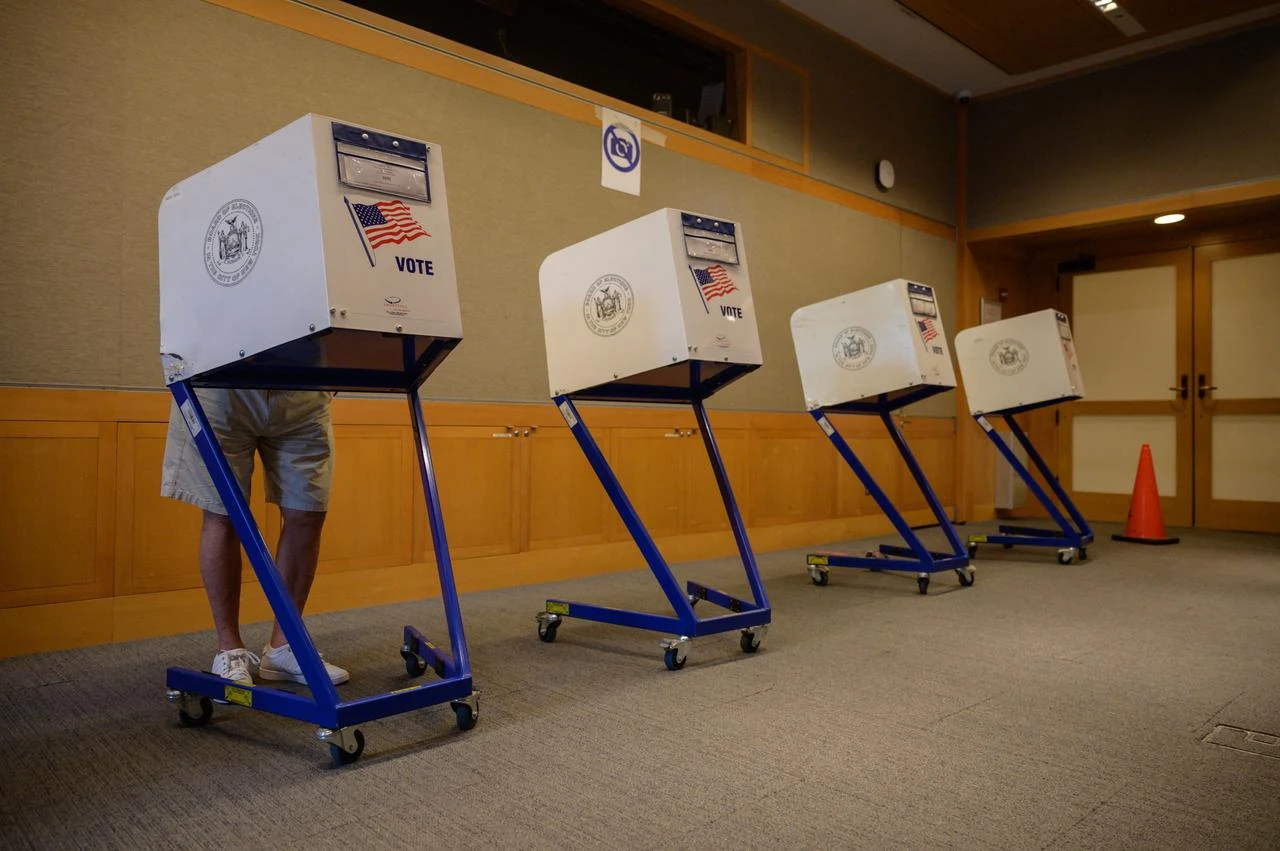

In a nearly half-hour address from the White House Thursday night, Trump announced the declassification of intelligence he said showed "shocking vulnerabilities" in U.S. election infrastructure and evidence of "hacking, exploitation and foreign interference."
He said that "starting during the 2020 election cycle, the People's Republic of China carried out what is believed to be the largest compromise of election data in history," resulting in what he called China's "illicit acquisition" of 220 million U.S. voter files, including names, addresses, phone numbers and party affiliations.
Citing a CIA report, Trump said that in mid-2018, during his first term, Chinese Communist Party policy was to "leverage all domestic and foreign elements" opposed to him in an effort "to reduce the U.S. president's votes and make him resign or prevent his reelection."
He also alleged that China sought to identify U.S. journalists who reported negatively on him, offering to pay them for further negative coverage. Furthermore, he claimed dozens of CIA and National Security Agency (NSA) reports on Chinese election targeting were withheld from his presidential briefings, blaming current and former intelligence officials whom he accused of running a "shadow government."
He said he had asked the Office of the Director of National Intelligence, the Justice Department, the FBI and the CIA to investigate the alleged cover-up, fire those responsible and pursue criminal charges "if appropriate."
Trump also cited a Department of Homeland Security review he said identified approximately 278,000 non-citizens registered to vote in federal elections, and referenced FBI files he said detailed alleged voter-registration fraud in Muskegon, Michigan, in 2020, saying the Biden Justice Department "slow-walked" that investigation.
He called on Congress to pass the SAVE America Act, which would require proof-of-citizenship and photo identification to register and vote, and would limit mail-in balloting.
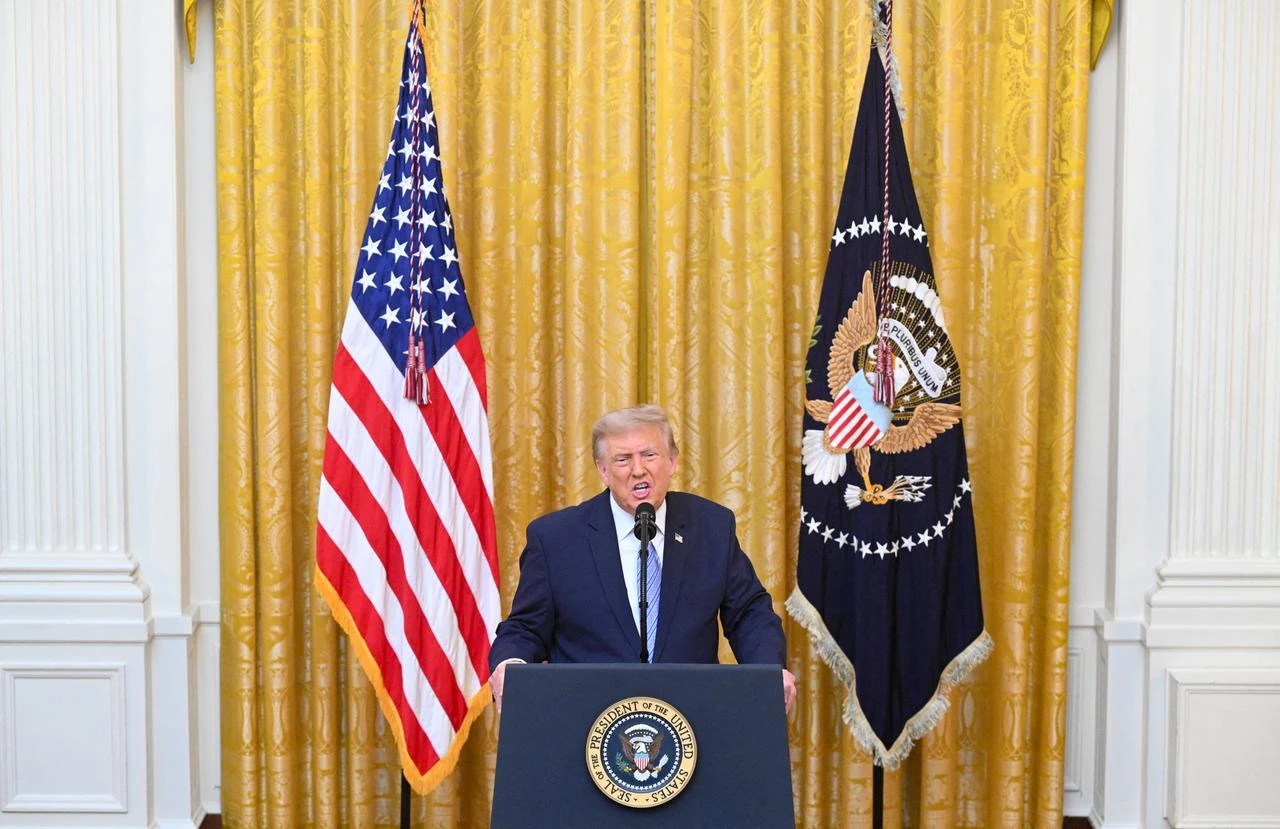
Trump's claim that the 2020 election was "rigged" has never been substantiated; more than 60 lawsuits produced no ruling establishing fraud capable of changing the outcome. Furthermore, subsequent recounts, audits, and Trump's own Justice Department found no evidence of widespread irregularities.
The Financial Times (FT) reported that the U.S. intelligence community has previously concluded China did not interfere in the 2020 election.
A 2021 National Intelligence Council report found China "considered but did not deploy influence efforts intended to change the outcome of the U.S. presidential election," though the report noted the national intelligence officer for cyber issues had dissented from that majority assessment, believing China took some steps to undermine Trump's reelection.
Dennis Wilder, a former head of CIA China analysis, told the FT: "The intelligence record does not show large Chinese campaigns to influence U.S. national elections," though he said Beijing had used social media influence operations, including on TikTok, to shape American views on U.S.-China relations more broadly.
The FT also reported that among the declassified documents released Thursday was a CIA report from this past June examining Venezuela's ability to manipulate its own electronic voting machines, which stated U.S. intelligence "did not definitively confirm" large-scale electronic vote-rigging had occurred there, and which did not detail any Venezuelan attempts to interfere in U.S. elections.
The FT noted Trump made only a passing reference to Russia in his address, despite intelligence community findings that Russian President Vladimir Putin authorized a campaign to influence the 2020 election in Trump's favor.
Senate Intelligence Committee Vice Chair Mark Warner said: "Tonight, Americans heard the president once again repeat claims about our elections that have been investigated for years and repeatedly rejected by the intelligence community," adding that the "greatest danger to our elections" was "a false narrative (that) elections cannot be trusted."
Senate Democratic leader Chuck Schumer said Trump was "working to rig the midterms before a single vote has even been cast."
Sen. Dick Durbin called the speech "a dangerous attempt to resurrect disproven lies to undermine future elections before a single vote is cast."
Rick Hasen, an election law expert at the University of California, Los Angeles (UCLA), described the address as "the same old unsupported, and surprisingly weak, claims of American election vulnerabilities," calling it "a tired speech with recycled and debunked claims" that he said would not change how U.S. elections are run.
Former Trump White House lawyer Ty Cobb told PBS he believed the speech was intended to build a justification for declaring an election emergency around the time of the midterms, adding he considered the deployment of immigration officers at polling places a "virtual certainty."


 Set as preferred source
 Set as preferred source


 5 min read