Newsletters


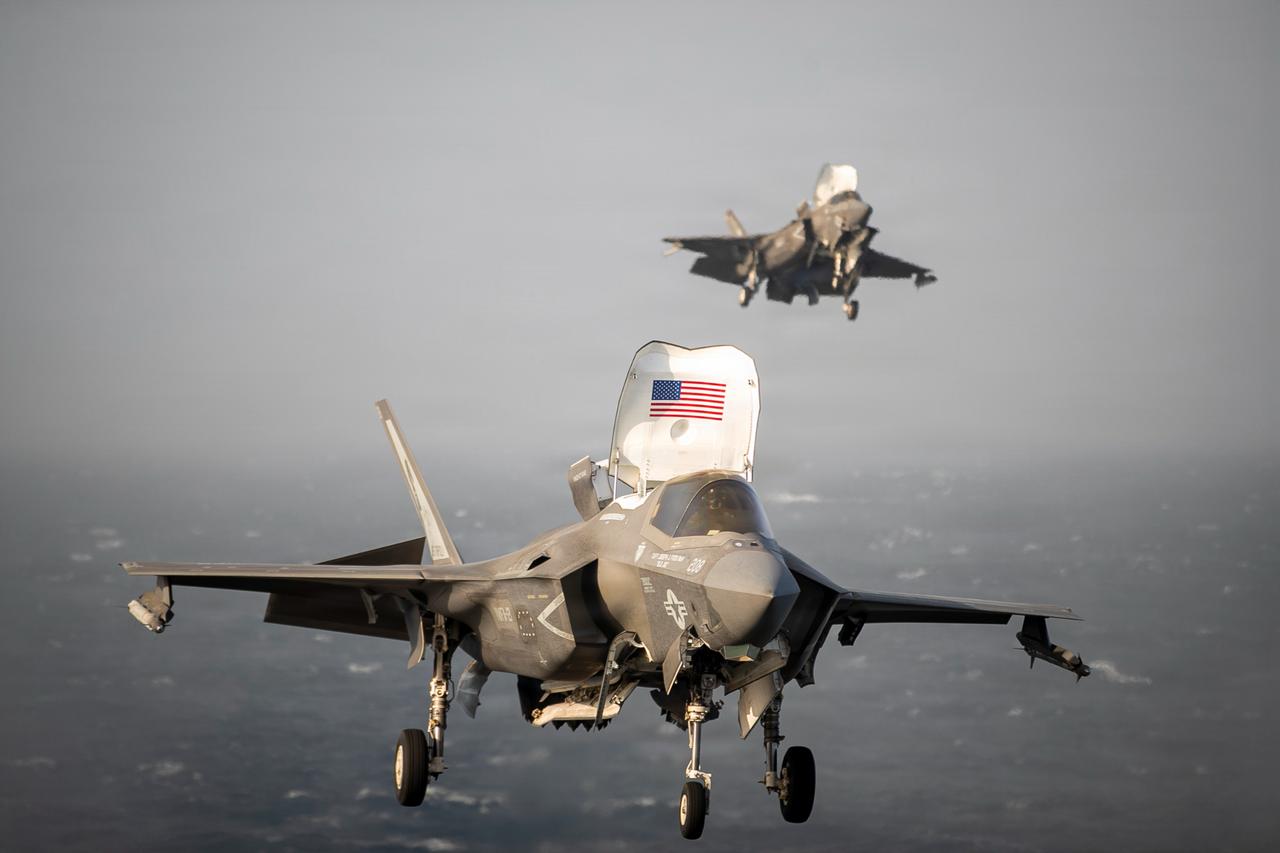


China on Monday announced new restrictions on dozens of U.S. companies in response to Washington's decision to expand a Pentagon list of Chinese companies it says are linked to Beijing's military.
China banned 46 firms from government procurement and added 10 others to an export control list
The measures target U.S. defense contractors, rare earth producers, drone makers, robotics firms, aerospace suppliers, electronics manufacturers and other industrial companies.
They came after the U.S. Defense Department on June 9 added several Chinese companies, including technology firm Alibaba and electric vehicle maker BYD, to its list of "Chinese military companies."
China's Finance Ministry said it had decided to restrict 46 U.S. companies from participating in government procurement projects.
Under the measure, Chinese government procurement authorities are barred from buying products from the listed companies.
The companies include Lockheed Martin Corp., Raytheon Missiles & Defense, General Atomics Aeronautical Systems, Boeing Defense, Space & Security, General Dynamics Land Systems and Javelin Joint Venture, a partnership between Lockheed Martin and Raytheon.
Reports said foreign-funded, locally registered entities associated with the excluded firms are exempt from the restriction.
Products manufactured by U.S.-invested enterprises operating in China are also carved out from the measure.
In a separate statement, China's Commerce Ministry said it had placed 10 U.S. companies on its export control list, banning exports of dual-use items originating in China to those firms.
The companies include rare earth and magnet producers MP Materials and USA Rare Earth; motor and electronic power systems maker Aveox; drone and robotics companies Red Cat, Teal Drones and Jaia Robotics; Ball Aerospace & Technologies; Oshkosh Defense; IMSAR; and L3Harris Maritime Services.
The Commerce Ministry said export operators are prohibited from shipping dual-use items to the 10 firms.
Organizations and individuals from any country or region are also barred from transferring or supplying Chinese-origin dual-use items to the listed companies.
The notice said any export activity already underway that falls under the rules must be stopped immediately.
Dual-use items refer to products with both civilian and military applications.

China's Commerce Ministry said the export restrictions were taken to safeguard national security and interests and fulfill international obligations, including nonproliferation.
The ministry said the measure was a response to what it called the U.S. government's "malicious" practice of expanding its list of Chinese military companies.
The Pentagon earlier this month expanded its so-called 1260H list, adding Chinese companies it says are linked to China's military.
Companies named in the reports include Alibaba Group, Baidu, BYD, Nio, Unitree Robotics, TP-Link and other firms in artificial intelligence, biotechnology, solar technology, consumer electronics and other sectors.
Chinese authorities had earlier said they would take all necessary measures to protect Chinese companies' "legitimate and legal rights and benefits," while criticizing the U.S. for drawing up discriminatory lists under the pretext of national security.
The 1260H designation does not automatically impose sanctions, according to the reports.
However, it bars the U.S. Department of Defense from awarding direct contracts to affected companies starting June 30, with restrictions on indirect procurement following in 2027.
The designation can also complicate access to U.S. capital markets and government business, and may deter federal agencies and commercial partners from doing business with listed companies.
Several designated Chinese firms have disputed the U.S. designations and pledged legal action to seek their removal.
Chinese smartphone maker Xiaomi previously won a court challenge that led to its designation being removed in May 2021.
The inclusion of MP Materials and USA Rare Earth is notable because both companies are involved in rare earth supply chains.
MP Materials, which is backed by the Pentagon, operates the only active rare earth mine in the U.S., according to the reports. USA Rare Earth is also involved in the mine-to-magnet supply chain.
The export controls also target sectors including drones, robotics, aerospace, electronics, military equipment and strategic minerals.
MP Materials, USA Rare Earth and Aveox were not available for comment outside business hours, according to one report.
Several reports described the restrictions as part of a tit-for-tat response to Washington's expansion of its military-linked company list.
Analysts cited in the reports said the measures may be largely symbolic because many of the targeted companies have limited business exposure in China.
Han Shen Lin, China country director at consultancy The Asia Group, said Beijing's countermeasures appeared to be largely symbolic rather than a substantive escalation in U.S.-China relations, as most targeted companies have "little or no meaningful business exposure in China."
George Chen, partner for Greater China at the Asia Group, said most of the companies are U.S. defense industry players or have close connections with the U.S. government.
"Those companies are not going to do business in China, so the impact will be quite symbolic," Chen said.
Cameron Johnson, a partner at Shanghai-based consultancy Tidalwave Solutions, described Beijing's move as a "brushback pitch," saying it served as a warning against possible sanctions on China or Chinese firms.
"This is a reaction to the U.S.' recent blacklisting by the Pentagon," Johnson said.
Dan Wang, China director at Eurasia Group, said the latest countermeasures provided a "model example" of how China may handle mild escalation from the U.S. while keeping the broader relationship stable.
Xin Qiang, a professor and deputy director of the Centre for American Studies at Fudan University, said Beijing was making clear it would fight back against trade sanctions or designations.
"I think the next step will likely depend on whether the U.S. continues to introduce new sanctions or confrontational measures. If so, China will certainly retaliate. If this falls into a vicious cycle, the impact will be extremely negative," Xin said.
Both Chinese measures took effect immediately, according to the reports.
The Finance Ministry measure restricts 46 U.S. companies from government procurement, while the Commerce Ministry measure bans Chinese-origin dual-use exports to 10 U.S. companies.
The steps add to the latest exchange of restrictions between Beijing and Washington over companies the two sides link to military, technology and security concerns.


 Set as preferred source
 Set as preferred source


 2 min read
 1 min read