Newsletters


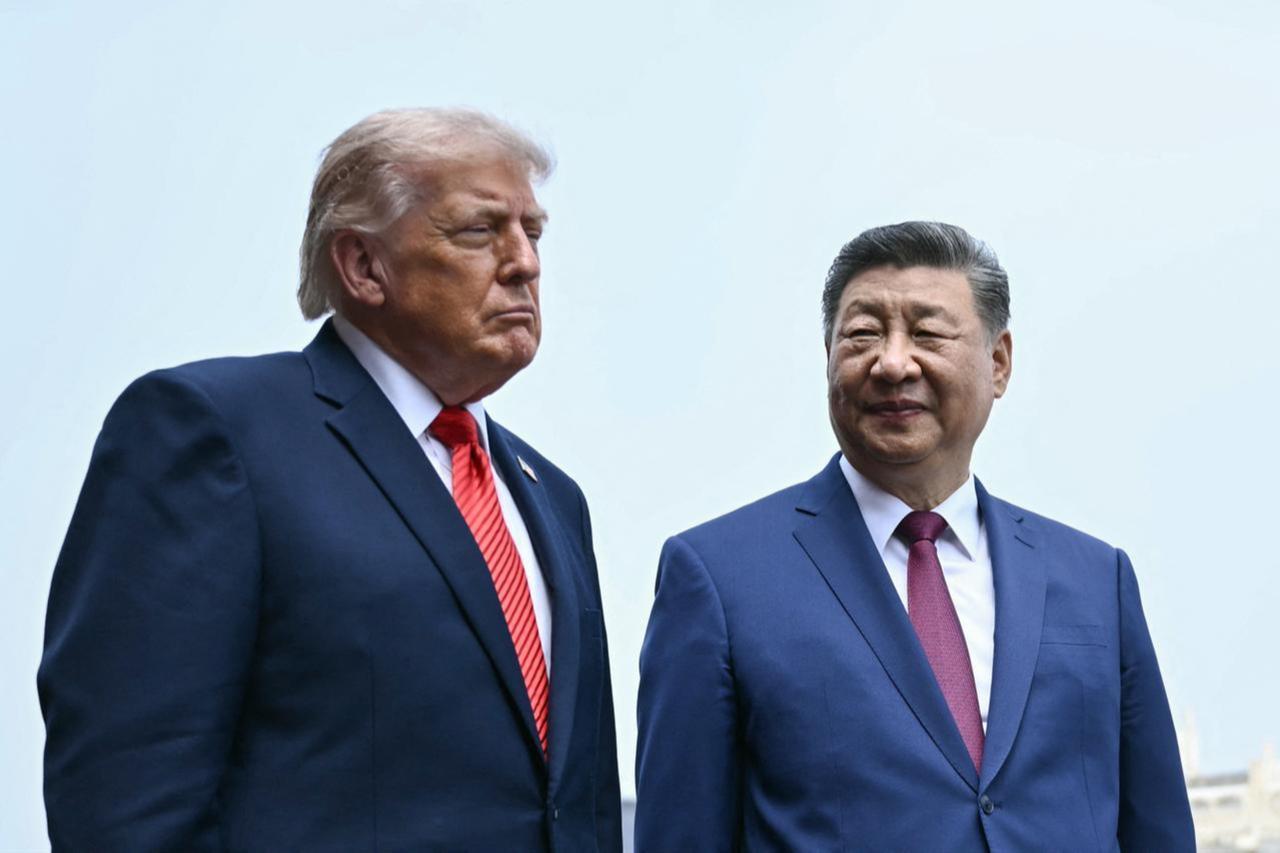


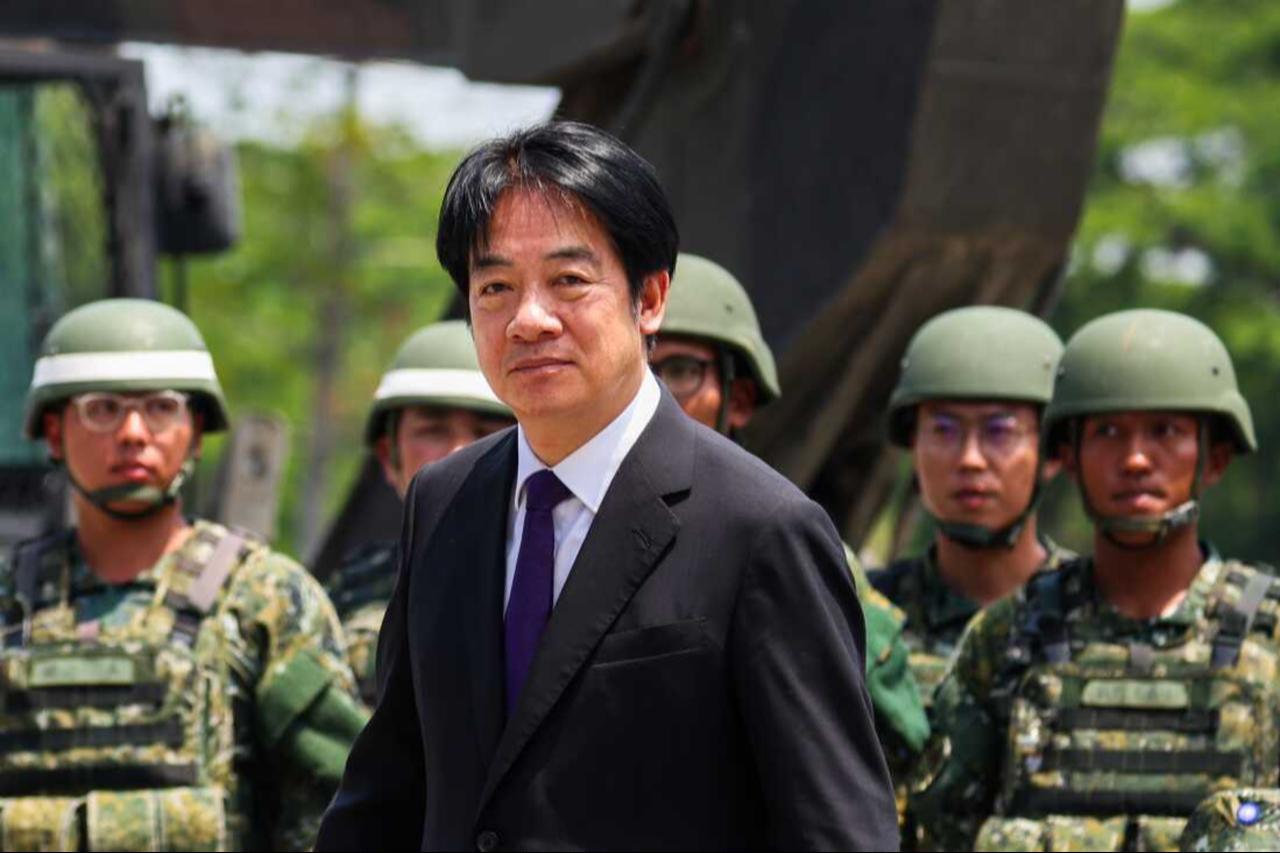
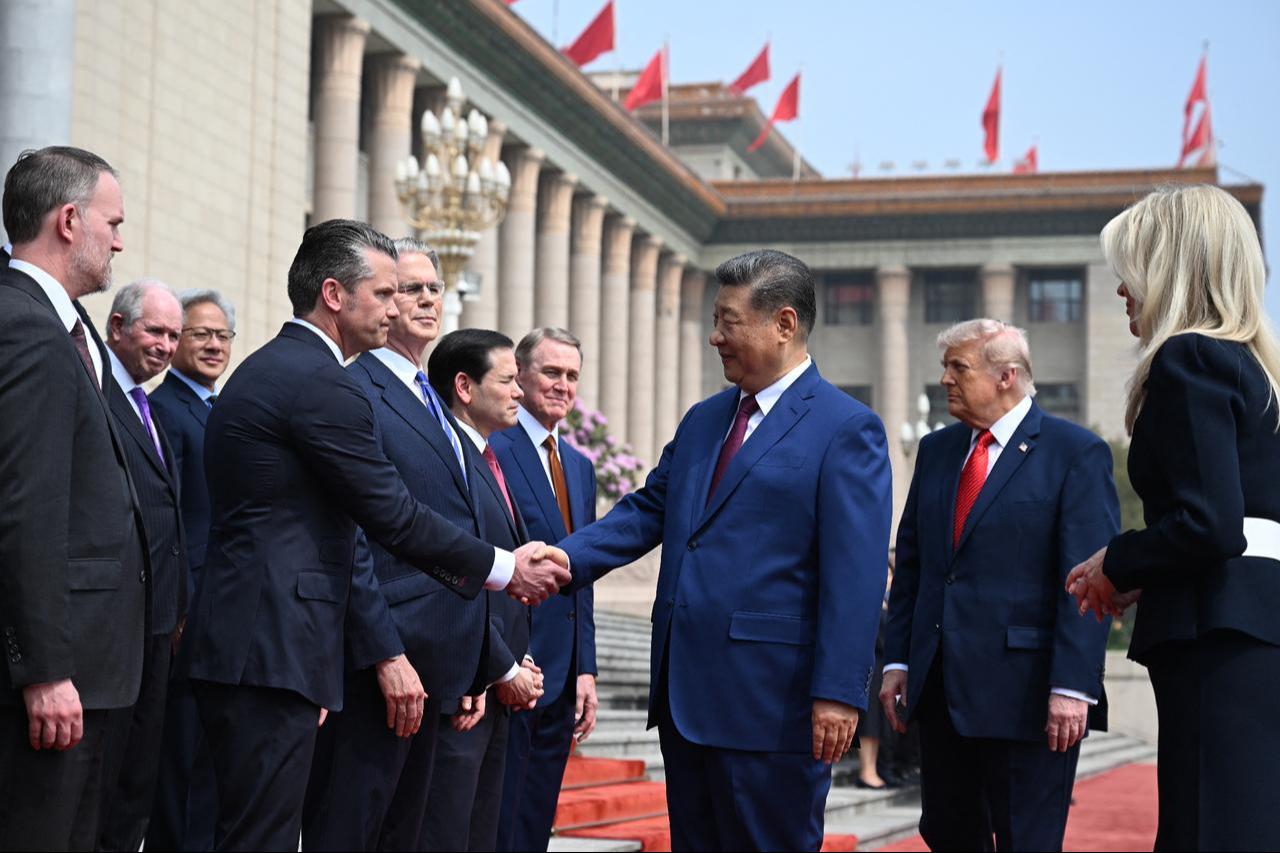
The prospect of a direct phone call between Donald Trump and Taiwan's President Lai Ching-te has instantly transformed Taiwan into the ultimate litmus test for the new administration's U.S.-China strategy.
Such a call would be diplomatically sensitive because no sitting U.S. president has held such direct contact with the leader in Taipei since Washington recognized Beijing in 1979.
At the same time, a reported $14 billion arms package remains unresolved after Trump discussed Taiwan with Xi Jinping in Beijing. He says he made no commitment to Xi. He also declined to clarify how the United States would respond in the event of a cross-Strait conflict.
Trump is not ending U.S. support for Taiwan. But he may be making Washington’s Taiwan policy appear more open to bargaining.

Trump’s view of Taiwan rarely centers on democratic language. It is more often framed around cost-sharing, leverage, and industrial capacity. His earlier complaint that Taiwan should pay more for defensewas blunt, but it wasn’t random.
He sees Taiwan as wealthy enough to carry more of its own burden. He also sees it through the semiconductor lens, at times describing Taiwan’s chip success as something taken from the United States.
That does not mean he wants to withdraw support for Taiwan. His administration cleared a record package of roughly $11 billion in 2025, while another reported package of around $14 billion remains under review.
The tension is elsewhere. Under the Taiwan Relations Act, Washington makes available defense articles and services so Taiwan can maintain a sufficient self-defense capability. Under the Six Assurances, the United States said it had not agreed to consult Beijing on arms sales to Taiwan.
Trump’s style raises questions about how consistently that line is maintained. If an arms package appears to be discussed with Xi as part of a wider U.S.-China bargain, even without a formal concession, Taipei has reason to ask whether U.S. support is being treated as a steady policy commitment or as bargaining leverage.
So the right phrase may not be strategic clarity. It is also not simple strategic ambiguity. It is something closer to transactional ambiguity. Arms may continue to flow, but the signal around those arms may become less steady.
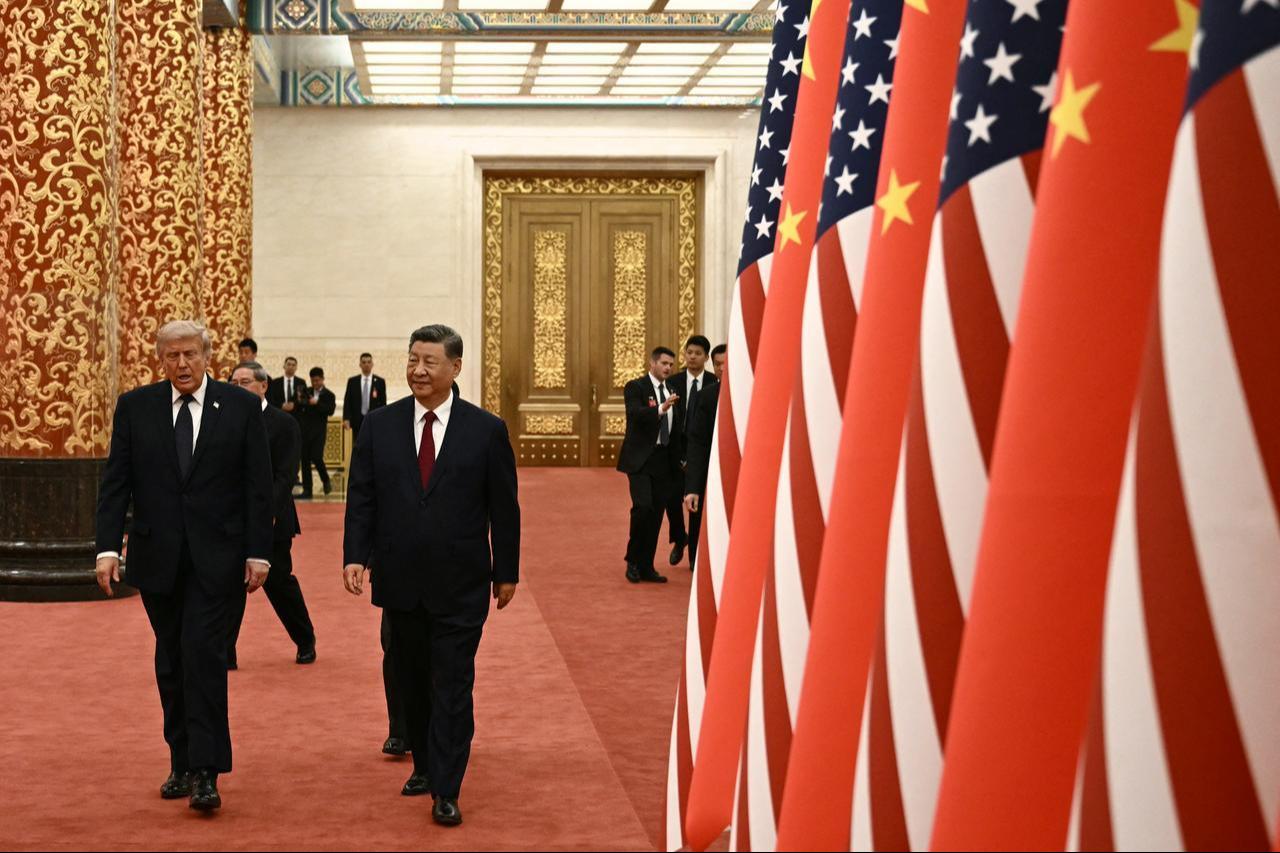
Beijing does not treat Taiwan as one item in a long bilateral agenda. It treats Taiwan as a central issue through which American intentions are judged.
In the Chinese readout of the Trump-Xi talks, Xi called the Taiwan question the most important issue in China-U.S. relations and warned that mishandling it could push the relationship toward clashes or conflict.
That is not new in substance. What is new is the setting: China is situating Taiwan inside a wider language of “constructive strategic stability” with Washington.
That matters because stability can mean different things to each side. For Washington, it can mean managing competition without war. In Taipei and among some U.S. allies, the same language may be read as a framework that could make U.S.-Taiwan political contact and arms transfers appear more contingent on the wider U.S.-China relationship.
This kind of stability language could make Taiwan and some U.S. allies worry that their concerns are being handled mainly through a U.S.-China framework rather than addressed directly.
Beijing is also maintaining party-to-party channels with political actors in Taiwan outside the Lai administration. The April meeting between Xi and Kuomintang chairwoman Cheng Li-wun was not a peace settlement, and it did not bind the elected authorities in Taipei.
But it allowed Beijing to present cross-Strait dialogue as framed around shared identity and internal reconciliation, rather than primarily as an international security issue. The Cheng-Xi meeting did not resolve anything, but it fit a framework in which cross-Strait engagement is presented as primarily a matter between the two sides.
A simplified version of the Taiwan debate assumes that a near-term military conflict is inevitable. That is too blunt. The U.S. intelligence community’s 2026 Annual Threat Assessment says Beijing probably will keep setting conditions for eventual unification short of conflict, prefers unification without force if possible, and does not currently have a fixed timetable for unification.
It also says the PLA continues to build the plans and capabilities needed if force is ordered. Both parts matter. There is no need to inflate risk. There is also no basis for complacency.
U.S. defense assessments frame Beijing’s approach toward Taiwan as involving diplomacy, information operations, military activity and economic pressure.
They also discuss “coercion short of war” as one possible pathway, combining military, cyber, electronic, economic and political instruments. That is a better frame than assuming an imminent war.
The concern, from Taipei’s perspective, is that such pressure could narrow Taiwan’s political and operational room for maneuver before any direct use of force.
Some military indicators are worth watching in this context. Taiwan regularly reports PLA air and naval activity around the island. Japanese analysts using satellite imagery of airfields along the Taiwan Strait have also pointed to the possible repurposing of retired fighter fleets for unmanned, decoy, or expendable roles.
That does not prove an operation is near. Such indicators are relevant to debates about attrition, saturation, and air-defense resilience. These technical changes should be watched without turning them into a countdown clock.
Taiwan’s semiconductor position still matters. TSMC’s 2025 annual report says advanced technologies, 7-nanometer and beyond, accounted for 74% of wafer revenue.
That gives Taiwan economic relevance far beyond its size. A war would damage China, the United States and the global technology supply chain. The “silicon shield” is real in that narrow sense: it raises the cost of war. But it is not a complete shield against pressures below the threshold of war.
The chip story also cuts both ways. U.S. efforts to onshore advanced semiconductor manufacturing have raised concern in Taiwan about whether its silicon shield could weaken. A later Stimson assessment argues that deeper U.S.-Taiwan AI and chip cooperation could reinforce the same shield, but only if supply chain vulnerabilities are managed. That is the right balance.
Chips raise the cost of reckless escalation. They also make Taiwan’s semiconductor capacity central to calculations of leverage, vulnerability, and crisis management.
The less visible vulnerability is logistics. CSIS estimates that about $2.45 trillion worth of goods transited the Taiwan Strait in 2022, over one-fifth of global maritime trade. It also estimates that nearly $1.4 trillion of Chinese and Hong Kong trade passed through the Strait.
This is why any major disruption or blockade scenario would carry costs not only for Taiwan and its partners, but also for China-linked trade. The Strait is not only a military space; it is also a trade route China uses.
Taiwan’s own resilience is thinner on energy. The island relies on imports for over 95.8% of its energy needs. CSIS blockade wargames found that natural gas inventories run out long before coal and oil.
EIA’s 2026 Taiwan brief also shows the scale of oil dependence, with 2024 petroleum and liquids consumption at 871,000 barrels per day and oil stocks estimated at 146 days. In a crisis, resilience would not be measured only by missiles. It would be measured by ports, tankers, power generation, fuel stocks, insurance and repair capacity.
This is where Trump’s Taiwan policy should be judged. The test is whether Taiwan remains capable, politically steady and materially resilient, without allowing Washington’s Taiwan policy to appear as a variable inside broader U.S.-China stabilization.
A steadier policy would clarify support, reduce policy uncertainty, keep dialogue with Beijing open, avoid theatrical provocation, and avoid giving the impression that questions of Taiwan’s security can be folded into a broader U.S.-China bargain.
The most likely danger is not an imminent war. It is the slow normalization of a more unstable cross-Strait status quo.


 Set as preferred source
 Set as preferred source


 2 min read
 1 min read