Newsletters


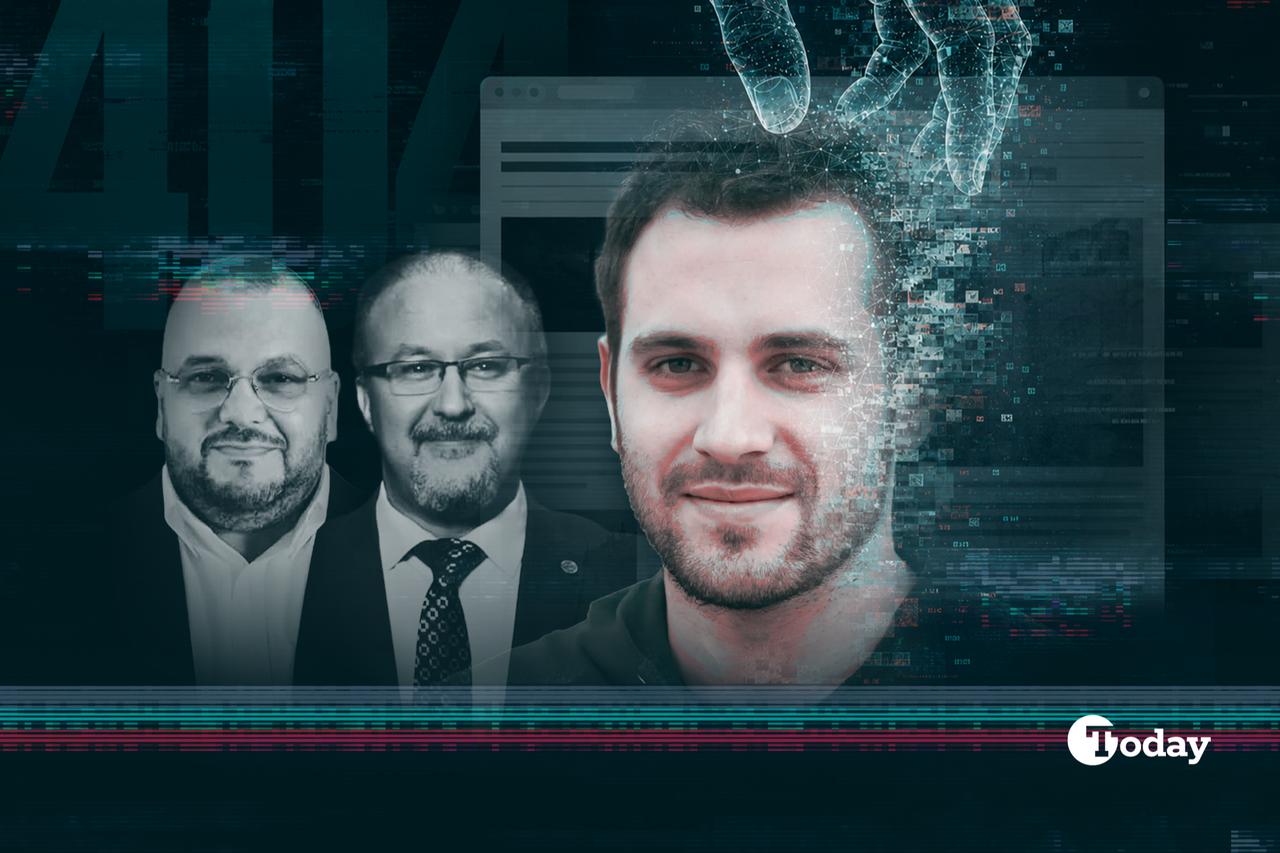


Daniel Robson almost became a budding star in Canadian conservative media.
Prolific and quick off the mark, he consistently filed fine opinion pieces calling out Canadian authorities over tighter immigration policies, warning against increasing pro-Palestine protests, pointing fingers at Moroccan dissidents, and at anyone with whom they do business, including a simple Turkish tradesman.
There was just one problem: Daniel Robson does not exist.
For nearly two years, an artificially generated persona operating under this name successfully infiltrated several prominent Canadian news outlets and policy hubs.
After building a columnist persona in the Canadian press, he upped his game. He contacted foreign newsrooms to run operations on Canadian-Moroccan businessman Hicham Jerando and one former Moroccan high-ranking intelligence officer, Mehdi Hijaouy.
He communicated exclusively via email and rarely phoned these Canadian publications, who were oblivious to the whole affair until Türkiye Today contacted them.
The phantom writer leveraged AI tools to bypass established editorial vetting, publishing dozens of articles that pushed hyper-specific foreign policy narratives.
Eventually, he and Moroccan hackers he collaborated with targeted a Turkish citizen, whose only fault was trading with a Moroccan dissident.
It all started on Sept. 2 when Türkiye Today received an email from Robson, who introduced himself as a Canadian independent journalist, with extremism, terrorism, and cybercrime laid out as his clear beat.
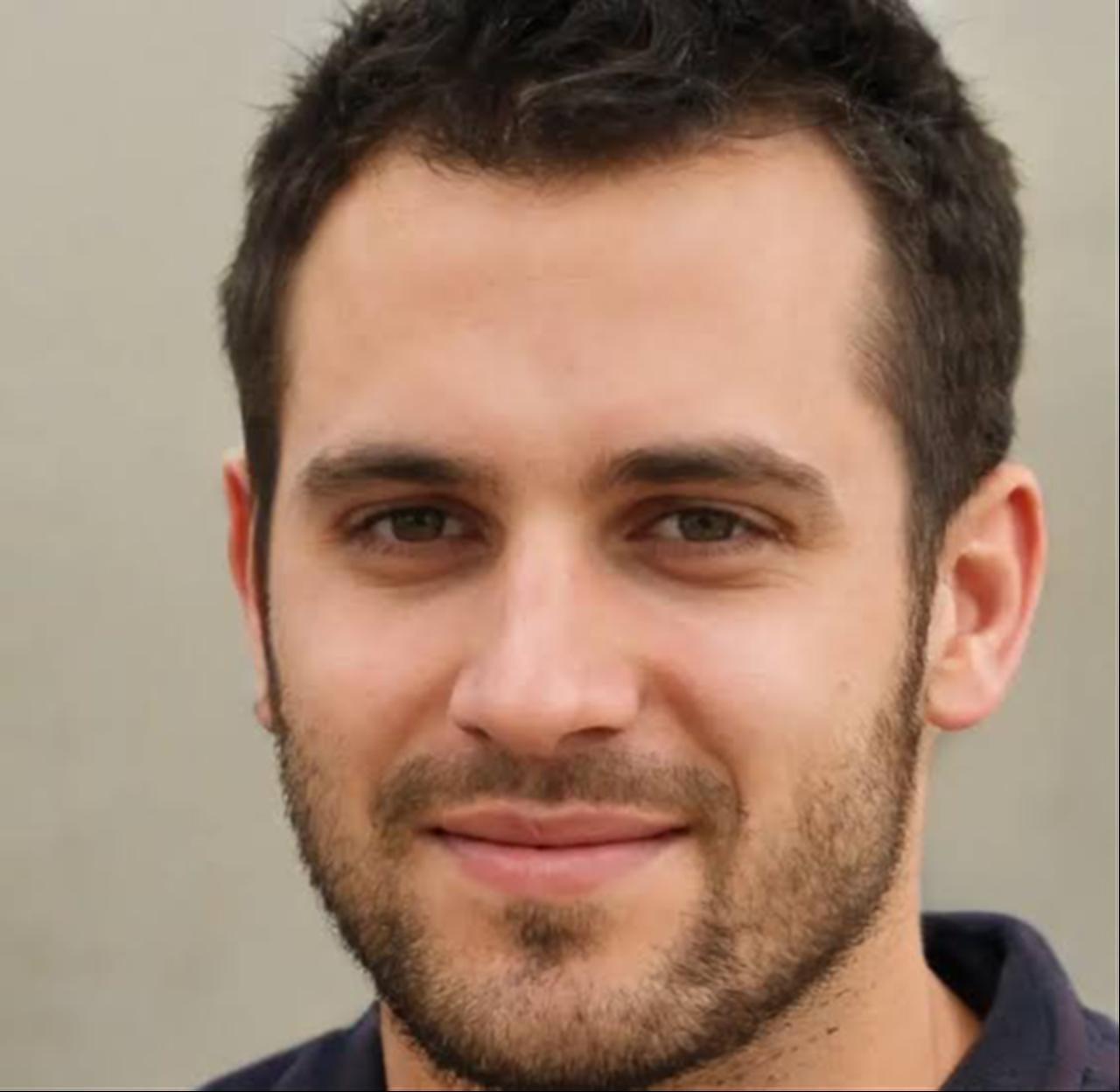
“I am writing to submit for your consideration an investigative feature entitled ‘From Canada Through Türkiye: Canadian Runs Criminal Network Linking Drug Trafficking and Migrant Smuggling,’” read his over 600-word email, along with his headshot profile picture and a long-form write-up.

He said his work usually examines how legal, institutional, and intelligence choices shape Canada’s national security posture and international credibility.
But the article read like a mere attempt to localize his ongoing campaign against Hicham Jerando, a Canadian-Moroccan businessman, offering supposed leaked financial documents from Moroccan-based hacker group Atlas Hacks to prove the Quebec-based dissident was running a global drug empire through Türkiye.
Robson heavily padded his pitch, citing his bylines in various Canadian media and his chapter in retired Colonel Charles Oliviero’s book to establish credibility.
He remained adamant that the piece has an impeccable “Türkiye angle” and is a “developing case” that should get across the wire as soon as possible.
The article had the unmistakable whiff of something fishy.
Türkiye Today immediately asked Robson to have a one-on-one video call to clear the air regarding the ‘drug case’ involving a Turkish businessman and Jerando.
He declined the request in a jiffy and shot an excusatory email instead: “I have been dealing for several days with a dental problem that recently worsened and developed into significant trismus, with painful restriction of jaw movement. I underwent a minor oral surgical procedure yesterday to address the underlying problem, but the stiffness and discomfort remain quite pronounced, particularly with repeated jaw movement and sustained speaking.”
He insisted the communication should be in writing and refused any sort of video exchange. Instead, he sent documents that were leaked by Atlas Hacks. Yet the underlying evidence fell apart upon closer inspection.
The alleged financial leaks showed low-level money transfers of merely $1,500 to $2,500, figures laughably inconsistent with the illicit proceeds of a purported global drug empire.
Later, a forensic analysis using three different AI photo-detection applications confirmed that the author's headshot was 97% artificially generated, likely originating from "ThisPersonDoesNotExist.com."
That’s when the nagging doubts began to take shape.
Upon confrontation with the initial findings, including Robson’s AI-generated photo, Canadian newsrooms scrambled to address the breach.
The Ottawa Citizen promptly deleted Robson's biography page and removed his articles without publishing an editorial note. They were swift but silent.
Policy Options, a Canadian digital magazine, also withdrew Robson’s work. In a public editorial note, the editor-in-chief, Les Perreaux, admitted a critical lapse in vetting, noting they were ultimately unable to confirm Robson had even attended the academic institution he claimed as his alma mater. The outlet also noted that Robson refused to share his resume and a video call that may have proved he is a real person.
"We are on a very steep learning curve with AI," Policy Options Editor-in-Chief Les Perreaux acknowledged.
"I can see upon a very quick review that some of his emails were likely heavily assisted by AI, but we were rather naive about it a year ago," he told Türkiye Today.
A journalist who previously edited Robson’s pieces estimated that one article he filed was 80% AI-generated.
Strangely enough, as a young columnist, Robson has always refused honorarium payments when offered by multiple outlets.
Other publishers took a while to get the memo.
The right-wing outlet Western Standard initially kept Robson’s work live on the website, publishing a piece on Sept. 11 titled "25 Years After 9/11: Canada Needs a Counter-Terrorism Strategy Reset."
When asked by Türkiye Today if anyone at the publication had ever spoken to Robson by phone or video, Opinion Editor Christopher Oldcorn claimed to have communicated via a "variety of methods" but declined to specify exactly how. The Western Standard ultimately withdrew the articles three weeks after Türkiye Today first contacted them.
The phantom author’s reach even extended into traditional publishing.
Robson is credited as a contributing author in retired Oliviero’s collective volume, “Fulfilling The Promise of Canada: Charting a National Strategy for an Unstable World,” authoring a chapter on digital openness.
While Oliviero initially resisted the idea that his contributor was an AI fabrication, his certainty has since faltered. When asked recently if he could confirm Robson is a real person, Oliviero simply replied, "Not yet."
Robson has been publishing articles in Canada's Western Standard until the third week of September 2026.
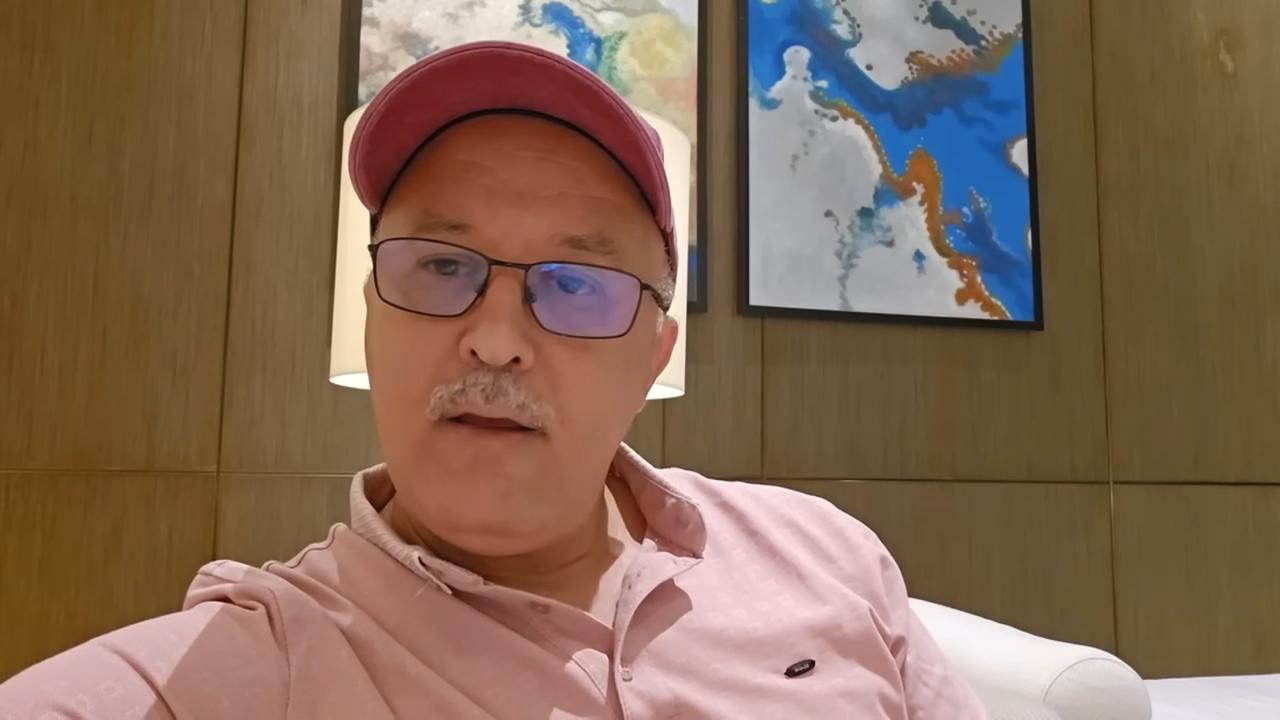
While Robson’s domestic commentary echoed standard conservative talking points, his international focus revealed a coordinated agenda: fiercely defending the Moroccan state while orchestrating targeted information campaigns against its critics.
In Open Canada, he argued that "Canada cannot build a credible Africa strategy without Morocco." For The Hub, he praised King Mohammed VI’s long-term reforms as a masterclass in institutional design.
In one article at The Hub, he argued that “Canada has a language blind spot when it comes to anti-Jewish hatred.” In another one, which is still publicly accessible on the Yahoo News website, he says Canadian authorities should bring Arabic, Farsi, and Turkish translators who "are pre-positioned to capture and translate livestreamed chants the same day" of pro-Palestinian protests in Ottawa.
Talking with Türkiye Today regarding Daniel Robson's case, The Hub’s managing editor Harrison Lowman said, "Canada as a middle power is prone to foreign interference. Journalism in Canada can be used as a soft belly to influence Western decision-makers. Our industry is suffering financially. And I think that's a wake-up call."
In some articles, Robson penned warnings to the authorities of dangers awaiting Canada, while he suddenly included Morocco in the article and explained how two countries can cooperate and benefit from each other.
But the persona's primary utility was attacking Moroccan dissidents and his fight against rising antisemitism in Canada.
In a March 2026 article for The Hub, Robson explicitly targeted former senior intelligence officer Hijaouy, now exiled in Canada.
Painting Canada as a haven for international criminals, Robson wrote: "A country does not have to be the final destination of a fraud scheme, a cartel network, or a terror plot to become part of it.
It can be enough to serve as a first refuge, a transit point, or a jurisdiction where scrutiny arrives late. That is what links three very different cases: Mehdi Hijaouy, Ryan Wedding, and Muhammad Shahzeb Khan."
He called the “Hijaouy file,” the murkiest, as he is a former Moroccan external-intelligence official “removed from service over serious professional misconduct and later implicated in fraud allegations, victim complaints, and an international arrest warrant linked to serious cross-border financial fraud.”
Robson applied this same blueprint to Jerando, a Quebec-based businessman and harsh critic of the Moroccan ruling elite.
He wove Jerando's name into an August 2025 piece for The Hub regarding anti-Jewish incitement and later escalated the attacks in the Western Standard, formally accusing Jerando of running a drug empire and laundering money through a Turkish middleman.
Speaking to Türkiye Today, Jerando, who has business ties in Türkiye, said Moroccan intelligence continuously targets him due to his opposition to the “corrupt elite” in the country.
Jerando’s YouTube and Facebook page, where he voices anti-Moroccan views online, reached 1 billion views in recent years.
“The secret services are paying many journalists to publish allegations about me. The Canadian government and its institutions are very well aware of all that. They know me, and they know who I am,” Jerando said.
He thinks a Moroccan-origin legal consultant, "El Amine," is certainly the real "Daniel Robson," as he was consistently targeted by the same person who was working for the Moroccan intelligence.
"El Amine cannot enter Morocco due to the corruption; he was involved in the Made in Morocco project."
In his first draft for Türkiye Today, Robson wrote, “A name repeatedly surfaces whenever money in the Hicham Jerando file reaches Türkiye. Fuat (a Turkish citizen) appears in the Atlas Hacks recordings as an intermediary designated to receive funds connected to dealings between Jerando and figures inside Morocco’s narcotics trade. The same name later reappears in the migrant-smuggling dimension of the network.”
Moroccan hackers shared an image saying that Fuat is the right-hand man of Jerando in drug trafficking.
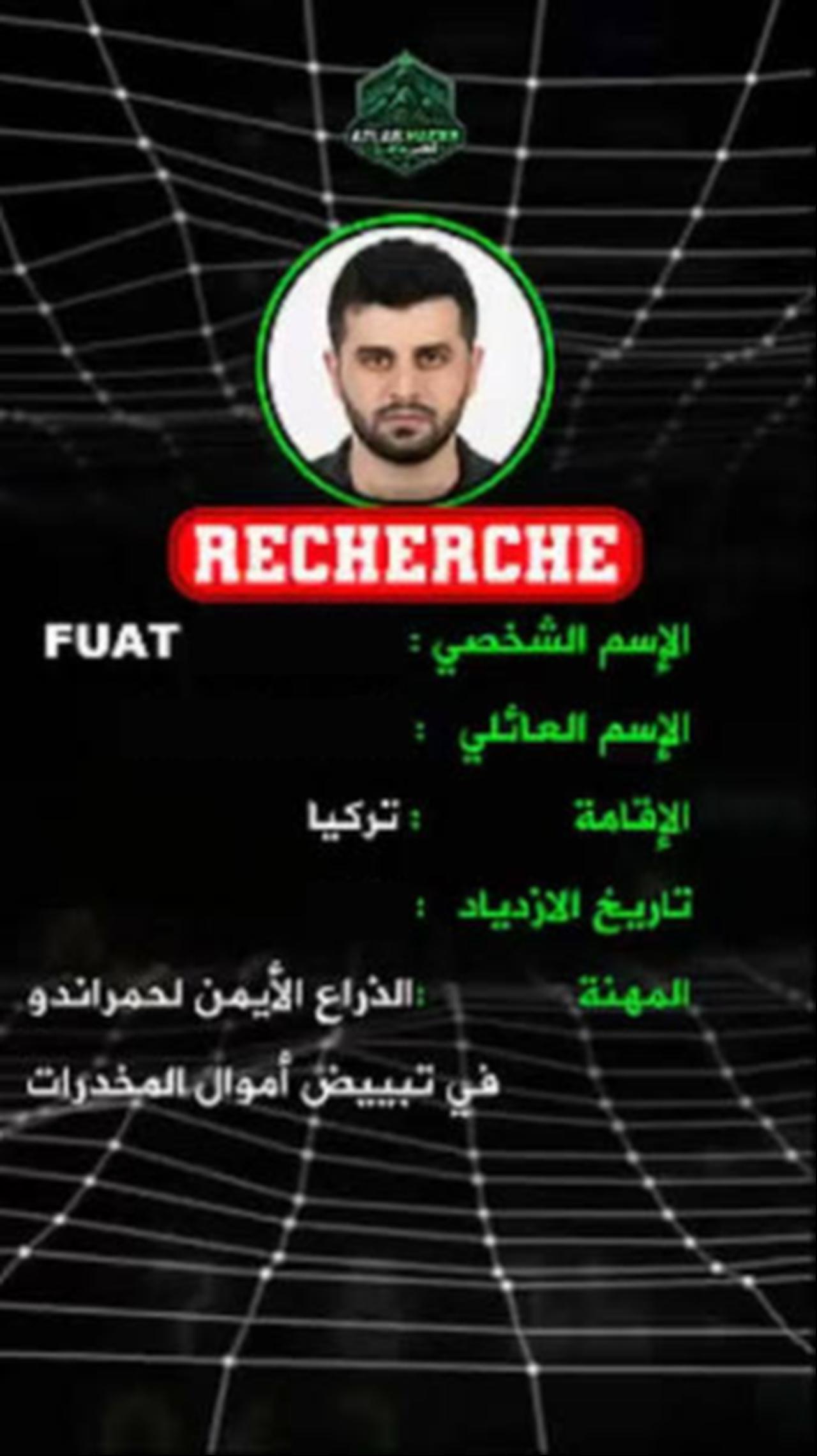
That alleged middleman was Fuat, a Turkish textile supplier who found himself suddenly thrust into an international disinformation campaign.
Operating a family textile shop in one of Istanbul’s tourist spots, Fuat speaks no English, Arabic, or French. For a decade, he communicated with Jerando—who purchased textiles from him—exclusively online or via translation tools or with very basic English phrases.
When Jerando temporarily switched suppliers and lost $37,000 to a fraudulent Turkish seller, he returned to doing business with Fuat.
“Hicham was like an uncle. Yet, after I saw claims about him, I got suspicious. You can never trust anybody fully. Then, they started to label me as his middleman,” Fuat said.
For selling textiles to a Moroccan dissident, Fuat became a target.
Moroccan press began referring to him as the middleman for a drug lord long before Daniel Robson targeted him. His phone number was doxed by the pro-Morocco hacker group Atlas Hacks.
Soon, the harassment began: strange WhatsApp messages arriving in the middle of the night, photoshopped images sent to intimidate him, and relentless bullying from Morocco-based social media accounts.
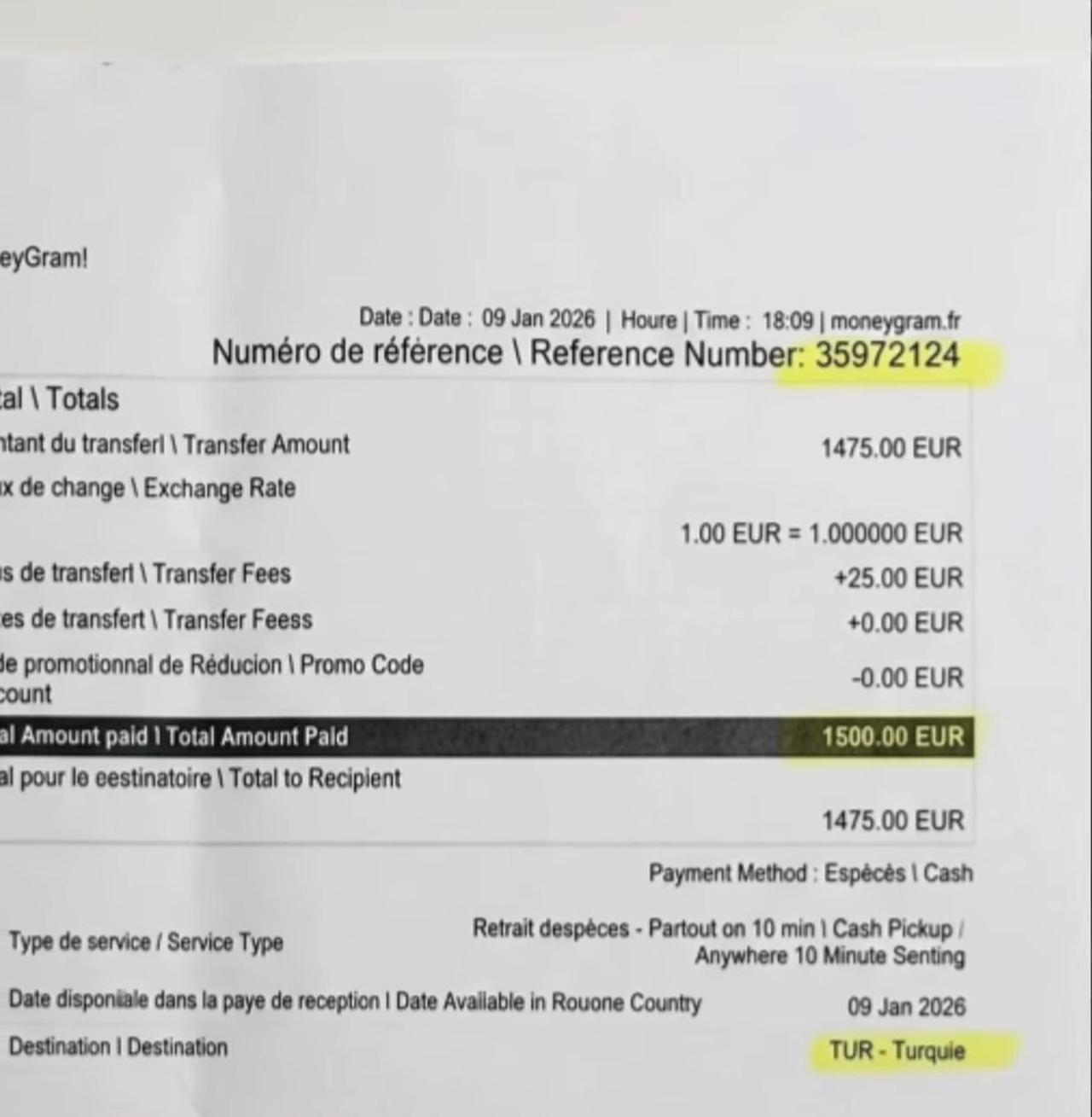
One document shared by Daniel Robson with Türkiye Today shows a €1,500 ($1702) MoneyGram transfer to a Turkish business account, allegedly part of a drug-laundering plot.
In one message to Fuat, seen by Türkiye Today, a Moroccan WhatsApp user told him it was "90+1" for him, a football reference meaning his time was almost up.
Fuat described living in fear of physical attack at any given time.
The sustained digital harassment took such a severe toll on his mental health that he was forced to seek psychiatric care to cope with the anxiety.
“I can’t go to work for the last two months due to threats. My business is disrupted,” Fuat told Türkiye Today.
Not knowing what he would do in the face of an international bullying campaign, Fuat filed a complaint at an Istanbul courthouse, saying that he has no involvement in a drug business, and that the Moroccan social media account share is a mere fiction.
But Fuat might not be the first nor the last victim.
A July 2026 Guardian report revealed how Moroccan intelligence uses spyware, such as Israel-made Pegasus, to spy on dissidents, journalists, diplomats and politicians in the name of preventing terror-related activities.
The spying, it turns out, is only the beginning. The threats come next.
After receiving e-mails from Canadian editors requesting more details about Robson’s identity, he accused Türkiye Today’s managing editor of backstabbing him.
In an e-mail correspondence, he wrote: “This is particularly serious because, after publication of the Canadian investigation and during my exchanges with you, I began receiving anonymous threatening messages. I am accustomed to hostility when working on sensitive criminal files in Canada, but the timing here, combined with persistent questions about where I live and where I am staying, has caused me SERIOUS CONCERN FOR MY SAFETY.”
Robson defended himself, stating that he is a real person, and argued that his dental problem was real.
“You should understand that I regard what has happened as EXTREMELY SERIOUS, and you bear responsibility for the consequences of your actions,” he noted, yet, as ever, in a warning that arrived draped in AI lingo via email, dodging the more direct pleasure of a face-to-face encounter.


 Set as preferred source
 Set as preferred source


 2 min read