Newsletters


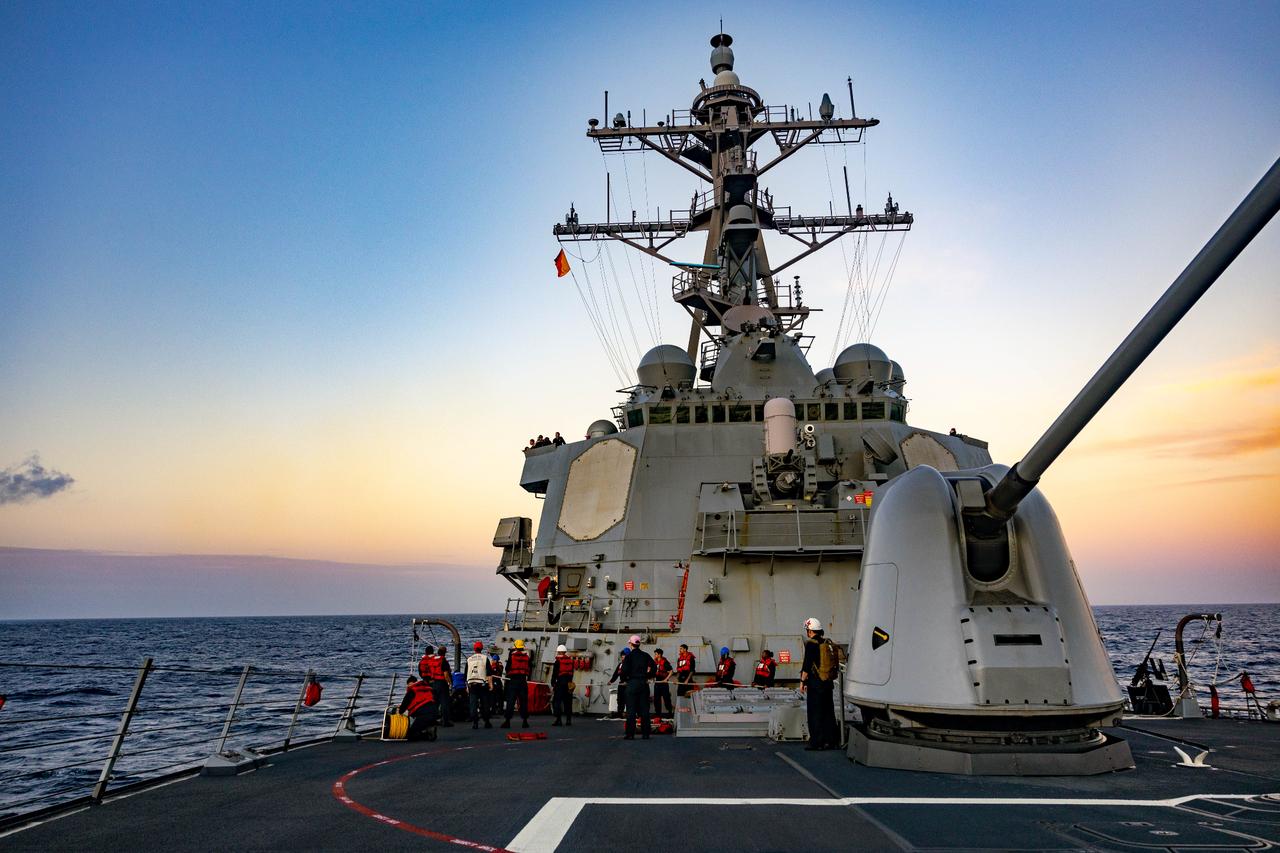


A major fire this week aboard the USS Higgins, a guided-missile destroyer assigned to the U.S. Navy's 7th Fleet in the Pacific, knocked out the warship's electricity and propulsion systems, U.S. officials said, raising fresh concerns about the operational readiness of American naval assets across two theaters.
No injuries to service members had been reported as of Wednesday. The cause of the fire and the vessel's precise location within the U.S. Indo-Pacific Command's (INDOPACOM) area of operations remained unclear, as did the extent of structural damage and the timeline for repairs.
Pentagon spokespeople directed questions to INDOPACOM, and the ship's public affairs office did not respond to requests for comment.
Vessel tracking data showed the Higgins had been docked in Singapore as recently as February.
The Higgins, homeported at Naval Station Yokosuka in Japan and assigned to Destroyer Squadron 15, forms part of the 7th Fleet's forward-deployed surface force, the Navy's primary strike and deterrence presence in the western Pacific.
INDOPACOM is the largest of the U.S. military's combatant commands, overseeing American operations across more than half the globe, a region of growing strategic importance amid heightened tensions with China.
The Higgins is an Arleigh Burke-class destroyer, a workhorse of the modern U.S. fleet equipped with the Aegis combat system, vertical-launch missile cells, and anti-submarine warfare capabilities.
The loss of propulsion and power, even temporarily, significantly limits a warship's ability to maneuver, defend itself, or respond to contingencies in contested waters.
 1 min read
The Higgins incident is the third shipboard fire to strike the U.S. Navy in a matter of weeks. Earlier this month, a blaze broke out aboard the aircraft carrier USS Dwight D. Eisenhower, injuring eight sailors, according to the Navy Times.
A separate fire erupted in the laundry spaces of the aircraft carrier USS Gerald R. Ford, wounding two sailors. A U.S. official confirmed Wednesday that the Ford and its accompanying strike group are expected to depart the Middle East in the coming days, where it had been one of three carriers operating in the region.
The destroyer is named for Marine Col. William R. Higgins, a Vietnam War veteran who was serving with a United Nations peacekeeping mission in southern Lebanon when Hezbollah-linked militants kidnapped him in February 1988.
Higgins was tortured and interrogated before being killed, and was promoted to colonel while still in captivity. His remains were recovered from a Beirut street in December 1991. He was posthumously awarded the Presidential Citizens Medal and the Prisoner of War Medal.


 Set as preferred source
 Set as preferred source


 1 min read