Newsletters


On Nov. 26, Rahmanullah Lakanwal, an Afghan evacuee admitted under the Biden administration, opened fire on two National Guard soldiers patrolling near the White House. Armed with a 357 Smith & Wesson revolver, a weapon rarely used in terror attacks.
The incident caused President Trump to intensify his nationwide “war on crime” push, deploying even more National Guard units across Washington.
The story of the Washington shooter, however, does not begin in the United States. It traces back to the battlefields of southern Afghanistan. Lakanwal had served during the height of the war in one of the CIA-backed NDS “Zero Units,” among the most secretive and contentious Afghan paramilitary forces.
As later confirmed by CIA Director Ratcliffe, he belonged to this U.S.-supported strike force that conducted counterterrorism raids alongside American operatives.
After the fall of Kabul in 2021, with thousands of Afghan partners already on Taliban kill lists, the Biden administration admitted roughly 76,000 Afghans under Operation Allies Welcome. Lakanwal was one of them, in a process that later became an ethical test in U.S. debate and popular culture.
This arc from Kandahar to Washington has propelled the Zero Units into the center of national debate once again, highlighting the long-ignored human and political costs the United States inherited from the Afghan war.
To understand how these events are seen from inside the Afghan security establishment, and to bring forward the other side of the story, I spoke with Lieutenant General Farid Ahmadi, former commander of Afghanistan’s Army Special Operations Command (ANASOC) and one of the most senior Afghan officers to speak publicly about these issues.
In our conversation, he set out a detailed and often overlooked perspective on the Zero Units, the Washington attack and the political narratives now shaping the lives of Afghan veterans in the United States.

A secretive force outside Afghan chain of command
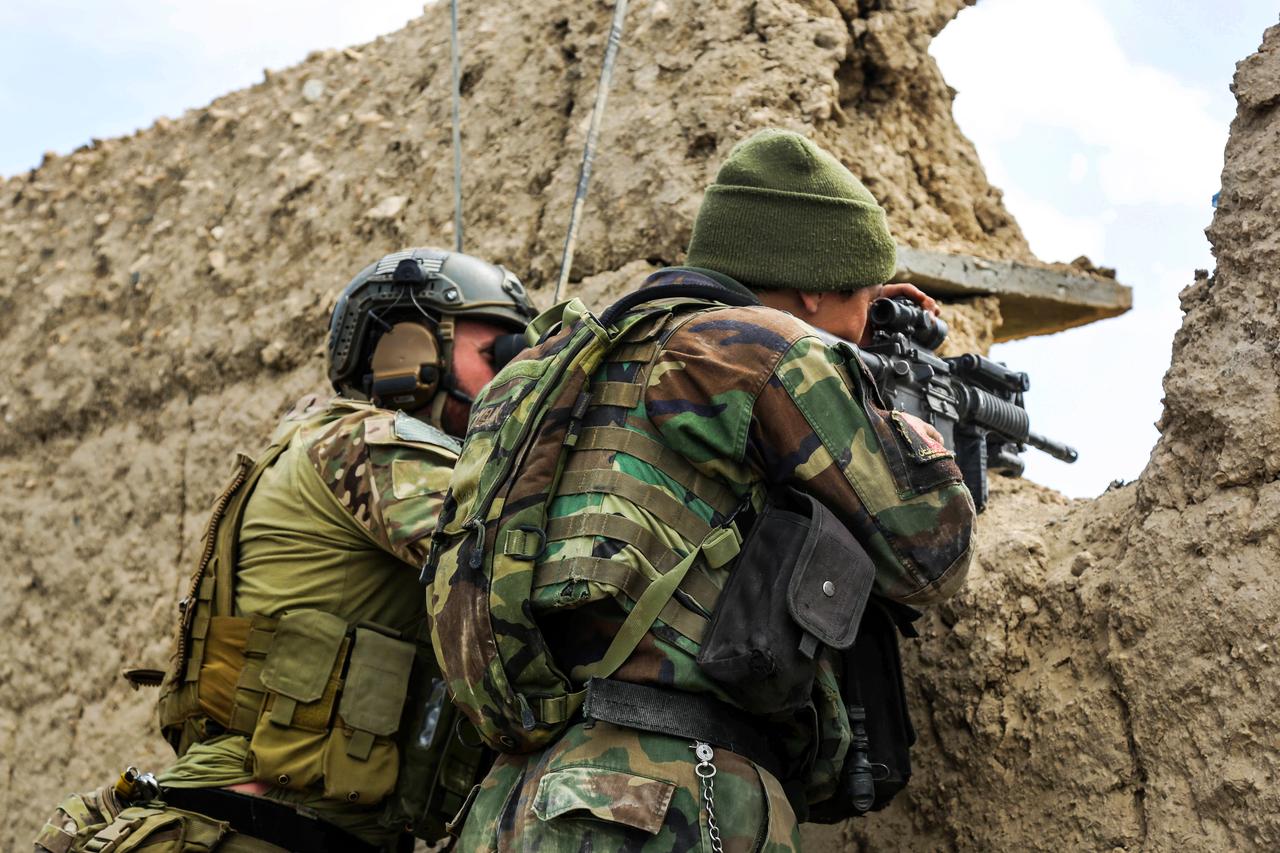
General Ahmadi describes the Zero Units as one of the most effective yet least transparent instruments of the Afghan war. Formally linked to the NDS but operationally guided by US intelligence, they occupied a gray zone between Afghan authority and American control.
“The strike forces, the so-called Zero Units, were small, agile, highly secretive and very effective,” he said. “They were recruited and run jointly by US and NDS intelligence support, but operated with a high degree of autonomy under U.S. guidance.”
The Kandahar Strike Force, known as NDS 03, was the most prominent of these units. Operating from the former Mullah Omar compound at Camp Gecko, it used to lead counterterrorism missions across Kandahar and neighboring southern provinces.
For Afghan commanders, the challenge lay not in the unit’s effectiveness but in its unstructured relationship to national command. “There was a lack of transparency over chains of command, oversight, command and control and rules of engagement,” Ahmadi recalled.
He notes that although coalition intelligence maintained oversight of recruitment, training and payments, “these units remained outside standard ANASOC structures,” leaving Afghan leadership without full visibility.
Some coordination existed to prevent accidental engagements and to share time-sensitive intelligence, but it was far from seamless. “There were occasional points of coordination so that the U.S. did not accidentally strike Afghan units,” he said.
“Despite all these military and intelligence levels of coordination, we had many occasions of Afghan forces’ casualties from Coalition fires and strikes, and it happened even between NATO forces.” For Ahmadi, these incidents illustrated the complexity of joint operations in a high-tempo counterterrorism environment.
He personally interacted with Zero Units whenever their operations overlapped with ANASOC’s area of responsibility.
“I visited their headquarters and other camps for coordination and inter-agency deconfliction,” he said. Because most operational details were classified, Afghan commanders had limited insight into prioritization and mission design.
“Most targets, the top 20, were selected by U.S. intelligence,” he noted, with some coordination from Afghan NDS.
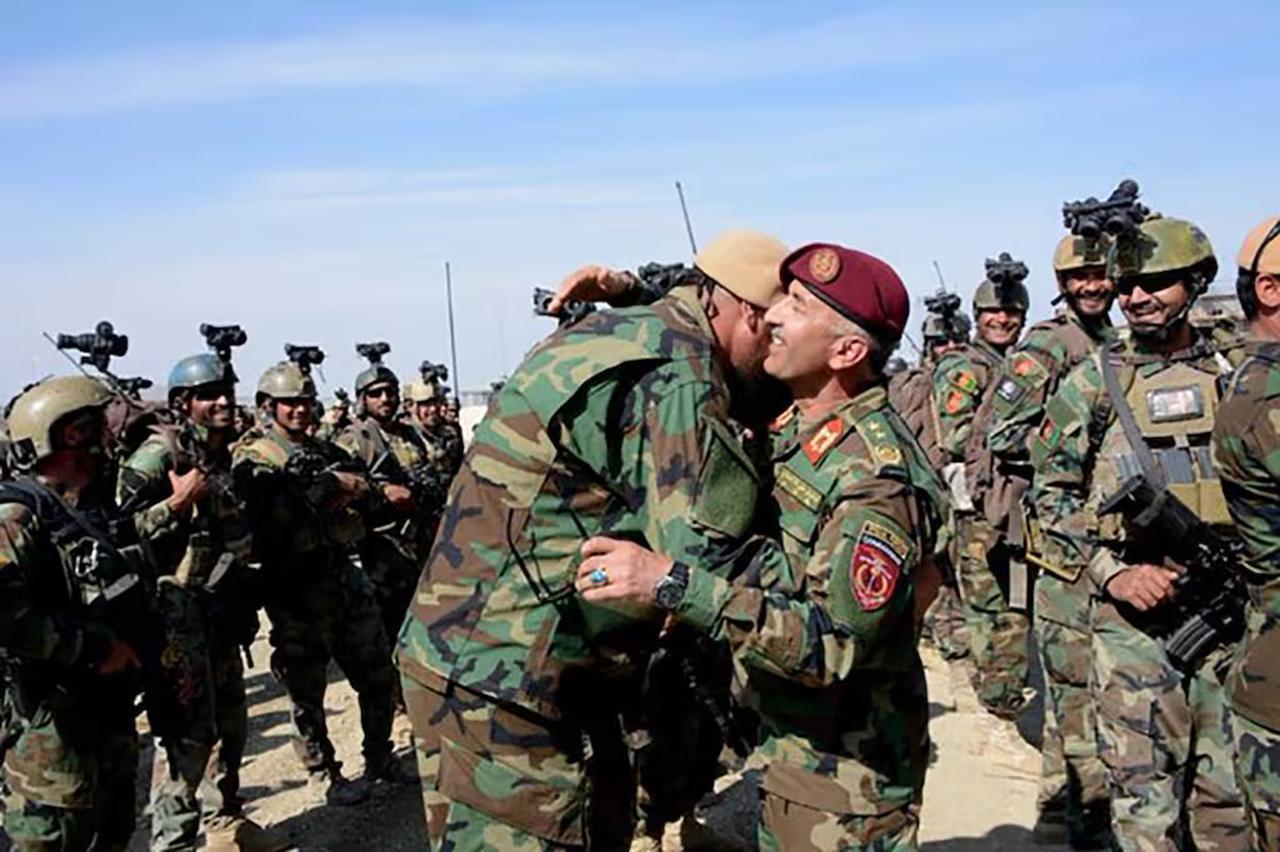
'Fog of war' and systemic failures behind night raids
General Ahmadi views the controversies surrounding zero-unit night raids as the product of overlapping realities.
“Failures of intelligence and the fog of war with chaotic ground conditions because these forces were facing the most dangerous and experienced terrorists in the world, which inevitably cause mistakes in raids and targeting,” he said.
He also pointed to deeper structural issues: “systemic problems in command, control, rare accountability, limited judicial review and oversight of these units, which operated in two systems with two different military–intelligence cultures, priorities and historical-tribal characteristics.”
Individual cases, he noted, unfolded under extreme pressure, with “separate operational and tactical situations, characters, and various terrorist groups with no rules of engagement exploiting their mistakes.”
But for Ahmadi, tactical errors soon evolved into strategic liabilities.
“Repeated civilian harm through military operations undermines the government’s legitimacy,” he warned, arguing that the political context amplified these failures.
“More than this, the government’s top leadership’s endemic corruption, incompetence of local governance, and our president's tribal politics had long-term negative consequences for the Afghan Republic, and strengthened insurgent recruitment, local hostility and rising community resentment, exactly the opposite of the hearts and minds effect counterterrorism forces seek.”
He also highlighted a deeper vacuum: “It had other aspects, too, lack of political clarity and vision, no definition of the enemy, and the national security interests compared to the tribal interests.”
His criticism of former presidents Karzai and Ghani is particularly sharp.
“(Mr.) Karzai and (Mr.) Ghani in 20 years (2001–2021) didn't believe that their National Army, police and NDS were giving their lives and fighting counterterrorism and counterinsurgency. They expressed controversial messages to the nation and armed forces and freed thousands of terrorists from prison, including convicted suicide attack planners and their sponsors, while security forces gave the ultimate sacrifice capturing and bringing them to justice.”
The fault line between CIA, Afghan State and fighters
For General Ahmadi, the Zero Units and other CIA-backed forces were never just a technical instrument. They sat at the fault line between Afghan society, its own government, and the United States, and the way they were recruited and managed left long-term risks that did not end when the war did.
“These forces sometimes were tension points between the people, the Afghan government, and the U.S.,” he recalled.
“Zero Units’ recruitment, training, equipping, and payments occurred in a mix of formal and informal ways by the US and Afghan NDS partners, but vetting and oversight were uneven or inadequate.”
Seen from that angle, the Lakanwal case is not simply a story about one man, but about the pressure placed on an entire ecosystem of wartime partners. Ahmadi cautions against jumping to conclusions.
“We must condemn any terrorist act,” he said, “while we cannot exclude operational fatigue and pressure, deep background factors, motives, long-term risk management, post-resettlement struggle, integration, and PTSD in the case of Lakanwal.”
He argued that the problem begins with the limits of battlefield vetting and continues into the resettlement phase.
“Tactical local vetting during wartime is indeed insufficient or incomplete,” he noted.
“However, resettlement systems must include long-term behavioral and mental health monitoring and taking care of personnel who serve in high-intensity units, which is true for all kinds of armies.”
To many observers, these pressures raise a further question—whether some operators may have entered this environment at an age too young for the demands of such units.
Some U.S. press reports and online discussions have suggested that members of the Zero Units, including the Washington suspect, may have been recruited in their mid-teens.
When asked about this, “Young people aged eighteen and above were recruited across the board. Some local militia commanders had minors under eighteen recruited with different purposes, but not in the elite units.” General Ahmadi responded.
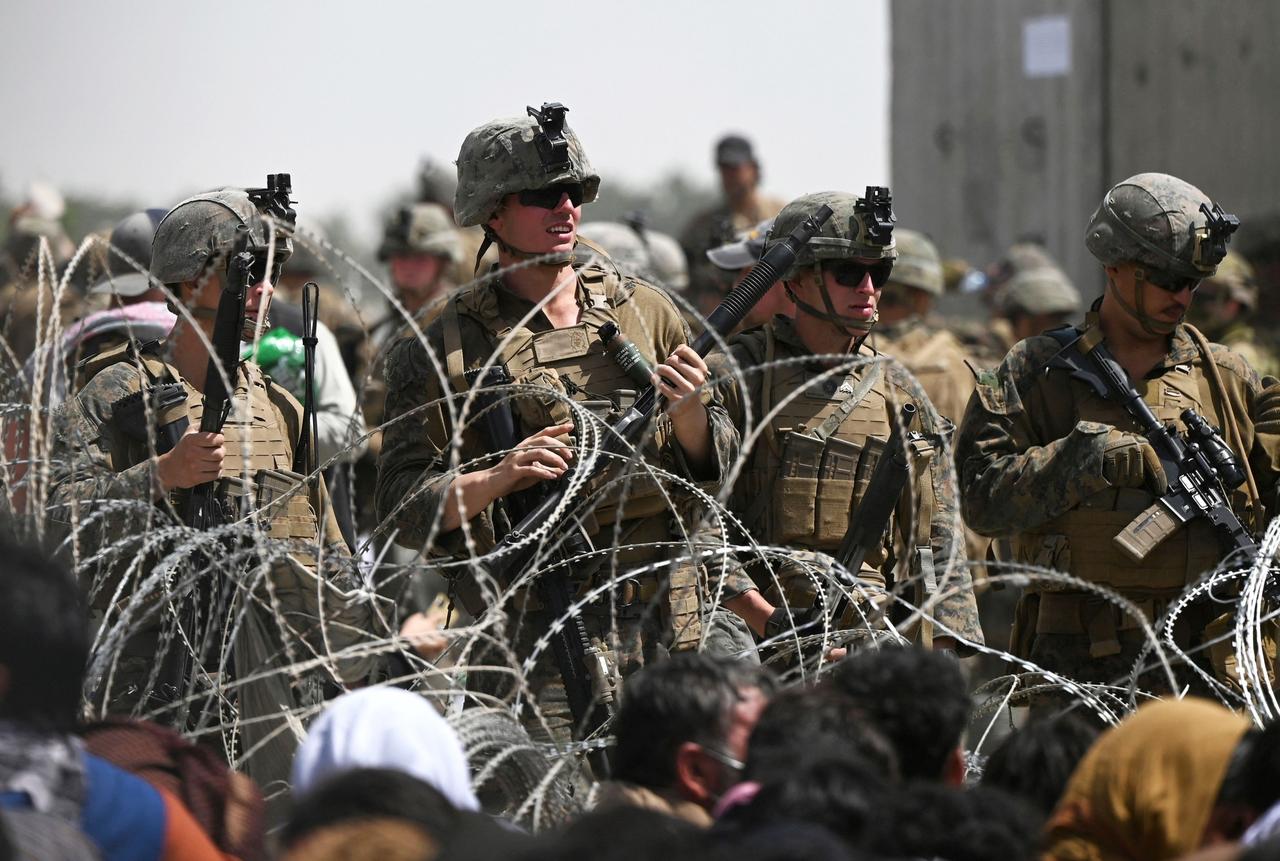
'The evacuation saved lives, the aftermath failed them'
For General Ahmadi, the 2021 evacuation was an urgent moral obligation that the United States fulfilled only in its first phase.
“The bottom line is that Operation Allies Welcome kept its promise in the most urgent sense by getting thousands out of Afghanistan and preventing terrorist reprisals,” he said. But the speed and chaos of the airlift also meant that some who posed risks may have slipped in, while others who truly needed protection were left behind.
What followed, Ahmadi argues, has been even harder for many of those who served in special forces, commando units, or CIA-linked teams.
“For many former Special Forces, commando soldiers and intelligence personnel from CIA-backed units, the combination of high rates of trauma, secrecy about their service and humiliation of political betrayal by the Afghan president and their generals had direct moral injury,” he explained.
“In addition to that, legal uncertainty, economic hardships and reintegration difficulties have left them vulnerable and unsupported.”
Evacuation, in his view, was only the beginning of the United States’ responsibility. Long-term protection and stability remain largely unaddressed.
“The U.S. can and should grant permanent residency for verified wartime partners through the Adjustment Act,” he said, adding that sustained investment in mental health support, employment pathways and community integration is essential. Without such measures, veterans of high-intensity operations carry unresolved psychological burdens while navigating a system that offers little clarity about their future.
Available records show that Lakanwal had been seeking help well before the attack. Emails and social service notes document repeated requests for housing and mental-health support with little follow-up.
Rolling Stone also reported, based on screenshots it reviewed, that he asked for assistance in a Zero Unit veterans’ chat linked to a CIA liaison, with some messages ignored or removed.
Although not independently confirmed, the accounts reinforce allegations that he may have been experiencing PTSD or related mental-health distress in the months before the attack, with only limited support available to him, in a pattern that echoes long-standing debates about insufficient care for America’s own war veterans.
The danger of turning a security incident into collective blame
“One person’s terrorist act or crime, however painful and politically explosive, should not become a reason for rapid policy changes for collective punishment of tens of thousands of good, legitimate allies,” he says.
“They put themselves at risk to work with and help the U.S., and such actions degrade future partnership credibility.”
At the same time, Ahmadi does not dismiss the security gaps.
“These incidents expose real weaknesses and serious risks in rushed vetting and post-resettlement processes,” he noted.
The problem, in his view, is not the existence of vetting but its design. Wartime screening is necessarily fast and incomplete; the long-term phase is where robust monitoring, mental-health support and risk identification must happen.
“The US must rapidly implement targeted reforms for vetting to identify real high-risk individuals while protecting innocent allies and fulfilling moral obligations,” he said.
He warns that the United States’ credibility is also at stake. Partners who fought alongside American forces did so at enormous personal cost, and many of them are now young families now trying to rebuild their lives.
“The U.S. has a moral obligation, credibility and national security interests for treating partners fairly,” Ahmadi stressed. Abandoning them or subjecting them to blanket suspicion would send a devastating signal to future allies in other conflicts.
Ahmadi also pointed to a second, often ignored dimension. In the chaos of the 2021 evacuation, the United States may have admitted individuals aligned with hostile networks while leaving behind many who were genuinely at risk.
“The U.S. probably took risks by bringing in terrorists instead of the genuine Afghans who truly need to be saved from the Taliban,” he said.
For him, strengthening security requires a broader strategic correction. He calls for a reevaluation of U.S. policy toward the Taliban and affiliated groups, closer scrutiny of public figures in the diaspora who promote extremist narratives, reconsideration of financial flows that empower the Taliban and more active cooperation with the Afghan-American anti-Taliban community.


 Set as preferred source
 Set as preferred source


 4 min read