Newsletters




The outbreak of war between the United States and Iran has produced a striking pattern of shifting explanations from political leaders and commentators. From the first hours of the conflict, officials in Washington have advanced multiple rationales for military action, ranging from neutralizing Iran’s missile capabilities to eliminating a nuclear threat or even encouraging political change inside the country.
Rather than presenting a single, consistent explanation, official statements have moved between different arguments depending on the audience and the moment.
At the same time, the debate has extended beyond government statements. Media outlets, political commentators and analysts have offered their own interpretations of why the conflict began, often emphasizing geopolitical grand plans, alliance politics or domestic political appeals.
From the outset, the administration of U.S. President Donald Trump offered multiple explanations for launching military operations against Iran. In the earliest statements, officials framed the campaign as a response to decades of Iranian hostility and regional activity.
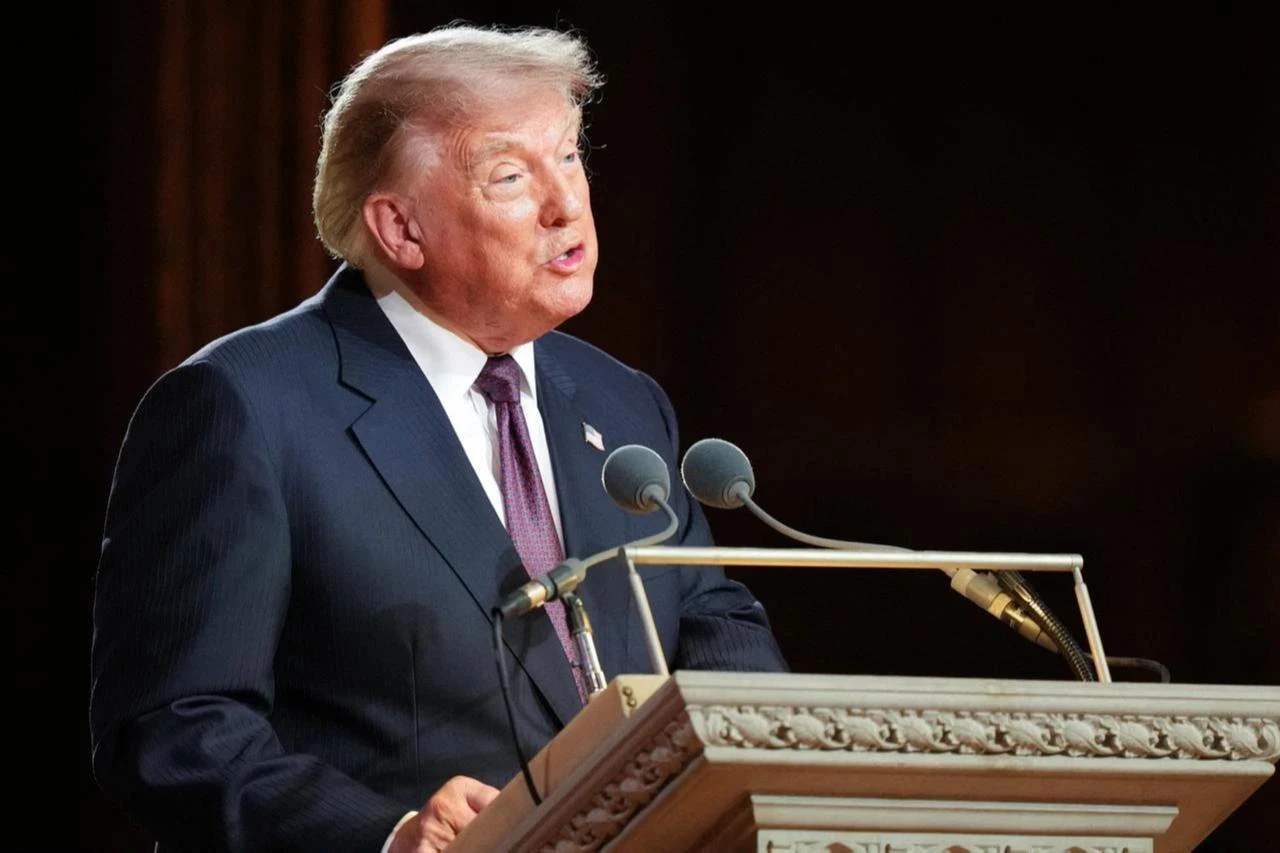
Trump announced the start of Operation Epic Fury in an eight-minute video posted on Truth Social on Feb. 28. In the address, the president described the operation as both a defensive military response and an opportunity for political transformation inside Iran. References to the 1979 hostage crisis, Iran-backed militant groups and Tehran’s broader regional policies were combined with calls for Iranians to reclaim their country.
Within the same speech, the administration’s objectives appeared to expand rapidly. The campaign was described as an effort to destroy Iran’s missile arsenal, dismantle its missile production industry and eliminate what was portrayed as an imminent nuclear threat.
Later the same day, Trump offered a different framing, suggesting the conflict could either escalate into a broader effort to “take over the whole thing” or conclude within a few days after destroying Iranian nuclear and missile infrastructure.
As military operations began, U.S. officials also moved quickly to present a legal justification for the conflict. On the first day of the attacks, the U.S. mission to the United Nations invoked Article 51 of the U.N. Charter, which allows states to act in self-defense if they face an imminent threat.
The administration argued that Iran’s missile capabilities and nuclear ambitions posed a direct danger to American forces deployed across the Middle East.
The claim sought to position the war as a defensive response rather than a preemptive strike.
However, the self-defense argument didn’t hold for too long. The day after the diplomatic outreach, the alleged reports from congressional briefings on March 1 acknowledged that Iran had not been preparing an immediate attack against U.S. forces or bases unless Israel first launched a strike against Iranian targets.

In the first Pentagon press briefing following the initial strikes, Defense Secretary Pete Hegseth described the operation as a focused military campaign with clearly defined objectives. According to Hegseth, the mission aimed to destroy Iran’s offensive missile capabilities, dismantle missile production infrastructure and weaken naval and security assets connected to Iran’s military apparatus.
He emphasized that the campaign was not intended as a regime-change war. At the same time, his remarks suggested that the outcome of the conflict could still transform Iran’s political leadership, describing the possibility of change in Tehran as beneficial for global security.
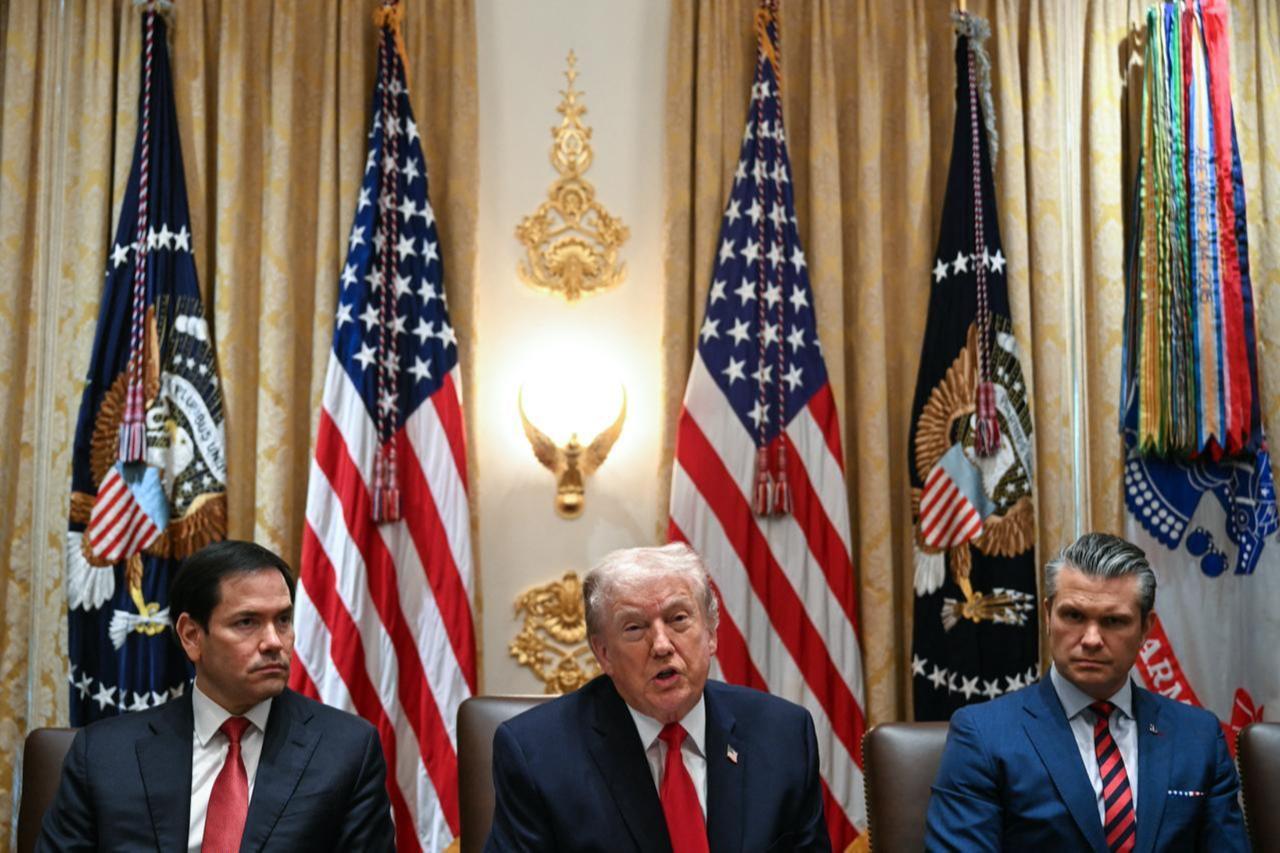
The explanation evolved again hours later when Secretary of State Marco Rubio offered a separate account of the war’s origins. Rubio told reporters that Washington had been aware Israel was planning a unilateral strike against Iran and that Tehran had delegated authority to commanders to retaliate automatically against U.S. forces if attacked.
Trump soon rejected Rubio’s explanation, presenting yet another justification for the war. The president insisted the decision to attack Iran was entirely his own and based on the belief that Tehran was preparing to strike first.
According to this version of events, the United States acted preemptively to prevent an Iranian attack.
The messaging continued to shift in the days that followed. During a subsequent Pentagon briefing on March 4, Hegseth framed the conflict partly as retaliation for an alleged Iranian plot to assassinate Trump. He announced the killing of an Islamic Revolutionary Guard Corps commander who was described as being behind the plan.
By March 6, the president’s language had escalated further. In a Truth Social post, Trump declared that the only acceptable outcome of the war would be Iran’s “unconditional surrender,” presenting the conflict in terms that suggested a far broader objective than earlier descriptions of limited strikes against missile infrastructure.
Outside government circles, commentators and analysts have offered their own explanations for the conflict.
Political commentator Tucker Carlson suggested that Israeli Prime Minister Benjamin Netanyahu effectively drove the decision to escalate tensions with Tehran. Similarly, the investigative outlet The Lever characterized the campaign as heavily shaped by pro-Israel lobbying in Washington.
Others have focused on broader geopolitical dynamics. Analysts like Zineb Riboua argued that the conflict should be viewed within the context of competition with China. According to this interpretation, weakening Iran could undermine Beijing’s long-term strategy in the Middle East.
Yet even these broader geopolitical arguments leave unresolved questions about timing. While strategic rivalry and alliance politics may explain long-term tensions, they do not fully clarify why the conflict erupted when it did.
According to Ali Bakir, a seasoned foreign policy analyst, Washington’s entry into the conflict alongside Israel has transformed a localized confrontation into a high-stakes regional crisis. Bakir argues that while the Trump administration has publicly flirted with the ambitious goal of regime change, the underlying American calculus relies on the belief that a relentless air campaign can act as a catalyst for internal disintegration. This strategy relies on the idea that crippling leadership and military infrastructure to create a power vacuum, betting that external pressure will eventually force a domestic breaking point.
Bakir argues that Washington ultimately hopes sustained pressure will set off one of three developments inside Iran. One possibility is the gradual erosion and eventual collapse of the political system under the cumulative weight of military and economic strain. Another scenario involves a coup or internal power shift emerging from within Iran’s own security and political establishment. A third envisions widespread unrest that could bring about a new leadership prepared to negotiate with Washington on more favorable terms.
In the absence of a clear and consistent explanation, the war’s most enduring question may not be how it began, but which of these competing justifications will ultimately define its outcome as the U.S. military puts its weight on the region.


 Set as preferred source
 Set as preferred source


 2 min read