Newsletters


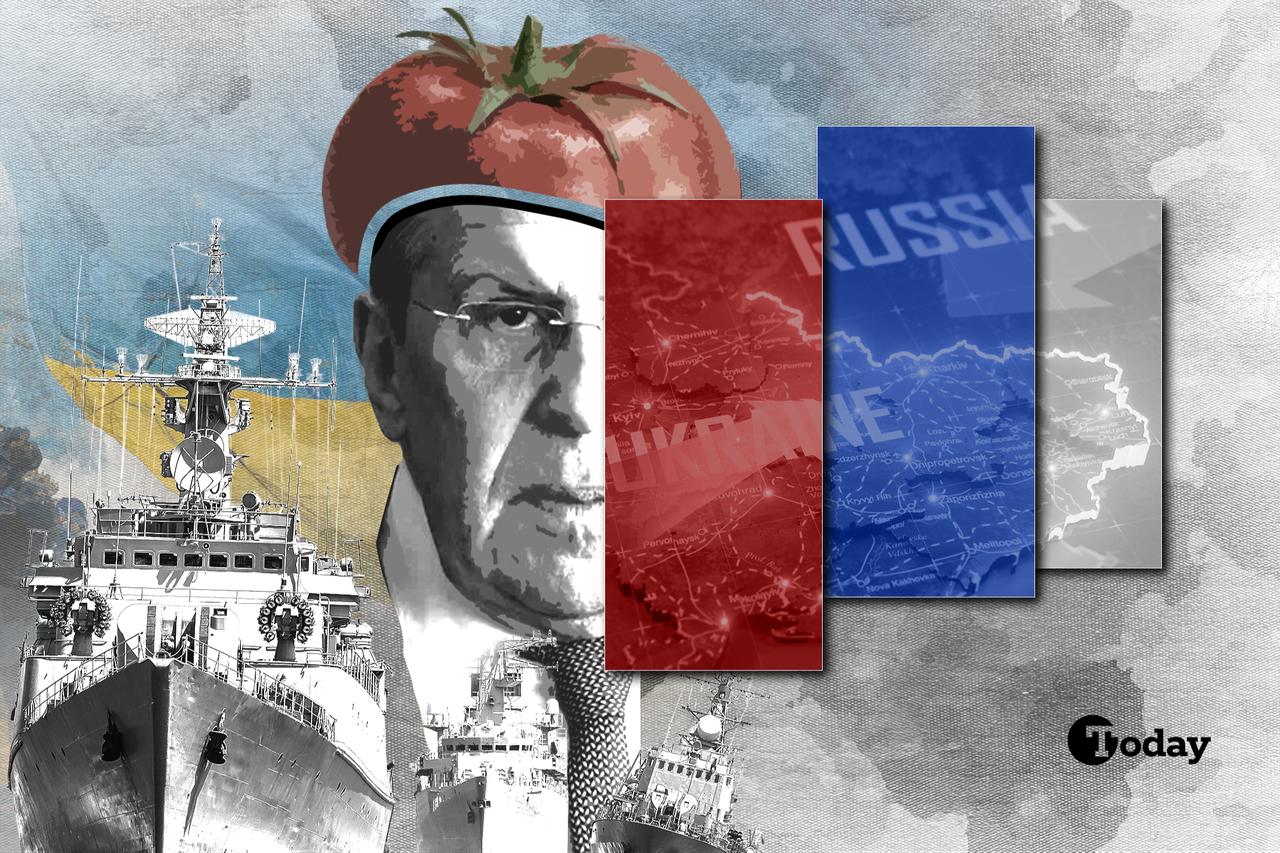


If diplomacy were performed beneath the bright Klieg lights of Broadway, Russian Foreign Minister Sergey Lavrov would win the Tony Award for best supporting actor in a musical.
Lavrov’s song-and-dance is to make Vladimir Putin appear restrained, acting within reason, defending the motherland, and enjoying Turkish vegetable products.
Spend five minutes with the veteran 75-year-old diplomat, and he can easily woo you into a Moscow state of mind.
In his interview with the Türkiye daily, Lavrov delivered one of his regular masterclasses in narrative shaping. In his eyes, Russia is, expectedly, a defender against an aggressive West, a partner for peace, and an indispensable architect of a new international order.
He projects the confidence of a country with vast resources and massive production capacity, even as the cracks of war fatigue begin to show. As one prominent Turkish businessman once told me, “If you lock Russia’s door for 100 years, it would still sustain itself.” In Lavrov’s theater, that self-sufficiency is the ultimate closing act.
Lavrov repeatedly framed Russia as a nation forced into an adversarial posture by a West determined to diminish its influence. He invoked history, from Napoleon, Hitler, to the Cold War, to argue that Russian security concerns are rooted in centuries of real threats.
Then he bridged past to the present: the West, especially NATO and the U.S., is allegedly intent on weakening Russia by proxy in Ukraine.
He said, "Just as Hitler openly rallied people under the Nazi flag, today many countries, including those right next to us, have sought to whitewash their role in the genocide committed against Soviet peoples after the Cold War."
It is striking how differently politicians deploy the Hitler analogy: Lavrov applies it to Zelenskyy, Netanyahu to Khamenei, and Erdogan to Netanyahu.
Such historical framing is rhetorically powerful. Who could fault a country for guarding its borders if encirclement truly threatened it? Yet this interpretation omits the agency of sovereign states like Ukraine, which have their own aspirations, a path that many nations chose in the past. Its fault was to seek a path by bordering Russia at Putin's peak.
One of the consistent themes in Lavrov’s diplomacy is the advocacy for a “multipolar world order,” a world beyond Western dominance. Moscow, he says, champions a more equitable international system where no single bloc dictates terms.
That is where he pays his respects to Türkiye.
Despite Türkiye’s status as a NATO member, Russia does not treat it like the rest of the ensemble. Türkiye’s drive for strategic autonomy and its emphasis on putting national interests first are a lot more appealing to Russia than smaller neighbors that simply bandwagon behind others.
Speaking to Türkiye Daily, Lavrov praised the quality of Turkish agricultural products. Russians’ love for Turkish tomatoes is never-ending. However, Turkish tomato exports to Russia have been declining in recent years, for reasons that remain unclear.
Lavrov praised Türkiye as a unique diplomatic player with the potential to help “rescue a faltering global order.” He specifically lauded Turkish diplomacy and praised its constructive role in international crisis resolution.
This may flatter Turkish audiences, as there are, however, relatively small, pro-Russian political circles in Türkiye. These groups are mostly left-wing audiences who have a natural soft spot for Moscow from Soviet times. To them, whatever Lavrov says goes down easy—they buy into his narrative almost instantly, whether it’s entirely true or not. A lot of this comes down to the fact that anti-Americanism is baked into the Turkish public's DNA right now. It makes Russia’s complaints about the West feel more like a shared grudge.
Lavrov's praise of Türkiye also aligns with Ankara’s newly-formed bid to be seen as a mediator between different aggressors. However, Lavrov’s praise comes bundled with a consistent caveat: Western actors, not Russia, are to blame for blocked peace efforts. Moscow claims it supported early peace talks, including in Istanbul, only for the West to sabotage them.
Lavrov’s toughest line in the interview was on Ukraine. He painted the conflict as nothing less than a calculated Western project to encircle and weaken Russia, using Kyiv as a pawn in a broader geopolitical game.
Lavrov’s words appeal to logic and legitimate concerns, but they also cloak strategic aggression in the garb of defensive necessity.
As Western and non-Western audiences alike digest his arguments, one fact remains clear: diplomacy, in the hands of a seasoned actor, can make even a wolf’s howl sound like a lullaby. But underneath, the underlying behavior still matters.
As Western and non-Western audiences alike digest his arguments, one fact remains clear: diplomacy, in the hands of a seasoned lead like Lavrov, can make even a wolf’s howl sound like a soothing lullaby. No matter how convincing the act, the underlying behavior is what truly dictates the final curtain call.


 Set as preferred source
 Set as preferred source


 2 min read