Newsletters


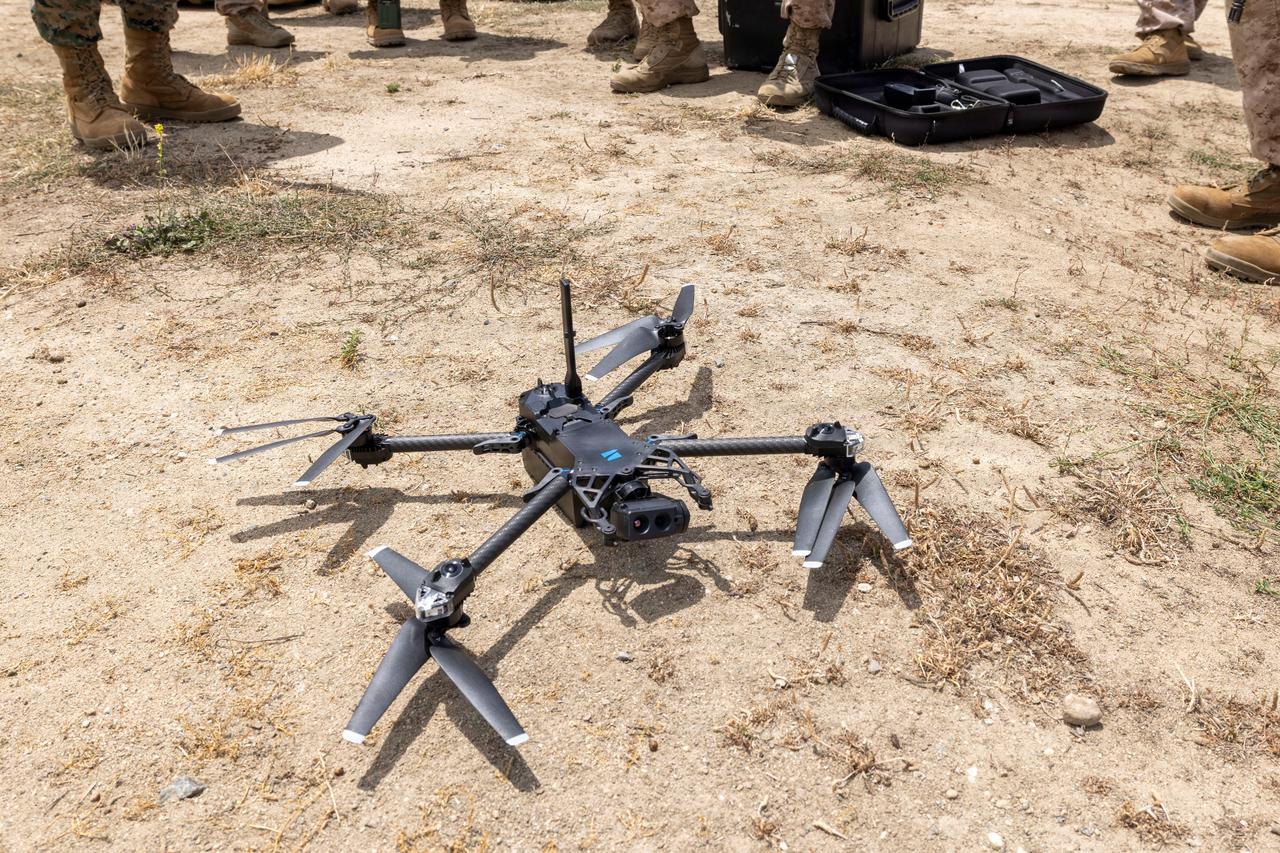


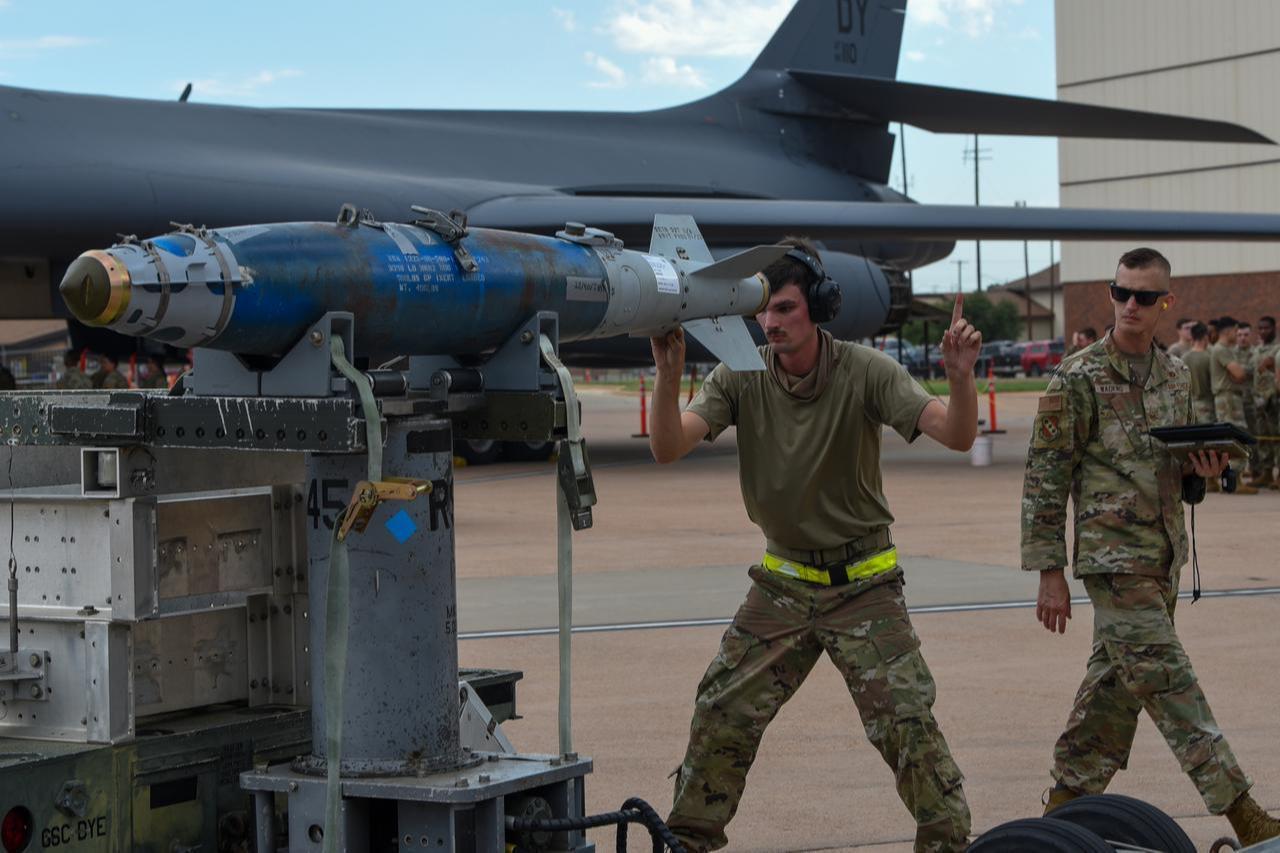
The Pentagon is prepared to cut traditional high-end weapons systems to protect investment in low-cost autonomous drones and AI-driven munitions if Congress fails to pass a $350 billion reconciliation funding package, the Defense Department's chief technology officer warned.
The disclosure lays bare the internal trade-offs shaping the most aggressive AI military buildup in U.S. history.
Emil Michael, who serves concurrently as undersecretary of defense for research and engineering and as Pentagon CTO, made the remarks at the Hudson Institute.
He also revealed that 1.5 million Defense Department personnel, out of a total workforce of 3.5 million, are now using generative AI daily on the department's GenAI.mil platform, up from just 80,000 users in December 2025.


The $350 billion reconciliation request is paired with a $1.15 trillion base discretionary budget in the White House's fiscal year 2027 defense proposal.
Key drone and autonomous systems funding was pushed into the reconciliation portion, a decision now under pressure after Republican Sens. Susan Collins and Mitch McConnell signaled on June 9 that they saw no path to passage in the upper chamber.
Trump responded on Truth Social, calling on Republicans to "Immediately advance and pass the forthcoming $350 Billion Reconciliation Bill" and publicly excoriating McConnell.
Michael acknowledged that Congress controls appropriations but said the department would adapt if reconciliation collapsed.
"If we're forced into that position, we just make other trade-offs, like against exquisite weapons and systems: How much of those are we willing to sacrifice in place of low-cost autonomous weapons?" he said, adding, "It's just like balancing any budget and any portfolio."
At the center of the package is the Defense Autonomous Warfare Group, known as DAWG, whose budget request jumps from $225 million in fiscal year 2026 to $55 billion in fiscal year 2027, a roughly 244-fold increase.
Senate Armed Services Subcommittee Chair Sen. Joni Ernst described DAWG's mandate as "rapidly developing, testing, and fielding large numbers of uncrewed systems and drones" during a May 19 hearing.
Ernst also flagged that AI-driven targeting is being integrated with autonomous munitions "at a pace that DoD directive 3000.09 was not designed to contemplate."
Michael agreed that the existing autonomous weapons governance framework "absolutely needs updating," citing both the threat environment and "lessons we learned in Iran."
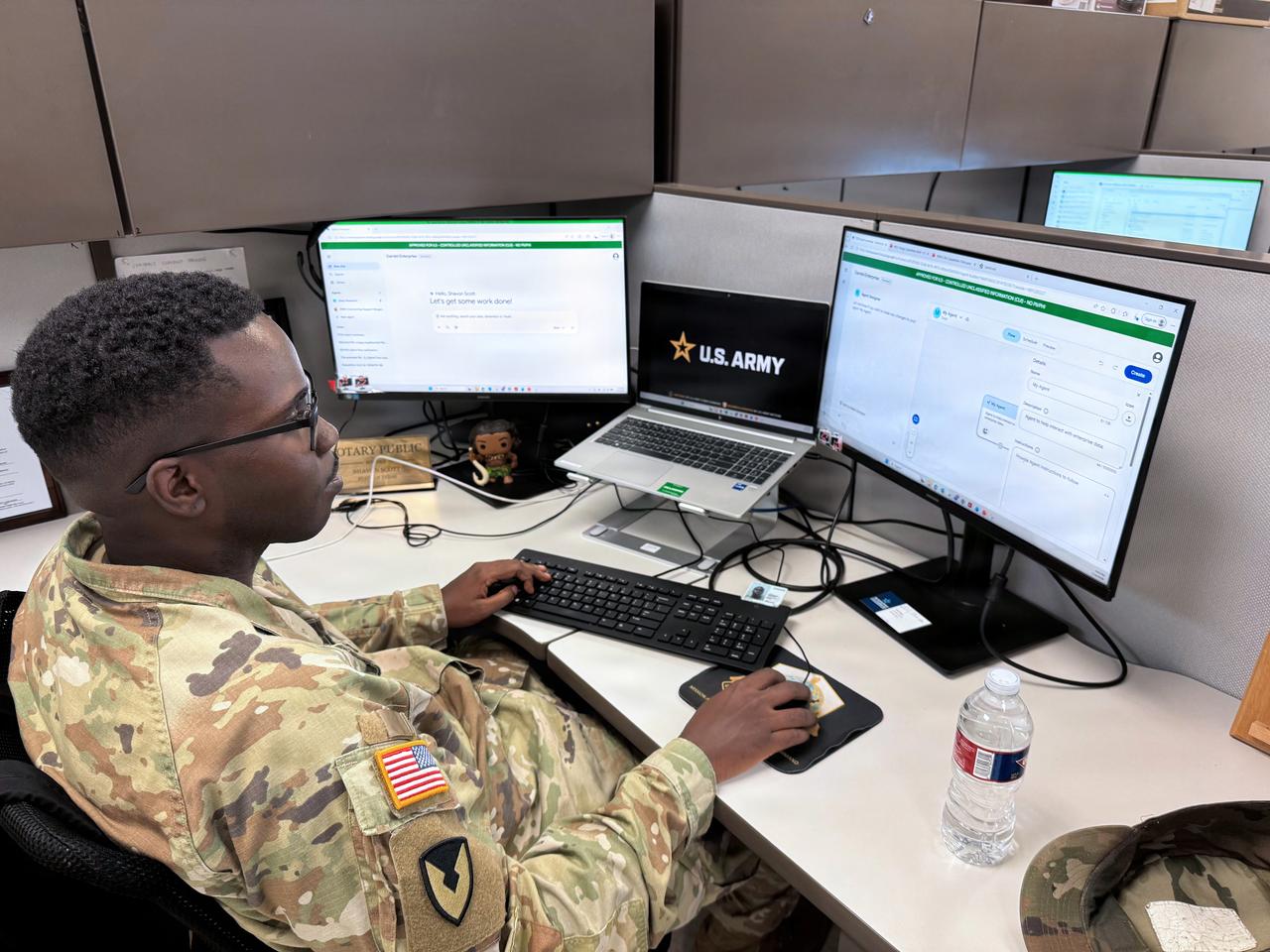
The GenAI.mil platform, launched in December with Google Gemini as its first tool, has scaled rapidly across the unclassified Defense Department network.
OpenAI's ChatGPT and xAI's Grok were also slated for integration.
The department has created more than 100,000 customized AI agents for specific tasks, and 50,000 personnel have signed up for training on the technology, with a waitlist still active.
Michael described use cases ranging from drafting job descriptions to congressional reporting. "I have to report to Congress every year on this thing. Let me load all the papers onto it and have it draft me a congressional report that would otherwise take 200 hours of staffing time and do it in five hours," he said, characterizing the shift as the department catching up to commercial practice.
On the warfighting side, Michael said AI tools were used extensively during Operation Epic Fury against Iran, though he specified that target lists continue to be developed "independent of AI."
"What AI could do is say, when do you hit that target because of what's happening in the weather, where are your assets, where are the allies' assets, and what will happen when, and when is the ideal time to strike a target that someone else has selected," he noted.
To sustain expanded AI operations, the Pentagon is requesting nearly $30 billion for fiscal year 2027 for next-generation AI supercomputers and computing infrastructure under what Michael calls the "AI Arsenal" initiative.
He described plans to develop dedicated classified facilities, floating the name "combat compute commands," noting that classified and top-secret work cannot run on commercial cloud infrastructure. "It has to be different," he said.
Michael also flagged community resistance to data center construction as a strategic vulnerability, saying, "China, while they don't have the exquisite chips that we have, they do have a lot of power, like electricity, and they do have a lot of will. There's no community resistance in China; they'll put a data center wherever they want."
Michael confirmed that the Defense Department will divest from Anthropic within two months, citing the company's terms of service as incompatible with Pentagon requirements.
"What we're worried about with the terms of service that they had and their posture toward the department, which when they questioned the Maduro raid, and whether their software was used inappropriately, gave us the sense that this was not a reliable partner," he said.
He contrasted Anthropic's stance with Google's, Microsoft's, and Nvidia's, which he said "went through their legal teams and agreed to our terms of all lawful use cases, where Anthropic would not. So that should say something that our terms weren't unreasonable."
Sen. Elissa Slotkin, the subcommittee's ranking minority member, called the divestment decision difficult to understand given Anthropic's embedded role across the military services.
"All of you use Anthropic right now, to the point where we've named them a supply chain risk, and all of you are supposed to be divesting from Anthropic in the next two months," Slotkin said.
 2 min read

On hypersonics, Michael highlighted Castelion's Blackbeard missile, described as costing under $500,000 per unit compared to $50 million for existing systems.
The Navy awarded Castelion a $105 million contract in April to integrate Blackbeard onto the F/A-18 for carrier operations, with an Early Operational Capability targeted for 2027.
The Pentagon subsequently announced plans to purchase a minimum of 500 Blackbeard missiles annually for two years, with options to extend for five years and total procurement potentially exceeding 12,000 missiles.

On directed energy, Michael said the science is "largely done," and the focus has shifted to engineering for scale and cost reduction.
"We now have a suite of directed energy products that go from low-end to high-end, and now we have to scale production of those," he said, linking the push to Golden Dome anti-missile architecture.
A primary directed energy demonstration within the Golden Dome system is planned for summer 2028.
Michael also warned that China is "distilling" American AI models, effectively copying them for a fraction of the cost while removing safety guardrails, in ways that could enable their use "as a cyber weapon, as a biological weapon, or as a chemical weapon."
He said the U.S. leads China by six to twelve months in AI performance according to the latest NIST evaluation and that the gap had widened by a few months since the previous assessment.


 Set as preferred source
 Set as preferred source




 1 min read