Newsletters


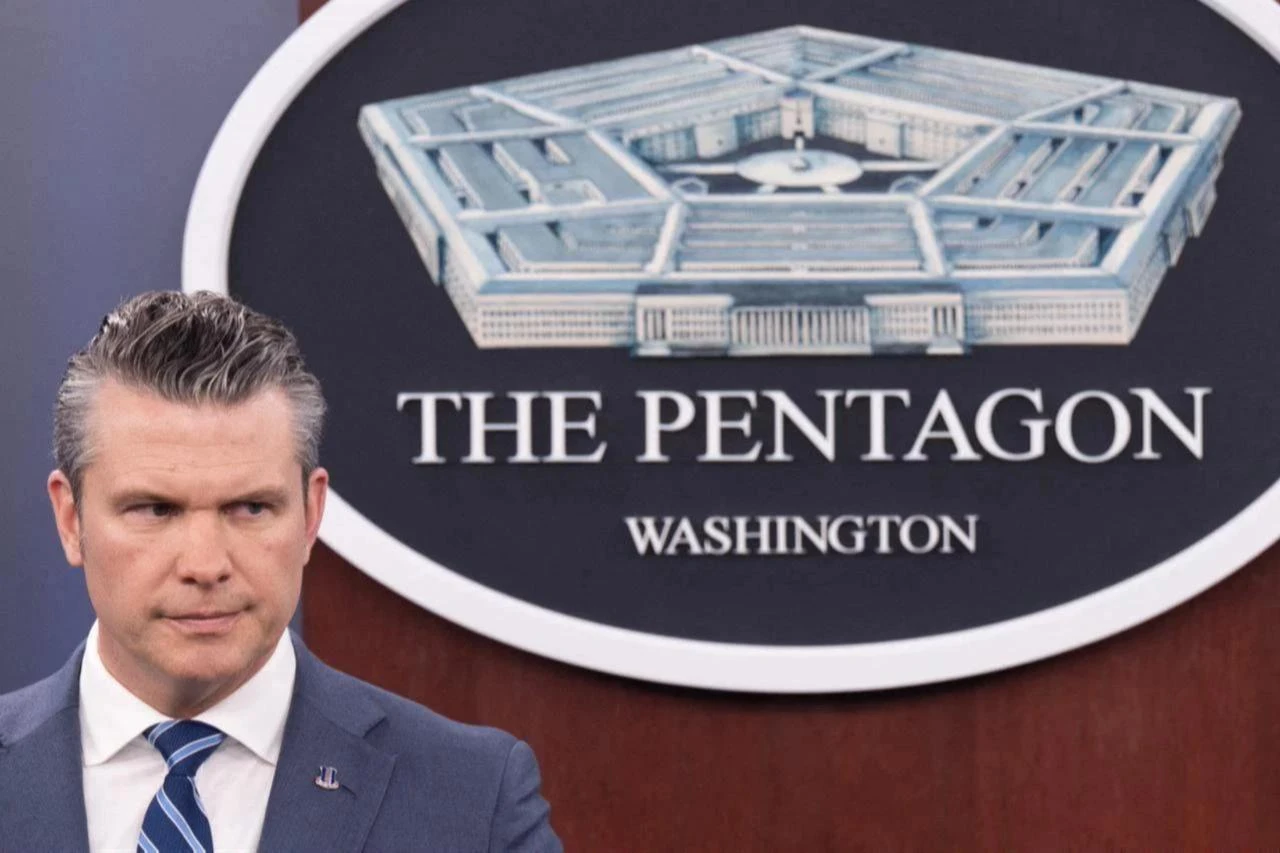


In mid-July, the U.S. Air Force sent a stark warning to the nation's largest military contractors: strip all software built by the artificial intelligence company Anthropic from weapons and control systems by Sept. 1, or risk losing their business with the Pentagon.
Within a month, the Air Force reversed course, telling those same contractors they could, for now, disregard the order.
The about-face is the latest sign of confusion inside the national security establishment as it scrambles to respond to rapidly advancing artificial intelligence systems, even as agencies like the Department of Defense continue to rely on hardware first designed decades ago.
The reversal followed a monthslong public dispute between Anthropic's chief executive, Dario Amodei, and Defense Secretary Pete Hegseth over limits the company sought to place on the military's use of its technology.
A Pentagon memo reviewed by The New York Times told contractors that, "at this time," they were not required to remove Anthropic products interfacing with Department of the Air Force systems and networks.
The memo cautioned that the guidance could change again depending on the outcome of pending litigation.
A Pentagon official described the new Air Force instructions as temporary, insisting the department-wide mandate to remove Anthropic products remained in force.
Officials say the military has replaced Anthropic's "Claude for Government" tool, a version of the company's publicly available AI model adapted for classified use, across nearly all systems that once relied on it, and has ended its use in Maven, the Pentagon's intelligence-analysis and airstrike-targeting system used in the war with Iran.
The dispute traces back to restrictions Anthropic sought to attach to its products. Officials said the company initially presented the Pentagon with 25 pages of conditions before narrowing them, by February, to two: that its technology not be used for domestic surveillance of Americans or in fully autonomous weapons without human oversight.
Hegseth rejected the terms, arguing that defense contractors such as Raytheon do not dictate how their weapons are used and that such decisions belong to the government, not corporate executives. When Amodei would not budge, the Pentagon designated Anthropic a "supply chain risk" and barred its military use.
Emil Michael, the undersecretary of defense for research and engineering, said in May that Anthropic had brought the ban on itself and that the Pentagon had erred by relying too heavily on a single AI provider.
Asked whether Anthropic could repair the relationship, he said flatly it could not, "at the Department of War." A Lockheed spokeswoman declined to comment directly on the letter ordering Anthropic's removal, saying only that the company follows the "president's and the Department of War's direction," and that it expected minimal business impact since it does not depend on any single large-language model.
Despite the broader prohibition, the National Security Agency has continued using an experimental version of Anthropic's newer Mythos model, which is designed to detect and exploit software vulnerabilities.
Senior NSA officials argued that without it, the agency would struggle to find and patch weaknesses in the Pentagon's own systems.
The tool is also being used to probe the networks of adversaries including China, Russia, North Korea and Iran, according to current and former officials, who said abandoning the technology would have amounted to "unilateral disarmament."
The exemption became necessary after the Trump administration briefly barred all foreign nationals, including some of Mythos's own engineers, from accessing the model, before reversing that decision as well.
A former official who recently left the administration described the reaction inside government at the time simply as panic.


The Anthropic dispute is one strand of a broader pattern of shifting AI policy under the Trump administration. Early on, the White House pursued a largely hands-off approach shaped by David Sacks, the venture capitalist who oversaw AI and cryptocurrency policy until leaving the administration this year.
That approach favored loosening export restrictions to spread what Sacks called an "American tech stack" globally. In May, Trump scrapped a draft order that would have required AI companies to submit new models for a 90-day government safety review, accepting arguments that the requirement would hand China an advantage.
By June, however, the administration had imposed sweeping restrictions cutting off foreign access to Anthropic's Mythos model, before lifting the ban two weeks later without public explanation.
A similar reversal played out over export controls on Nvidia's advanced AI chips: the administration halted sales of an China-approved chip in April of last year, then reversed course that July after Trump met with Nvidia chief executive Jensen Huang, allowing sales to resume in exchange for a cut of the revenue for the U.S. government.
The administration also revoked a Biden-era rule restricting sales of the most powerful chips to countries outside a close circle of American allies, leading some U.S. companies to sell advanced chips to Chinese firms operating outside China.
Earlier this month, the administration told executives from major AI developers, including OpenAI and Anthropic, that new models would face government review to ensure they could not be used to build biological weapons or breach classified U.S. systems, including nuclear command networks.
That review, however, exempts "open" models whose underlying code can be modified by users, a category that includes many Chinese-made systems. One industry executive briefed on the policy, who spoke on condition of anonymity for fear of angering officials, called the exemption illogical given that open models pose similar risks.
Chris McGuire, a senior fellow at the Council on Foreign Relations and a former Biden administration official, said the export-control approach has been "incoherent," noting that the administration has loosened restrictions on China while directing its most forceful AI export measure against an American company.
"You're loosening export controls on China, you're leaving loopholes, and the first time you use export controls on A.I. is to blast an American company?" he said.
The tensions come as U.S. officials weigh how far behind China remains in AI development. Experts estimate China may be six months or less behind the United States in building the most advanced AI models, though likely years behind in producing the advanced semiconductors needed to power them.
CIA Director John Ratcliffe recently compared the technology's potential to "digital nuclear weapons," a comparison some believe understates the differences: unlike Cold War-era nuclear technology, which remained under state control and changed little over decades, AI is developed largely in the private sector, updated frequently and available globally.
Evan S. Medeiros, a professor at Georgetown University and a former National Security Council official, said Chinese officials have shown more willingness to discuss AI arms control than they have on nuclear arms control or missile defense, though it remains unclear what such an arrangement would look like.
President Trump has said AI will be a topic of discussion when he meets Chinese President Xi Jinping in Washington in late September, with two further meetings planned later in the year.
Pentagon officials reject the suggestion that the department has moved too slowly to adapt. One official, speaking on condition of anonymity to discuss internal policy, said the Defense Department integrated a version of Google's Gemini model into its systems within four days of its commercial release, despite the Anthropic ban.


 Set as preferred source
 Set as preferred source


 1 min read


 1 min read