Newsletters


Russia has built secret bases capable of launching high-powered attack drones deep into NATO territory, according to a Telegraph investigation that identified 10 Kremlin sites with newly constructed launch pads for Moscow's most advanced long-range strike drones, some of them within range of Warsaw.
Using leaked documents and satellite images, the Telegraph identified at least 59 new launch rails, mechanical guide tracks used to launch fixed-wing drones without a traditional runway, along Russia's border with Belarus and Ukraine.
Some of the bases have been repurposed from existing military installations and civilian airports, while additional launch pads have been carved out of the Russian countryside.
Imagery analyzed by drone intelligence firm DroneSec found that about 20 of the newly fitted rails appeared to be of extended length, indicating they are built to launch Russia's latest long-range attack drones.
One base had enough storage capacity to hold more than 1,000 drones at a time, and further launch rails are under construction at a number of key sites, according to the Telegraph.
Some of the identified bases are already being used to strike Ukraine, with their proximity to the border aiding mass aerial attacks that push past Kyiv's diminishing air defenses. Open-source tracking data showed seven of the 10 identified sites were used during recent bombardments of Kyiv.
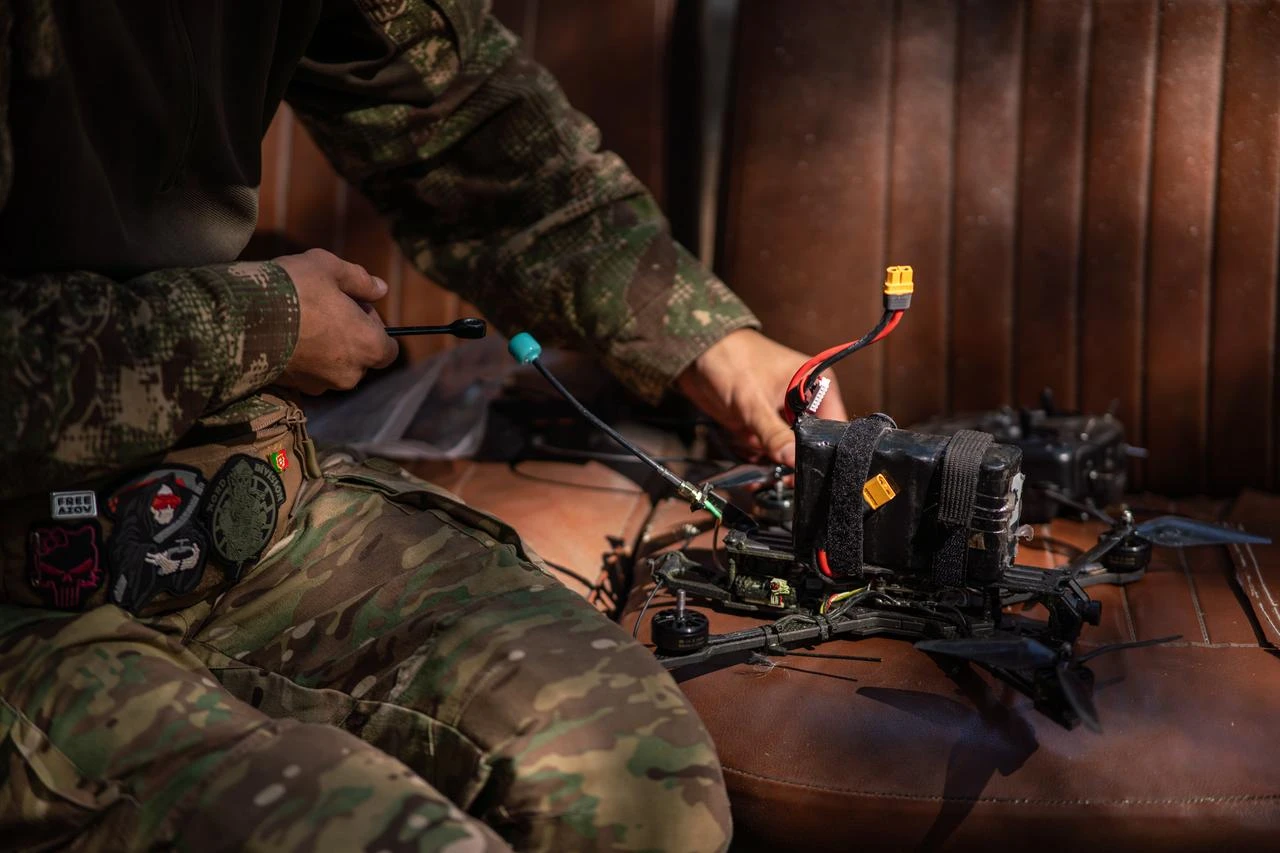

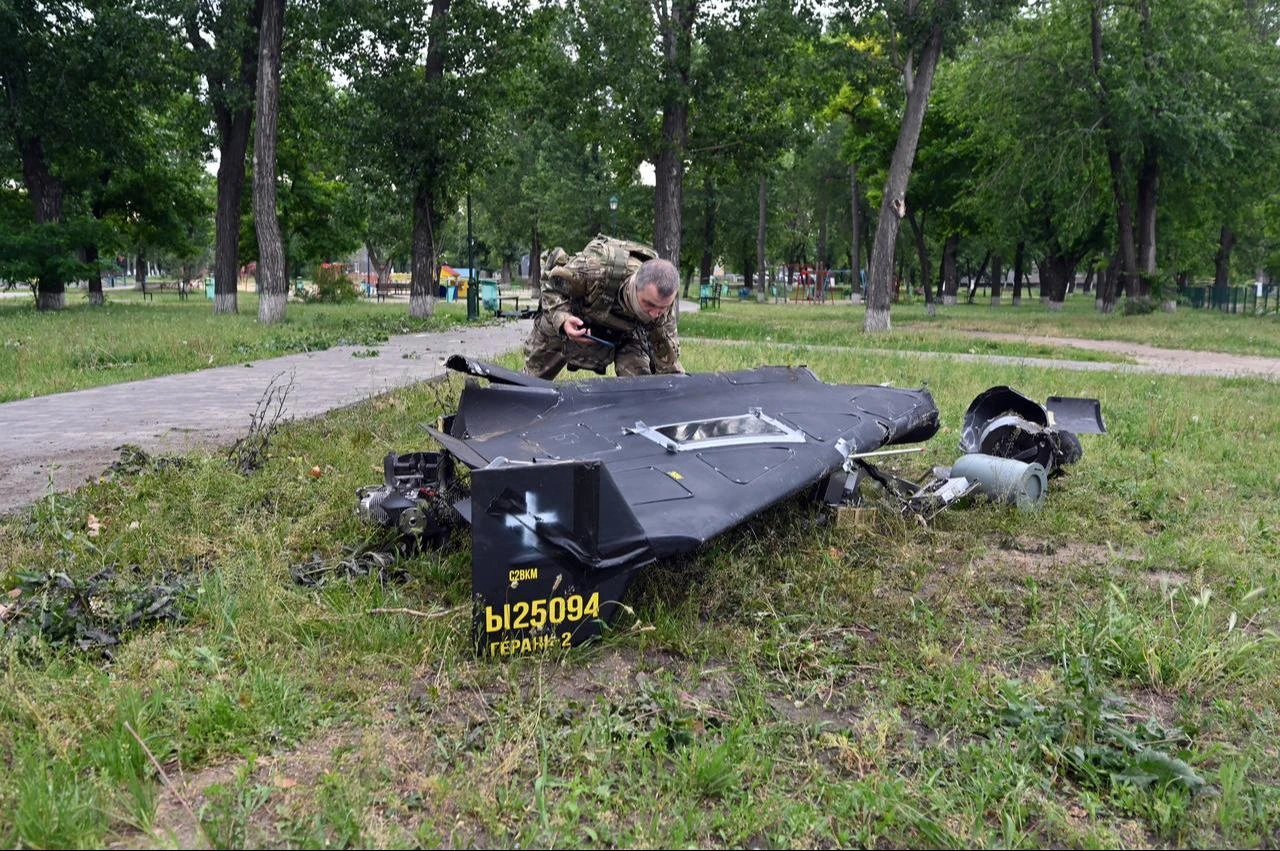
Moscow has been rapidly upgrading its version of the Iranian Shahed drone, deploying newer high-speed jet variants capable of reaching targets almost 620 miles (1,000 kilometers) away.
Drones launched from the identified bases using these newer variants would put Warsaw within range.
The latest variants, named Geran-4 and Geran-5, can fly fast enough to evade air defense systems while carrying a 90-kilogram payload, according to Ukrainian government documents leaked online and cited by the Telegraph.
Ukraine's military intelligence agency, the GUR, has also warned that Russia is arming Geran drones with air-to-air missiles to target aircraft protecting Kyiv.
The Kremlin claims that slower, older drone variants could also reach the United Kingdom, though the Telegraph said it is highly probable any such attempt would be intercepted.
There is no indication Russia is planning a strike against NATO territory, according to the Telegraph, though the alliance is preparing for a range of future conflict scenarios.
The mapped sites span Russia's border regions, including Shatalovo, Tsimbulova, the Navlya drone base, the Asovitsa/Ashelok drone launch site, the Kursk airfield/Khalino, Millerovo airfield, Donetsk airport, and the Primorsko-Akhtarsk drone base, according to the Telegraph's mapping.
The bases are supplied by munitions factories around the country, including the Alabuga special economic zone, a drone-manufacturing campus producing an estimated 6,000 units a year.
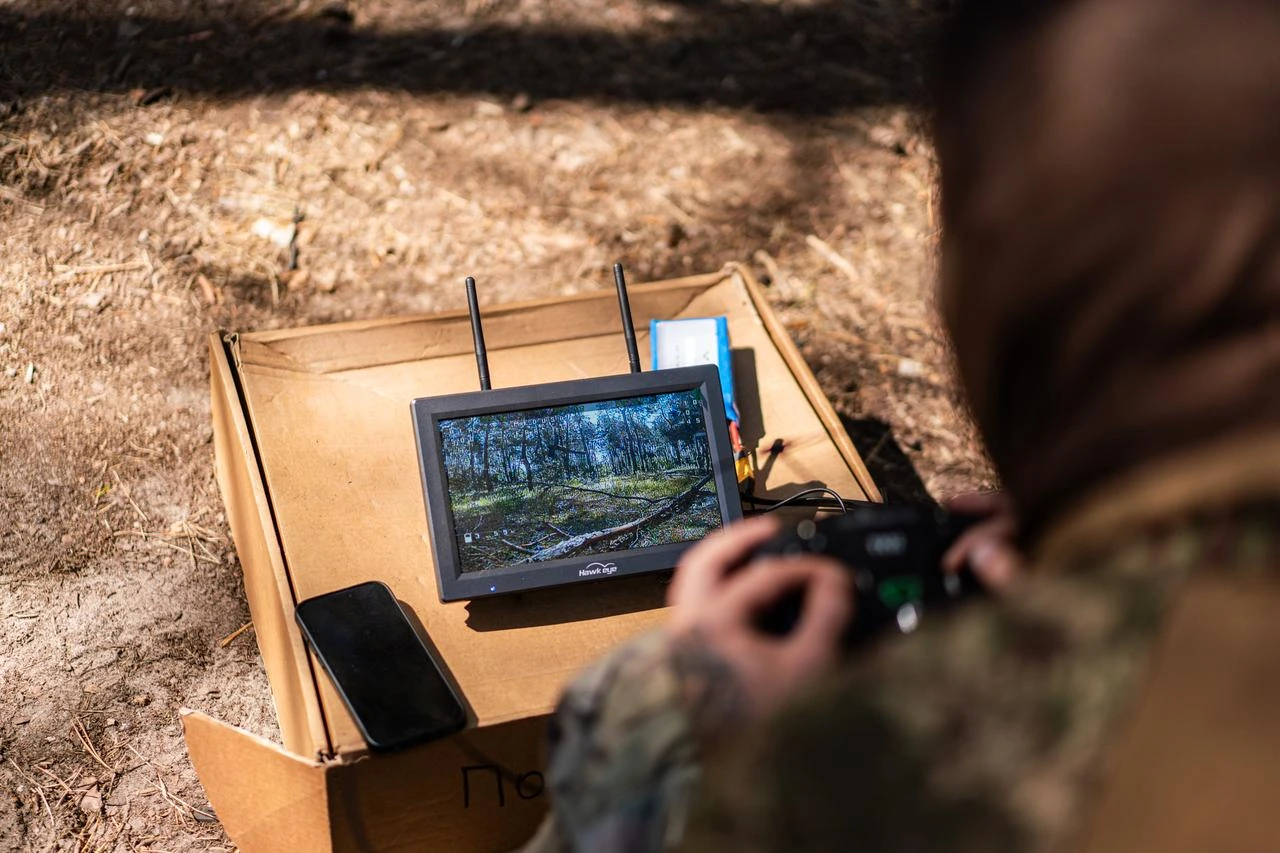
Mike Monnik, chief executive and founder of DroneSec, who analyzed the satellite imagery, said the Kremlin has "significantly expanded" its drone network in an effort "to attack Ukraine and to hold NATO states at risk of such attacks."
He said the expansion allows Russia to launch greater numbers of drones while making the aircraft harder to intercept.
"These two elements combine to enable a growing number of total unmanned aircraft systems Russia can use to attack Ukraine and increase the difficulty facing Ukrainian forces in intercepting newer Russian drone designs," Monnik said.
European and U.S. intelligence officials believe Russia is considering an armed provocation on Polish soil, missile or drone attacks against critical infrastructure, or false-flag attacks blamed on Ukraine.
A NATO official told the Telegraph the alliance is "ready to defend every inch of allied territory" and would continue to "enhance our readiness to deter and defend against any threat, including from drones."
The official added that "drones have fundamentally altered the character of modern warfare and have become a decisive factor on the battlefield," and that NATO is "rapidly expanding our ability to produce, operate and neutralize drones at scale."
Separately mapped data illustrating the reach of Russia's Geran-5 Shahed-type missile, with a stated range of 1,000 kilometers, shows that launch sites within Russian-controlled territory place most of Ukraine, the Baltic states, Poland, Romania, and parts of Türkiye within range.
Russia's Defense Ministry said its forces continued strikes on port infrastructure and vessels it said were operating in the interests of Ukraine's armed forces overnight into Aug. 17.
"In the port of Odesa, a Tarantul-class patrol boat that had been providing security for merchant vessels during their sea transit and at unloading sites, as well as fuel storage tanks, were struck," the ministry said on Telegram.
"In the port of Izmail, a berthing terminal used for unloading vessels carrying military cargo, hangars housing Western military equipment, and storage facilities for unmanned boats were struck," the ministry said.
Russia's Defense Ministry said its air defenses intercepted and destroyed 205 Ukrainian fixed-wing drones overnight over the Astrakhan, Belgorod, Bryansk, Voronezh, Volgograd, Kaluga, Kursk and Rostov regions, the Republic of Crimea, and the waters of the Azov and Black seas.
Ukraine's General Staff said on Telegram that Russia attacked with 128 Shahed-type strike drones, including jet-powered variants, Gerbera decoy drones, and "Parody"-type decoy drones overnight into Aug. 17, launched from the direction of Kursk, Oryol, Primorsko-Akhtarsk and the temporarily occupied Donetsk region.
Ukrainian aviation, anti-aircraft missile units, electronic warfare and unmanned systems units, and mobile fire groups of the Defense Forces of Ukraine responded to the attack, according to the statement.
As of 8:30 a.m., preliminary data showed Ukrainian air defenses had shot down or suppressed 106 hostile Shahed-type, Gerbera-type and other drones across the north, south and east of the country, the General Staff said.


 Set as preferred source
 Set as preferred source



 4 min read