Newsletters


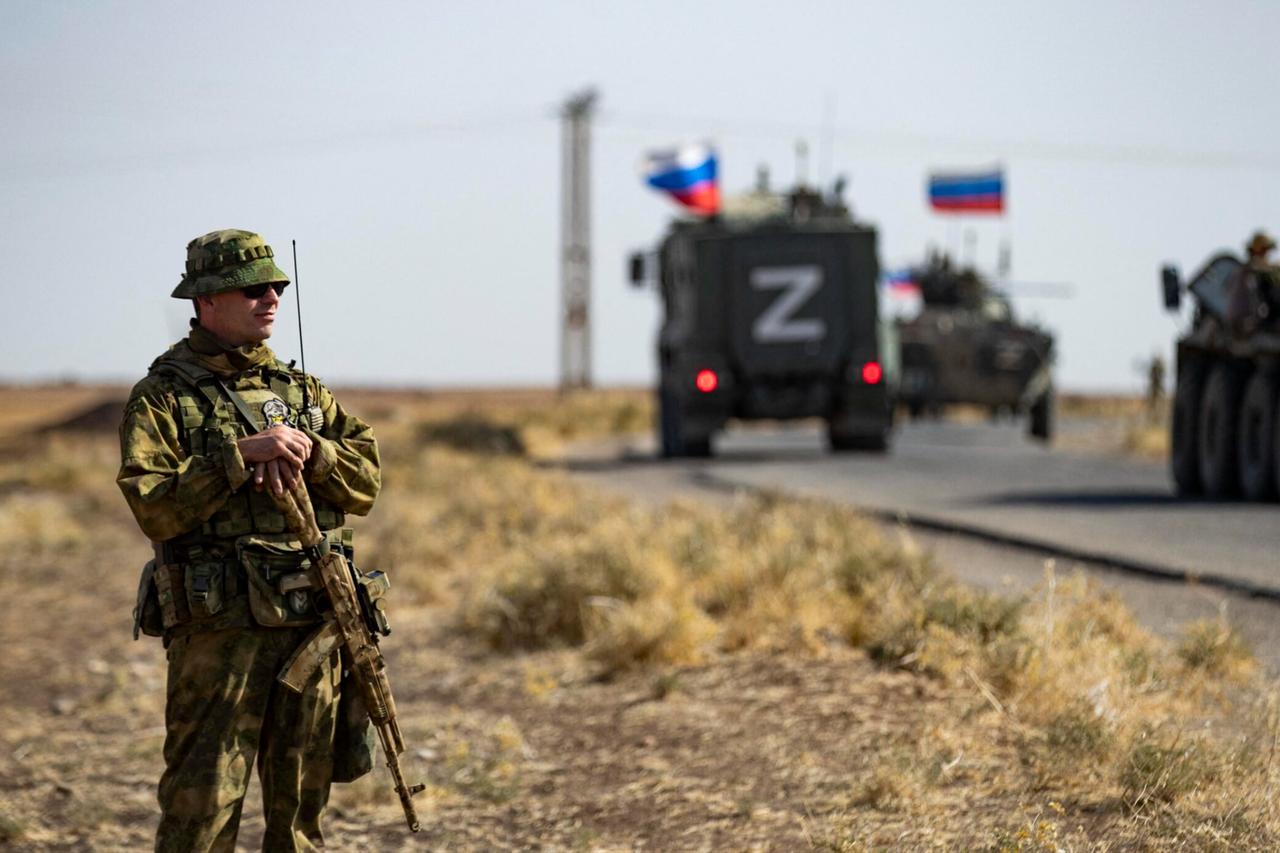


Germany’s top military officer, Gen. Carsten Breuer, said Russia could test NATO militarily by 2029, or possibly earlier, citing Moscow’s rearmament, personnel buildup and wider economic and political developments.
Breuer, the Bundeswehr’s inspector general, made the remarks in a joint interview with his British counterpart, Air Chief Marshal Sir Richard Knighton, published by Suddeutsche Zeitung.
“The various indicators — rearmament, personnel buildup, economic and political developments — are heading toward one point: 2029. Could it happen earlier? Yes,” Breuer said.
Knighton said Russia’s threat should be taken seriously because Moscow is fighting in Ukraine, learning from the war and developing new technologies and military capabilities.
He said Russian President Vladimir Putin had shown his willingness to attack sovereign states.
Breuer and Knighton said NATO remained united despite troop withdrawals and unclear signals from Washington.
“Our problem is in Moscow and nowhere else,” Breuer said.
He said Germany needed a “fight-tonight capability,” or the ability to be ready for immediate deployment, as well as increased capacity by 2029 and technological superiority by 2035.
Breuer also confirmed that the planned deployment of a U.S. Long-Range Fires Battalion in Germany under U.S. President Joe Biden would apparently not happen.
The U.S. missiles were originally meant to bridge the period until Germany developed its own long-range capabilities. Breuer said Germany was urgently examining transitional solutions, including buying systems already available on the market.
He said he had already visited the Pentagon on the issue, while German Defense Minister Boris Pistorius is expected to travel to Washington at the end of the month to continue advocating for the purchase of Tomahawk cruise missiles.
Breuer described the withdrawal of 5,000 U.S. troops from Germany as militarily manageable, saying moving back 5,000 of nearly 40,000 soldiers did not mean withdrawal from NATO.
Strategically, he said, the move was “not a game-changer,” though it would affect communities in Germany economically and socially.
Knighton said U.S. President Donald Trump had described Article 5 of the NATO treaty as untouchable, calling it the foundation of the most successful military alliance in history. He added that Europe needed to take more responsibility.
The two military chiefs also emphasized close cooperation between German and British forces.
Knighton cited joint airspace surveillance in the Baltic region with Eurofighters, German maritime patrol aircraft operating from British bases, and a British general with his staff aboard a German frigate in a NATO naval group.
“That is as close as you can get,” Knighton said.
Breuer said Germany and Britain could fight together “without any doubt,” adding that systems and structures should eventually become genuinely interchangeable, not only compatible.
On European nuclear deterrence involving Germany, Breuer said the issue was political rather than military and that deterrence depended on strategic ambiguity. Knighton said Britain’s nuclear capability remained fully embedded in NATO.
Asked how young people could be encouraged to join military service, Breuer said Europe’s freedom, peace, prosperity and values were threatened “not sometime in the future, but today, every day.”
Knighton said strong armed forces in Europe reduce the likelihood of conflict by deterring opponents.
“We do not want war. We avoid it through strength,” he said.


 Set as preferred source
 Set as preferred source


 4 min read