Newsletters


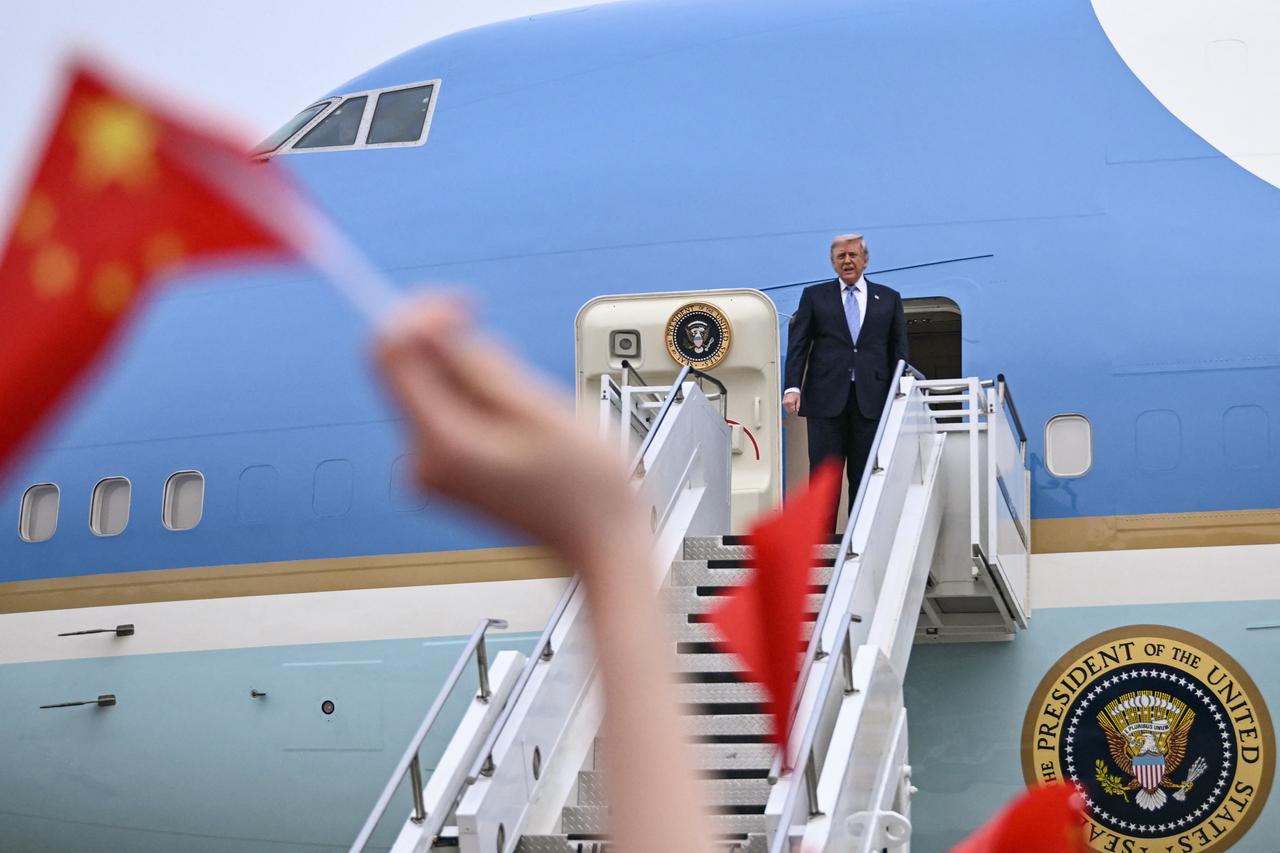
White House staff collected and discarded every item Chinese officials had distributed to the U.S. delegation, including credentials, burner phones, and delegation pins, before anyone was allowed to board Air Force One at the Beijing Capital Airport.
"American staff took everything Chinese officials handed out, credentials, burner phones from WH staff, pins for delegation, collected them before we got on AF1 and threw them in a bin at the bottom of the stairs. Nothing from China allowed on the plane. We're taking off shortly for America," New York Post White House correspondent Emily Goodin wrote on X in a pool dispatch.
Trump himself made a characteristically buoyant exit. Chinese Foreign Minister Wang Yi was on hand to see him off. Schoolchildren dressed in Air Force One's light blue and white colors waved American and Chinese flags and chanted "Farewell! Warm farewell!" as he arrived at the aircraft.
Trump turned at the top of the stairs, pumped his fist, waved and entered without speaking further.

The three-day visit, the first by a sitting U.S. president to China in nine years and Trump's first since his 2017 state visit, was heavy on symbolism and personal diplomacy.
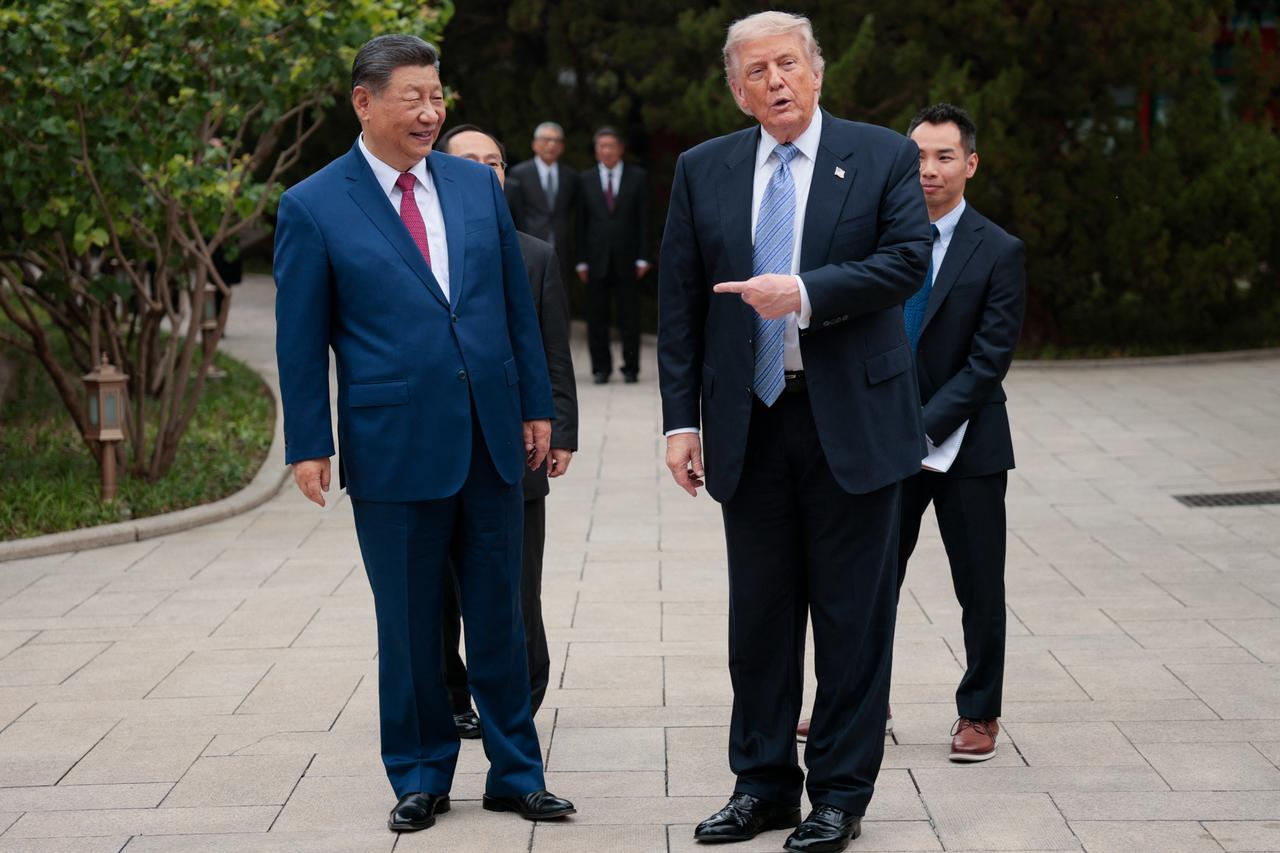
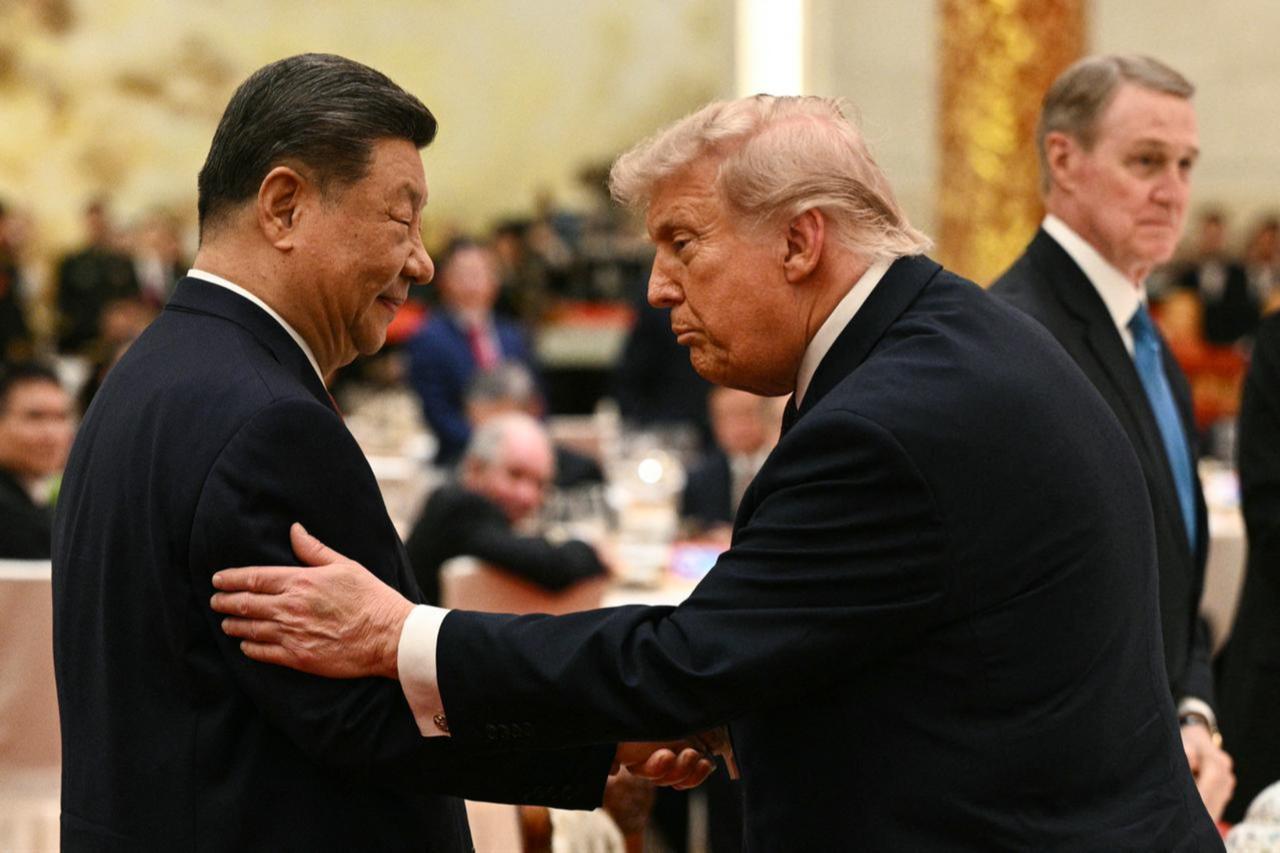
The two leaders held approximately two hours of talks at the Great Hall of the People, toured the Temple of Heaven, and attended a banquet. They then walked the grounds of Zhongnanhai and held a working tea and lunch at the Chun'ou Zhai building—a historic structure where Emperor Qianlong once admired a celebrated painting each year after imperial sacrifices to the god of agriculture.
Xi described the visit as "historic and landmark" and said both sides had agreed on "the new vision of building a constructive China-U.S. relationship of strategic stability."
He said Trump's visit was "conducive to enhancing mutual understanding, deepening mutual trust and improving the well-being of the two peoples."
Trump said, "It's been an incredible visit. I think a lot of good has come of it."
He praised Xi as "a man I respect greatly" and said both leaders agreed they do not want Iran "to have a nuclear weapon."
"We want the straits open. We want them to get it ended because it's a crazy thing there," he said.
Behind closed doors, however, Xi delivered a stark warning that any mishandling of Taiwan could spiral into conflict, to which Trump declined to publicly respond, staying unusually restrained on the subject throughout the visit.
Reuters reported the summit ended without any major breakthroughs on trade or a tangible Chinese commitment to help end the Iran war.
Trump left without an official resolution of China's rare earth export controls. Promised business deals in agriculture, beef and aviation produced no concrete announcements. While Trump sought immediate wins for his approval ratings ahead of the November midterm elections, Xi focused on framing a long-term bilateral reset.
Adding a further geopolitical dimension to the Beijing summit's aftermath, the South China Morning Post reported on Friday that Russian President Vladimir Putin is expected to visit China on May 20, citing sources, though neither Beijing nor Moscow has confirmed the dates.
Kremlin spokesman Dmitry Peskov said preparations were "already complete, with only final touches remaining." If confirmed, China would become the first country to host all four other permanent UN Security Council members' leaders within months.
U.S. President Donald Trump said on Friday that the scheduled opening of his planned ballroom would be around September 2028.
"China has a ballroom, and so should the U.S.A.! It’s under construction, ahead of schedule, and will be the finest facility of its kind anywhere in the U.S.A.," Trump wrote on Truth Social.
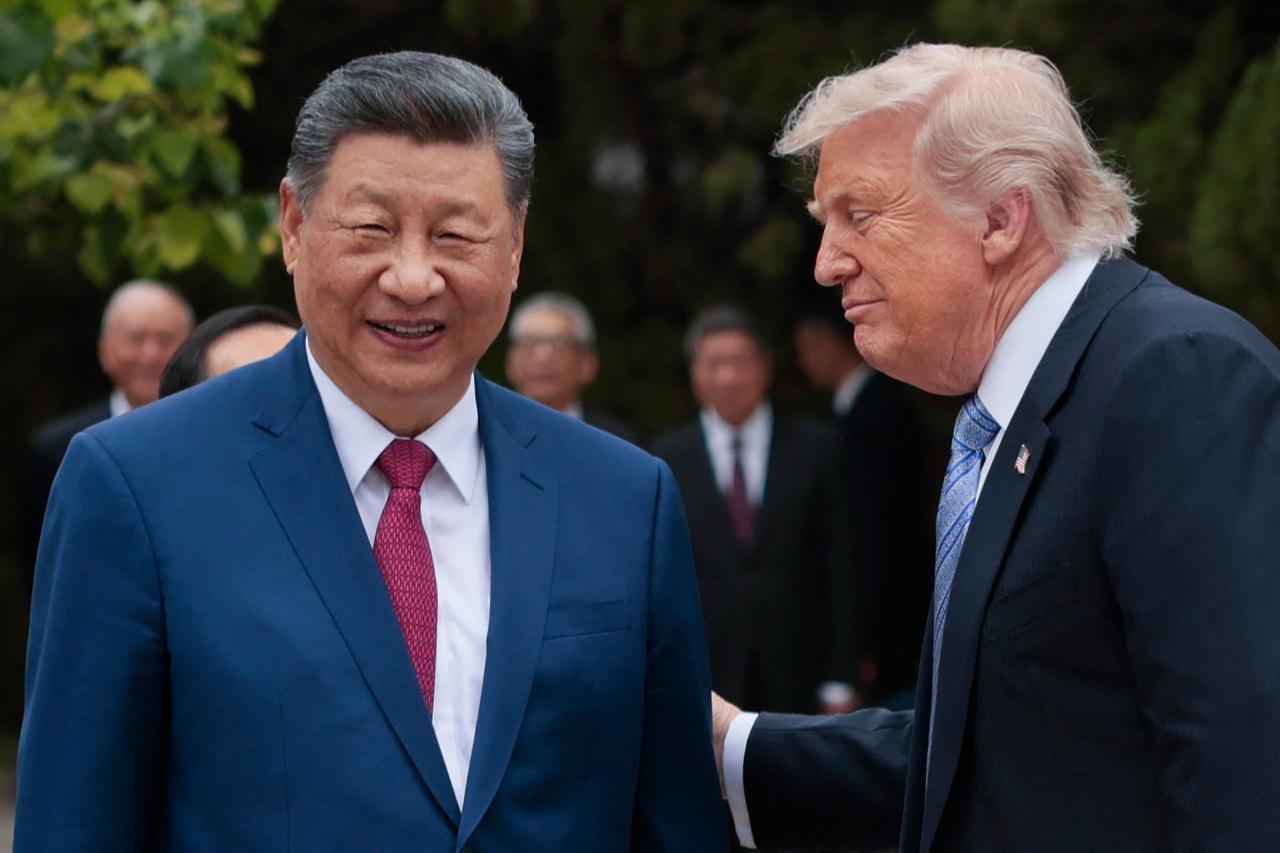
"Thank you for all the support I have been given in getting this project going. Scheduled opening will be around September of 2028. The man I am walking with is President Xi, of China, one of the World’s Great Leaders!" he added.


 Set as preferred source
 Set as preferred source


 1 min read
 1 min read