Newsletters


Russia sees building a new post-war security framework for Europe as the main goal of U.S.-brokered talks with Ukraine that opened Tuesday in Abu Dhabi, with a settlement of the war only one part of a broader discussion, a source in the Russian delegation told Reuters.
"While the Ukrainian settlement, being a matter of critical importance, is just one aspect of this wide-ranging discussion, it is subordinate to the main objective, the creation of a comprehensive and indivisible security architecture for the entire continent," the source told reporters, according to Interfax.
The talks would focus on "key aspects of forming a new system of continental security in the post-conflict period" and on developing mechanisms to prevent threats and strengthen regional stability, the source said.
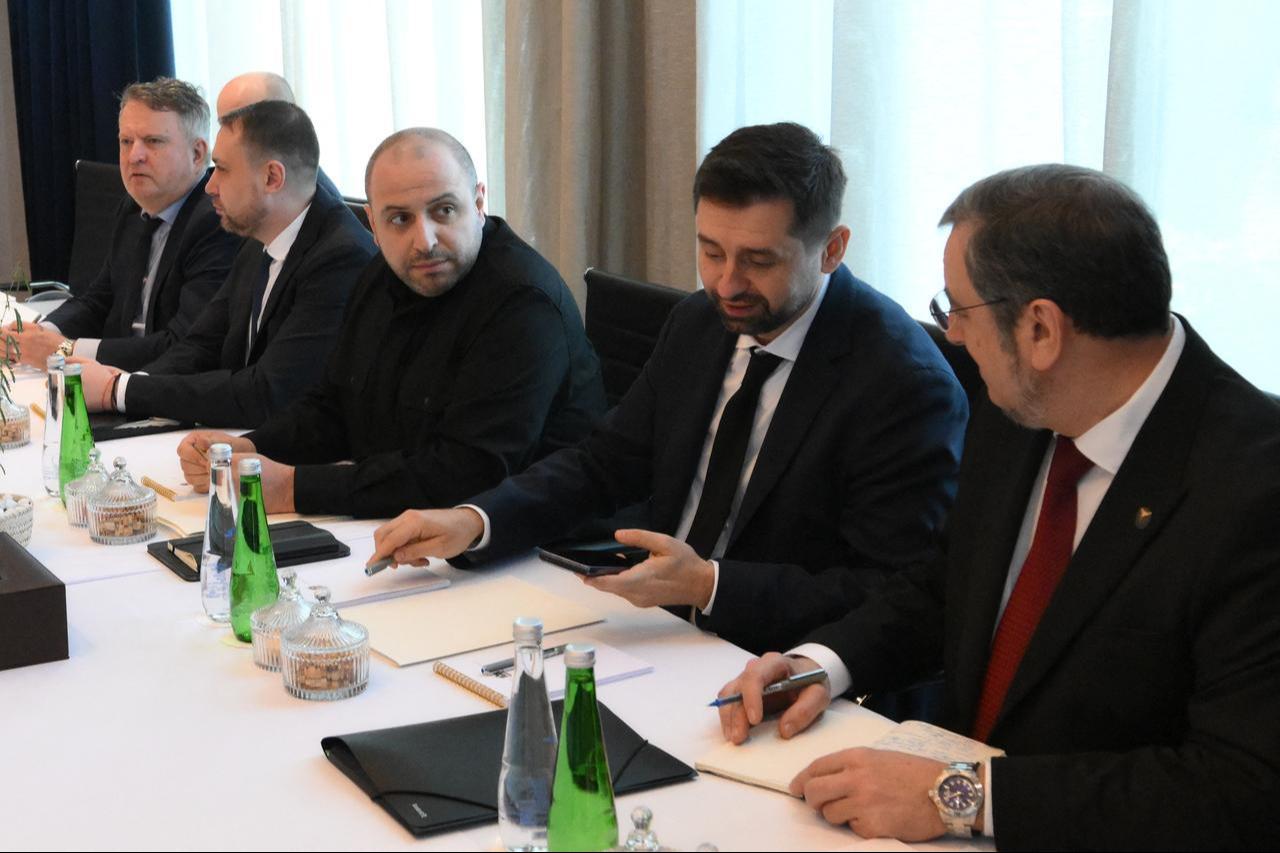

The two-day talks are the first trilateral round since negotiations in Geneva on Feb. 17-18, which followed two earlier rounds in Abu Dhabi in January and February. They began at about 11:15 a.m. Moscow time, behind closed doors, with the Russian and Ukrainian delegations seated across a U-shaped table beneath the flags of Russia, the U.S., Ukraine and the UAE.
"The hope today is not only to discuss the bilateral issues between the countries and how do we end the war, but it’s also how do we create the right security relationships between Ukraine and Russia and Europe so that not only we end this war, we create a new framework" for "decades, if not centuries, of peace," U.S. envoy Jared Kushner said.
Russian delegation head Vladimir Medinsky expressed hope the talks would advance a peaceful settlement, RIA Novosti reported.
Russia’s 11-member team includes five delegates and six experts: Medinsky, Deputy Foreign Ministers Sergei Ryabkov and Mikhail Galuzin, FSB international relations chief Alexei Komkov and military intelligence chief Igor Kostyukov, along with senior General Staff, FSB, presidential administration and Foreign Ministry officials.
Ukraine’s delegation is led by Foreign Intelligence Service chief Rustem Umerov and includes presidential office head Kyrylo Budanov, his first deputy Sergiy Kyslytsya, ruling party faction leader Davyd Arakhamia, deputy military intelligence chief Vadym Skibitskyi and Chief of the General Staff Andriy Hnatov.
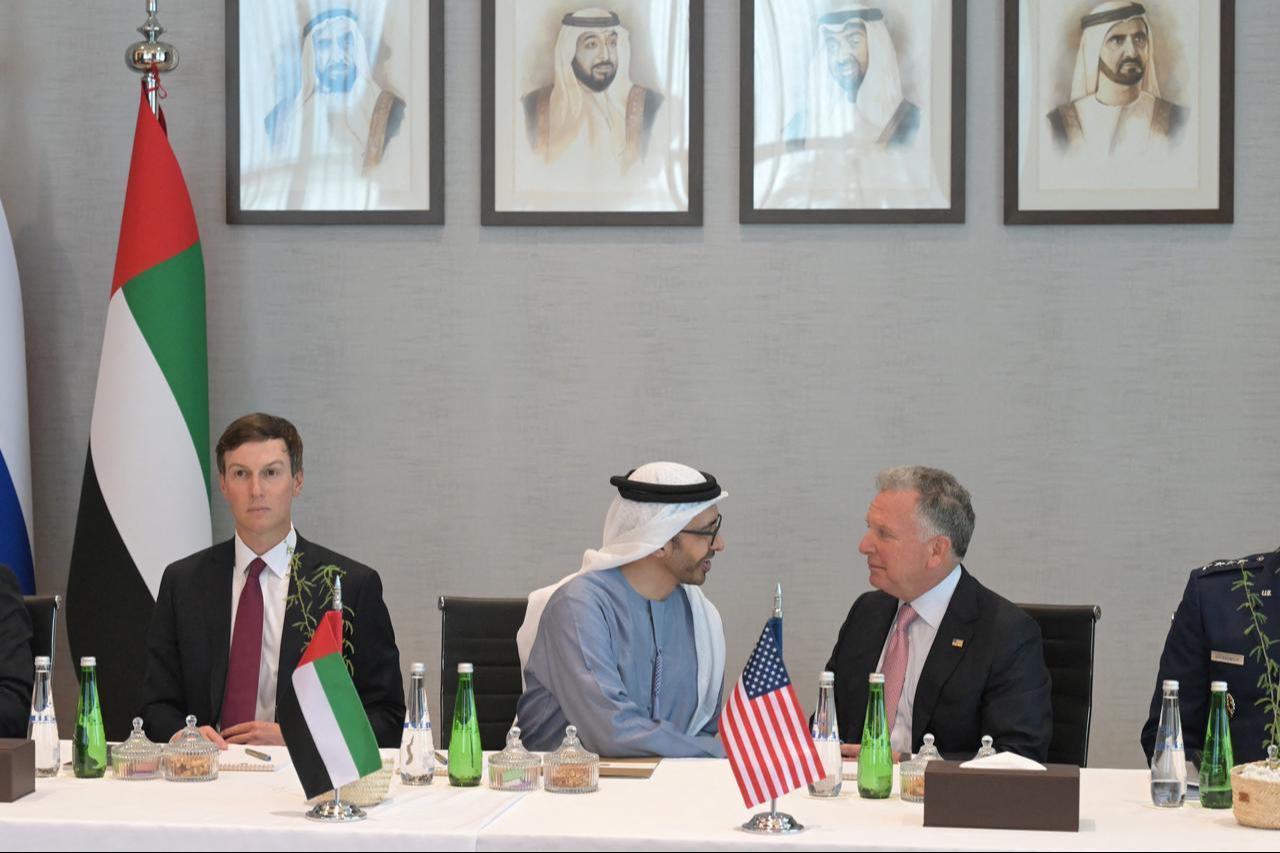
U.S. envoys Steve Witkoff and Kushner, NATO’s Supreme Allied Commander Europe Gen. Alexus Grynkewich and UAE Foreign Minister Sheikh Abdullah bin Zayed Al Nahyan were at the table as talks began.
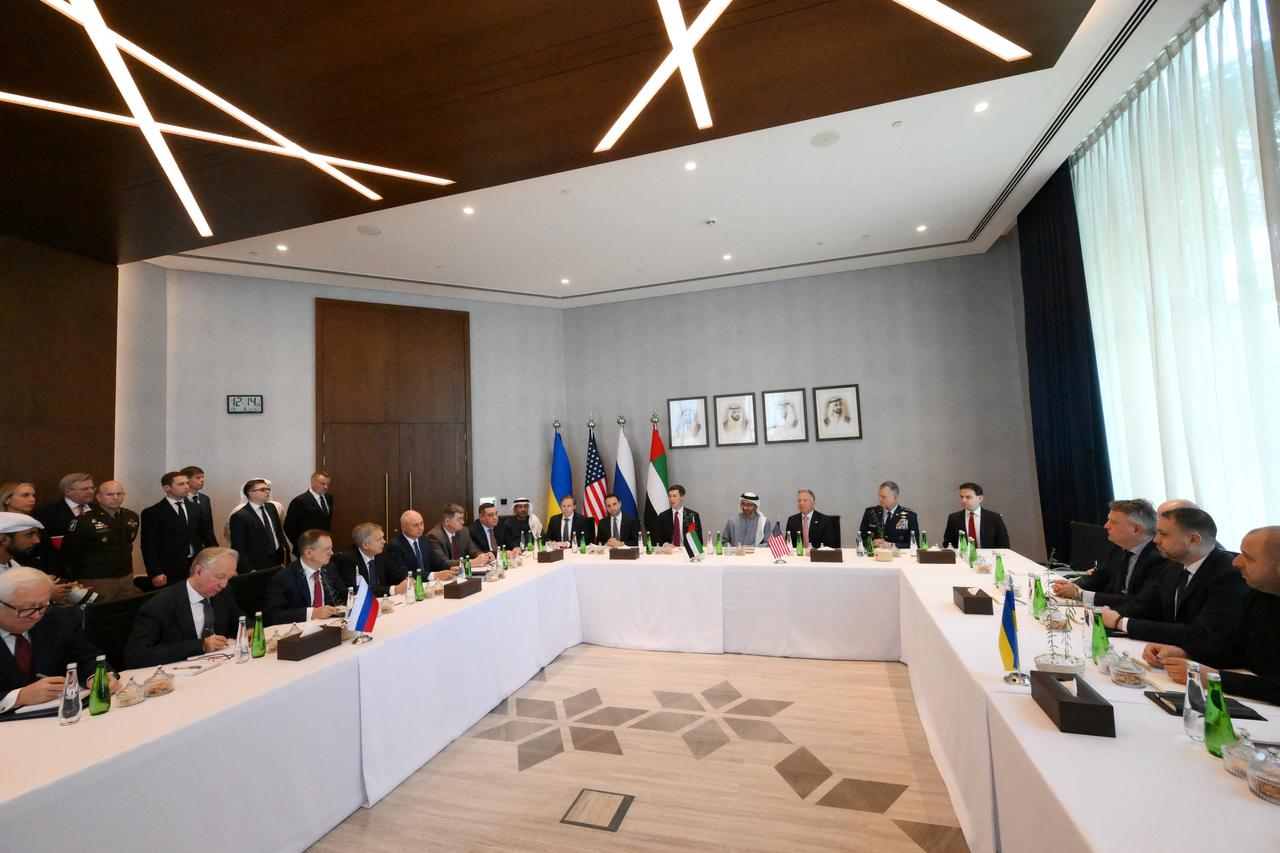
Representatives of France, Britain, Germany, Italy, the European Commission and NATO are in Abu Dhabi to coordinate with U.S. and Ukrainian officials.
Umerov said the first meeting would be with those representatives and the U.S. envoys to "align our positions and coordinate our steps." The EU team is led by Bjoern Seibert, chief of staff to Commission President Ursula von der Leyen, and Anna-Maria Boura, chief foreign policy adviser to Council President Antonio Costa.
"These are three-party talks between Russia and Ukraine with U.S. mediation," Kremlin spokesman Dmitry Peskov said, adding that Washington and Kyiv have their own channels with the Europeans.
A U.S. official told the Financial Times (FT) that Washington wants Russia to agree to multilateral talks including Europeans, and has asked whether Moscow would object to the U.S. and NATO offering Ukraine an "Article 5-like" security guarantee, with any final decision resting with Trump.
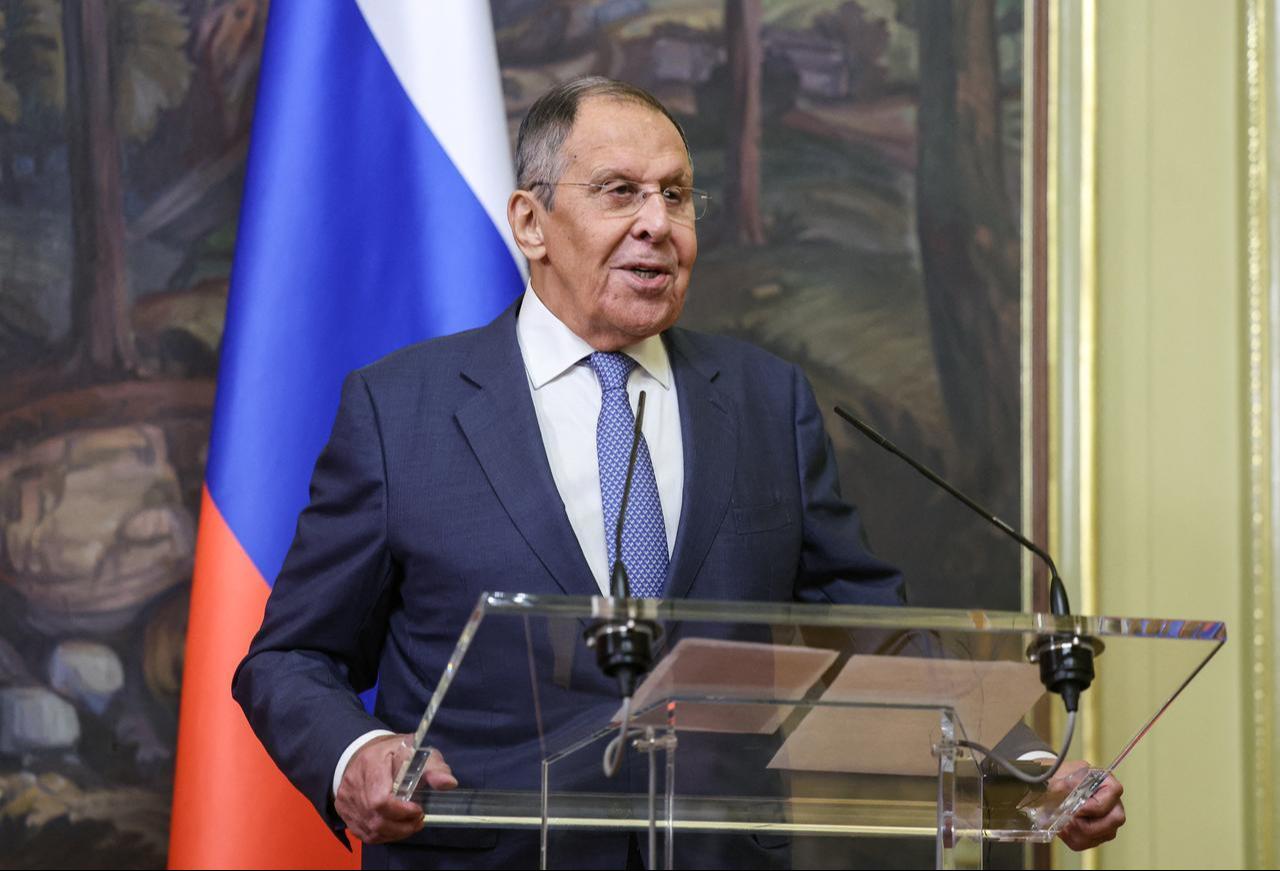
The talks will cover "ensuring collective security in this region under guarantees that will take effect after a full, comprehensive settlement is reached," at the U.S. proposal agreed with Moscow, Russian Foreign Minister Sergey Lavrov said at a forum on collective security.
"We have no illusions regarding the Trump administration, I want to say this right away. But, it is always better to talk," Lavrov said, contrasting it with the Biden administration, which he said "arrogantly refused" to discuss collective security guarantees.
He said Russia has a position paper on a new Eurasian security architecture and does not seek to "subordinate" existing organizations, including the CSTO.
U.S. officials told the FT the talks would focus on postwar security arrangements and territory in eastern Ukraine, though expectations of a breakthrough are low.
Putin has demanded Ukraine withdraw from parts of Donbas it still controls as a precondition for a ceasefire and would link security guarantees to further territorial concessions, people briefed on his thinking told the FT.
Moscow insists Ukraine withdraw from the parts of Donetsk, Luhansk, Zaporizhzhia and Kherson it controls, which Kyiv rejects.
Russia opposes NATO membership for Ukraine and warns that Western troops deployed there would be legitimate targets.
"At the meetings in Abu Dhabi, our team will propose de-escalatory steps," Ukrainian President Volodymyr Zelenskyy said. He has listed protecting energy infrastructure, restoring safe Black Sea navigation and more prisoner exchanges as priorities.
Zelenskyy met Nordic leaders in Denmark on Tuesday to discuss air defense and energy security.
Kushner said European security discussions would center on "stronger consultation, reliable crisis communications, greater military transparency, and reciprocal measures to reduce escalation risks."
European officials told the FT they are open to restoring Cold War-era deconflicting mechanisms such as the Open Skies agreement, as Russia pushes its security agenda at the Abu Dhabi talks.


 Set as preferred source
 Set as preferred source


 1 min read