Newsletters


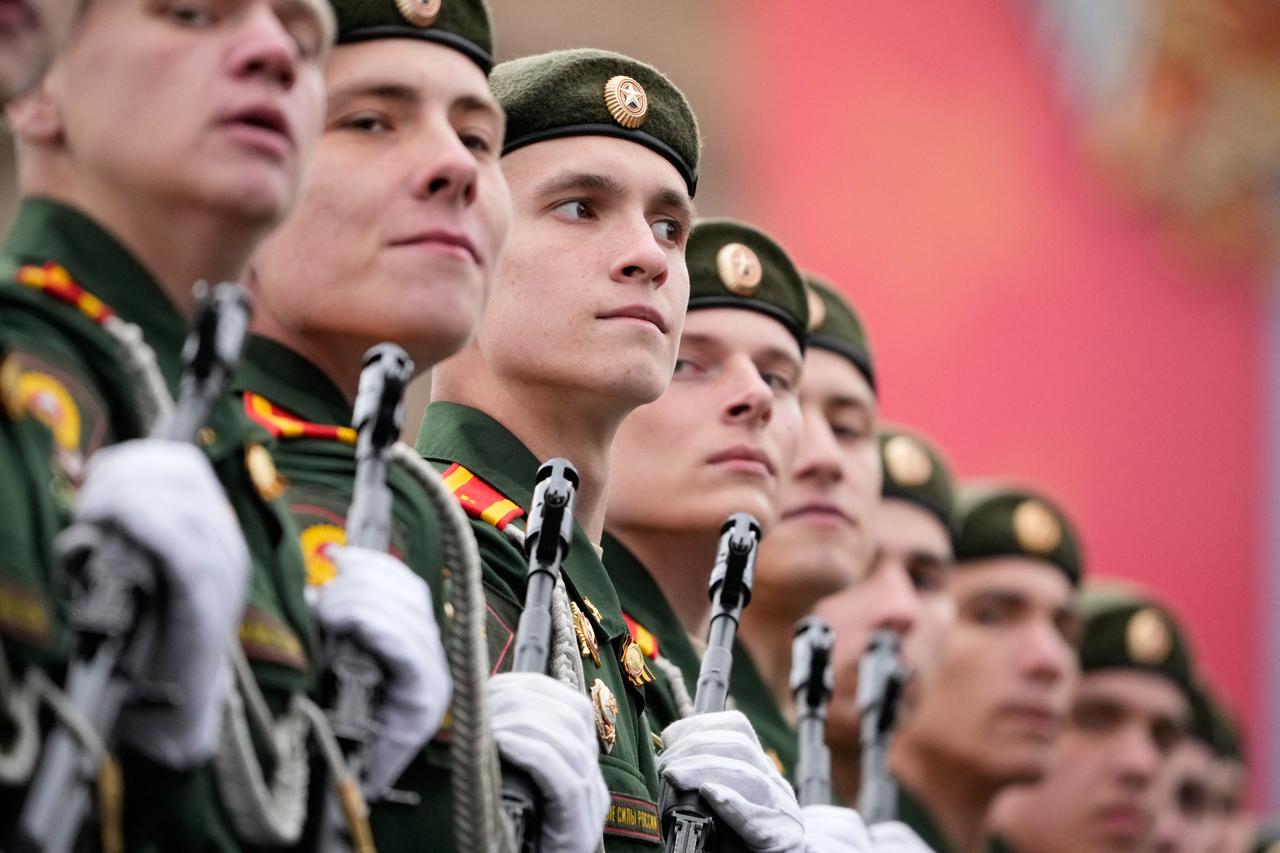


Russia's military advance in Ukraine has slowed to a crawl, recruitment has fallen 20%, and the country's economy is absorbing what analysts describe as the "most severe labor shortage in its history."
A convergence of pressures that analysts say may soon force President Vladimir Putin to confront choices he has spent four years trying to avoid, according to assessments from Western intelligence officials, independent defense analysts and battlefield tracking organizations.
The signs of strain are visible on multiple fronts.
In April and May, the Russian army lost more ground in Ukraine than it gained, according to an Agence France-Presse (AFP) analysis of data from the Institute for the Study of War (ISW).
Ukraine recorded a net territorial gain of nearly 100 square kilometers in May alone, the second consecutive month Russian forces experienced a net loss, Ukrainian Commander-in-Chief Oleksandr Syrskyi said.
The ISW's terrain control assessment as of June 13 shows Russian forces maintaining their main effort along the Eastern Ukraine axis, with subordinate operations targeting Donetsk and Luhansk oblasts and a supporting push along the northern axis toward Kharkiv.
Significant fighting has been recorded in the past 24 hours across multiple contact points in those sectors, according to the ISW map.
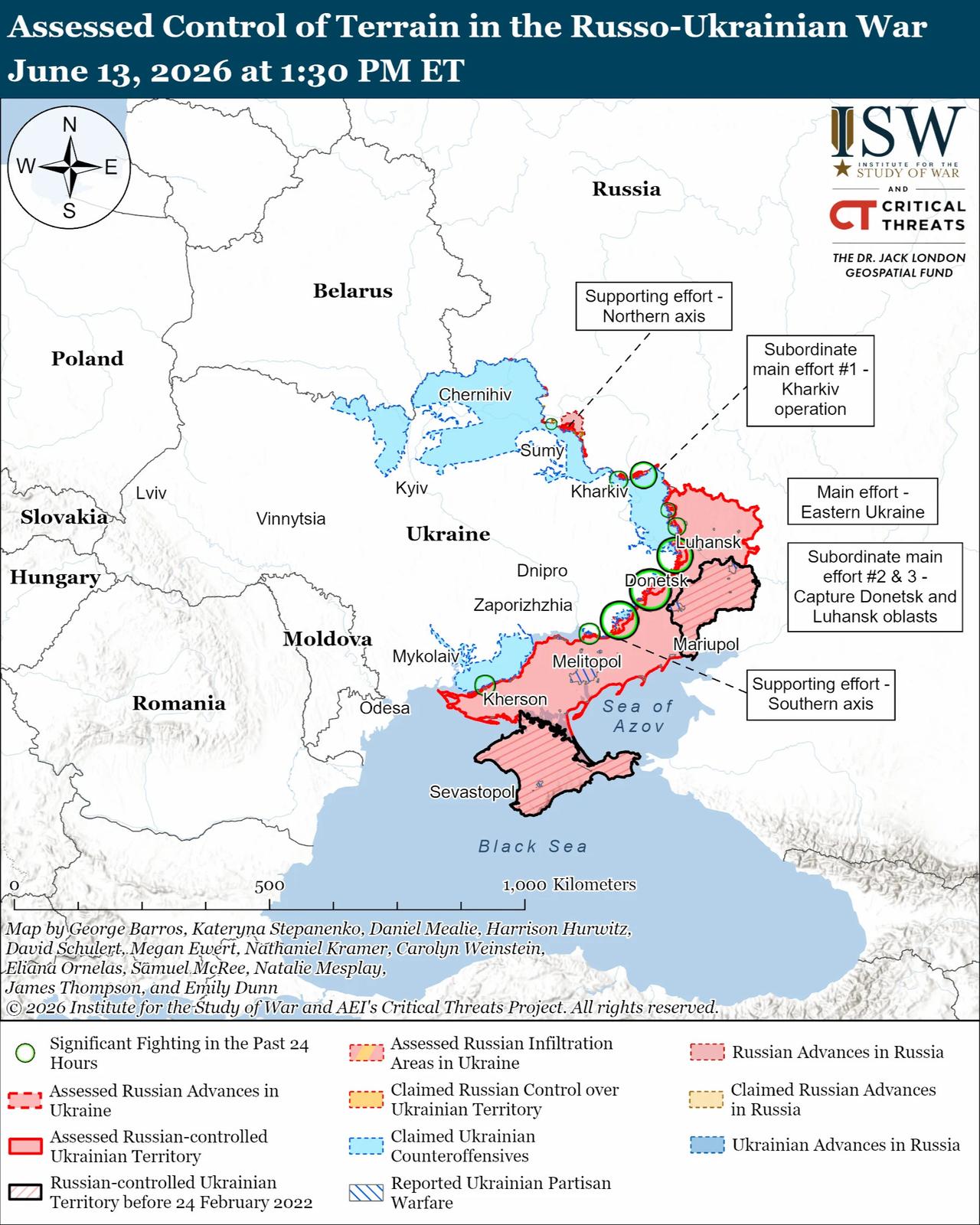

UK Defense Intelligence's June 9 battlefield update confirmed that Russian attack vectors remain oriented toward the Western, Central, and Eastern groupings in eastern Ukraine, with a Northern grouping pressing toward the Sumy direction.
Ukrainian forces have mounted counterattacks, including operations in the Voskresinka and Piddubne areas in the Zaporizhzhia sector, with recent public geolocations indicating a 10-kilometer Ukrainian advance into Piddubne.
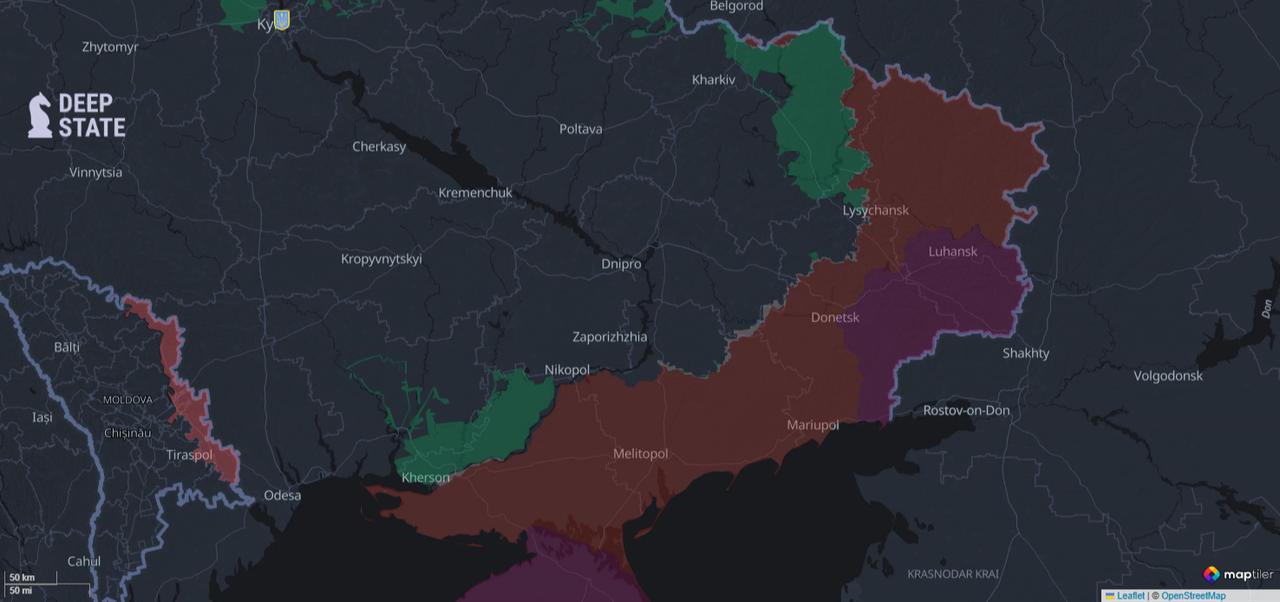
Russia holds approximately one-fifth of Ukraine's territory: the Crimean Peninsula, annexed in 2014, most of Donetsk and Luhansk, and large portions of Zaporizhzhia and Kherson.
According to the DeepStateMap territorial tracker, Russia has occupied 72,912 square kilometers of Ukrainian territory since February 24, 2022, representing 12.08% of the country, with an additional 43,970 square kilometers held before that date.
Total temporarily occupied territory stands at 116,882 square kilometers, or 19.36% of Ukraine.
Putin, who declared last June that "all of Ukraine" was Russia's and threatened to advance on Sumy, has since narrowed his stated objective to capturing the Donbas.
"The Russian army's advance is proceeding at an extremely slow pace," Russian military expert Alexander Khramchikhin told AFP.
Unless Ukraine's resources are "completely depleted," an acceleration in Russian advances is difficult to foresee, he said.
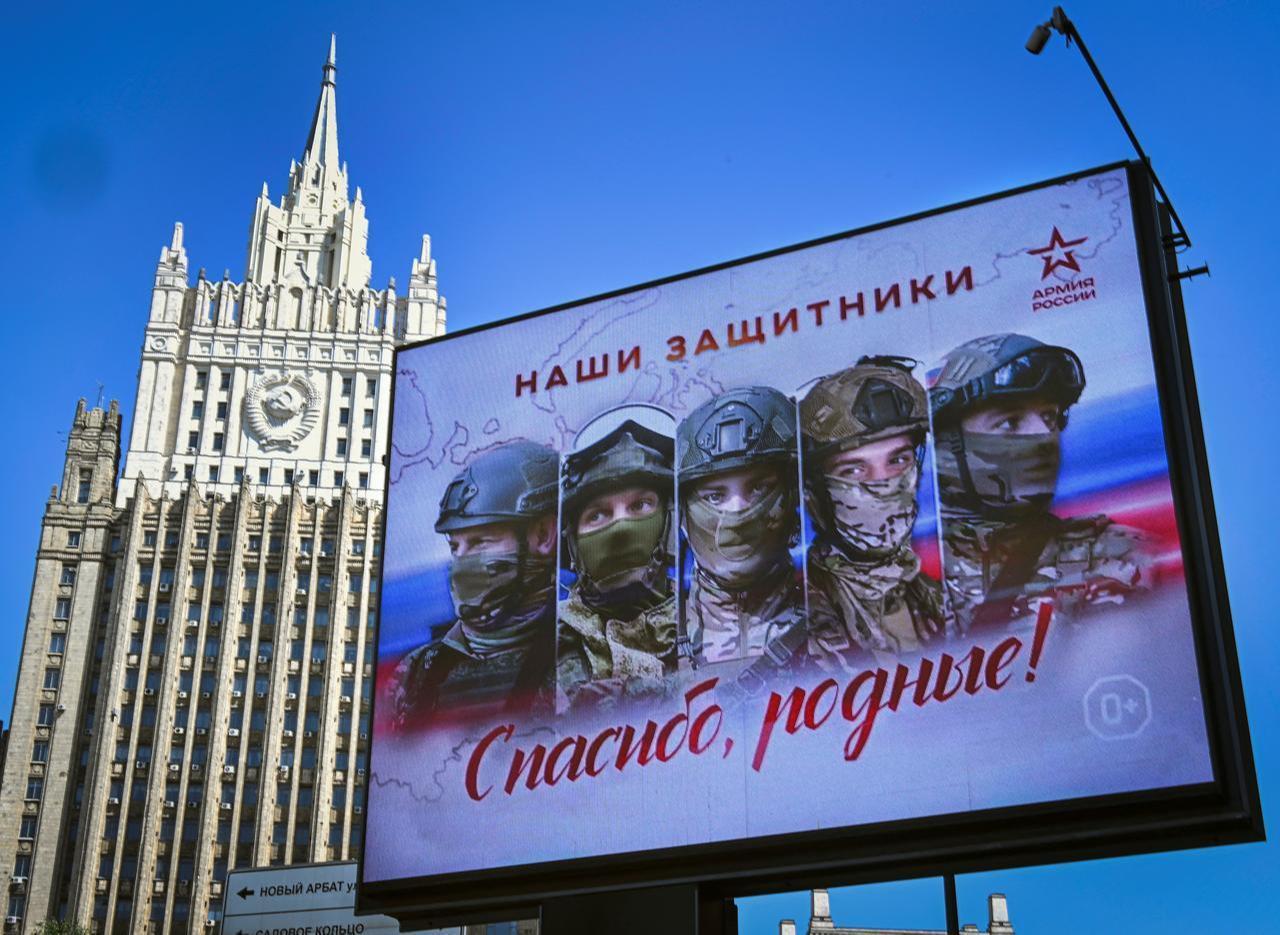
Despite billboards and social media campaigns offering signing bonuses equivalent to more than quadruple the average annual salary and debt relief packages of up to $140,000, voluntary military recruitment fell 20% in the first quarter of 2026 compared to the same period in 2025, according to Russian economy expert Janis Kluge.
"Rubles don't fight wars," said Nigel Gould-Davies, a senior fellow for Russia and Eurasia at the International Institute for Strategic Studies, speaking to CNN.
He described the current conflict as the first war in Russia's history in which the state has paid citizens to fight rather than forcing them and said that approach is now generating both economic strain and manpower shortfalls.
"There are signs that this incentive may no longer be working effectively and that Russia has begun to lose more troops than it can recruit," Gould-Davies said in a recent report.
Moscow has responded by sending tens of thousands of former prisoners to the front, absorbing three separate waves of North Korean soldiers, and incentivizing immigrants to enlist. Nearly 500,000 Russian soldiers have died in the war, according to some Western intelligence reports, and hundreds of thousands more have emigrated to avoid conscription.
The resulting labor shortage is now rippling across the wider Russian economy.
"It's not just struggling to find people to go to the front… they're struggling to find people to employ," Gould-Davies told CNN, adding that, "The whole Russian economy is suffering from the most severe labor shortage in history."
Russia's defense industry is operating at maximum capacity with factories running around the clock, limiting any further increase in military output. The official annual inflation rate stands at 5.52% as of June, according to Russian state media outlet TASS, but food prices have risen by more than 18% compared to January 2024.
Consumer confidence is declining, and business closures are rising.
"These trends could weaken support for the war, potentially increasing social discontent," said Maria Snegovaya of the Center for Strategic and International Studies, speaking to CNN, as she added, "However, the regime is boosting its repressive apparatus. The Kremlin has tended to double down on its goals rather than scale them back."
Gould-Davies framed the fundamental constraint in stark terms: "With effort, it is possible to build a new factory or raise money. But the state cannot dictate the birth rate."
As Russia's manpower base erodes, Ukraine has accelerated its battlefield innovation, particularly in drone warfare, in ways that analysts say are fundamentally altering the casualty equation.
Ukrainian President Volodymyr Zelenskyy claimed earlier this year that Ukrainian forces captured a Russian position using only drones and robots for the first time and had conducted over 22,000 unmanned ground missions in the first three months of 2026 alone.
"Ukrainian forces are achieving and out-innovating" on the battlefield, particularly in tactical drone use, said Kateryna Stepanenko, an analyst at ISW.
Syrskyi has claimed that in May, Ukrainian drone operators killed or wounded more Russian soldiers than Russia could recruit in the same period.
Ukrainian drone strikes on Crimea have also struck high-value infrastructure targets.
The Phalanx Multi-Domain Task Forces unit released imagery showing first-person view (FPV) drones striking the Crimea TITAN facility, described as the largest producer of titanium dioxide in Eastern Europe, as well as a pontoon crossing at Chonhar, a military checkpoint, and trucks near Dzhankoi.
Russian casualty rates stand at approximately 30,000 to 35,000 per month, according to Zelenskyy and Western officials, though estimates vary.
The ISW noted that Ukrainian forces have "largely halted" Russia's spring-summer offensive.
Russia's own drone recruitment efforts have struggled.
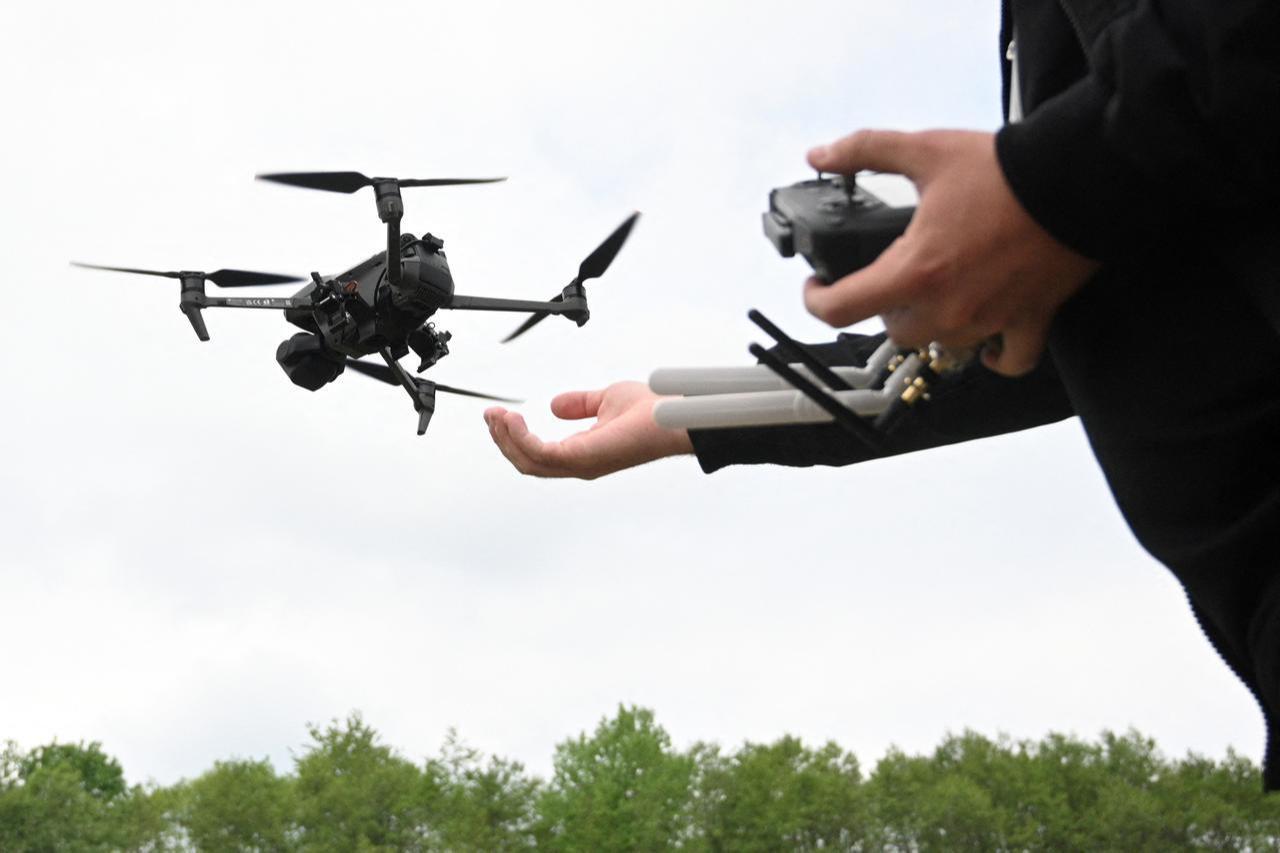
Moscow's attempts to build expert drone units among students have been undermined by a decision to commit some drone operators to frontline ground assaults.
"That created a really not-helpful PR campaign for the unmanned systems forces recruitment," Stepanenko said.
Mykola Bielieskov, a Ukrainian analyst, offered a measured assessment of where the war stands.
"What can definitely be said is that the situation for us has stopped deteriorating," he told AFP.
Ukraine's current strategic objective, he said, is to "bring Russia to the point where it has to negotiate."
The United Nations reported this week that the war is deadlier now than "at any point" since Russia's invasion began in 2022.


 Set as preferred source
 Set as preferred source


 1 min read