Sign in
 Newsletters




U.S. President Donald Trump said Thursday he had asked Russian President Vladimir Putin to "pull back all military aggression" against Europe, striking a firmer tone toward a leader he called "my friend" only a week earlier.
Trump said he made the request when the two met in China last week, and expressed hope that it would help bring a swift end to Russia's war in Ukraine. "I really believe this is a strong possibility," he wrote on his Truth Social network.
In his post, Trump said he "spent a lot of time" with Putin discussing his wish to see Russia withdraw its military aggression "against territories throughout Europe," in the hope that a deal between Russia and Ukraine "can be made, and made quickly."
The post did not name the territories he had in mind and did not specifically mention Ukraine.
European governments have grown increasingly uneasy about what they see as Russian provocations. Among the incidents is the landing of three Russian cruise missiles in Poland last week.
The appeal contrasts with the warmth Trump showed toward Putin in the Chinese city of Shenzhen, where the two met both one-on-one and alongside Chinese President Xi Jinping.
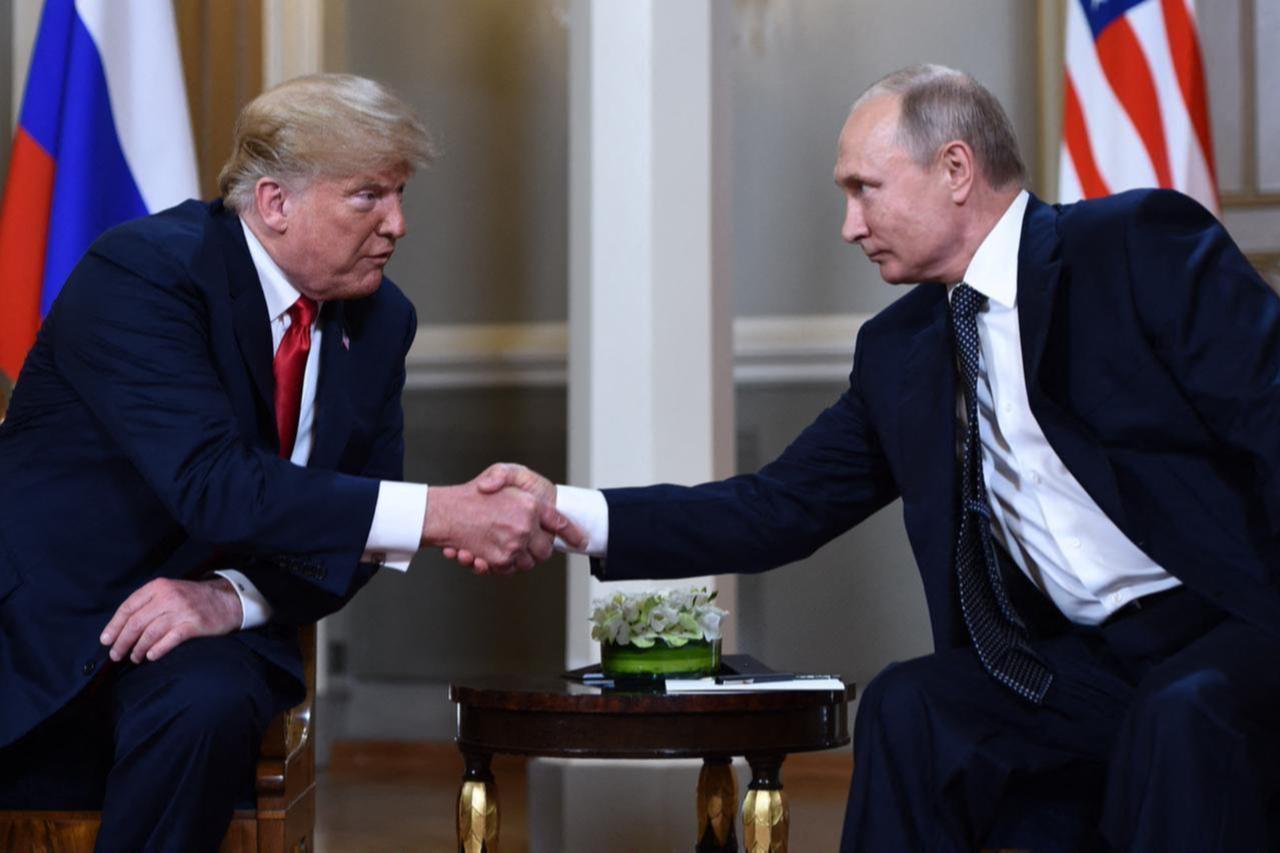
Greeting the Russian leader with a smile, Trump asked, "Who is he?" and answered himself: "He's my friend." He then shook Putin's hand warmly.
The remark revived concern in Kyiv and across European capitals that Trump was again tilting toward Putin, with whom he has long had a close rapport, at Ukraine's expense. Russia launched its full-scale invasion of Ukraine in February 2022.
Trump's post followed his meeting in Florida with NATO Secretary General Mark Rutte, whom he said he had briefed on his talks with Putin. The two later issued a joint statement saying they "discussed the importance of Russia avoiding any actions that intentionally, or unintentionally, expand the war." Trump reposted the statement on Truth Social shortly before publishing his comments on Putin.
The messaging differs from Trump's recent criticism of Ukraine for striking targets deep inside Russia. That criticism has tended to portray Moscow and Kyiv as equally responsible for the conflict.
This time, Trump made no call for Ukraine to show similar restraint.


 Set as preferred source
 Set as preferred source


 1 min read
 1 min read