Newsletters


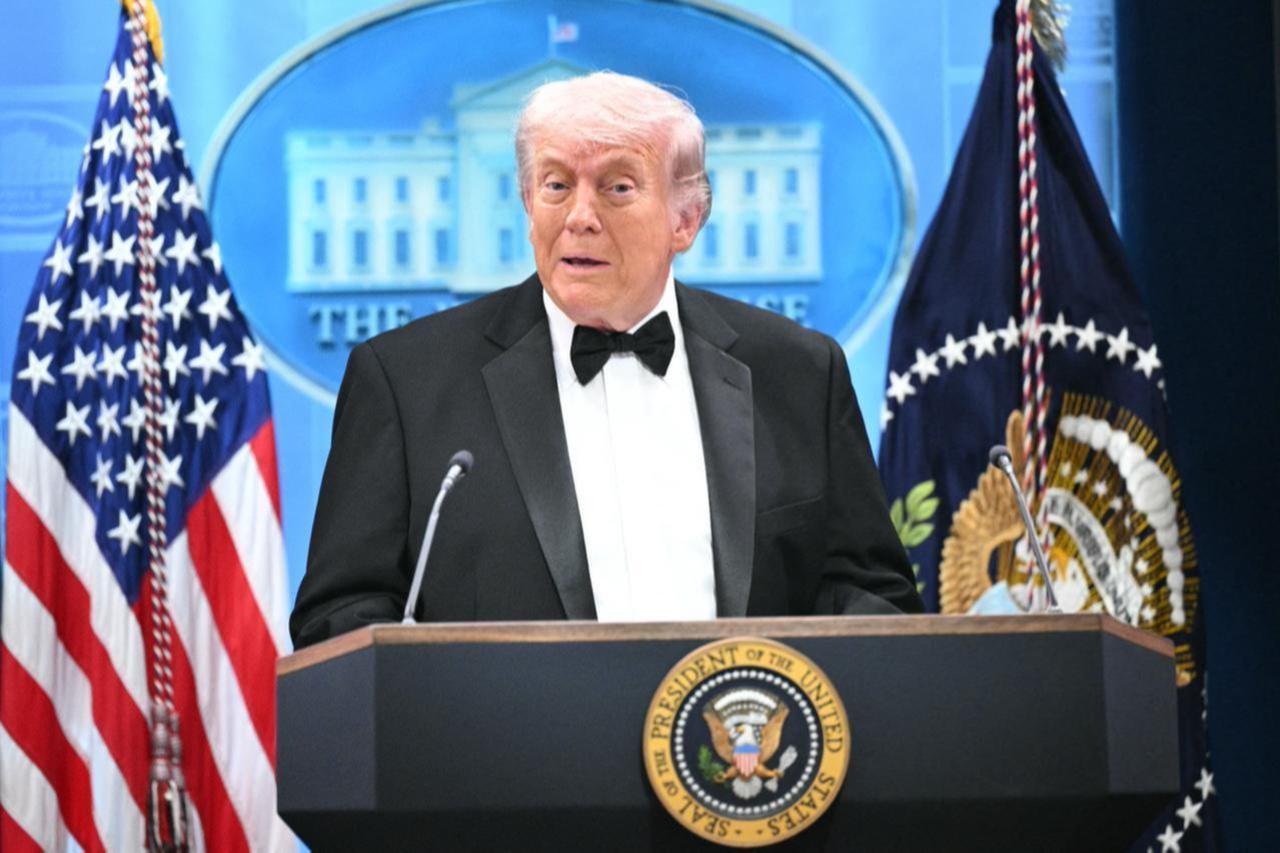


President Donald Trump declared Friday that U.S. hostilities against Iran had formally ended under a ceasefire, invoking that claim to sidestep a congressional deadline that required him to either end the conflict or seek lawmakers' authorization, a move Democrats immediately rejected as legally groundless.
In a letter to congressional leaders, Trump said there had been no exchange of fire with Iran since the ceasefire took effect. "The hostilities that began on February 28, 2026, have terminated," he wrote. Later, departing Washington for Florida, Trump offered a more blunt rationale: "We had a ceasefire, so that gives you additional time."
The letter arrived on the last day of the 60-day window set by the 1973 War Powers Resolution, a law Congress passed in the aftermath of Vietnam to curb a president's ability to wage open-ended war without legislative approval. Under the measure, a president must end military action, secure congressional authorization, or declare a 30-day extension on narrow grounds within that window. Trump argued the law does not apply in this case, and a senior administration official had said the day before that the administration did not believe the deadline applied at all. Trump went further, calling the War Powers Resolution unconstitutional, a position taken by both Republican and Democratic presidents over the decades. Legal experts say courts have never resolved the question.
Congressional Democrats rejected Trump's framing outright, arguing the 1973 law contains no provision allowing a ceasefire to extend the deadline or pause the clock. They also pointed to the continued deployment of U.S. naval vessels blockading Iranian oil exports as evidence that the conflict had not genuinely ceased. Senator Jeanne Shaheen of New Hampshire, the senior Democrat on the Senate Foreign Relations Committee, said the deadline was "a clear legal threshold" and accused the president of having no coherent plan. "After sixty days of conflict, President Trump still does not have a strategy or way out for this poorly planned war," Shaheen said.
Trump acknowledged the conflict's unresolved nature in his own letter, writing that Iran continues to pose a "significant" threat to the United States and its armed forces, a concession that contradicted the framing of hostilities as fully concluded.


The war, now two months old, has killed thousands, caused billions of dollars in damage, and roiled global energy markets, driving up consumer prices across a range of sectors. Polls show it is deeply unpopular with the American public at a politically sensitive moment, with midterm elections in November set to determine control of Congress.
Trump's Republicans, who hold slim majorities in both chambers and have remained almost uniformly loyal to the president, have voted to block every Democratic resolution aimed at ending the conflict. That partisan cohesion has effectively insulated the administration from legislative consequences, even as public discontent with the war grows.
On Thursday, one day before the deadline, Trump received a briefing on plans for fresh military strikes aimed at compelling Iran to negotiate. If hostilities resume, the administration would be positioned to argue that a new 60-day clock begins, a mechanism that presidents from both parties have used repeatedly to sustain intermittent military campaigns since the War Powers Resolution was enacted in 1973 over President Nixon's veto.
 1 min read

On the same day Trump submitted his letter to Congress, Iran's state news agency IRNA reported that Tehran had sent its most recent negotiating proposal to Pakistani mediators facilitating indirect talks between the two governments. Trump rejected it almost immediately. The administration has said it wants Iran to agree to verifiable limits on its nuclear program as a condition of any settlement, while Iran has insisted on guarantees that Washington will not resume maximum-pressure sanctions regardless of any deal's outcome.
The conflict began February 28 with the first U.S. airstrikes. Trump formally notified Congress of the military action 48 hours later, triggering the War Powers Resolution's 60-day clock that expired Friday. Congressional aides and analysts had widely anticipated that the administration would find a way to bypass the deadline rather than seek authorization or withdraw.


 Set as preferred source
 Set as preferred source



 1 min read