Newsletters




President Donald Trump has informed Attorney General Pam Bondi that she will be removed from her position, according to multiple officials and sources familiar with the matter, ending a tenure marked by her loyalty to the White House and a prolonged, self-inflicted crisis over the Justice Department's mishandling of files related to convicted sex offender Jeffrey Epstein.
Fox News reported Wednesday night that Bondi was told of her ouster during a meeting with Trump in the Oval Office ahead of his nationally televised address on the war in Iran, and that she was already on her way back to Florida by the time he stepped to the podium.
Four sources told NBC News that her departure is imminent, though the decision had not been formally announced and remains subject to change. Trump, in a statement provided to The New York Times, said "Attorney General Pam Bondi is a wonderful person and she is doing a good job," a formulation widely read as a soft farewell rather than an endorsement.
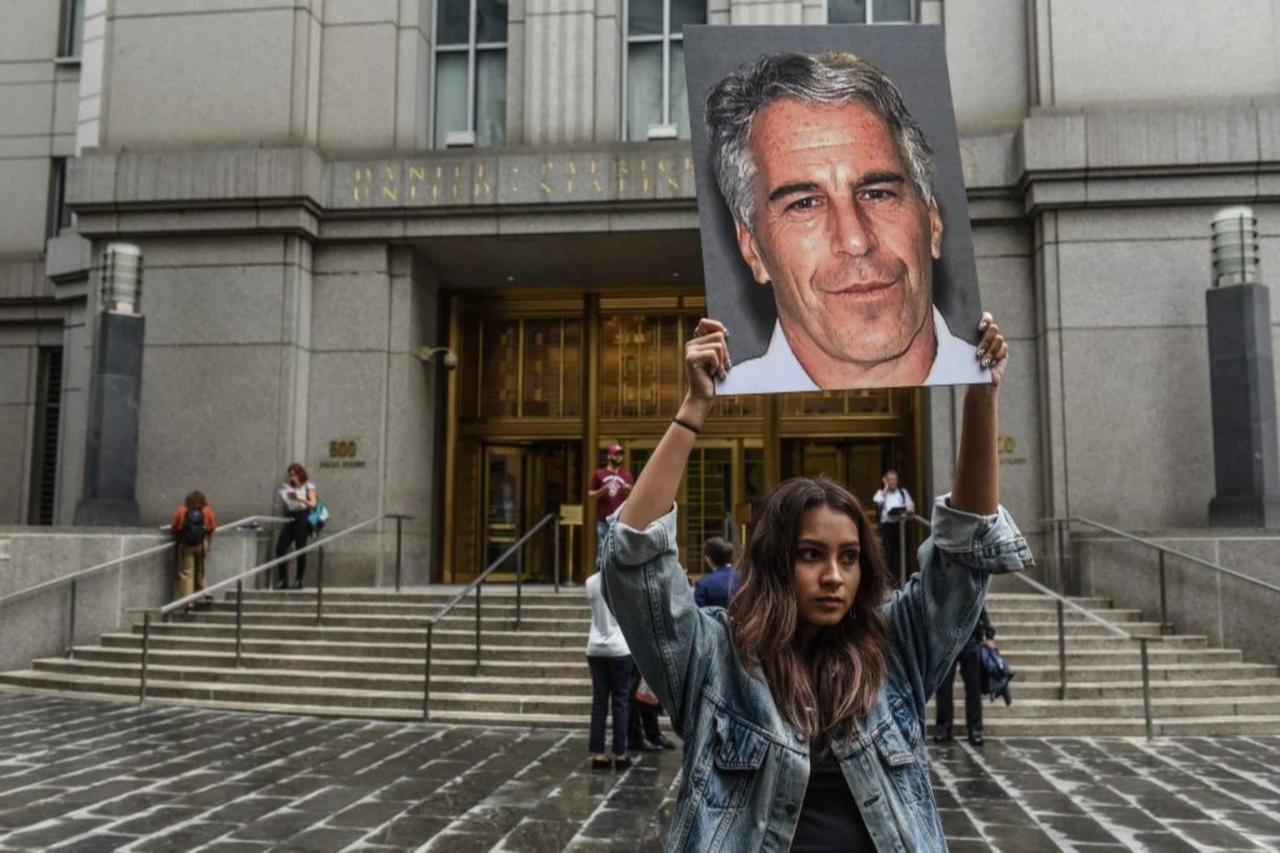

The proximate cause of Bondi's downfall was a months-long catastrophe that began, ironically, with a promise. In a February 2025 Fox News interview, she told host John Roberts that an Epstein client list was "sitting on my desk right now to review," framing the remark as a presidential directive and a harbinger of major revelations. The department proceeded to distribute white binders labeled "Epstein Files: Phase 1" to a group of Trump-aligned social media influencers at the White House, but the materials contained little that was new or explosive. The rollout was widely panned as a dud.
Rather than recalibrate, Bondi pushed further. She told Fox's Sean Hannity that investigators had received a "truckload" of previously withheld material, blamed the Biden administration for suppression, and repeatedly invoked figures in the hundreds when citing victim counts, a number the DOJ's own later review did not clearly corroborate. In a March TV interview she declared: "It's a new administration, and everything's going to come out to the public."
It did not. In July 2025, the Justice Department and FBI released a two-page memo concluding that a "systematic review revealed no incriminating 'client list'" and no credible evidence that Epstein had been murdered or had blackmailed prominent individuals. FBI agents had, in fact, confirmed internally as early as February 19, 2025, two days before Bondi's Fox appearance, that no such list existed. The memo marked a public reversal of a theory the administration had itself helped amplify.
The fallout was immediate and came largely from within Trump's own coalition. Far-right activist Laura Loomer called publicly for Bondi to resign. Elon Musk mocked her on social media with a series of images of a clown applying makeup. Tucker Carlson accused her of covering up serious crimes. White House Chief of Staff Susie Wiles, one of Bondi's strongest internal defenders, had previously acknowledged in a Vanity Fair interview that the attorney general had "completely whiffed" on the Epstein files.
Beyond the Epstein debacle, Trump had grown separately frustrated that Bondi was not moving aggressively enough against his perceived enemies, sources told multiple outlets. The president has for years treated the Justice Department as an instrument of personal retribution, a demand that Bondi publicly embraced from her first days in office, breaking with the post-Watergate norms that had long insulated the department from direct White House political pressure.
Under her leadership, the DOJ opened investigations into an array of Trump adversaries, including Federal Reserve Chair Jerome Powell, New York Attorney General Letitia James, former FBI Director James Comey, and former National Security Adviser John Bolton. Her department secured indictments against Comey and James, but both were thrown out after a federal judge ruled that the prosecutor handling the cases had been serving illegally. Sources told CNN and ABC that Trump fumed at the setbacks and at what he viewed as insufficient pace and aggression.
Bondi's combative February 2026 appearance before the House Judiciary Committee, where she repeatedly clashed with Democratic lawmakers and declined to answer questions about the Epstein files, drew criticism even inside the West Wing, sources told ABC News.
Trump has most frequently mentioned EPA Administrator Lee Zeldin as a potential successor, according to CNN, the New York Times, and the Associated Press, though he is not considered a final choice. Deputy Attorney General Todd Blanche has also been mentioned as a possibility.
Zeldin, a former Republican congressman from New York who lost the state's 2022 gubernatorial race to Kathy Hochul, has remained one of Trump's most reliable allies. Trump referred to him as "our secret weapon" at a White House coal industry event in February, praising the speed with which he had advanced energy deregulation at the EPA. An attorney and Army veteran, Zeldin has no prior background in law enforcement leadership.
If confirmed, Bondi's removal would make her the second cabinet departure of Trump's current term, following the ouster of Homeland Security Secretary Kristi Noem in early March. She had been Trump's second choice for attorney general after former Representative Matt Gaetz withdrew his nomination ahead of a congressional ethics report.
Bondi's tenure was defined above all by deference. A former Florida attorney general who served on Trump's legal defense team during his first impeachment, she arrived at the Justice Department pledging, paradoxically, that she would not play politics, and then systematically remade the agency in the president's image. She fired career civil servants, redirected prosecutorial resources toward Trump's political targets, and publicly echoed the president's grievances against the FBI and the institutional DOJ.
The House Oversight Committee subpoenaed her to testify about the Epstein files' handling. She refused to address the matter at the Judiciary Committee hearing. A deposition before Congress was scheduled for later this month.
For Trump, whose second administration has been defined by a drive to ensure that every arm of the executive branch serves his personal and political interests, Bondi ultimately failed the test not of independence but of effectiveness. She bent the department to his will and still fell short of his expectations.


 Set as preferred source
 Set as preferred source


 1 min read
 1 min read