

 Newsletters


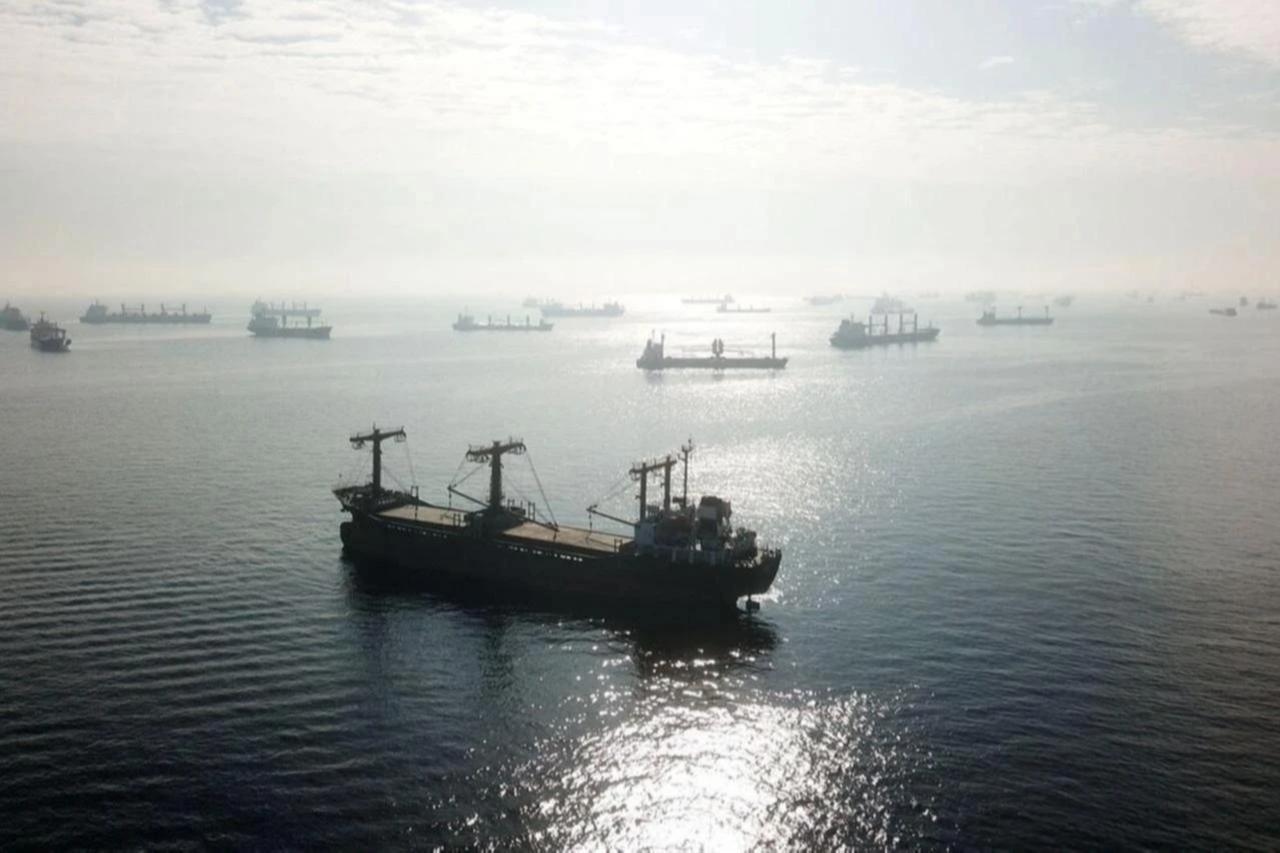


Ukraine has sent Russia an offer proposing that both sides halt attacks on civilian targets in the Black Sea, Reuters reported Thursday, citing a source familiar with the matter.
The offer was transmitted by Kyiv through a third party, and Ukraine is still waiting for a response, the source told Reuters.
Before the report, Russian Deputy Foreign Minister Alexander Grushko said Moscow had received no formal Black Sea ceasefire proposal.
"Recently, we have been hearing many calls for various kinds of moratoriums and truces. These ideas are being put forward through various channels, but we have not received any formal proposals," Grushko said, according to Russia's state news agency Tass.
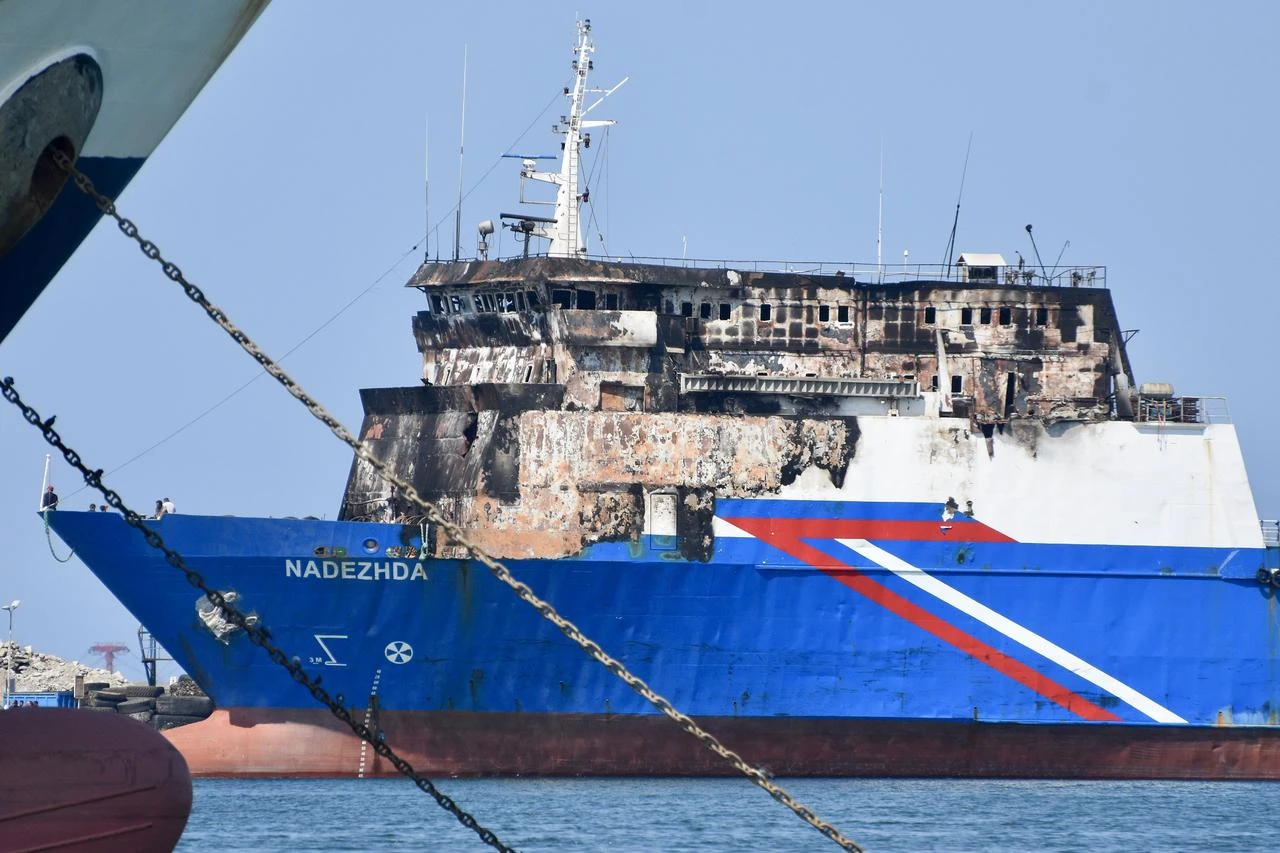
The reported offer comes as mounting strikes on vessels and ports in the Black Sea and the Sea of Azov raise fears over global food supplies.
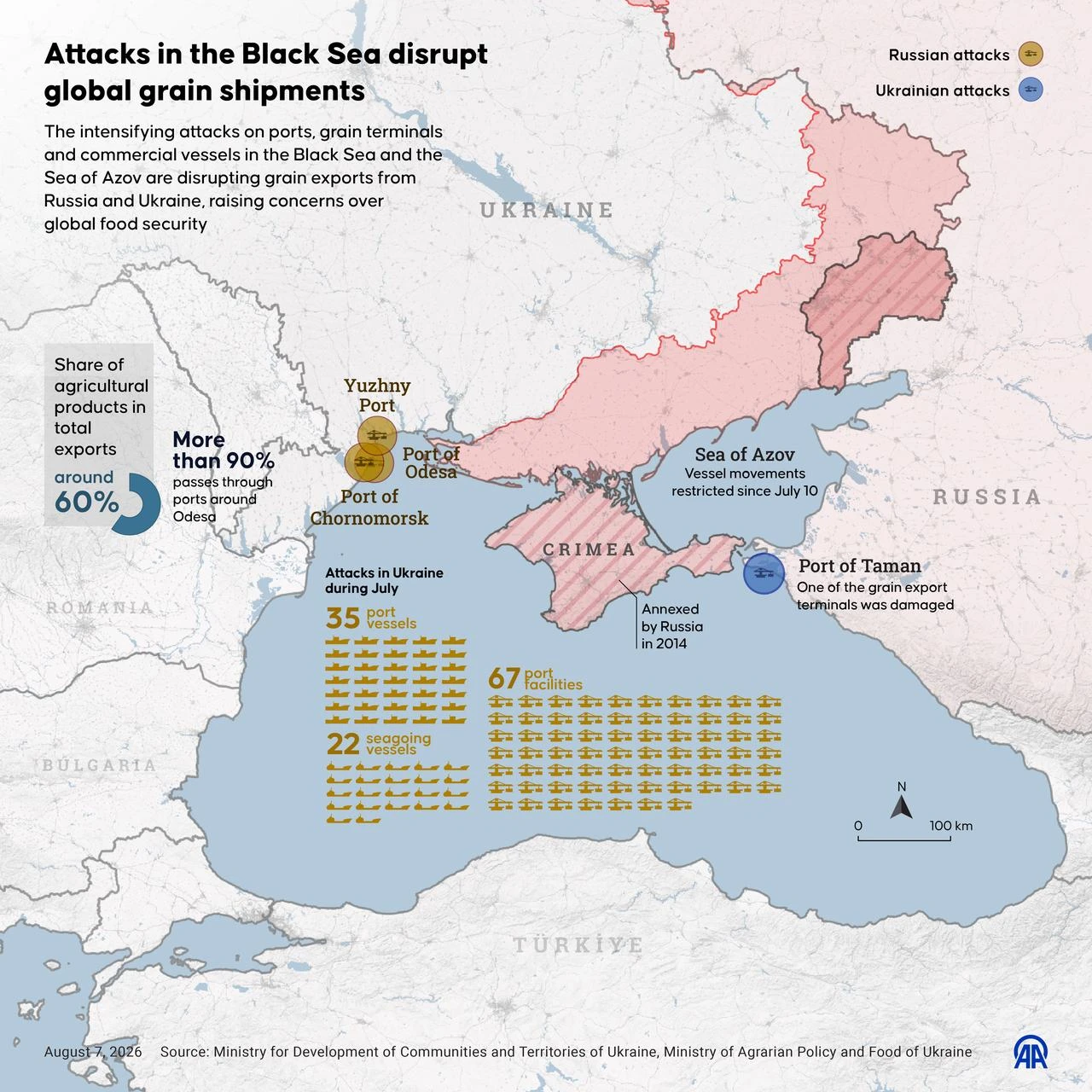

Intensifying attacks on ports, grain terminals and commercial ships in the Black Sea and the Sea of Azov are disrupting Russian and Ukrainian grain shipments, fueling concerns over global food security.
Russia is the world's largest wheat exporter, while Ukraine is known as Europe's breadbasket.
Ukraine's grain and oilseed production is expected to rise from 80 million metric tons last year to 81 million this year, with agricultural products making up around 60% of its total exports.
The United Nations said global agricultural markets are beginning to feel the effects of the attacks, calling for efforts to prevent tensions from escalating.
The U.N. World Food Programme warned that Ukrainian grain shipments could be further disrupted if attacks on shipping routes continue, deepening global food insecurity.
Some 35 attacks were carried out against ships in ports, 22 against ships at sea and 67 on port facilities last month, according to Ukraine's Infrastructure Ministry.
Ships in Ukrainian ports were targeted a total of 14 times last year, the ministry said.
Russia's escalating attacks on ports and surrounding infrastructure in the Odesa region are affecting the main route used for Ukrainian agricultural exports, more than 90% of which are shipped through ports in Odesa and the surrounding area.
Ports in Odesa, Chornomorsk and Yuzhny have seen commercial traffic largely come to a halt since the second half of July as security risks increased.
Taras Vysotskyi, Ukraine's agricultural policy and food minister, said shipowners had temporarily suspended sending vessels to the country's Black Sea ports to load agricultural products as of July 22.
He said alternative export routes would not reach full capacity until the end of August.
Vysotskyi said land and river routes, even at full capacity, would not be able to handle half the volume of shipments normally carried through Black Sea ports.
Danish shipper Maersk temporarily suspended its feeder service through Chornomorsk port and is rerouting cargo to Romania's Constanta port. Existing export bookings may be canceled or the loading port may be changed to Constanta.
Russia has repeatedly sought to block Ukrainian port operations and shipments that are key to Kyiv's war-hit economy.
The Russian Defense Ministry says the targets it struck in attacks on Ukrainian ports and ships were used for military purposes.
Kyiv says a significant portion of the targeted facilities and vessels were used for civilian trade and agricultural exports.
Ukraine has also intensified drone attacks on Russian ports, grain terminals and commercial vessels along the Black Sea and Sea of Azov coasts.
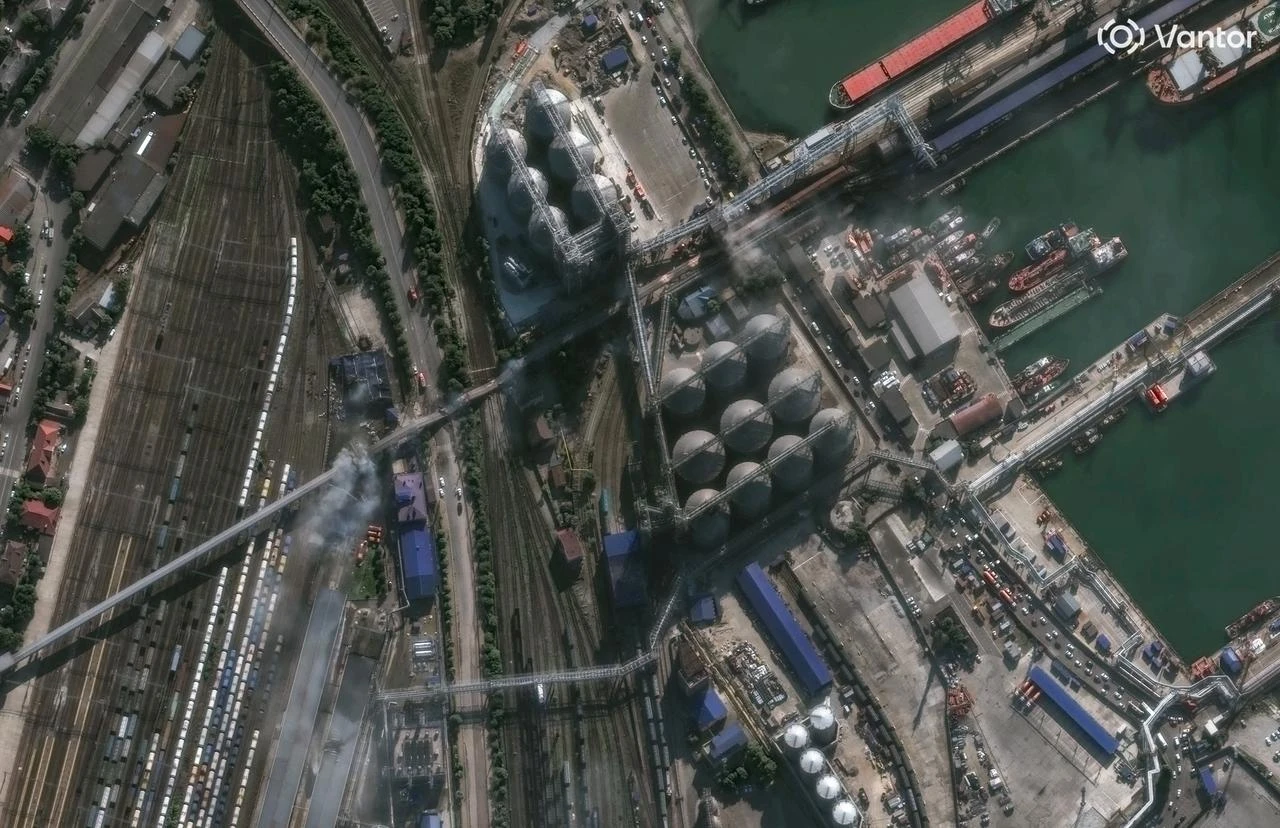
Russia's major grain export terminals at Taman port were reportedly attacked, while some terminals along the Black Sea coast have limited grain intake by land transport because of security risks.
Operations at the Port of Taman were affected by restrictions on ship movements in the Sea of Azov introduced on July 10.
Grain shipments continue from the ports of Novorossiysk and Tuapse, but loading speeds have slowed because of security measures and restrictions.
The nonprofit Rusgrain Union warned that attacks on commercial vessels and port infrastructure threaten Black Sea shipping and that export corridors could close if conditions persist.
Both Moscow and Kyiv deny accusations of targeting civilian ships and port infrastructure, saying they are striking targets linked to military activity.
Türkiye last Sunday conveyed its concerns about attacks to Russia and Ukraine, saying both sides should declare a moratorium on attacks in the Black Sea.
The Black Sea Grain Initiative was signed in Istanbul in July 2022 by Türkiye, Russia, Ukraine and the U.N. to prevent a potential global food crisis.
While the Black Sea grain corridor was open, more than 1,000 ships delivered around 33 million metric tons of grain to global markets and for humanitarian purposes.
The corridor facilitated Ukrainian grain shipments to global markets and helped ease global food price pressures.
After Russia withdrew from the deal in July 2023, Ukraine established an alternative maritime corridor along the western coast of the Black Sea, close to the territorial waters of Romania and Bulgaria.
The route had remained operational until the latest round of escalation, while alternatives by rail and through the Danube remain limited, according to Kyiv.
The current de facto blockade of Black Sea ports has sent Ukrainian grain exports tumbling 76% year-on-year so far in August, with the agricultural sector warning of major consequences for the economy if it persists.
If tensions in the Black Sea and the Sea of Azov continue, grain shipment disruptions could affect prices and lead to supply pressures, especially in African and Middle Eastern countries that rely on imports from the region.


 Set as preferred source
 Set as preferred source


 2 min read

 1 min read


