Newsletters


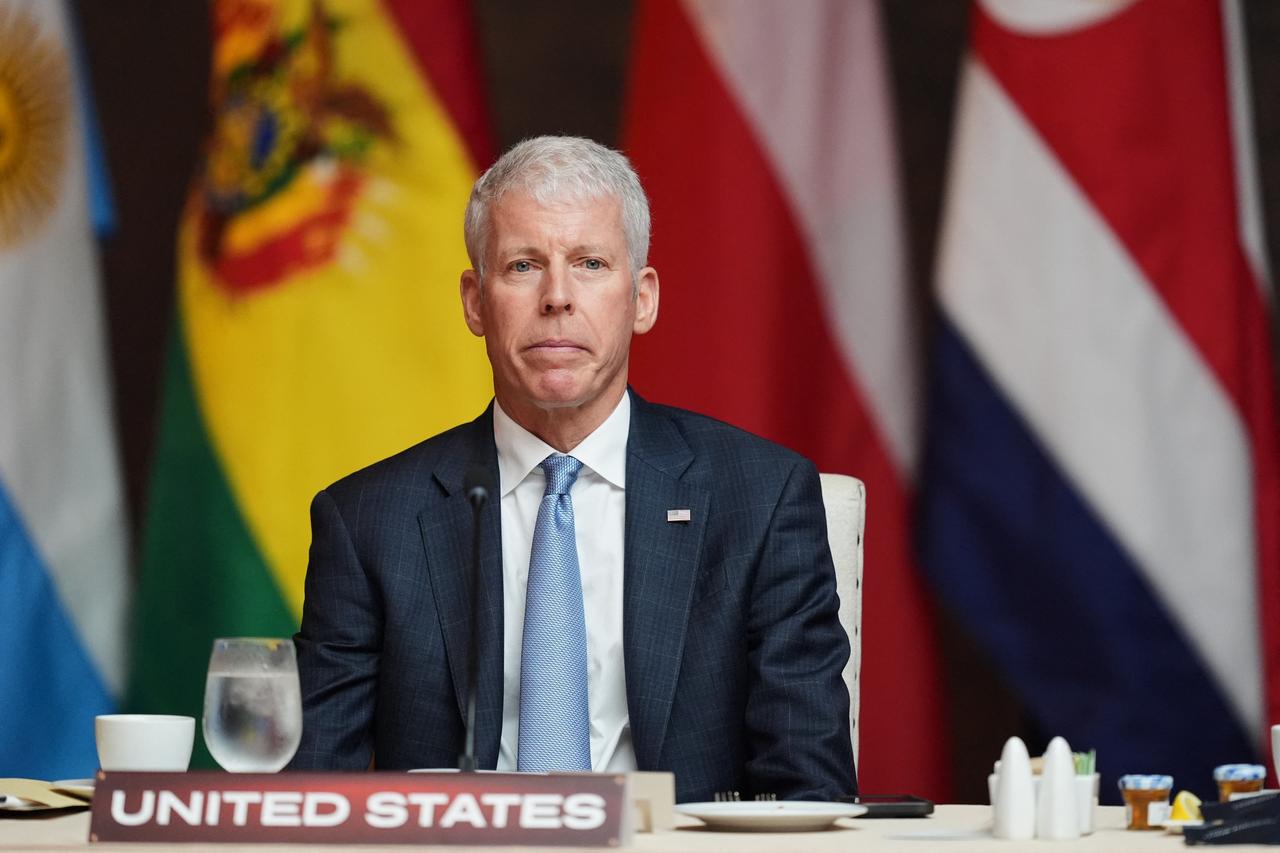


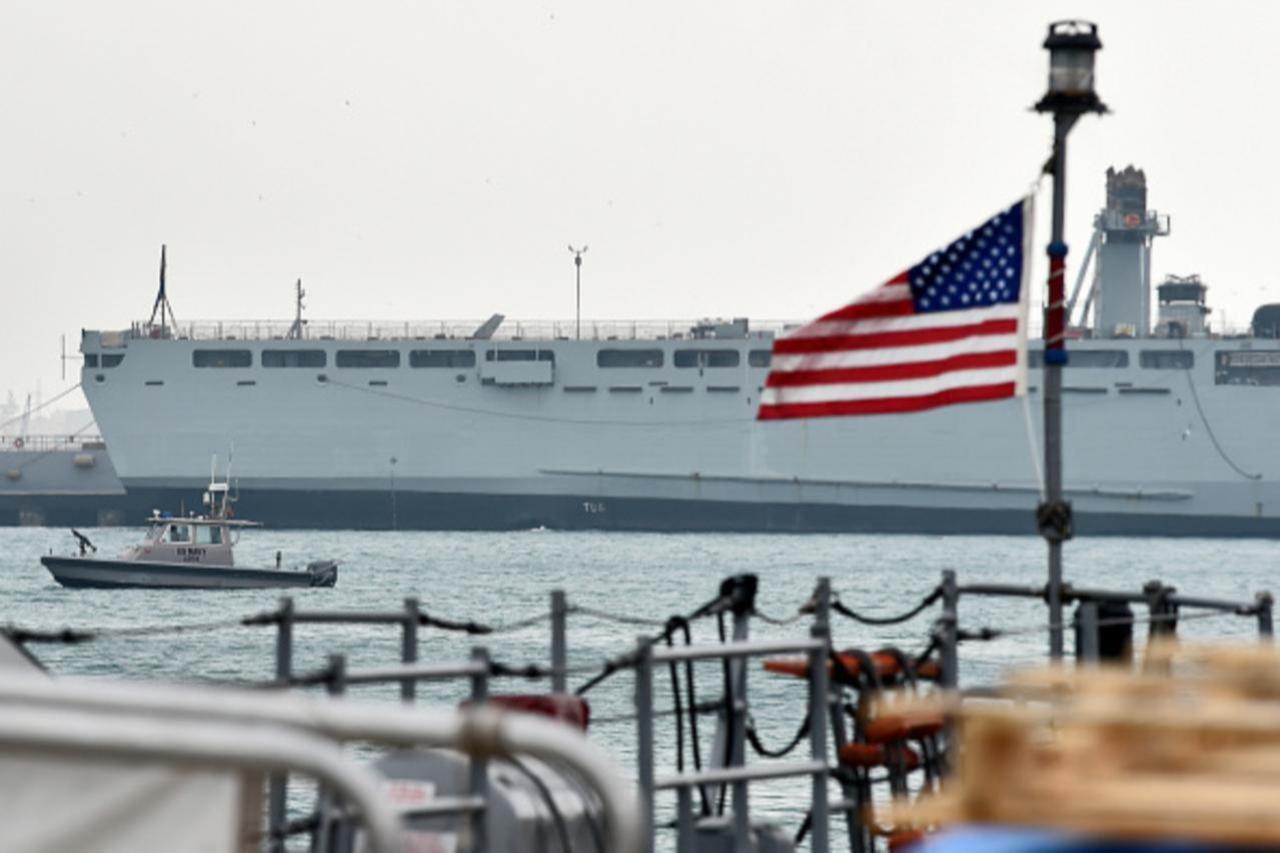
US Energy Secretary Chris Wright on Tuesday deleted a social media post in which he claimed the US Navy had successfully escorted an oil tanker through the Strait of Hormuz, after a senior Iranian Revolutionary Guard Corps naval official flatly denied the operation ever occurred, calling it part of a "media war" designed to mislead global public opinion.
The rapid reversal injected fresh uncertainty into already volatile energy markets and raised questions about the credibility of Washington's efforts to signal that the world's most critical oil chokepoint is reopening, nearly two weeks into a war that has brought shipping through the strait to a virtual standstill.
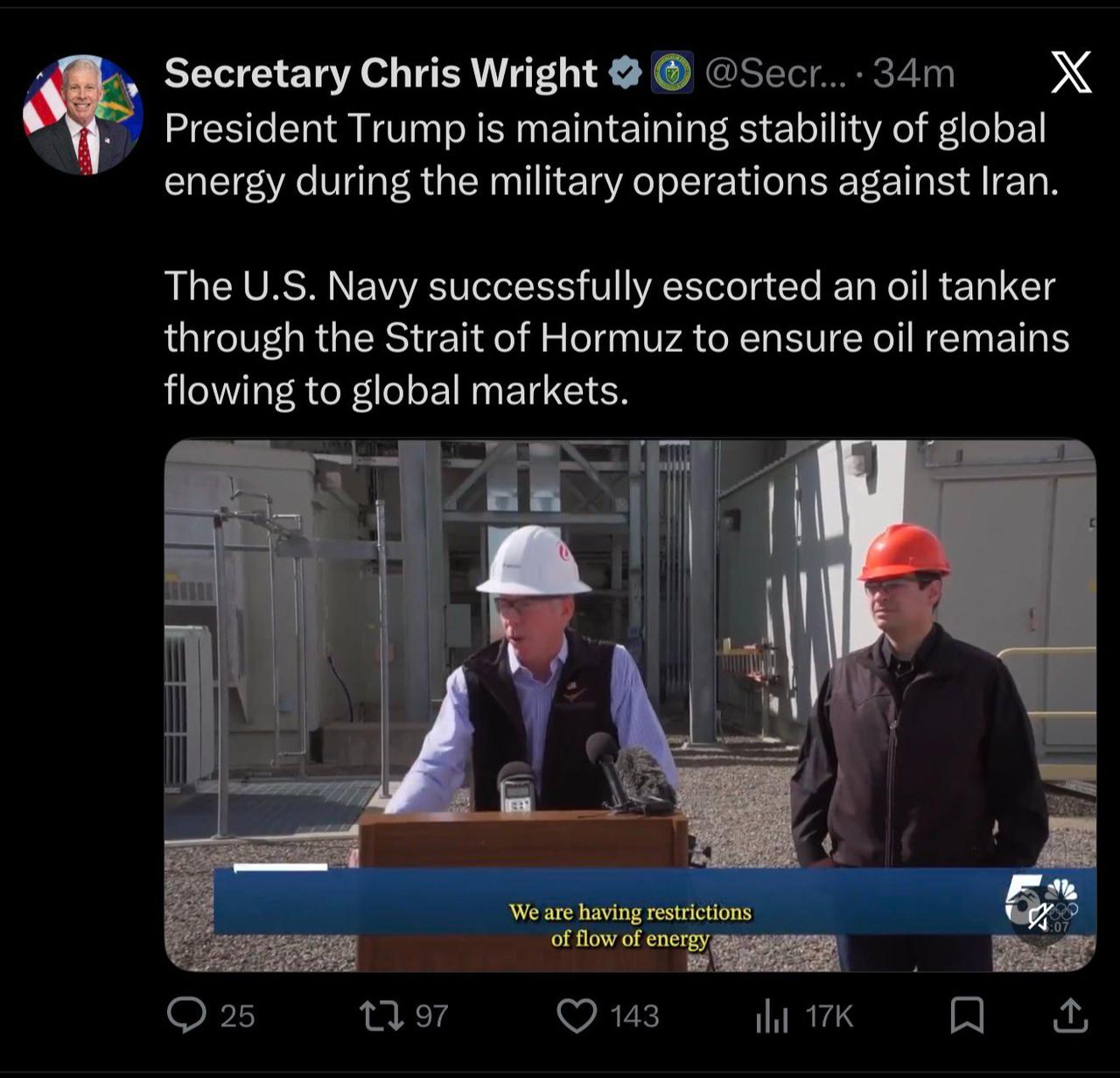
Wright had posted earlier Tuesday that "the US Navy successfully escorted an oil tanker through the Strait of Hormuz to ensure oil remains flowing to global markets," adding that President Donald Trump "is maintaining stability of global energy during the military operations against Iran." The post initially sent oil prices tumbling roughly 15%, with Brent crude falling to around $84 a barrel after briefly surging past $120 the day before.

But the claim was swiftly challenged. A senior source in the IRGC's naval force told Iranian outlet Iran Now that Wright's assertions "have no basis in truth," stating categorically that US naval forces did not escort any oil tanker through the strait.
The source said the claim falls within the framework of "media warfare and attempts to mislead public opinion," adding that the Strait of Hormuz is under "precise surveillance" by Iranian forces and that "any military movement in the area is fully monitored."
Wright subsequently deleted the post without public explanation.
The administration's own messaging unraveled further when White House Press Secretary Karoline Leavitt publicly contradicted Wright's claim just hours after it was posted.
"I can confirm that the US Navy has not escorted a tanker or vessel at this time," Leavitt told reporters, effectively siding with Tehran's denial over her own cabinet colleague's assertion. She attempted to soften the reversal by framing escort operations as a tool the president remains willing to deploy "if and when necessary at the appropriate time," but the damage to Washington's credibility on Hormuz was already compounding.
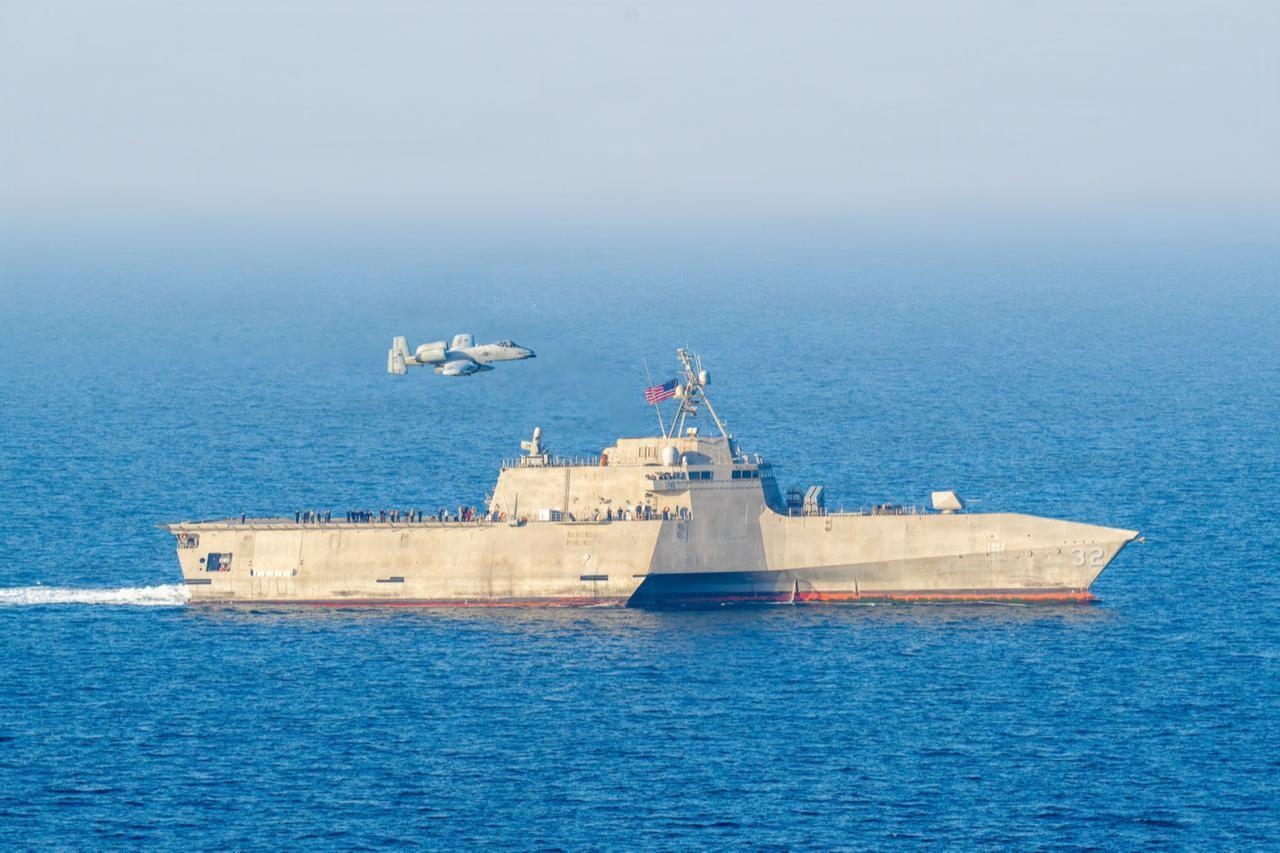
Wright's now-deleted claim was the culmination of more than a week of signals from the Trump administration that naval escorts were imminent.
On March 3, the president posted on Truth Social that he had ordered the US Development Finance Corporation to provide political risk insurance for maritime trade in the Gulf. "If necessary, the United States Navy will begin escorting tankers through the Strait of Hormuz, as soon as possible," Trump wrote.
But execution lagged behind the rhetoric. As recently as last Friday, a US official told Fox News: "We are not escorting ships through the Strait of Hormuz, and we will not speculate on future operations."
Wright himself floated the idea on the same day that escorts would begin only "as soon as it's reasonable to do it."
Analysts had warned that Washington faced a fundamental tension between conducting combat operations against Iran and simultaneously providing safe passage for hundreds of stranded vessels.
"A key question will be whether there are enough Navy assets to both escort ships as well as continue operations against Iran," Helima Croft, head of global commodity strategy at RBC Capital Markets and a former CIA analyst, told clients in a note cited by CNBC.
On Sunday, Wright appeared to preview Tuesday's claim when he told Fox News that "one large tanker has already gone through the straits with no issues at all." The Hill reported that it contacted US Central Command and the Department of Defense to ask whether the Navy had actually escorted that vessel, but did not receive confirmation, according to The Hill.


 Set as preferred source
 Set as preferred source


 1 min read


 1 min read