Newsletters


Iraqi authorities are exploring alternative routes to export crude oil after transit through the Strait of Hormuz was disrupted by the Middle East war, an Oil Ministry spokesperson said Tuesday.
Saheb Bazoun told Agence France-Presse (AFP) that Iraq’s oil sector has been heavily affected by the disruption.
“Much like other countries in the region, oil production and marketing have been severely impacted, leaving the government no choice but to seek alternative export routes,” Bazoun said.
He added that several Iraqi oil shipments are currently stranded at sea.
Iraq, a founding member of the Organization of the Petroleum Exporting Countries (OPEC), relies on crude oil sales for around 90% of its government revenues. Before the war, the country exported more than 3.5 million barrels per day.
The Strait of Hormuz remains closed to most oil tankers after Iran vowed that no oil would be exported from the Gulf while its war with the United States and Israel continues.
Bazoun said Iraqi authorities are considering multiple alternatives, including exporting crude through the pipeline running from northern Iraq’s Kurdish region to the port of Ceyhan in Türkiye.
The government is also evaluating the possibility of transporting oil over land, though such plans would take time to implement.
A senior official in Iraq’s Kurdish Regional Government (KRG) told AFP that talks are underway to facilitate exports from federal Iraq.
According to the official, Baghdad has requested permission to export about 200,000 barrels per day through the Ceyhan pipeline, which has a capacity of around 700,000 barrels per day.


However, regional authorities have demanded certain measures in return, including improved access to U.S. dollars through banking channels.
“We have made it clear to Baghdad that the relief on dollars should happen first,” the Kurdish official said, claiming that there is a “100 percent dollar embargo on Kurdistan.”
Iraq has faced a shortage of U.S. dollar liquidity since the beginning of the year, affecting multiple sectors of the economy.
Oil production in the KRG has also been disrupted after foreign energy companies halted operations as a precaution following the outbreak of war.
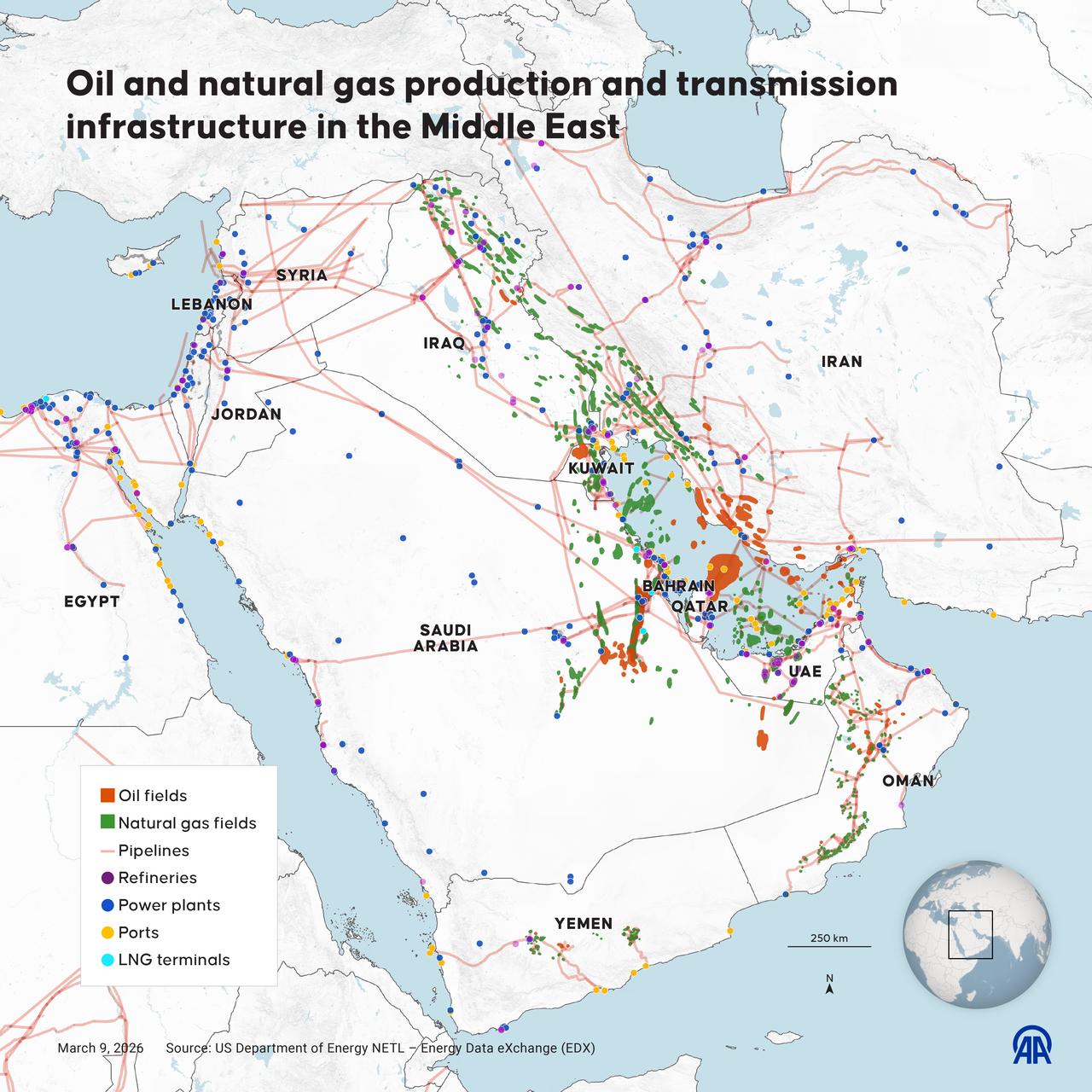
The disruption to oil shipments through the Strait of Hormuz has tightened global crude supply and pushed prices higher.
Each $1 increase in oil prices typically raises U.S. gasoline prices by about 2.5 cents per gallon.
According to the American Automobile Association (AAA), the average gasoline price in the United States jumped 16% over the past week to $3.48 per gallon, compared with $2.99 a week earlier and $2.90 a month ago.
Prices vary widely by state, with California recording the highest average at $5.20 per gallon, followed by Washington at $4.63 and Hawaii at $4.52. Prices remain below $3 per gallon in states such as Arkansas, Missouri, Oklahoma and Kansas.
Higher oil prices are also increasing the cost of diesel used in logistics and jet fuel in aviation, pushing up transport and freight costs.
Analysts warn that prolonged disruptions in energy markets could affect global inflation and economic stability.
Rising energy costs could add new pressure on inflation as supply shocks ripple through global markets.
The U.S. Federal Reserve has been trying to bring inflation down to its 2% target, though higher energy prices could complicate that effort.
U.S. consumer inflation rose 2.4% year-on-year in January, showing a slowdown, but analysts warn that prolonged energy shocks could push prices higher again.
Steven Kamin, a senior fellow at the American Enterprise Institute, said the inflationary impact depends on how high oil prices rise and how long they remain elevated.
Kamin noted that if oil prices remain high without monetary policy adjustments, inflation could increase, similar to what occurred during oil shocks in the 1970s.
However, he said inflation would likely fall back toward the Federal Reserve’s 2% target if the war ends quickly and energy prices decline.
Oxford Economics analysts also said the U.S. economy could remain resilient, but higher oil prices would likely widen the gap between lower- and higher-income households.
The longer the conflict continues, analysts warned, the more American consumers may feel the pressure from rising energy and transportation costs.


 Set as preferred source
 Set as preferred source


 1 min read

 1 min read