Newsletters




AI-generated music has crossed a significant threshold on streaming platforms, with Deezer reporting that it now accounts for more than half of all tracks delivered to its service each day.
The French streaming platform said it has received an average of around 90,000 fully AI-generated tracks per day since introducing an AI detection tool in January 2025. The rapid increase has added to concerns that human musicians could be pushed out of recommendation systems, playlists and royalty pools as automated music floods the market.
Listeners may not always recognize the difference. A 2025 survey carried out by Deezer and Ipsos found that 97% of more than 9,000 participants across eight countries were unable to correctly identify AI-generated music.
Artists such as Breaking Rust, Velvet Sundown and Cain Walker have already shown how convincingly AI systems can reproduce familiar voices, genres and production styles, blurring the line between music created through human experience and tracks assembled by algorithms.
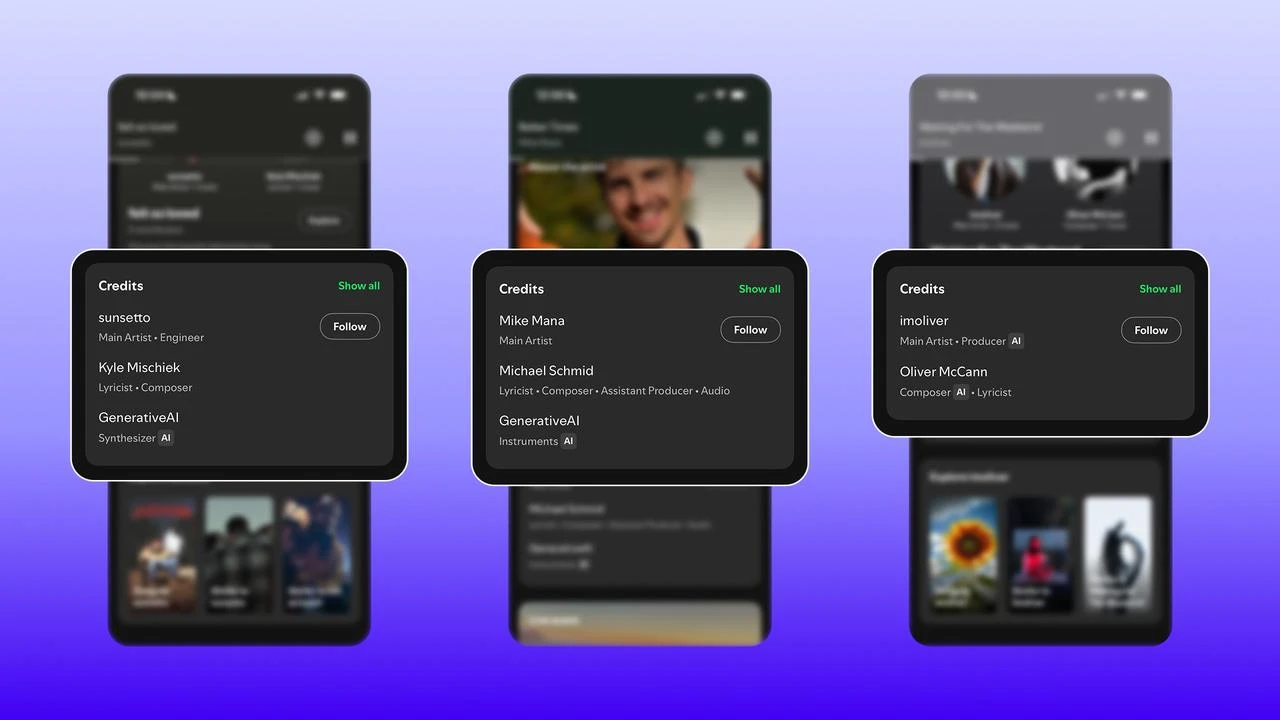

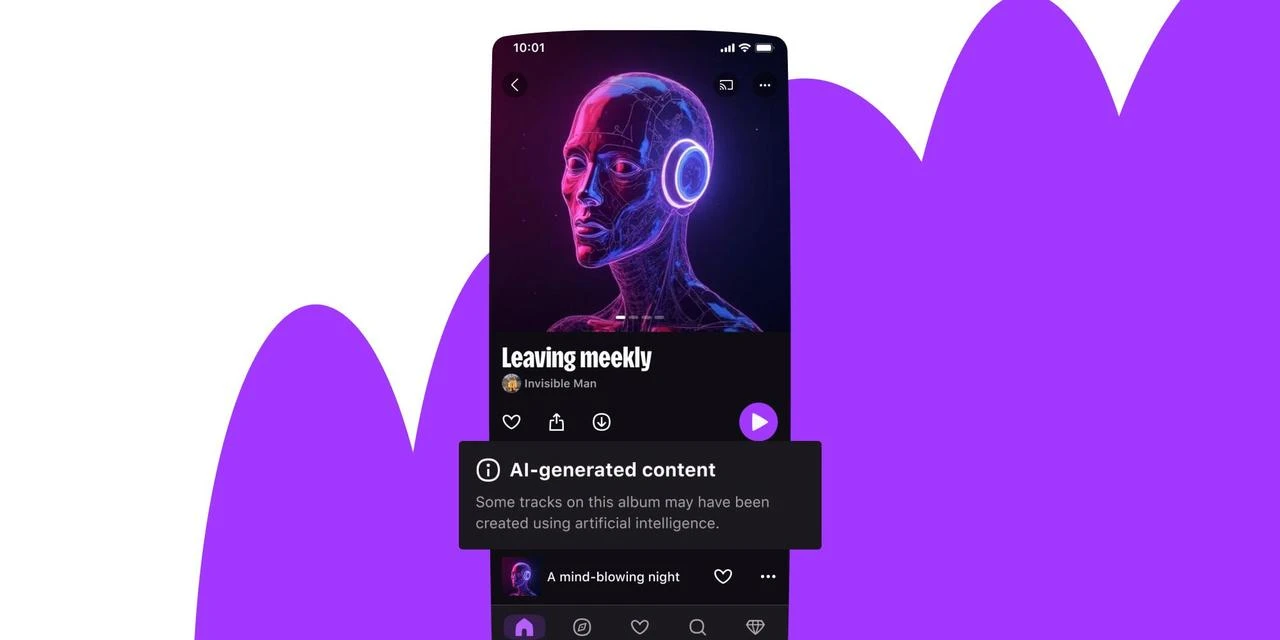
Although other major streaming services have not released figures comparable to Deezer's, several platforms have started bringing in policies to deal with AI-generated content, impersonation and streaming fraud.
Spotify said it removed more than 75 million spam tracks during a period shaped by the rapid spread of generative AI tools. It has also rolled out policies targeting impersonation and spam while supporting disclosures about how AI was used during music production.
Spotify and Universal Music Group later announced a tool allowing users to create AI-powered covers and remixes of songs by participating artists and songwriters. Spotify said the model would allow rights holders to share directly in the value generated by licensed AI covers and remixes.
Apple, meanwhile, requires labels and distributors to disclose whether AI has been used in recordings, compositions, artwork or music videos.
Other companies have taken a stricter approach. Bandcamp has banned music that is entirely or substantially generated by AI, while iHeartRadio has pledged not to use AI-generated personalities or play music featuring synthetic singers presented as human performers.
The International Confederation of Societies of Authors and Composers, known as CISAC, estimated in 2024 that AI-generated music could build up a total market value of EUR40 billion, equivalent to about $46 billion, over five years.
Its study projected that generative AI could make up around 20% of music streaming revenues by 2028 while placing almost one-quarter of creators' income at risk.
AI music generators such as Suno and Udio have helped drive this expansion by enabling users to produce complete songs within minutes.
Some established producers have called on musicians to adapt. Diplo argued that artists would not be able to hold back AI and said the technology could generate high-quality voices without relying on traditional vocal recordings.
Producer Timbaland has also used AI to finish songs that had remained incomplete since 2021. According to Rolling Stone, he said the technology helped him make around 1,000 beats in three months across a wide range of genres.
However, opposition within the industry remains strong. More than 200 artists, including Billie Eilish, Katy Perry, Nicki Minaj and Zayn Malik, signed a 2024 Artist Rights Alliance letter warning that AI could undermine musicians' privacy, identities and livelihoods.
The following year, more than 400 artists, including Dua Lipa, Coldplay and Elton John, called for stronger British copyright protections in response to the growth of generative AI.
Concerns about market saturation intensified after AI-assisted artists took up one-third of the top 10 positions on Billboard's Country Digital Song Sales chart in late 2025. Breaking Rust's AI-generated track "Walk My Walk" also reached the top of the chart.
Featured Artists Coalition CEO David Martin said such developments raised questions about whether human creators would still be able to get their work heard and build sustainable careers.
“The biggest concern for everybody is that AI-generated music is going to swamp the market ... and that we're going to be overrun,” Martin told Anadolu Agency.
European Music Managers Alliance Executive Director Jess Partridge also raised concerns about the percentage-based system used to divide streaming income. Under that model, a track's share of total plays determines how much of the available revenue it receives.
Partridge warned that even a relatively small share of AI-generated streams could significantly affect emerging musicians, who already receive only a limited proportion of overall plays.
The problem could grow worse when automated tracks are combined with artificial streaming activity. Partridge said users could generate a track, upload it and purchase fake streams to draw money away from the royalty pool.
Artists' representatives are also challenging the use of copyrighted music to train AI models without the creators' knowledge or permission.
Martin said musicians were concerned that their work had been taken from the internet and used to develop systems that could later compete with them for listeners and income.
“Creative work is not free raw material for another industry. If it's copyrighted, they need to license it. They need to pay for it,” Partridge said.
The European Music Managers Alliance has worked with European Union institutions on transparency requirements under the EU AI Act, particularly rules concerning the material used to train AI systems. However, Partridge said she was not optimistic that the measures would provide enough protection.
Music organizations including EMMA and the Featured Artists Coalition have also opposed agreements that automatically opt musicians into AI-related uses or pressure them to approve licensing deals without clear information, meaningful consent or guaranteed payment.
Partridge said the lack of publicly available information made it difficult to measure the scale of AI-generated music, impersonation and fraud.
She called for mandatory labeling, clearer licensing agreements and regular reports showing how many AI-generated tracks had been identified or removed from royalty systems.
Martin also urged streaming platforms and music distributors to bring in shared standards that clearly distinguish between fully AI-generated music and work in which AI has only been used as a supporting tool.
Both stressed that they were not opposed to AI itself and acknowledged that the technology could support musicians when used responsibly.
“Technology on its own is one thing. Technology in the hands of creative people is a different thing. We're not anti-AI. We're anti-abusive practices,” Martin said.


 Set as preferred source
 Set as preferred source



 5 min read