Newsletters




Spanish lender BBVA cut its 2026 growth forecast for Türkiye to 3% from 4%, warning that the Iran war, tight financial conditions and a worsening external balance could keep activity under pressure in the coming quarters.
"The prolonged conflict and tight financial conditions pose downside risks to the growth outlook, while the deteriorating external balance is reducing the room for supportive measures," BBVA Research said in a note following the release of first-quarter growth data.
Official data showed Türkiye's economy grew 2.5% year-over-year in the first quarter, slowing from 3.4% in the previous three months as exports of goods and services fell 12.7%. Domestic demand remained resilient, supported by a 4.8% increase in household consumption, while industrial output contracted 0.8%.
The bank expects growth to remain subdued in the second quarter as the conflict in the Middle East weighs on business and consumer confidence. Its nowcasting indicator pointed to annual growth of around 2% as of May, although it noted that some of the weakness could be reversed in June and that calendar effects may provide support later in the year.
BBVA argued that Türkiye's production side remains weak despite some improvement in sectoral activity. The recovery, it noted, remains uneven, with services and agriculture supporting growth while industry and construction continue to lag.
Domestic demand also cooled during the quarter, broadly in line with the bank's expectations. However, household spending proved more resilient than anticipated, while weaker investment activity emerged as the main drag on domestic demand. Net exports continued to weigh on growth amid soft external demand.
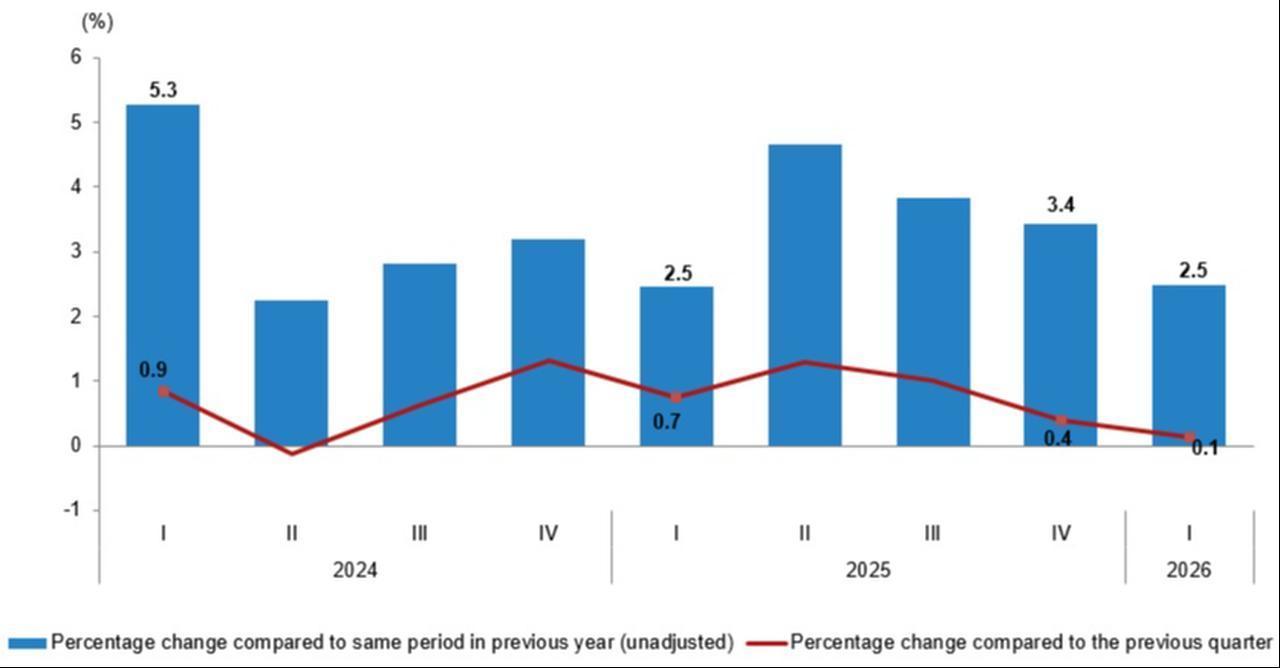

Economists at ING also pointed to signs of slowing momentum, noting that net exports have become an increasingly negative contributor to growth while domestic demand remains the economy's primary driver.
"Overall, the contribution of net exports has shifted further into negative territory, exerting a more pronounced drag on growth," ING said.
The bank added that leading indicators, including purchasing managers' index (PMI) readings, capacity utilization rates and consumer and business confidence surveys, suggest growth softened further in the second quarter.
ING warned that elevated borrowing costs, expectations that interest rates will remain higher for longer and the central bank's latest macroprudential tightening measures could lead to a more pronounced slowdown in the second half of the year.
Still, the bank noted that a resolution of the regional conflict could ease some of the downside pressure on the outlook and provide support for growth prospects.


 Set as preferred source
 Set as preferred source


 1 min read
 1 min read