Sign in
 Newsletters


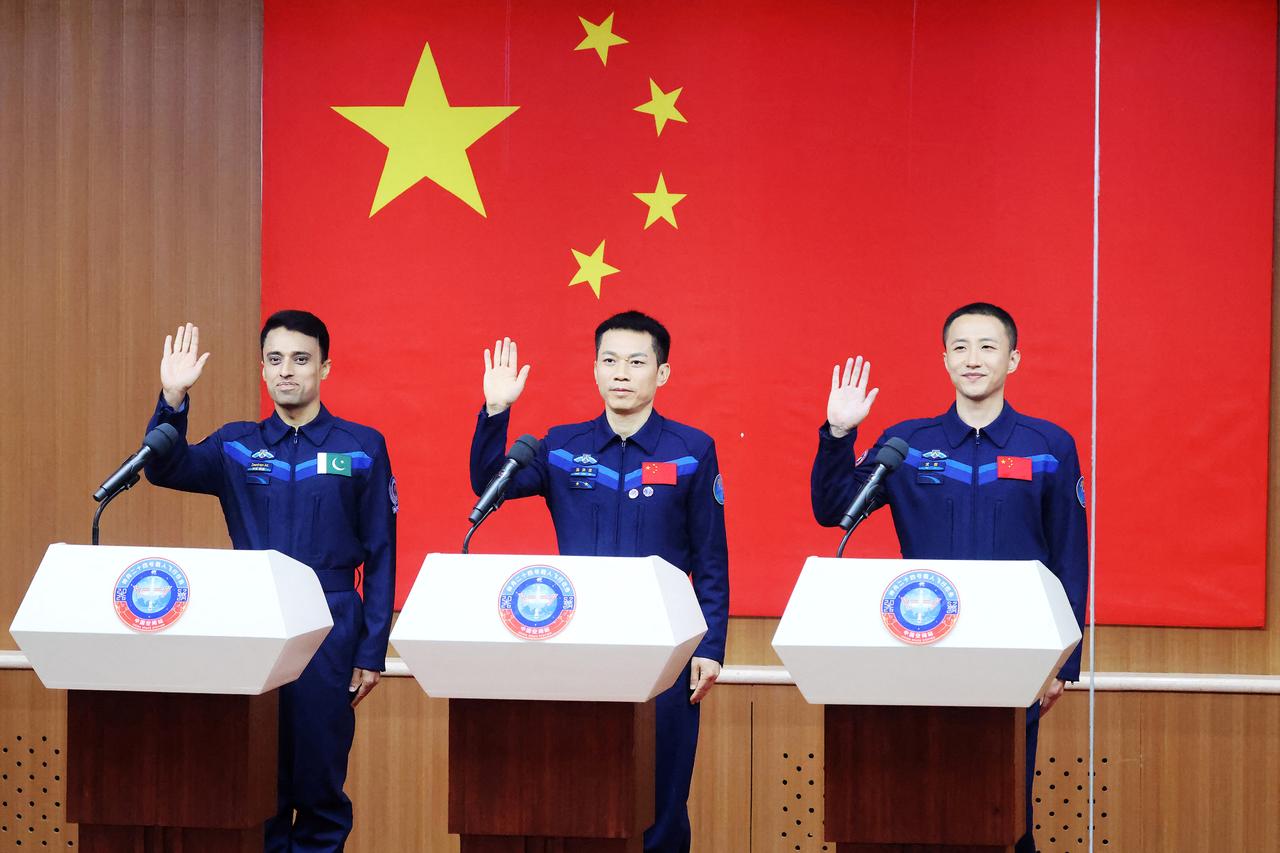


China is set to launch its Shenzhou-24 crewed mission Wednesday, carrying Pakistani fighter pilot Muhammad Zeeshan Ali, who will become the first foreign astronaut to board China's Tiangong space station, the China Manned Space Agency (CMSA) announced Tuesday.
The spacecraft is scheduled to lift off at 8:18 a.m. local time (12:18 a.m. GMT) from the Jiuquan Satellite Launch Center in northwestern China's Gobi Desert, CMSA spokesperson Zhang Jingbo said.
Ali, 40, will serve as a payload specialist alongside Chinese astronauts Tang Hongbo, 51, and Wu Yi, who is making his first spaceflight.
"I carry the name of Pakistan on my shoulder, the hopes of 250 million Pakistanis," Ali told reporters during a crew introduction ceremony.
"To every child who is watching while I'm in orbit, just look up at the sky and remember that I am up there with your dreams," he added.
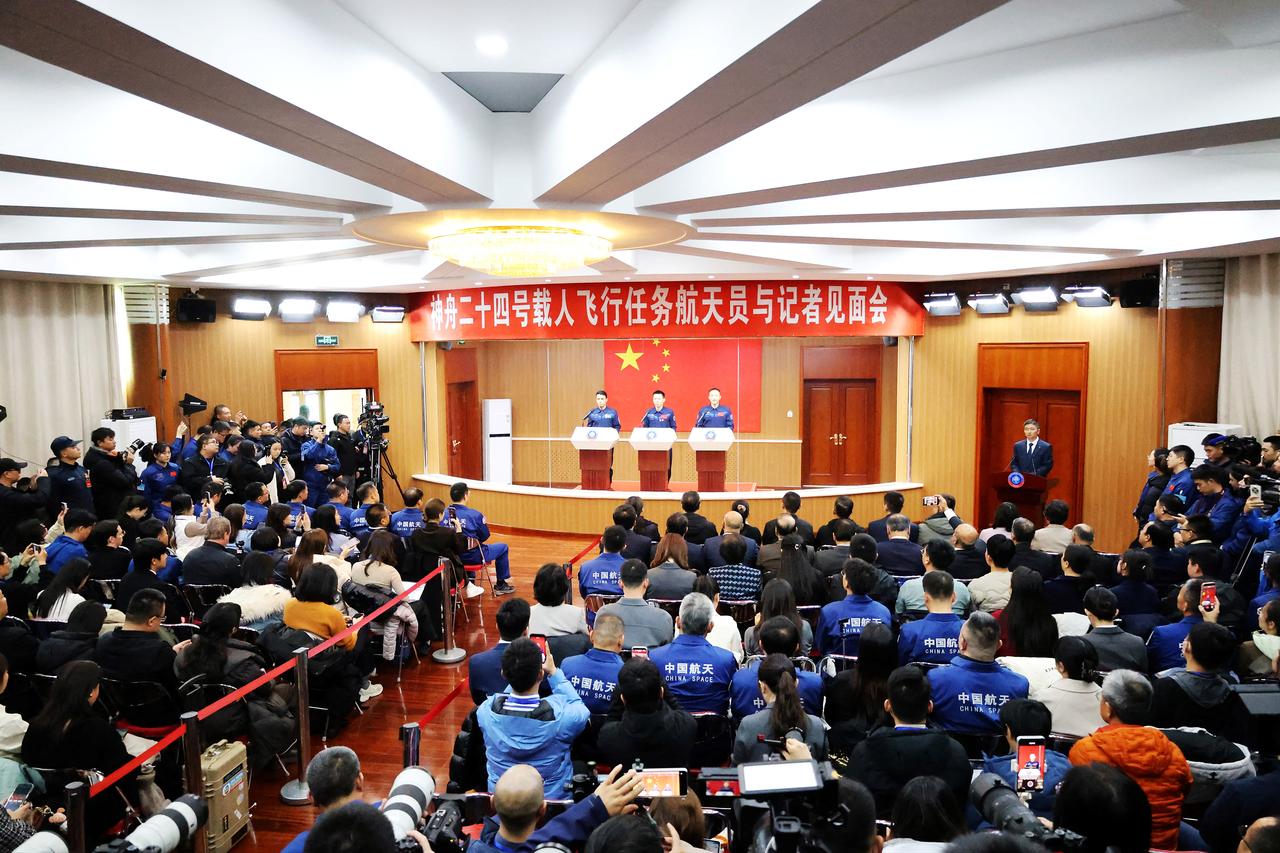

Ali's selection follows a February 2025 agreement under which China committed to selecting and training Pakistani astronauts.
He and fellow Pakistani candidate Khurram Daud began training in China in April, completing seven months of intensive preparation involving centrifuge exercises, spacecraft simulations, emergency procedures, survival training and Chinese language instruction.
Ali described mastering technical Chinese as his greatest challenge, noting that spacecraft controls, software and announcements are all in Chinese.
He said the mission demonstrated cooperation between the two countries in the peaceful exploration and use of space.
Pakistan's Information Minister Attaullah Tarar welcomed the mission as a source of national pride, while Planning Minister Ahsan Iqbal praised both astronaut candidates and highlighted the close relationship between Islamabad and Beijing.
Ali is expected to spend approximately five days to a week aboard Tiangong, participating in scientific research before returning to Earth aboard the Shenzhou-23 spacecraft.
The CMSA said the crew would conduct around 90 experiments during the mission.
Although Ali will become the first Pakistani to enter orbit, he is not the country's first national to reach space. Pakistani adventurer Namira Salim flew on Virgin Galactic's suborbital Galactic 04 mission in October 2023.
The Shenzhou-24 launch will also mark a milestone for China's space program as astronaut Zhu Yangzhu, 40, prepares to complete the country's first yearlong stay in orbit.
Zhu, who has already spent six months aboard Tiangong, will remain for another six months alongside Tang and Wu.
The current crew also includes Lai Ka-ying, Hong Kong's first astronaut and the only woman currently aboard the station, and Zhang Zhiyuan. Lai and Zhang will return to Earth with Ali aboard Shenzhou-23.
The extended mission is intended to assess human endurance during long-duration spaceflight, supporting China's future lunar and deep-space ambitions.
China's three-module Tiangong station became fully operational in late 2022 and has maintained a continuous astronaut presence, with crews generally rotating every six months.
CMSA spokesperson Zhang said preparations for the Long March-2F rocket were proceeding normally, with the crew in good condition and the space station meeting all mission requirements.
The launch comes as Beijing continues investing heavily in its space program, seeking to narrow the gap with the U.S. while expanding cooperation with international partners, including Pakistan.


 Set as preferred source
 Set as preferred source


 1 min read

 1 min read