Newsletters





Three Amazon Web Services facilities in the UAE and Bahrain were struck during the Middle East conflict. This marks the first instance of a major cloud provider's data center being taken offline due to military action.
On Sunday, Amazon Web Services updated its cloud status dashboard, initially reporting that the outage at its United Arab Emirates facility was caused by "objects" striking the site. By Monday, Amazon confirmed that three AWS data centers in the UAE and Bahrain sustained damage from drone strikes related to the ongoing conflict.
Two UAE facilities were hit directly, while a third in Bahrain was affected by a nearby drone strike, resulting in structural, electrical and water damage.
An internal document reviewed by Business Insider showed that the hardest-hit UAE facility, likely in Dubai and called DXB62, had to be evacuated and sealed off. The building had major structural damage. Water from fire extinguishing systems reached 3 to 4 centimetres, contributing to problems caused by power outages.
Fourteen EC2 cloud server racks that house Amazon's main computing hardware went offline, along with five additional production racks. The cooling systems failed. Air handling units that control temperature either lost power or broke down. Thirty cameras continued to monitor the damaged site.
A second Dubai facility, DXB61, was shut down on Sunday following an indirect impact and a small fire that was extinguished. A third site, DXB60, experienced a local WiFi outage. In Bahrain, AWS reported that a nearby drone strike caused physical damage to its infrastructure.
"These strikes have caused structural damage, disrupted power delivery to our infrastructure, and in some cases required fire suppression activities that resulted in additional water damage," AWS stated. "We expect recovery to be prolonged given the nature of the physical damage involved."
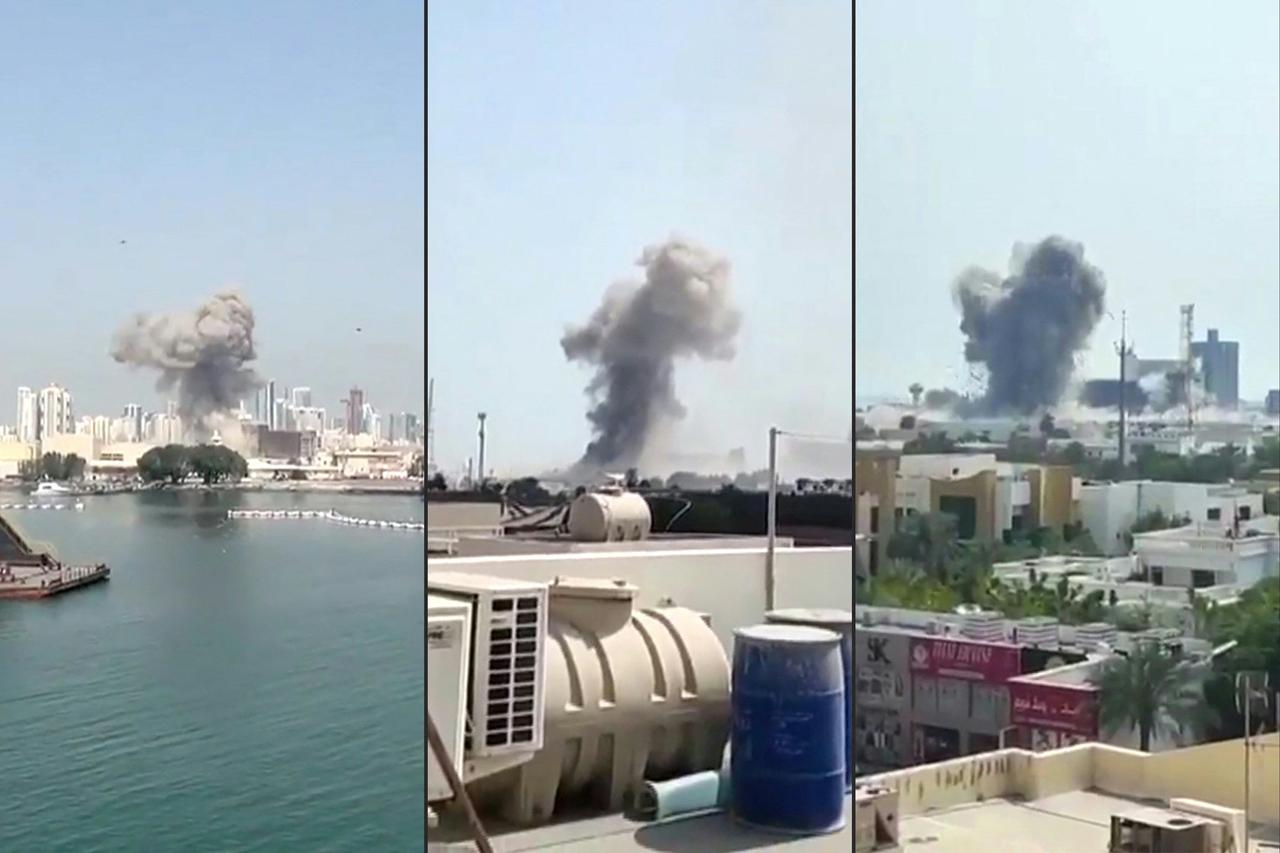

The company's initial use of the term "objects" drew immediate attention from technology and security analysts. Shanaka Anslem Perera, a technology analyst, wrote on X that Amazon appeared to use neutral language because there was no standard term for such incidents. This was the first instance of a major cloud service provider's data center being taken offline during active conflict.
Cybersecurity expert Lukasz Olejnik was more direct. "'Objects that struck the data center' is the gentlest description of a missile strike since 'special military operation," he wrote on X. Olejnik also said Amazon's UAE data center went completely offline from Saturday night to Sunday. While AWS notified users about the fires, it did not say which objects were impacted by the infrastructure. "Connecting the dots," he said, "is left to the reader."
Amazon has not explicitly attributed the damage to Iranian strikes, though the attacks occurred during retaliatory Iranian missile and drone launches against Gulf states following U.S. and Israeli military action in the region.
The outage affected about a dozen key AWS cloud services, including EC2 compute, S3 storage, and DynamoDB. Amazon told customers to start disaster recovery plans, back up critical data, and move operations to AWS servers outside the Middle East.
The impact went beyond the technology sector. Abu Dhabi Commercial Bank said its platforms and mobile app were unavailable due to what it called a region-wide IT disruption, though it did not directly link the outage to AWS.
Reuters reported that financial institutions using AWS were among those affected, according to a source. Amazon's e-commerce in Abu Dhabi also suspended deliveries amid rising tensions, Business Insider reported earlier Monday.
The strikes occurred during a period of significant growth. U.S. technology companies have invested heavily in establishing the UAE and the Gulf as a regional hub for artificial intelligence infrastructure. In November, Microsoft announced plans to invest $15 billion in the UAE by 2029, utilizing Nvidia chips in its data centers. Google and Oracle also maintain facilities in the region.
Last week, Washington-based think tank Center for Strategic and International Studies warned that the pattern of conflict in the region was changing. "In previous conflicts, regional opponents such as Iran and its proxies targeted pipelines, refineries, and oil fields in Gulf partner states. In the compute era, these actors could also target data centers, energy infrastructure supporting compute, and fiber chokepoints," the think tank said.
Levent Eraslan, a social media expert at Türkiye's Anadolu University and founder of the NGO Sodimer, said the AWS incident was not accidental. On X, Eraslan argued that Iran's attack on Amazon's cloud infrastructure showed the conflict was expanding beyond the military and into digital systems.
"Data centers, cloud systems, and digital networks are as strategically important as energy facilities or military bases today," he wrote. "Such a move would be seen as an asymmetric cyber power message against American tech infrastructure."
"Data and infrastructure control," Eraslan added, "is one of the invisible but most critical frontiers of war in the digital age."
AWS has advised customers in the region to treat the situation as ongoing and to migrate workloads to servers outside the Middle East while recovery remains uncertain. The broader issue is more complex: Amazon has positioned the Gulf as a cornerstone of its cloud expansion, operating availability zones across the UAE and Bahrain with the expectation that infrastructure would remain insulated from regional conflict. This incident demonstrated that such assumptions may no longer hold.


 Set as preferred source
 Set as preferred source



 1 min read