Newsletters


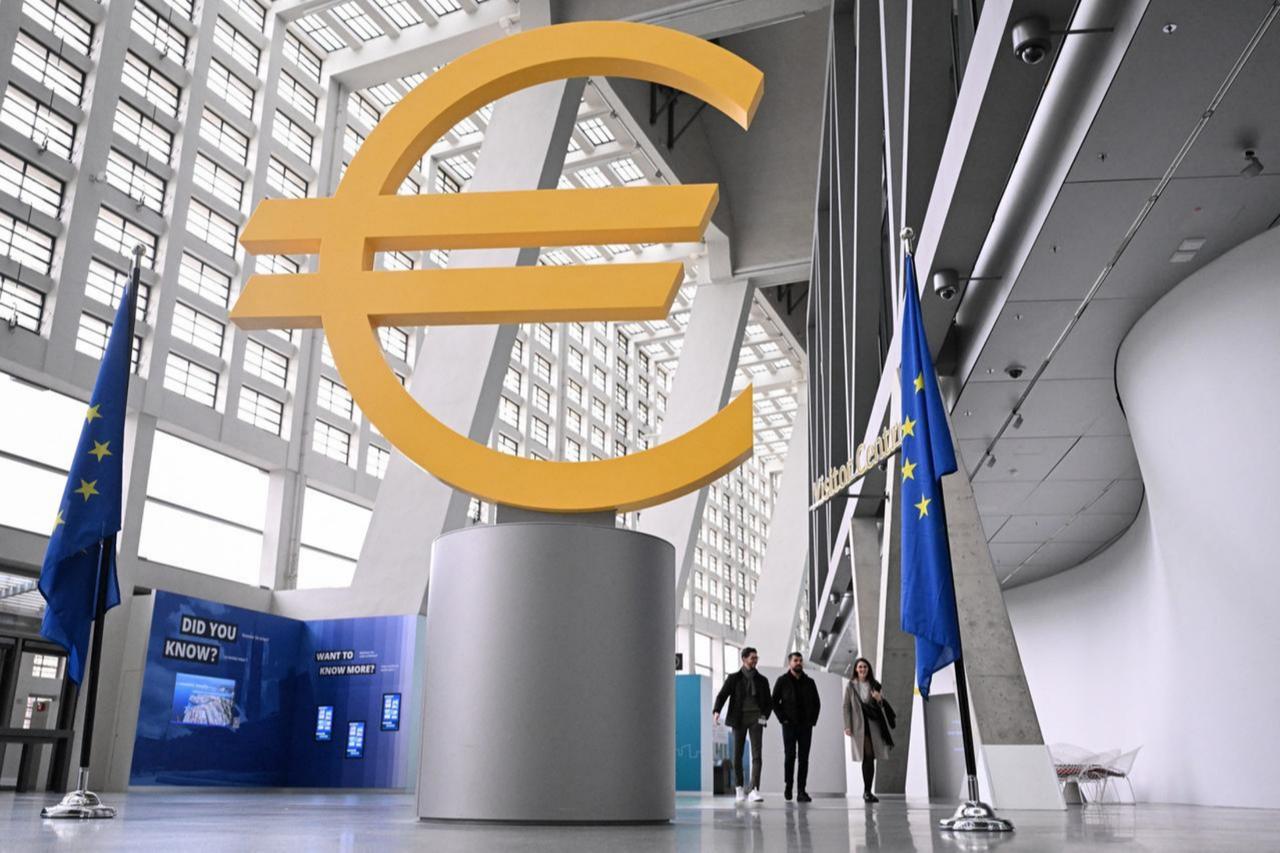


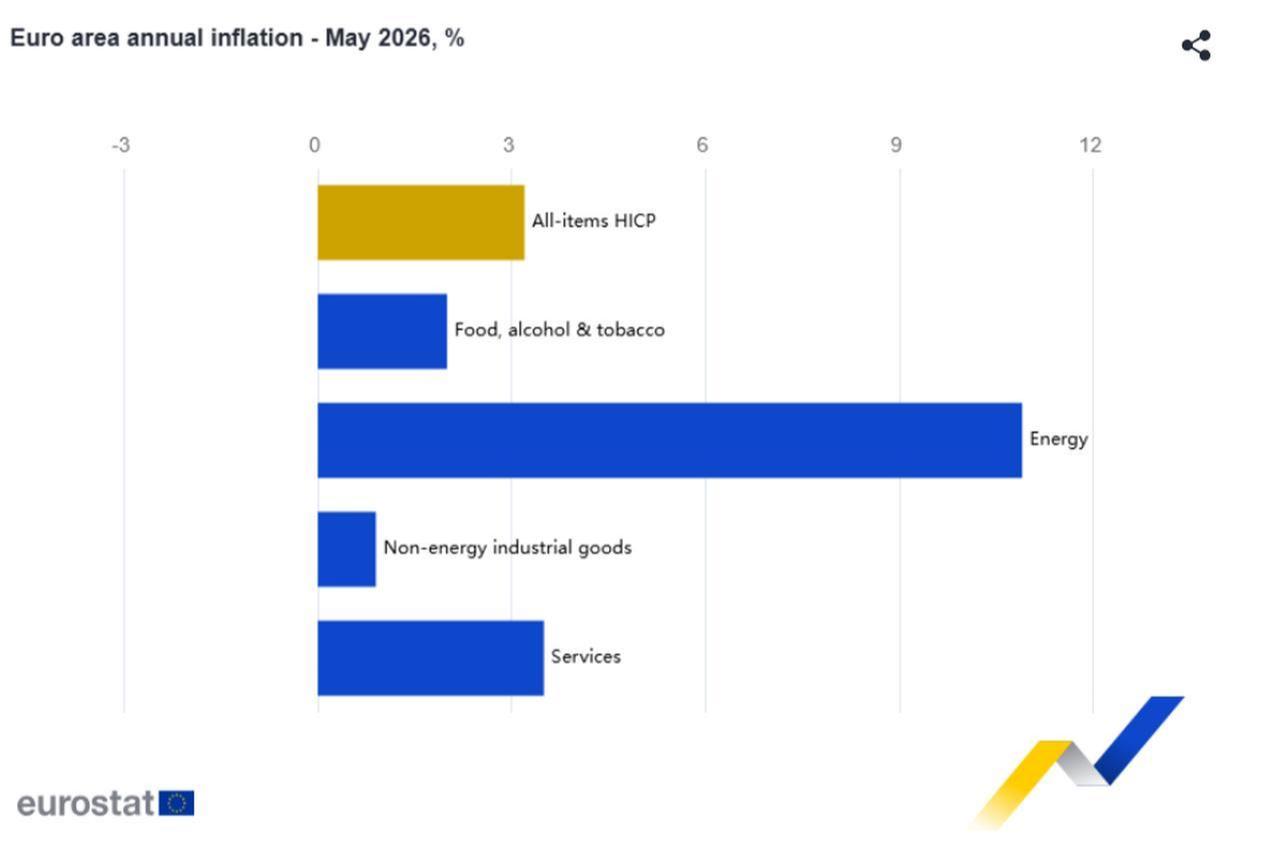
Annual inflation in the euro area rose to 3.2% in May from 3% in April, according to a flash estimate published by Eurostat on Tuesday, extending the bloc's recent upward trend in consumer prices despite a moderation in energy inflation.
The latest reading remains well above the European Central Bank's (ECB) 2% target and marks the third consecutive monthly increase in headline inflation.
Consumer prices in the euro area edged up 0.1% in May from the previous month, driven by a 0.4% increase in services and a 0.2% rise in non-energy industrial goods. Food, alcohol and tobacco prices were flat, as higher processed food prices were offset by a decline in unprocessed food.
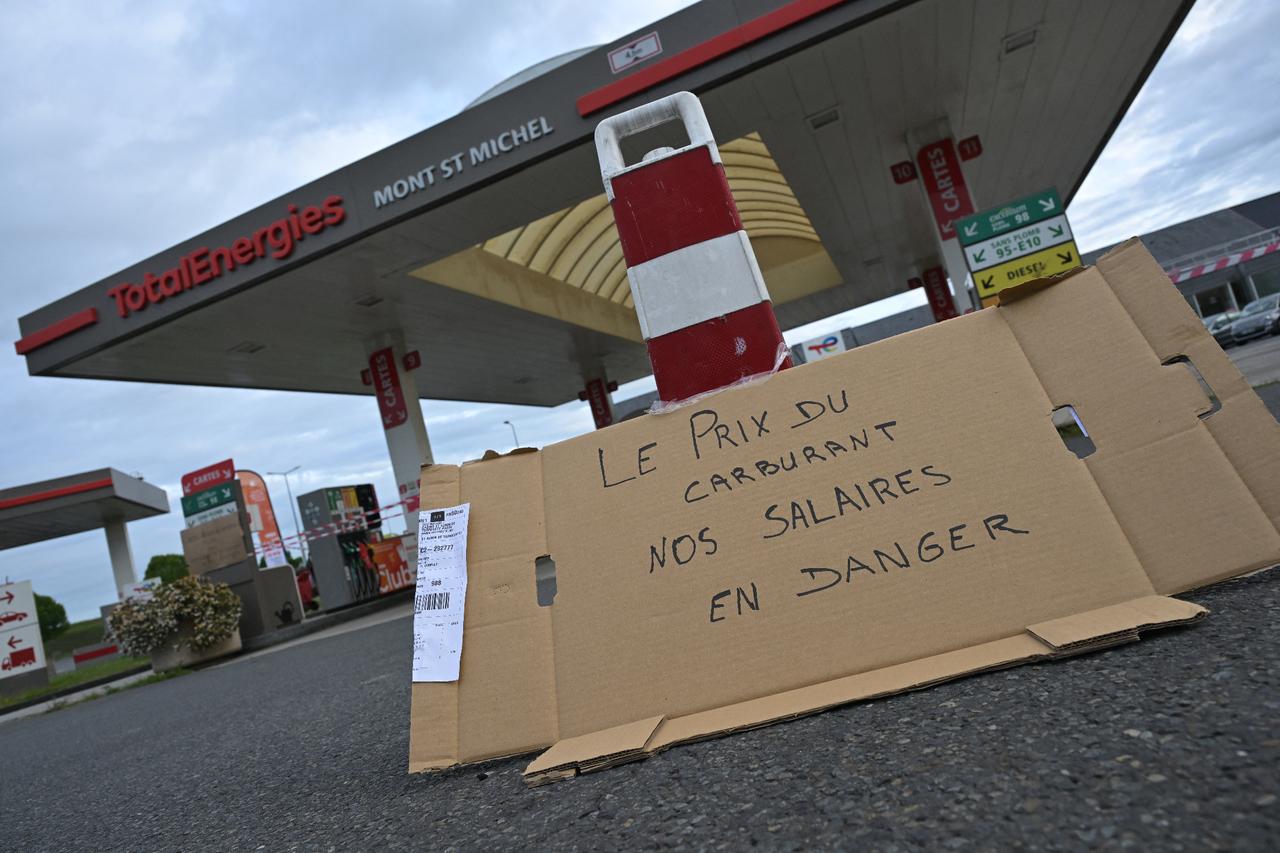
Energy prices fell 1.1% during the month, partially easing overall inflationary pressures as oil prices dropped by just over 19% in May.
Despite the monthly decline, energy remained the biggest driver of annual inflation, rising 10.9% from a year earlier. Unprocessed food prices increased 4.2%, while services and non-energy industrial goods rose 3.5% and 0.9%, respectively.
Excluding energy, annual inflation stood at 2.4% in May. Core inflation, which excludes energy, food, alcohol and tobacco, accelerated to 2.5% from 2.2% in April, suggesting underlying price pressures continued to build across the euro area.

Inflation accelerated across much of the euro area in May, with Bulgaria posting the bloc's highest annual inflation rate at 6.3%, followed by Lithuania at 5.1% and Greece at 5%.
Among the euro area's largest economies, Spain reported inflation of 3.6%, ahead of Italy at 3.3%, France at 2.8% and Germany at 2.7%. Malta recorded the lowest annual inflation rate in the bloc at 2.1%.
On a monthly basis, Malta recorded the strongest increase in consumer prices at 1.3%, followed by Estonia at 0.9%. At the other end of the spectrum, Belgium, Ireland and Luxembourg posted monthly declines of 0.2%. Consumer prices also edged down 0.1% in Germany and Lithuania, while the Netherlands recorded a flat monthly reading.
The latest inflation figures are likely to reinforce expectations that the ECB will tighten monetary policy later this month. Several ECB policymakers have recently signaled concern over the persistence of inflationary pressures, particularly as higher energy costs begin feeding through to broader price categories.
ECB Chief Economist Philip Lane has warned that inflation forecasts may need to be revised upward, while Executive Board member Isabel Schnabel has argued that the current energy shock can no longer be treated as temporary.
Financial markets largely expect the ECB to raise its deposit facility rate by 25 basis points to 2.25% at its June 11 meeting, following two consecutive meetings in which policymakers left interest rates unchanged.
In its March projections, the ECB forecast euro area inflation would average 2.6% in 2026 before easing to 2% in 2027. However, policymakers have increasingly warned that sustained energy price pressures could keep inflation elevated for longer than previously expected.


 Set as preferred source
 Set as preferred source


 1 min read
 1 min read