Newsletters




International ratings agency Fitch Ratings expects Türkiye's central bank to cut its policy rate by no more than 200 basis points over 2026, while warning that a lasting recovery in international reserves remains key to any future sovereign rating upgrade.
Senior Director at Fitch Ratings Erich Arispe Morales made the remarks after the agency affirmed last week Türkiye's BB- sovereign credit rating with a Stable outlook, saying the economy has remained resilient despite heightened global uncertainty and lingering geopolitical risks.
Morales said the Central Bank of the Republic of Türkiye (CBRT) is expected to begin easing later this year, provided geopolitical risks ease and energy prices remain lower, with cumulative rate cuts of 200 basis points bringing the policy rate to 35% by the end of 2026.
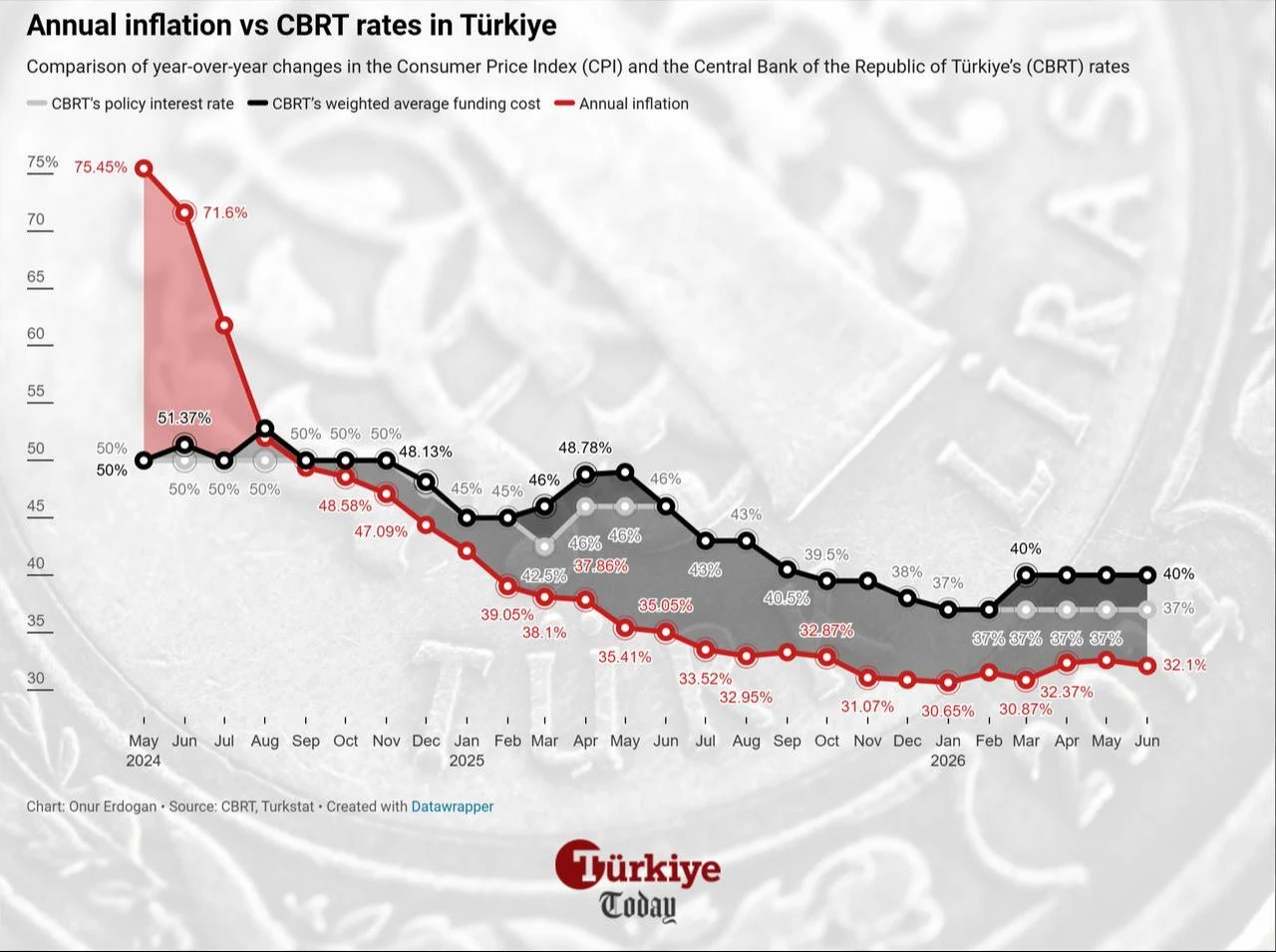
The CBRT has kept its policy rate at 37% over the past three meetings and is due to meet again on Thursday, July 23. Markets widely expect policymakers to leave the benchmark rate unchanged.
Morales noted that Türkiye's international reserves fell during the early Iran conflict before staging a partial recovery, although they remain below pre-war levels. Türkiye's gross central bank reserves stand at $163.3 billion, according to the latest data as of July 10.
Inflationary pressures have also eased somewhat in May and June, with the annual inflation easing to 32.1%, but geopolitical uncertainty continues to pose risks for Türkiye and other emerging markets through its potential impact on inflation and external balances.
Despite those pressures, he argued that policymakers have largely preserved gains in inflation expectations and avoided a major reversal in economic policy.
Morales said demand for lira-denominated assets has remained broadly stable, while the central bank continues to signal its commitment to bringing inflation down sustainably.
Fitch therefore sees Türkiye's economy as relatively resilient in the face of ongoing global uncertainty and believes it has historically withstood macroeconomic imbalances better than many peers, he explained.

Morales described Türkiye's banking sector as healthy and pointed to the country's continued access to external financing as important buffers against external shocks.
Although inflation remains elevated, he said it continues to show signs of slowing, adding that bringing inflation down from above 30% will take time and require sustained policy credibility.
Real interest rates remain high enough to support lira-denominated assets and discourage dollarization, he added.
Fitch continues to closely monitor Türkiye's international reserves when assessing the country's credit profile, Morales stressed.
A meaningful and durable increase in reserves, particularly given Türkiye's relatively high external financing needs, would be critical for any future upgrade, he noted. Fitch expects reserves to end the year slightly above current levels but said the durability of that improvement will carry greater weight than the increase itself.
Morales also pointed to the need for tight policy settings to remain in place long enough to support a clear decline in inflation and reduce balance-of-payments risks, especially in an environment where external shocks and political uncertainty may persist.


 Set as preferred source
 Set as preferred source


 1 min read
 1 min read