Newsletters




This article was originally written for Türkiye Today’s weekly economy newsletter, Turkish Economy in Brief, in its July 20 issue. Please make sure you are subscribed to the newsletter by clicking here.
The agreement reached in the Middle East in June was initially welcomed by markets, pushing oil prices down to around $70 per barrel. However, the picture has reversed since the beginning of July, particularly over the past two weeks, and markets are now repricing risks.
The issue is no longer simply the existence of geopolitical tensions, but the growing expectation that they could last much longer. In addition to escalating regional clashes, shipping through the Strait of Hormuz has slowed to a near standstill, U.S. threats to target Iranian infrastructure have intensified, and Tehran is reportedly preparing to widen the crisis by disrupting shipping in the Red Sea.
Together, these developments have triggered oil's second-fastest weekly increase since the war began.
Oil, which closed the previous week at $75.22 per barrel, ended last week at $88.27, posting a weekly gain of 17.35%. These shocks are also helping keep the U.S. dollar index above 100.50 and the U.S. two-year Treasury yield above 4.15%.
We know that rising oil prices are critical for Türkiye's inflation outlook, current account balance and interest rate policy.
The domestic two-year benchmark bond yield has climbed to 41.5%, while gasoline prices have increased 5.4% and diesel prices 13.2% so far in July. These are not encouraging signals for this month's inflation.
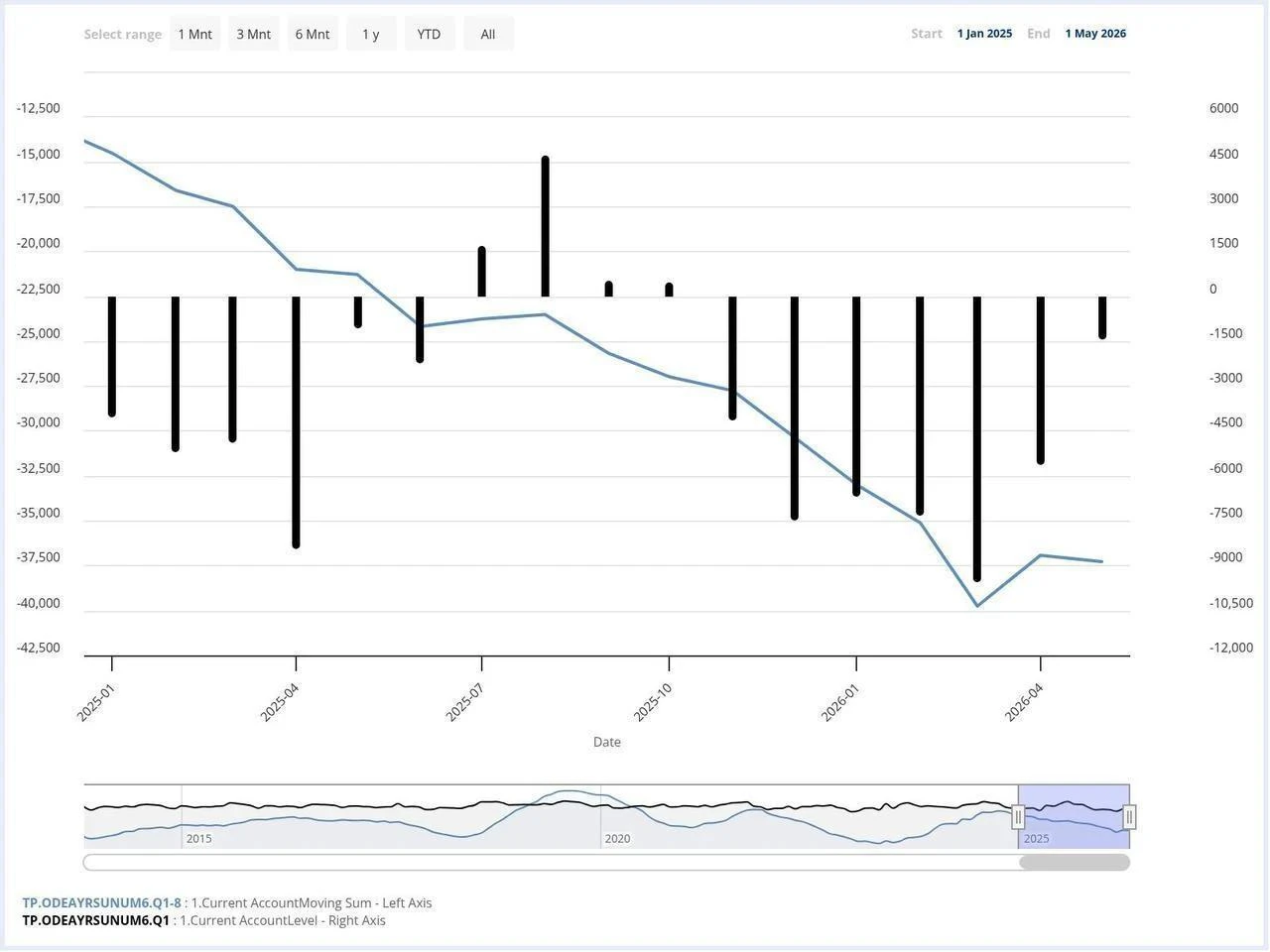
Türkiye recorded a current account deficit of $1.5 billion in May. Although this marks an improvement compared with the previous two months, the rolling annual deficit has reached $37.3 billion.
The recent surge in oil prices could once again weigh on the current account through higher energy costs in the months ahead, although foreign currency inflows from tourism during the summer may provide some offset.

This is the backdrop ahead of the Central Bank's Monetary Policy Committee meeting on July 23. Markets expect the policy rate to remain unchanged at 37% this Thursday, while the effective funding rate, which has stood around 40% since the war began, is expected to remain close to current levels or ease only slightly.
According to a Matriks Haber survey of 33 institutions, including eight foreign firms, the consensus expects the Central Bank to stay on hold this week. The year-end policy rate forecast has been revised up to 35%, while economists continue to expect year-end 2026 inflation at 29%.
This tight monetary policy outlook is weighing on the stock market. The equation is straightforward: persistent inflation limits room for interest rate cuts, while high borrowing costs continue to pressure bank stocks and the broader market.
Last week, Bank of America downgraded its recommendation on Turkish banks from "Buy" to "Neutral," citing stubborn inflation and a slower-than-expected pace of interest rate cuts.
The BIST 100 index fell 2.4% last week to close at 13,981. Meanwhile, the banking index has declined 16.3% from the peak it reached four weeks ago.
Developments in the Middle East and July inflation remain the two key short-term drivers for Turkish markets. Until clearer signals emerge on both fronts, Borsa Istanbul is likely to trade within the 13,600–14,600 range.


 Set as preferred source
 Set as preferred source



 7 min read