Newsletters




This article was originally written for Türkiye Today’s weekly economy newsletter, Turkish Economy in Brief, in its May 25 issue. Please make sure you are subscribed to the newsletter by clicking here.
It was another week of volatile pricing in Turkish markets, with domestic political developments adding to the market sensitivity already driven by tensions in the Middle East.
A court decision to annul the main opposition CHP’s latest leadership election paved the way for the party’s former administration to return to office.
Investors’ first reaction was most visible in the stock market. Following the news on Thursday, Borsa Istanbul fell by 6.05%.
However, on the final trading day of the week, the BIST 100 index rebounded by 4.89%, recovering most of the previous day’s losses. Despite the rebound, the index closed the week down 3.89% at 13,808 points.
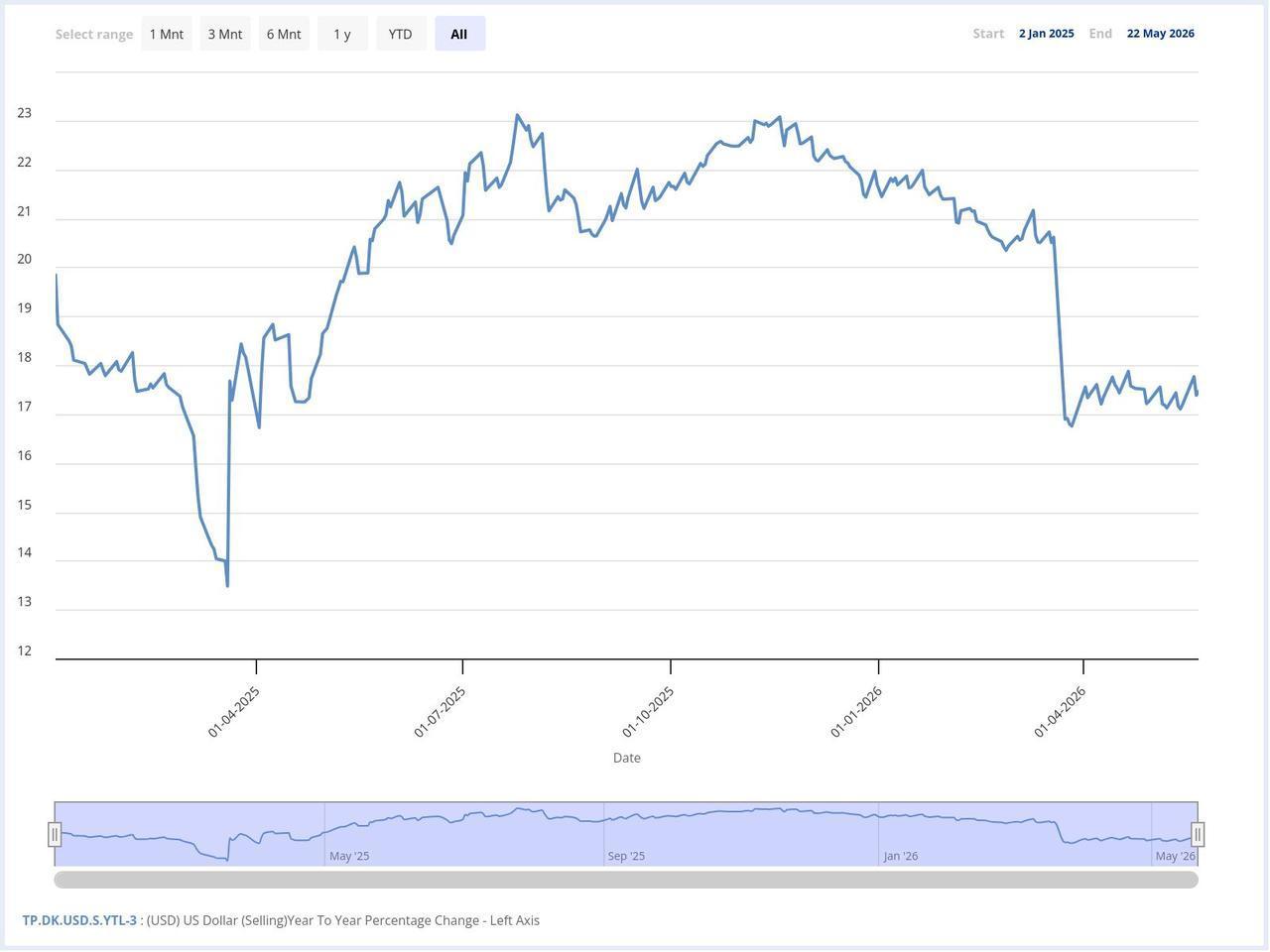
The USD/TRY exchange rate, which remained in focus throughout the week, rose by only 0.44% every week. In fact, this increase was not much different from the gradual rises seen in recent weeks.
Reports suggested that the Central Bank of the Republic of Türkiye (CBRT) intervened during the political news flow to meet foreign currency demand. We will probably see this more clearly in the money market reports to be released next week.
Meanwhile, in an assessment published by JP Morgan, analysts stated that the central bank initially responded to rising market sensitivity linked to political uncertainty through foreign exchange interventions. The bank also shared expectations that the CBRT could raise its policy rate from 37% to 40% at the Monetary Policy Committee meeting on June 11.

Beyond daily shocks like Thursday’s sell-off, several broader market indicators are also drawing attention:
These price movements reflect ongoing geopolitical risks in the Middle East, stalled negotiations, supply-driven pressure on energy prices, and expectations of persistently high inflation and interest rates.
The European Central Bank is also expected to raise rates next month. In the U.S., hopes for rate cuts are fading, while expectations that the Federal Reserve could return to rate hikes before year-end are gaining traction.
All of this creates a tough environment for equities. As a result, developments in the Middle East are likely to remain a bigger focus for Turkish markets than domestic political tensions.
Still, it should not be expected that the deterioration seen over the past 2.5 months will reverse within another 2.5 months. For markets right now, the major priority is being able to say: "We have seen the worst.”
Recent developments have also reignited discussions in Türkiye about the possibility of a currency shock. At this point, attention has turned to a recent HSBC report.
The British bank raised its year-end USD/TRY forecast from 48.00 to 50.00, citing higher-than-expected inflation and a widening current account deficit.
Based on current exchange rate levels, the forecast points to an expected depreciation of around 10% in the Turkish lira by the end of the year.
Another important topic is foreign investor interest in Türkiye. Over the past year, non-resident investors purchased $4.43 billion worth of Turkish equities, $4.63 billion in government bonds, and $1.42 billion in private sector bonds. Altogether, the figures indicate nearly $10.5 billion in foreign inflows over the past year. It should also be noted that last week’s data is not yet included in these figures.
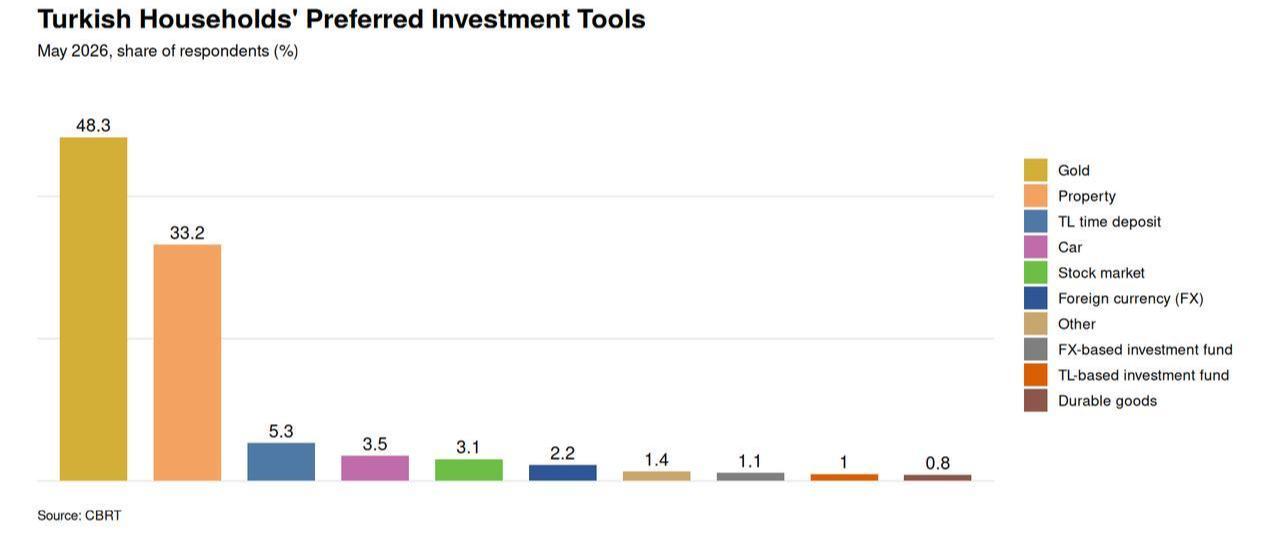
Domestic demand for foreign currency remains another key indicator. According to the CBRT’s May survey, only 2.2% of households said they would prefer to buy foreign currency as an investment tool, down from 2.4% in April.
Meanwhile, in the week ending May 15, residents’ foreign currency deposits fell by $2.98 billion compared to the previous week, declining to $229 billion.
Taken together, the data suggest that foreign investors continue to show interest in Türkiye, while local investors remain relatively cautious toward foreign currency. Combined with the CBRT’s repeated message that there will be “no compromise on tight monetary policy,” the current environment does not appear to support the likelihood of a major currency shock.
Due to Eid al-Adha, Turkish markets will only be open for one and a half days this week. There is no major domestic data calendar scheduled during the shortened trading week.
In the post-holiday period, investors will continue monitoring bond yields, Türkiye’s credit default swap (CDS) premiums, foreign investor appetite, inflation expectations, and reserve trends.
Finally, it is worth noting that the CBRT’s total reserves stood at $168.6 billion in the week ending May 15, while net international reserves reached $52 billion.


 Set as preferred source
 Set as preferred source



 7 min read