Newsletters





U.S.-based investment bank Goldman Sachs raised its forecast for Türkiye’s policy interest rate to 35% by the end of 2026 from 30% and scaled back expectations for the country’s banking sector, pointing to persistent inflation and elevated energy prices.
The revision came as the ongoing Iran war continues to drive risk premiums across global markets, particularly by keeping energy prices elevated amid supply disruptions in the Strait of Hormuz.
In a note on Wednesday, bank analysts warned that consensus earnings forecasts for Turkish banks could face further downward revisions, lowering their forecast for the banking sector’s average return on equity for 2026 to 27%, down from 30%.
According to the report, Turkish banks are no longer expected to generate real returns on equity above inflation levels through 2027 because of tight macroprudential measures, which continue to limit loan growth and compress margins, and persistent inflation.
The analysts added that banks are likely to feel the pressure more clearly after the second-quarter earnings season, when quarterly declines in net interest margins are expected to become more visible.
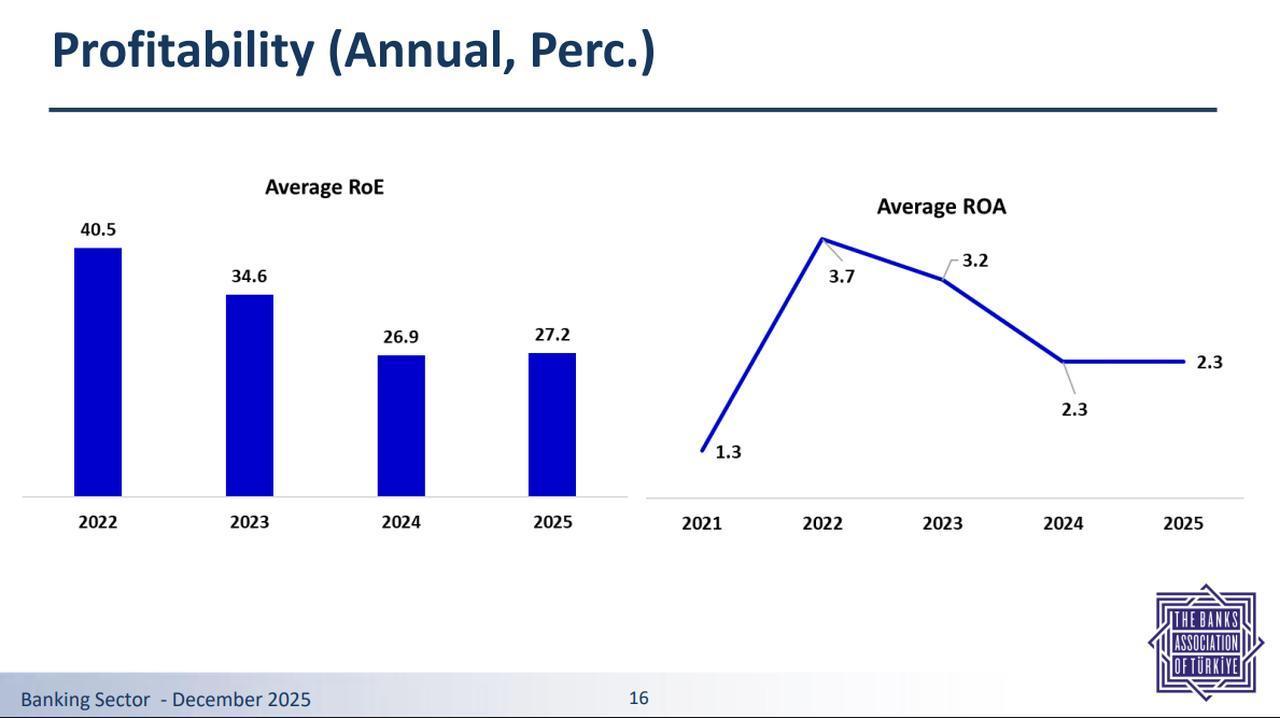

According to the Banks Association of Türkiye, Turkish banks posted a net profit of ₺940 billion ($23.8 billion) in 2025, up 43% year-over-year. The sector’s average return on equity stood at 27%, while the average return on assets was 2.3%.
As of May 20, the total market capitalization of Turkish banks stood at around ₺2.3 trillion, accounting for an 11.6% share of Borsa Istanbul’s total market capitalization.
Türkiye’s inflation accelerated to 32.4% in April amid surging energy prices, while the Central Bank of the Republic of Türkiye (CBRT) held its policy rate at 37% for a second consecutive meeting. Policymakers continue to fund the market through the costlier 40% overnight lending rate, as one-week repo auctions have remained suspended since March.
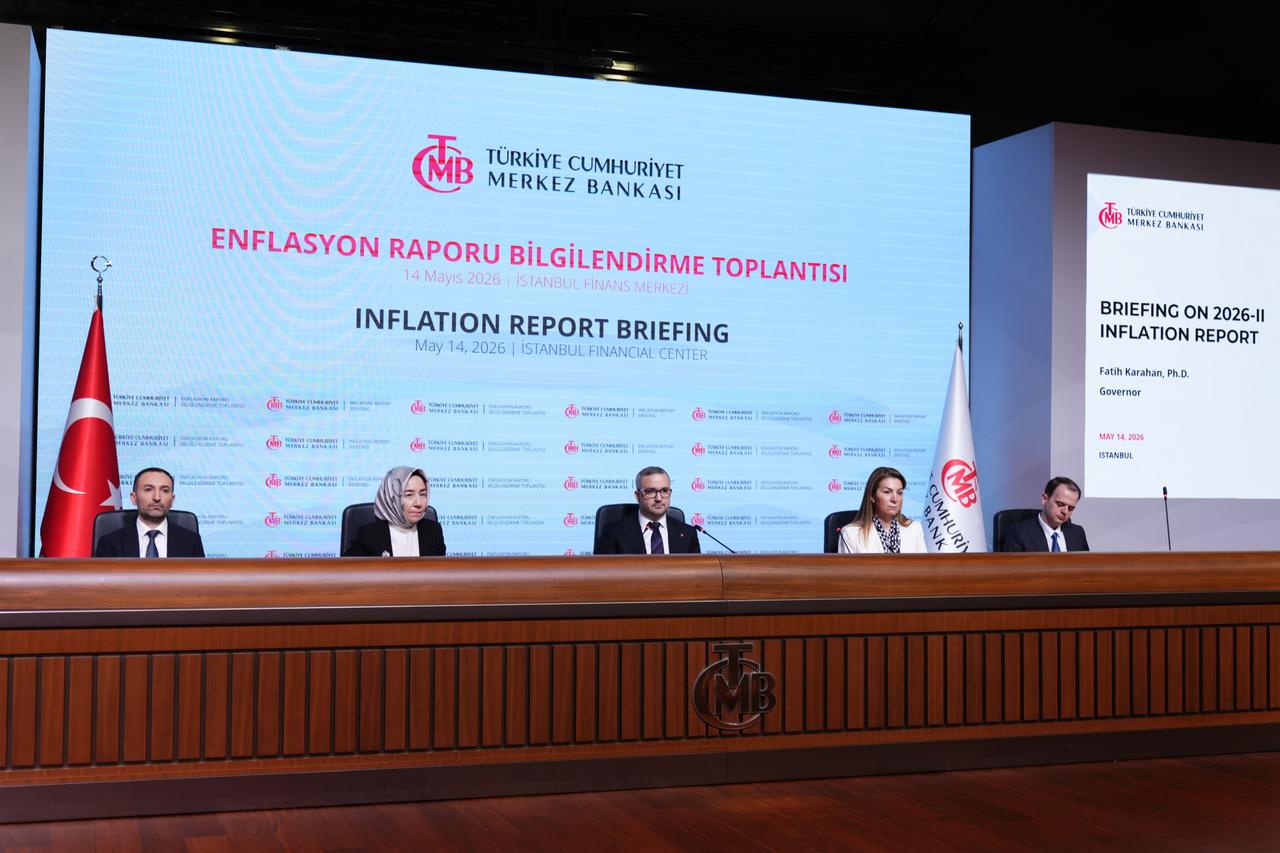
The bank revised its year-end inflation forecast upward to 26% and raised its interim target to 24% in its latest inflation report, both marking an eight-percentage-point increase from the previous report and signaling a more prolonged tight conditions.


 Set as preferred source
 Set as preferred source


 1 min read
 1 min read