Newsletters





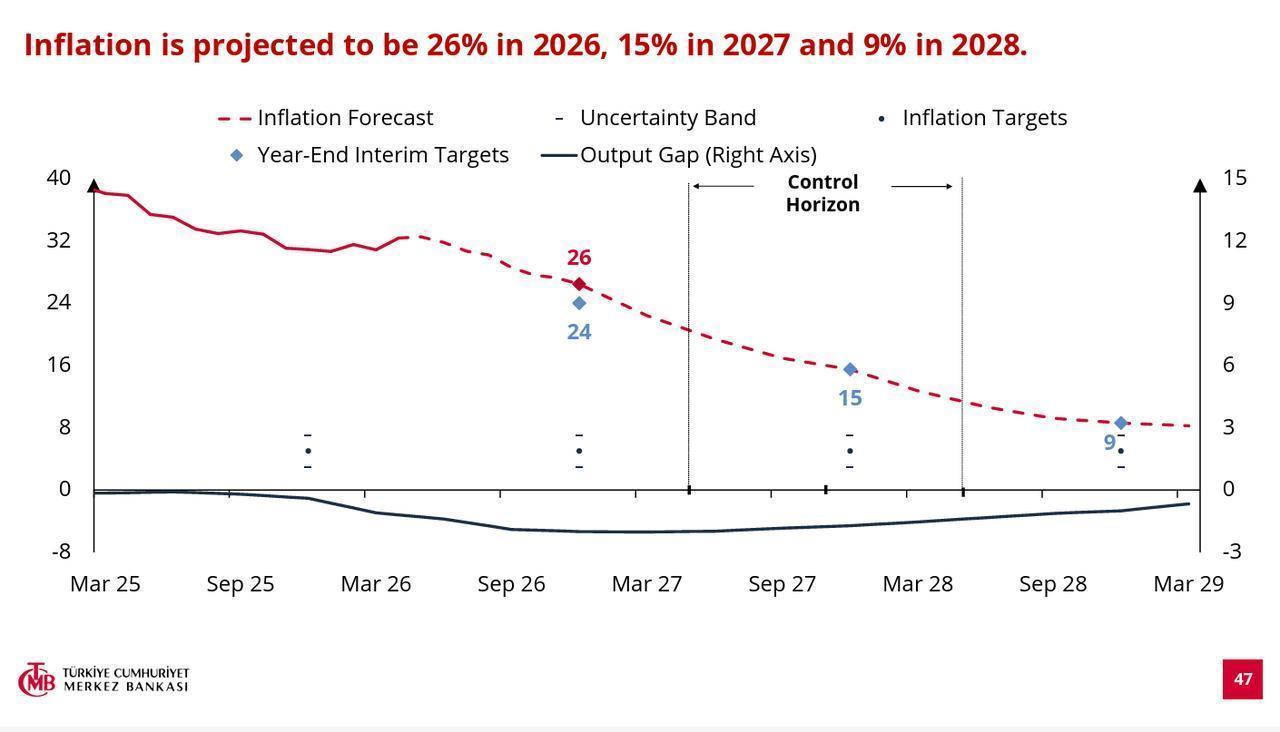
The Central Bank of the Republic of Türkiye (CBRT) raised its year-end inflation forecast for 2026 to 26% from 18% in its second inflation report, citing mounting price pressures triggered by the Iran war and disruptions tied to energy markets around the Strait of Hormuz, Governor Fatih Karahan announced on Thursday.
The central bank projected inflation would fall to 15% by the end of 2027 and decline further to 9% by the end of 2028 before stabilizing around its medium-term 5% target. The bank also revised its interim inflation target for 2026 upward to 24% from the previous 16%.

In its first inflation report of the year, released in February, the CBRT had already flagged rising price pressures stemming from a food supply shock, revising its forecast range upward to 15%-21% from 13%-19%.
Karahan said the bank decided to stop using forecast ranges in its inflation guidance due to heightened uncertainty surrounding the outlook.
CBRT chief pointed out that geopolitical developments following the Iran war created an "unexpectedly severe environment of uncertainty" for the global economy and central banks.
He noted that the war rapidly pushed up energy and transportation costs, adding that the duration of regional tensions and supply disruptions remained the main uncertainty for inflation.
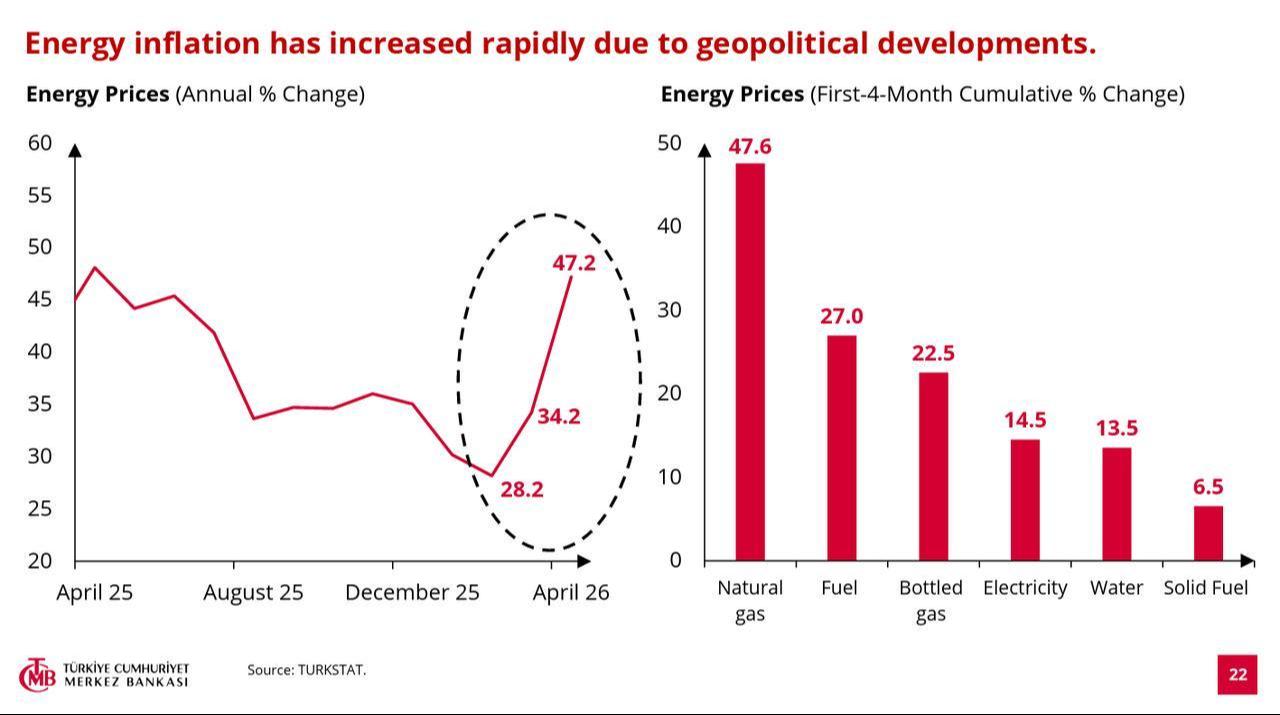
The annual inflation rate rose to 32.4% in April, while the annual energy inflation surged by 19 percentage points to 47% over the past two months due to rising oil and natural gas prices.
The central bank stated in its report that electricity and natural gas tariffs were revised upward following higher import costs. Household natural gas pricing also became more expensive under a tiered pricing system that imposed higher charges on heavier consumption.
Food prices also contributed to inflationary pressure during the first months of the year, particularly after unfavorable weather conditions pushed vegetable prices sharply higher in January and February. The bank expects food inflation to ease in the coming months as supply conditions normalize.
The CBRT chief said it would maintain a tight monetary policy stance to contain inflation risks stemming from energy markets and geopolitical uncertainty.
After cutting its policy rate by 100 basis points to 37% in January, the bank kept rates unchanged in March and April as war-driven volatility intensified.
Karahan explained that authorities suspended one-week repo auctions in March and increased funding costs to strengthen monetary tightening. The reference rate in money markets climbed to around 40% during the period. The bank also continued macroprudential measures aimed at supporting Turkish lira deposits, managing loan growth and stabilizing liquidity conditions.
The report highlighted that global growth momentum is expected to weaken considerably in 2026 due to geopolitical tensions, slower trade activity and elevated energy prices.
Weaker external demand would likely affect Türkiye’s exports, although April trade figures showed exports increased while imports declined. Despite rising energy import costs, the trade deficit narrowed in April compared to the first quarter, supported by weaker imports excluding gold and energy products.
The bank nevertheless warned that continued geopolitical instability and high oil prices could increase pressure on the current account balance during the remainder of the year.


 Set as preferred source
 Set as preferred source


 1 min read
 1 min read