Newsletters


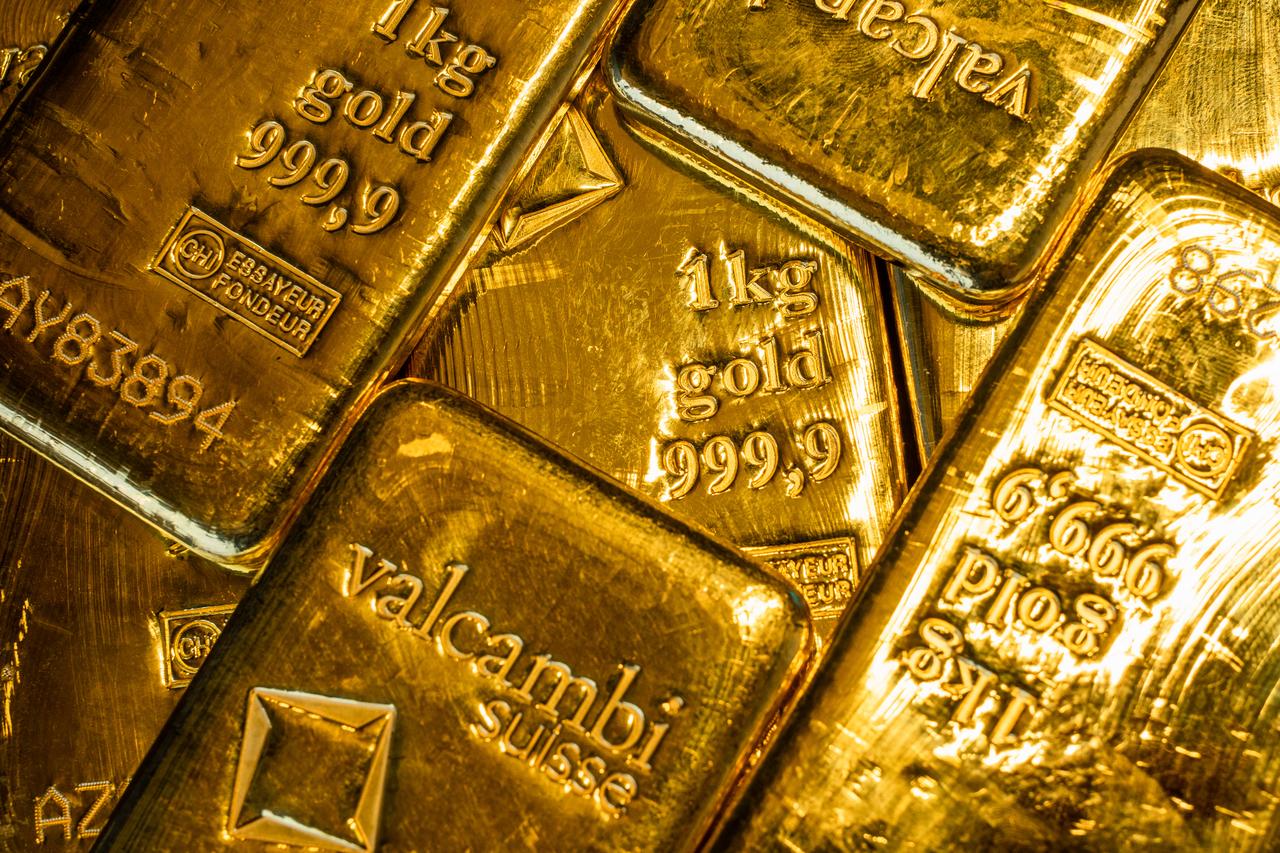


Gold prices are sliding toward a potential historical turning point as a stronger U.S. dollar, rising Treasury yields, and expectations of further Federal Reserve rate increases fuel fears of a deeper correction reminiscent of the 1980 crash.
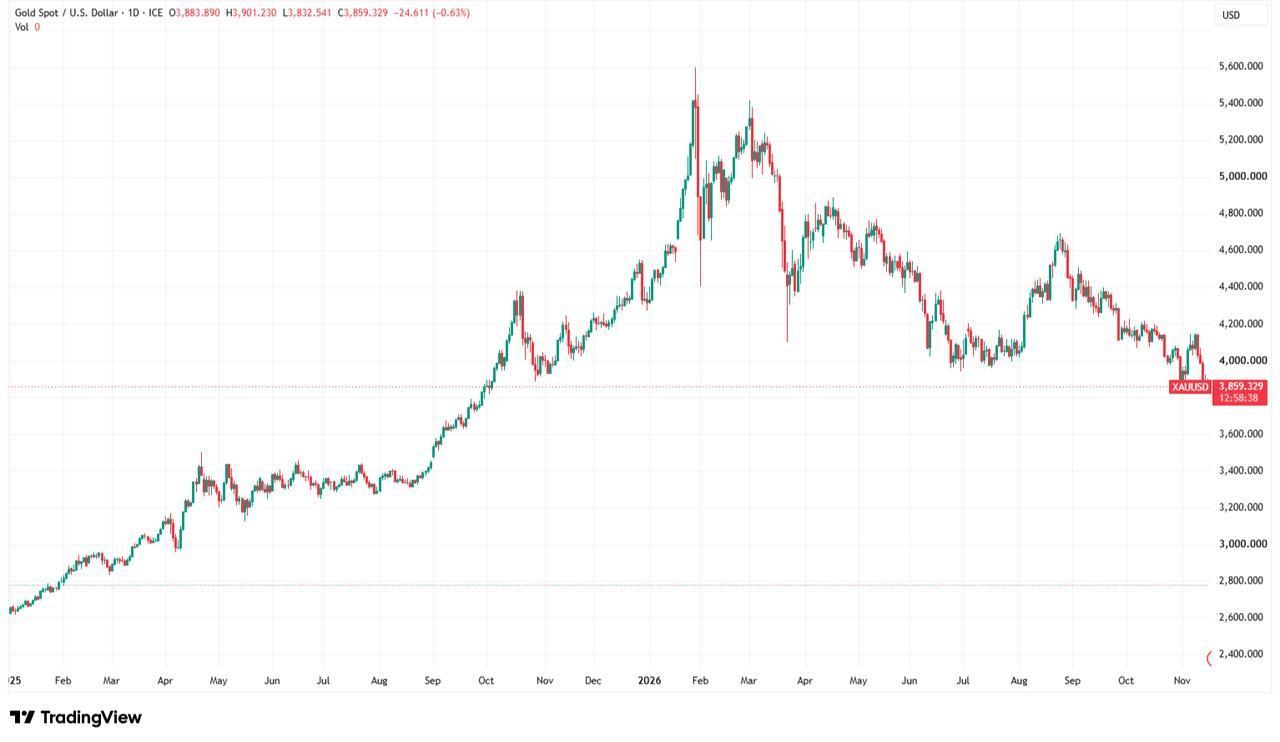
Bullion fell to its lowest level since September 2025 on Monday, extending a monthly sell-off that also hit silver particularly hard. Gold traded at $3,836 an ounce, down 0.70%, as of 6 a.m. GMT, bringing its monthly losses to 6.9%.
Gold entered 2025 at around $2,600 an ounce and went on to deliver its strongest annual performance since 1979, as geopolitical tensions, central bank purchases, growing investment demand and Federal Reserve rate cuts pushed prices to unprecedented levels.
The rally gathered momentum throughout the year, with the London Bullion Market Association (LBMA) gold price setting 53 new all-time highs. Gold's annual return reached 67%, while its annual average price climbed 44% to $3,431 an ounce, according to the World Gold Council (WGC).
The metal's advance accelerated in the second half of 2025, crossing $3,500 an ounce on Sept. 2 and breaking through $4,000 on Oct. 8. Gold reached another record of $4,449 on Dec. 23 before ending the year at $4,368 an ounce.
The rally carried into 2026, with gold setting more than 12 additional records and reaching an all-time high of $5,405 an ounce on Jan. 29. Bullion gained 14.1% in January alone, closing the month at $4,982, as geopolitical uncertainty and strong investor positioning sustained demand.
However, the rally quickly reversed after the Iran war sent energy prices higher, stoking inflation fears and expectations of further Federal Reserve tightening. Gold retreated to $4,002 in June, leaving it down 7% for the year, as profit-taking and shifting interest-rate expectations added to selling pressure.
Although bullion recovered in August, the rebound failed to hold. Gold fell 8.5% in September and another 6.3% in October, bringing its year-to-date decline to 10.4% by the end of October. As of Monday, Nov. 16, it remained approximately 29% below its January record.

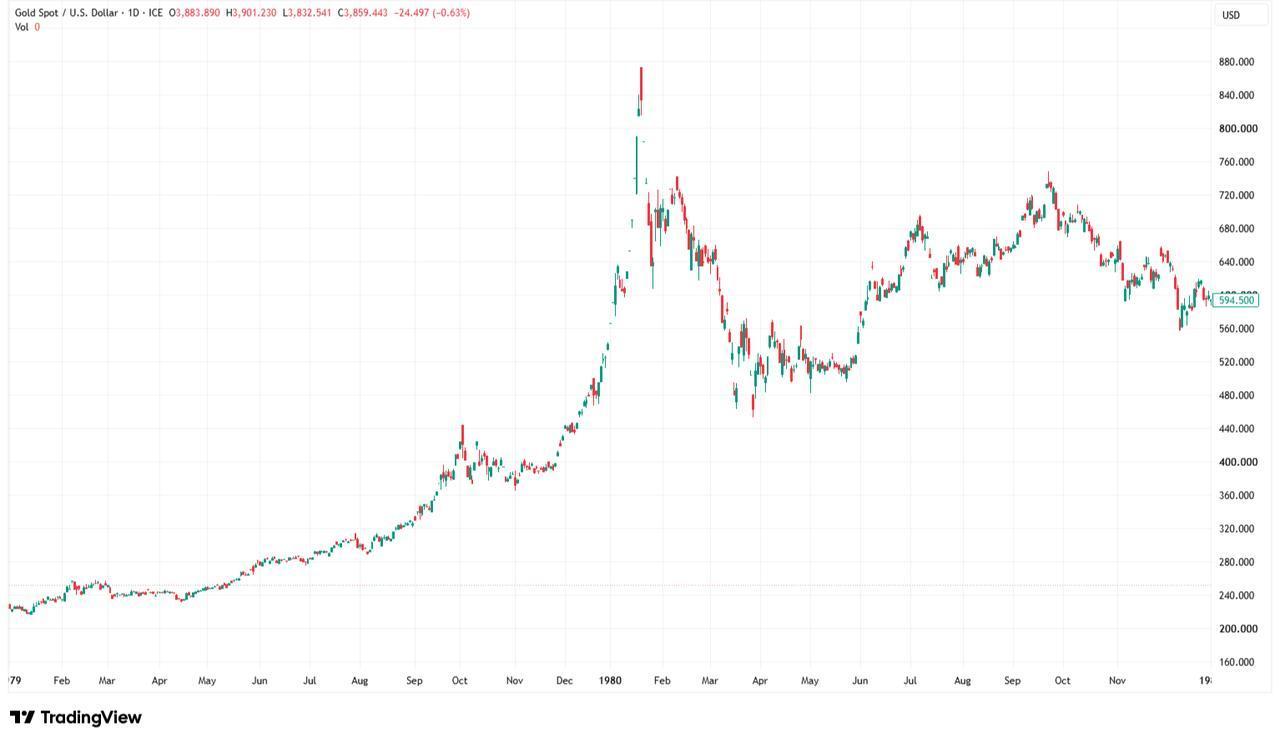
The latest sell-off is bringing back memories of January 1980, when gold suffered one of its sharpest historical reversals after an extraordinary rally fueled by inflation, geopolitical turmoil and concerns over the U.S. dollar.
Gold climbed from below $200 an ounce in early 1979 to a record closing price of $850 on Jan. 21, 1980, marking a gain of more than 325%. The rally quickly unraveled, however, with bullion tumbling to $650 within two days and falling further to $480 by March 17, losing more than 40% of its value from the peak.
The reversal came as the Federal Reserve, under then-Chairman Paul Volcker, aggressively raised interest rates to bring inflation under control. Higher borrowing costs and a stronger dollar weakened gold's appeal, prompting investors to pull back from the metal.
Back in 2026, major financial institutions still see room for a recovery, despite the steep correction and growing pressure from higher interest rates and dollar strength.
J.P. Morgan Private Bank expects gold to gradually regain ground, forecasting a price of $4,600 an ounce by the end of 2027. It sees continued central bank purchases and gold's role as a store of value supporting prices over the longer term, although higher real yields and a stronger dollar remain significant obstacles.
Central bank buying and physical demand from major markets such as China and India are also expected to provide a floor for prices as investors reassess their positions following the sharp reversal.


 Set as preferred source
 Set as preferred source


 2 min read
 1 min read