Newsletters





Moody’s, one of the three major global credit rating agencies, reaffirmed Türkiye’s sovereign credit rating at "Ba3" with a stable outlook on Friday, keeping it three notches below investment grade.
While no rating action was taken, the agency cited Türkiye’s large and dynamic economy and low government debt, which stands at around 25%, as key credit strengths, while noting ongoing institutional challenges and external vulnerabilities.
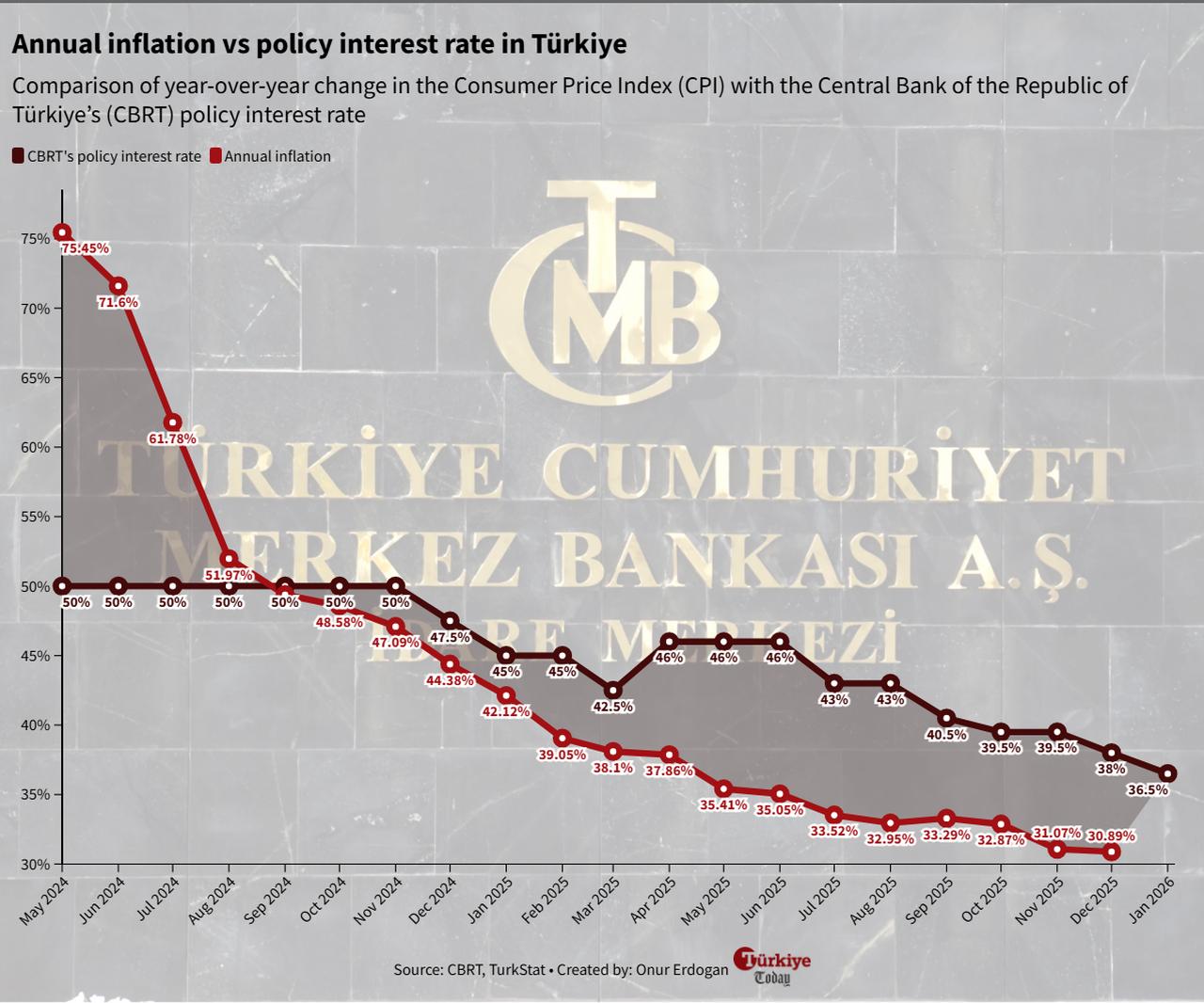
Despite a sharp shift toward orthodox monetary policy, the pace of disinflation has slowed. Inflation dropped from 30.9% in December 2025 and is projected to ease to 22% year-over-year by the end of 2026—above official projections, Moody’s stated.
The agency cautioned that "the risks remain skewed to the upside," citing weak monetary transmission, elevated gold prices boosting domestic demand, and a larger-than-expected minimum wage hike.
Real interest rates remain high, reinforcing the central bank’s restrictive stance even as a gradual rate-cutting cycle is underway.
Moody’s warned that renewed pressure on the Turkish lira or a resurgence of political turbulence could limit further monetary easing and risk undermining recent gains in policy credibility.

Türkiye’s fiscal deficit is estimated to have narrowed to 2.9% of gross domestic product (GDP) in 2025 from 4.7% in 2024, aided by fiscal consolidation efforts that also supported disinflation. Still, Moody’s sees challenges ahead. With real interest rates remaining elevated and general elections due in 2028, the agency anticipated that "further fiscal adjustment will be more difficult."
The government aims to reduce the deficit to below 3% by 2027, but spending pressures, especially interest costs, could pose obstacles to this target, it said.
Türkiye’s GDP growth rose to an estimated 3.5% in 2025, Moody’s added. While this aligns with efforts to cool inflation without triggering a severe slowdown, the agency noted that the figure remains below the economy’s long-term potential of 4%.
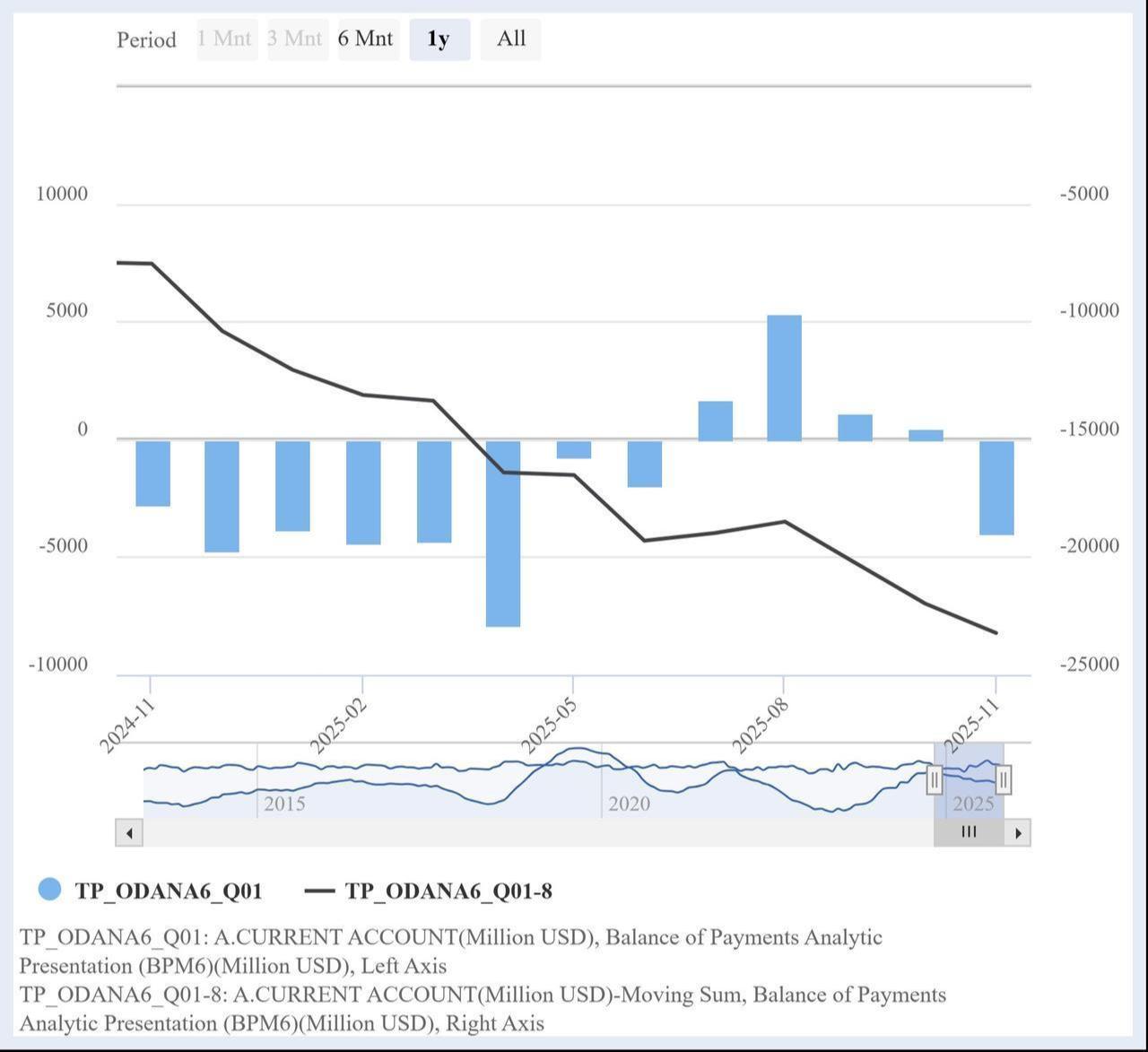
The country’s large current account deficit at $23.2 billion, low levels of domestic savings, and high dependence on energy imports continue to expose it to external shocks. Moody’s emphasized that reforms aimed at reducing energy import reliance, costing around $60 billion–$70 billion per year, and boosting export competitiveness could bolster resilience, though progress remains uneven.
The stable outlook assumes no reversal of current economic policy ahead of the 2028 presidential elections.
Moody’s warned, however, that "a return to policies that would again fuel economic imbalances is a key downside risk," particularly in the form of aggressive credit expansion, high wage growth, or renewed government spending.
An upgrade could be considered if reforms improve institutional independence and reduce inflation and external vulnerability. Conversely, the rating could be downgraded if disinflation efforts stall or central bank reserves decline significantly.
In another review, Fitch Ratings upgraded Türkiye’s credit outlook to "positive" while affirming its "BB-" rating, citing continued policy improvements and economic recovery.


 Set as preferred source
 Set as preferred source


 1 min read
 1 min read