Newsletters


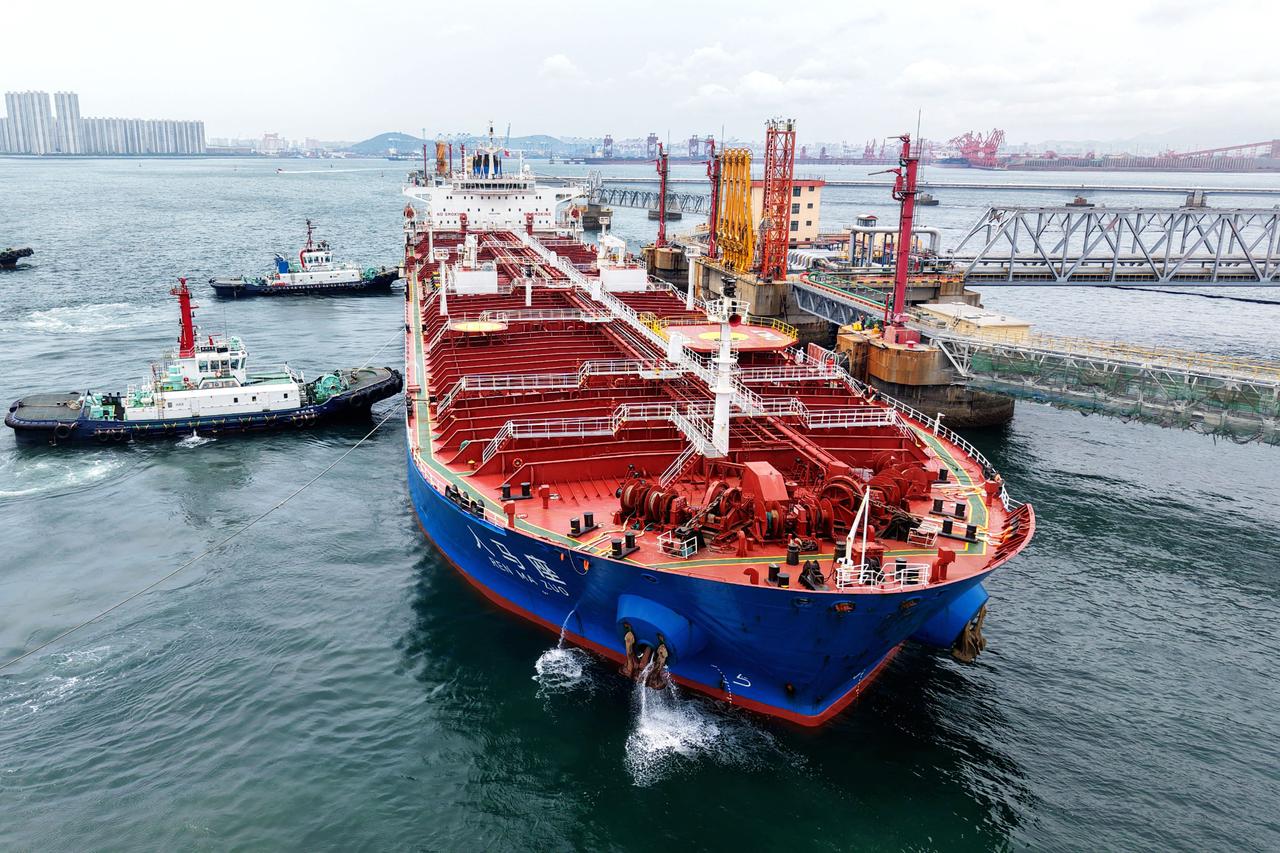


Oil prices hovered near their lowest levels in four months on Thursday as signs emerged that more tankers stranded in the Gulf since the start of the Iran war were beginning to move through the Strait of Hormuz.
Both Brent crude and U.S. benchmark West Texas Intermediate (WTI) showed little movement in early trading, slipping about 0.1% to $76.9 and $73.1 per barrel, respectively, as of 6 a.m. GMT.
The market remained under pressure after Washington granted Tehran a 60-day sanctions waiver allowing oil sales following initial peace talks, while fighting in Lebanon also eased during the week.
Asian markets were mixed, with Japan's Nikkei slipping 0.6% while South Korea's Kospi rebounded 3.3% after a sharp sell-off that had sent the technology-heavy index down 10% in the previous session.
Hong Kong’s Hang Seng advanced 0.5%, while China’s Shanghai Composite was little changed.
In Europe, futures linked to the Pan-European Stoxx 50 and Germany’s DAX slipped 0.1%, while Britain’s FTSE 100 futures edged up 0.1%. U.S. stock index futures traded mostly higher, although Dow Jones futures fell around 0.1%.
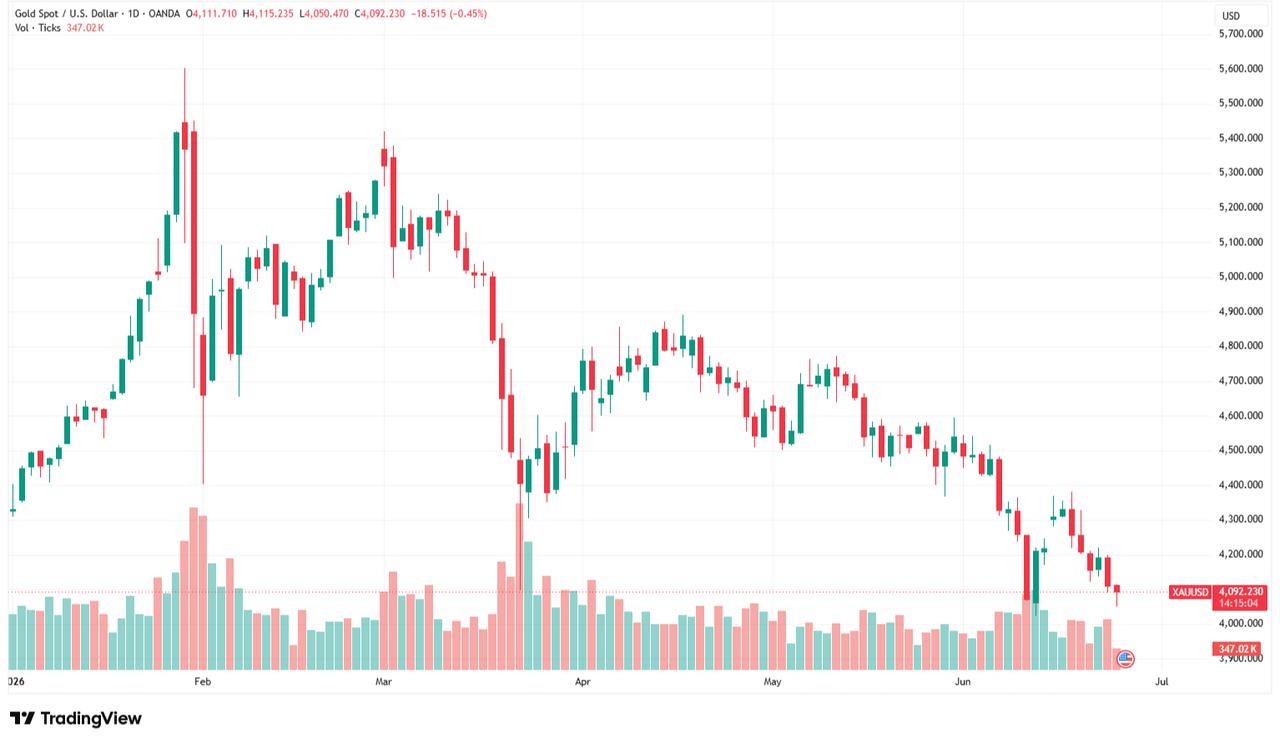
Gold extended losses, falling 0.7% to around $4,080, while silver climbed 0.7% to $62 per ounce. Palladium and platinum were broadly unchanged at $1,210 and $1,640 per ounce, respectively.
In digital assets, bitcoin rose 0.1% to $62,770, while ethereum slipped 0.6% to $1,670.

Investors found some relief in energy markets as shipping activity through the Strait of Hormuz continued to recover following the U.S.-Iran agreement.
Commercial vessel traffic has rebounded to around 40% of pre-war levels over the past five days, with crude oil and petroleum product shipments leading the recovery through the strategic waterway, which normally handles about one-fifth of global oil consumption.
The improving flow of tankers helped ease concerns over prolonged supply disruptions, although uncertainty remained over the future administration of the route.
The economic fallout from the Middle East conflict has reinforced expectations of tighter monetary policy worldwide, while speculation that the Federal Reserve may keep rates higher for longer has pushed the U.S. dollar to its strongest level since April 2025.
That backdrop has tempered enthusiasm for technology stocks, which have been buoyed by strong artificial intelligence-related investment over the past year. SpaceX shares fell for a third straight session after the company announced plans to issue its first investment-grade bonds, leaving the stock down more than 20% from its peak.
Attention later in the day will turn to earnings from U.S. memory-chip maker Micron Technology, which could offer fresh clues about semiconductor demand and the strength of the AI-driven rally.


 Set as preferred source
 Set as preferred source


 1 min read
 1 min read