Newsletters


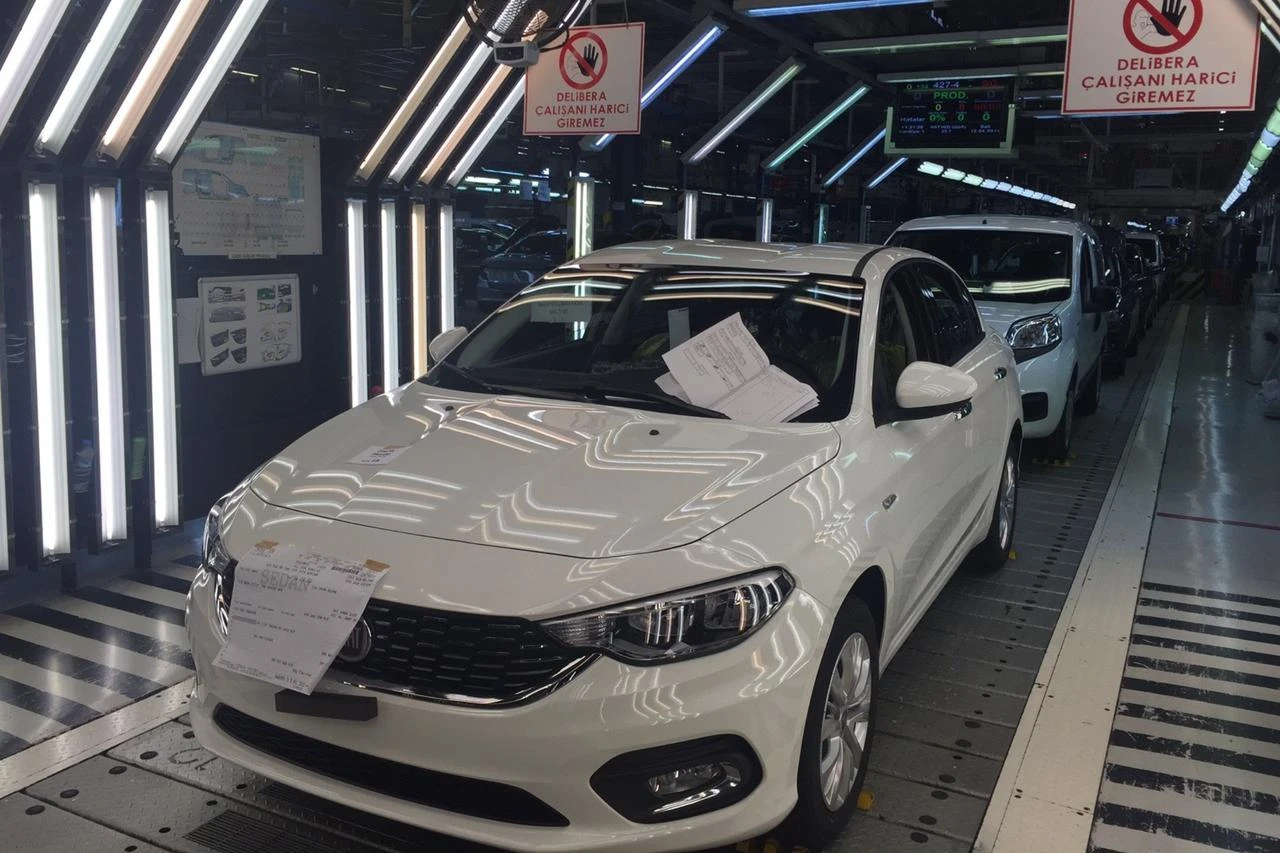


Negotiations over the European Union’s "Made in EU" framework are likely to continue well into 2027, a Turkish automotive industry chief said, as Türkiye seeks to ensure its manufacturers and suppliers are treated as part of Europe’s industrial value chain under the bloc’s new rules.
Cengiz Eroldu, chairman of the Automotive Industry Association (OSD), described the negotiations as one of the sector’s key issues, given the depth of Türkiye’s integration with European automotive manufacturing and supply chains.
"Europe is our most important export market, where we realize approximately 70% of our automotive exports," Eroglu emphasized. "The structure that has been formed between Türkiye and Europe over approximately 30 years is not only a trade relationship, but a deep industrial integration covering production, investment and supply chains."
The European Commission proposed the Industrial Accelerator Act (IAA) in March 2026 to strengthen the EU’s industrial base and accelerate investment in strategic sectors.
The proposal introduces "Made-in-EU" and low-carbon requirements in public procurement and public support schemes, with the automotive sector among those covered.
For Türkiye, the key question is how its vehicles, components and manufacturers will be treated under the new framework. Türkiye is outside the EU but has been part of the bloc’s Customs Union for roughly 30 years, while its automotive industry is closely connected to European manufacturers and suppliers.
Eroldu said the final rules could have consequences well beyond existing trade flows.
"The final content of the IAA, how Türkiye will be positioned within the IAA and the scope in which our main and supplier industries will be evaluated will affect existing investments as well as new model, capacity and technology investments," he explained.
"Our expectation is that, within the framework drawn by the IAA, Türkiye will be evaluated as a Customs Union partner and an integral part of the European automotive value chain, together with its main and supplier industries."
Eroglu indicated that leading Turkish automotive associations, OSD, the Uludag Automotive Industry Exporters’ Association (OIB), the Automotive Suppliers Association (TAYSAD) and the Turkish Industry and Business Association (TUSIAD) are holding discussions with EU institutions and decision-makers in Brussels
The groups are seeking to preserve Türkiye’s existing integration with European industry while supporting new investment and greater predictability. "We convey to our counterparts that the IAA should take shape within a framework that preserves existing integration, encourages new investments and strengthens predictability," he added.
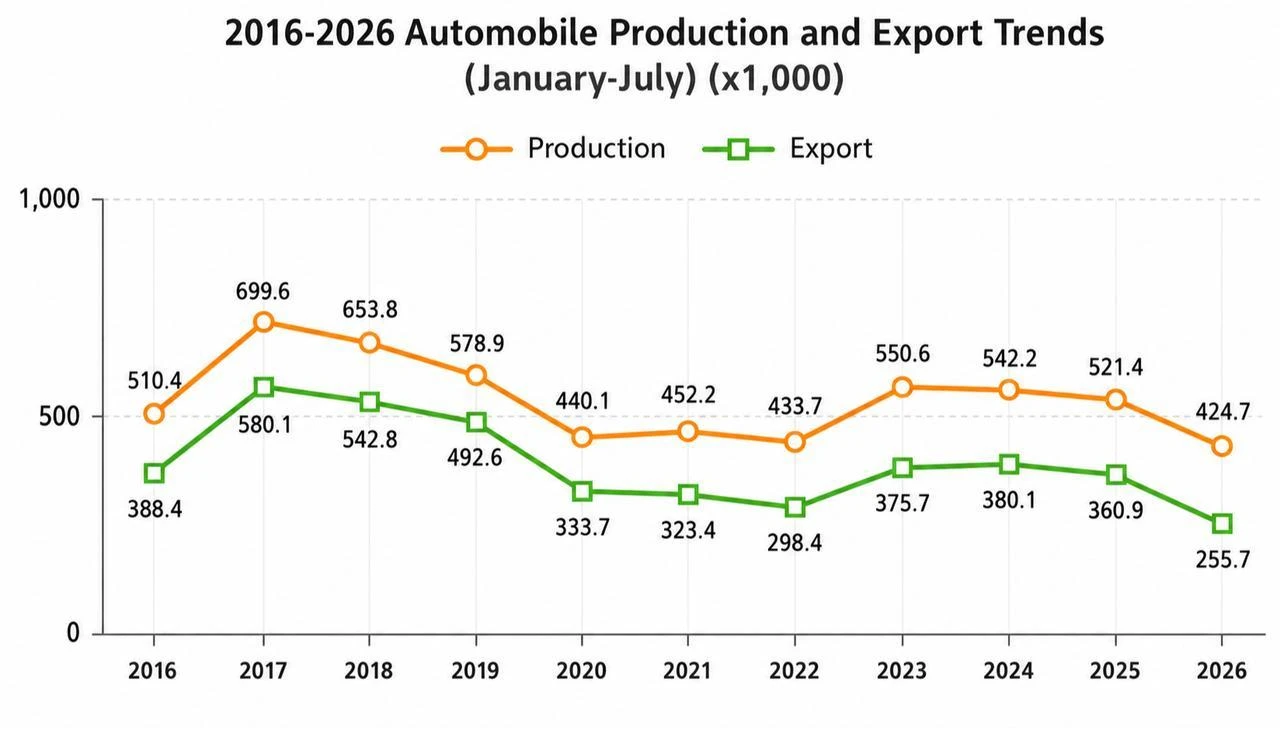

Türkiye’s total automotive production fell 8% from a year earlier to 767,216 units in January–July, while automobile production declined 19% to 424,667 units. Including tractors, total production reached 779,338 units.
Commercial vehicle production, however, increased 9% year-on-year, with heavy commercial vehicle output rising 4% and light commercial vehicle production climbing 10%.
The industry’s capacity utilization rate stood at 62%, with utilization at 63% for light vehicles, 57% for trucks, 69% for buses and minibuses, and 28% for tractors.
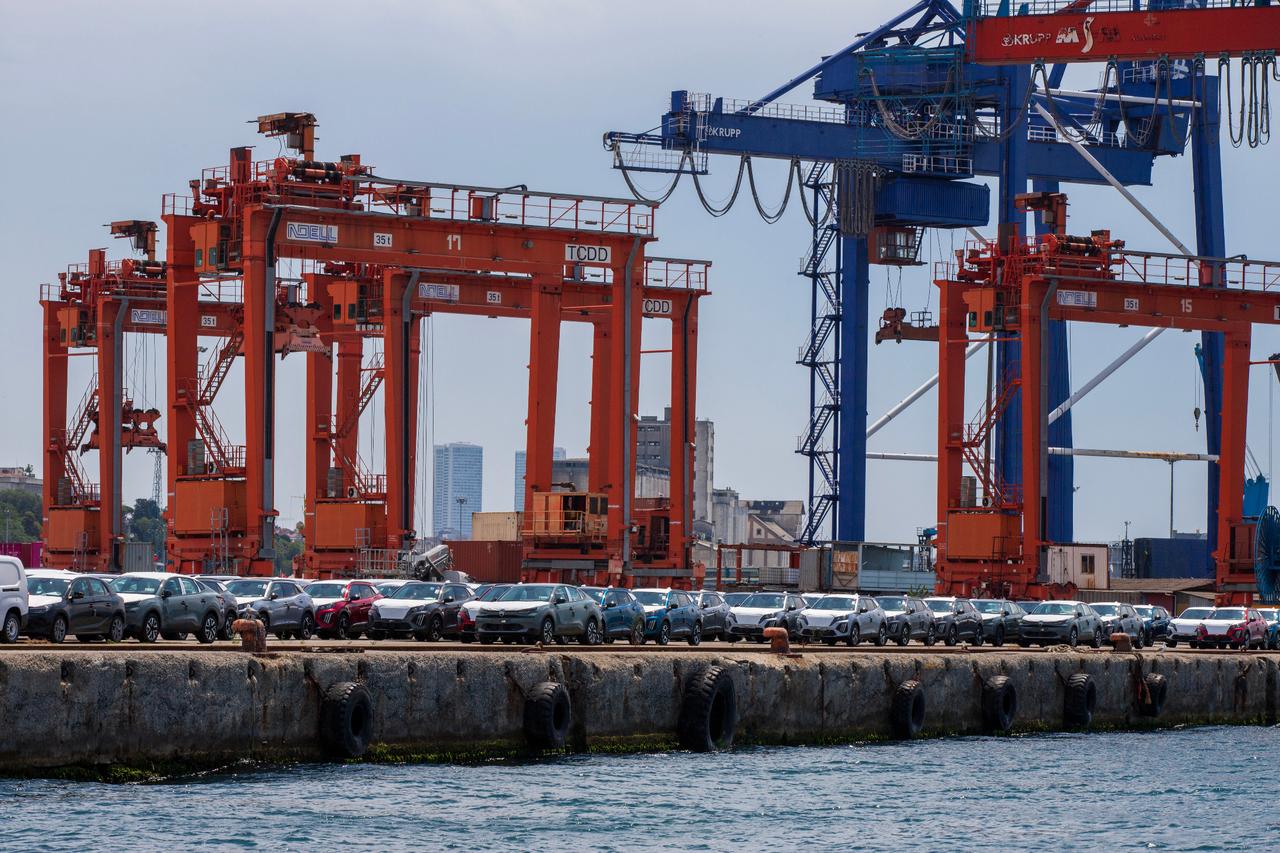
Automotive exports fell 14% in unit terms to 542,401 vehicles during the first seven months. Automobile exports dropped 29%, while commercial vehicle exports rose 8% and tractor exports increased 20% to 7,792 units.
Despite the decline in vehicle shipments, total automotive exports increased 2.6% from the same period in 2025 to $24.4 billion.
Eroldu noted that some automakers are preparing their production lines to introduce new models and expand capacity, contributing to lower output during the transition. He described the decline as a normal part of shifting production to new products.
"We consider the production loss to be a normal consequence of the transition period to new investments, due to the need to reduce the existing production pace for a certain period in order to introduce a new product onto the production line," he said.
"The positive reflection of new models entering production and export programs will become evident in the final quarter of the year and mainly in 2027."


 Set as preferred source
 Set as preferred source


 1 min read
 1 min read