Sign in
 Newsletters





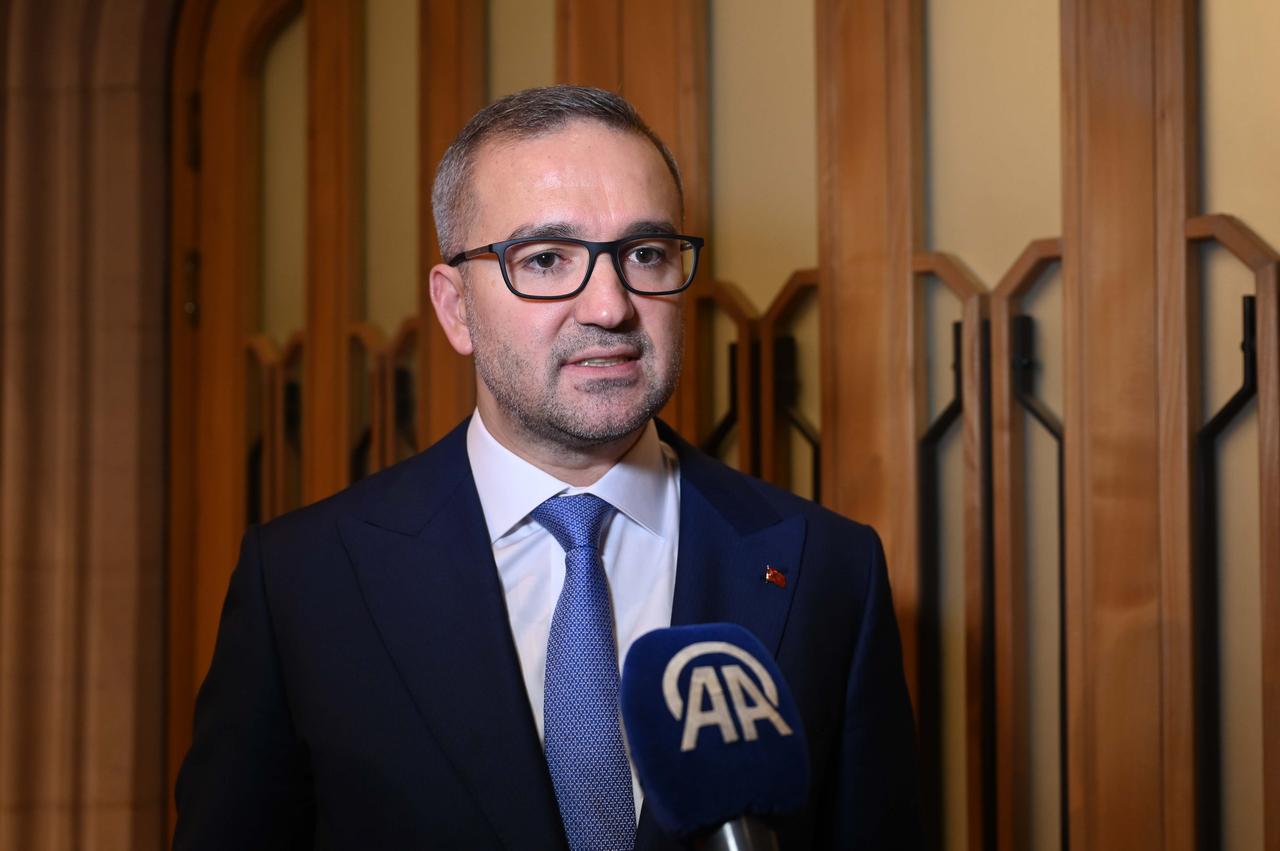
Central Bank of the Republic of Türkiye (TCMB) Governor Fatih Karahan has identified uncertainty surrounding artificial intelligence (AI) investments as one of the factors accelerating global portfolio outflows and weighing on the country's foreign exchange reserves, while maintaining that domestic demand for the Turkish lira remains strong.
In an interview with Anadolu Agency (AA), Karahan explained that international investors had sold assets to meet additional collateral requirements, triggering capital outflows from Türkiye and reducing the dollar value of the central bank's gold holdings.
"Some investors had to sell their assets to meet margin calls. This was reflected in portfolio outflows from our country," he explained.
The resulting sell-off also dragged down international gold prices, further reducing the dollar-denominated value of Türkiye's bullion holdings.
Karahan identified three other factors behind the reserve decline: lower gold prices, shifts in global portfolio allocations and increased foreign currency demand from domestic companies.
The governor attributed the recent acceleration in portfolio outflows partly to growing uncertainty over the returns on AI-focused investments.
Higher interest rates in developed economies and the continuing effects of the war have also shaped international capital movements, putting additional pressure on emerging markets.
Meanwhile, investors facing margin calls have had to liquidate positions, contributing to withdrawals from Turkish financial markets. The accompanying decline in gold prices has added another source of pressure on the central bank's balance sheet.
The pressure is reflected in the latest reserve figures. Türkiye's official reserve assets fell by $17 billion, or 10.7%, in the week ending Nov. 20, dropping to $142 billion from $159 billion a week earlier, according to TCMB data.
Foreign currency reserves declined by 17.1% to $42.8 billion, while gold reserves dropped by 8.1% to $91.6 billion over the same period.
The latest decline follows a substantial retreat from the record levels reached earlier in the year. Gross reserves stood at $218.2 billion on Jan. 30, meaning they have fallen by roughly $76.2 billion since then.
Gold holdings accounted for $42.2 billion of that decline, while foreign currency reserves decreased by $34 billion.
The fall in gold prices has played a significant role in the movement. As bullion loses market value, the dollar-denominated value of the central bank's holdings also decreases, even without an equivalent reduction in the physical amount of gold.

Beyond international market pressures, Karahan pointed to rising foreign currency demand among Turkish companies as another factor behind the reserve decline.
He described the development as normal toward the end of the year, when Türkiye runs a current account deficit and businesses typically need more foreign exchange.
Despite these pressures, the governor emphasized that domestic demand for the lira, particularly among households, remains stable and strong.
"The latest data show us that demand for the Turkish lira continues in a stable and strong manner," he noted.
To prevent global financial volatility from undermining domestic currency demand, the TCMB took proactive steps last week to support the lira.
Karahan also highlighted the continued decline in underlying inflation and described the deterioration in the current account balance as limited despite the adverse effects of the war.
"This means we can clearly say that our macroeconomic fundamentals are strong," he added.
He recalled that Türkiye had experienced similar market fluctuations several times over the past three years and managed them successfully.
"I think the coming period will also unfold in a similar way," Karahan said.


 Set as preferred source
 Set as preferred source


 1 min read
 1 min read