Newsletters




Turkish investment holding company RAL Yatirim Holding, whose shares surged more than 60,000% over five years, has sought court protection from creditors amid financing difficulties, the company announced on Monday.
The company attributed its liquidity problems partly to a court-ordered precautionary measure against its main shareholder, Riza Kandemir, who owns a 36.2% stake. The measure restricts his ability to freely dispose of certain assets while he is under investigation in the broader market manipulation probe.
Although the measures do not directly target the company, RAL Yatirim Holding said they have made banks and brokerage firms more reluctant to provide financing, disrupting existing financial relationships and putting "considerable pressure on short-term liquidity."
An Ankara court granted the company a three-month provisional moratorium, effective Monday, the company indicated.
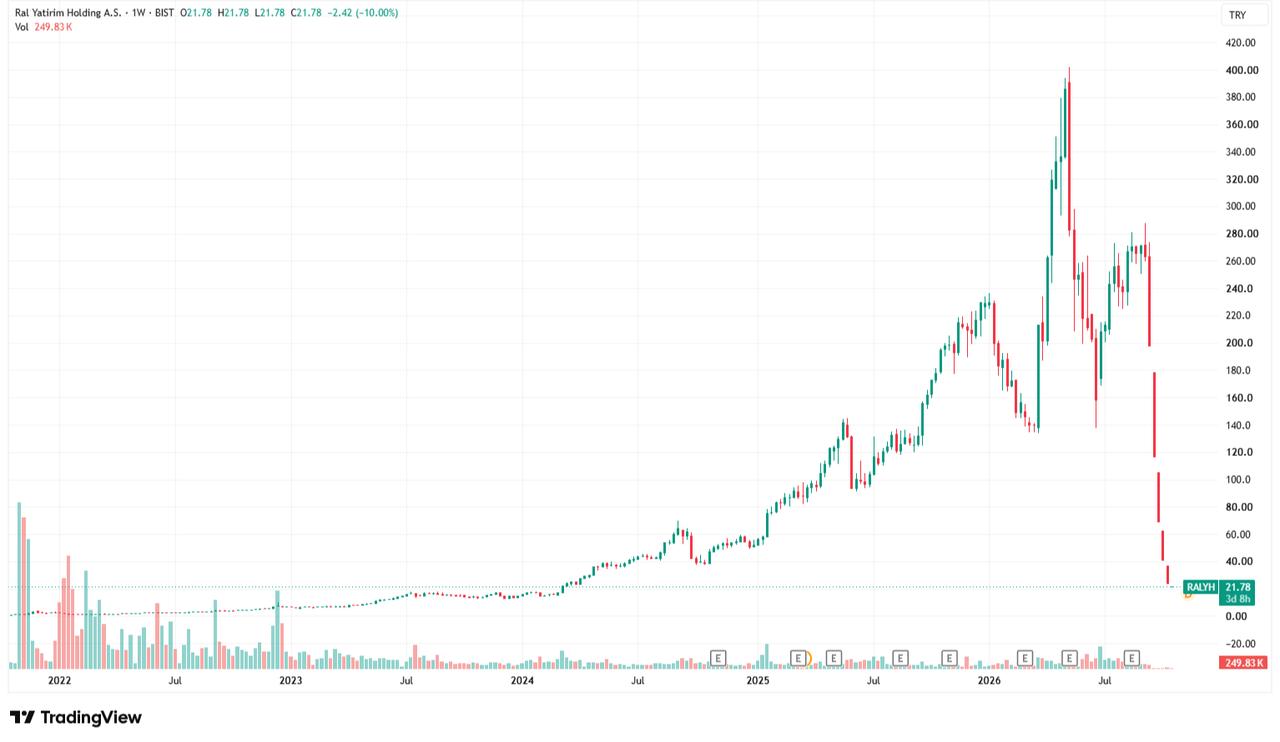
The company's shares on Borsa Istanbul fell by the daily limit of 10% on Monday, having lost approximately 94.6% of their value since reaching a peak of ₺401.75 earlier this year. The shares climbed from ₺0.653 on May 11, 2021, to their 2026 peak, marking a gain of approximately 61,426% over the period.
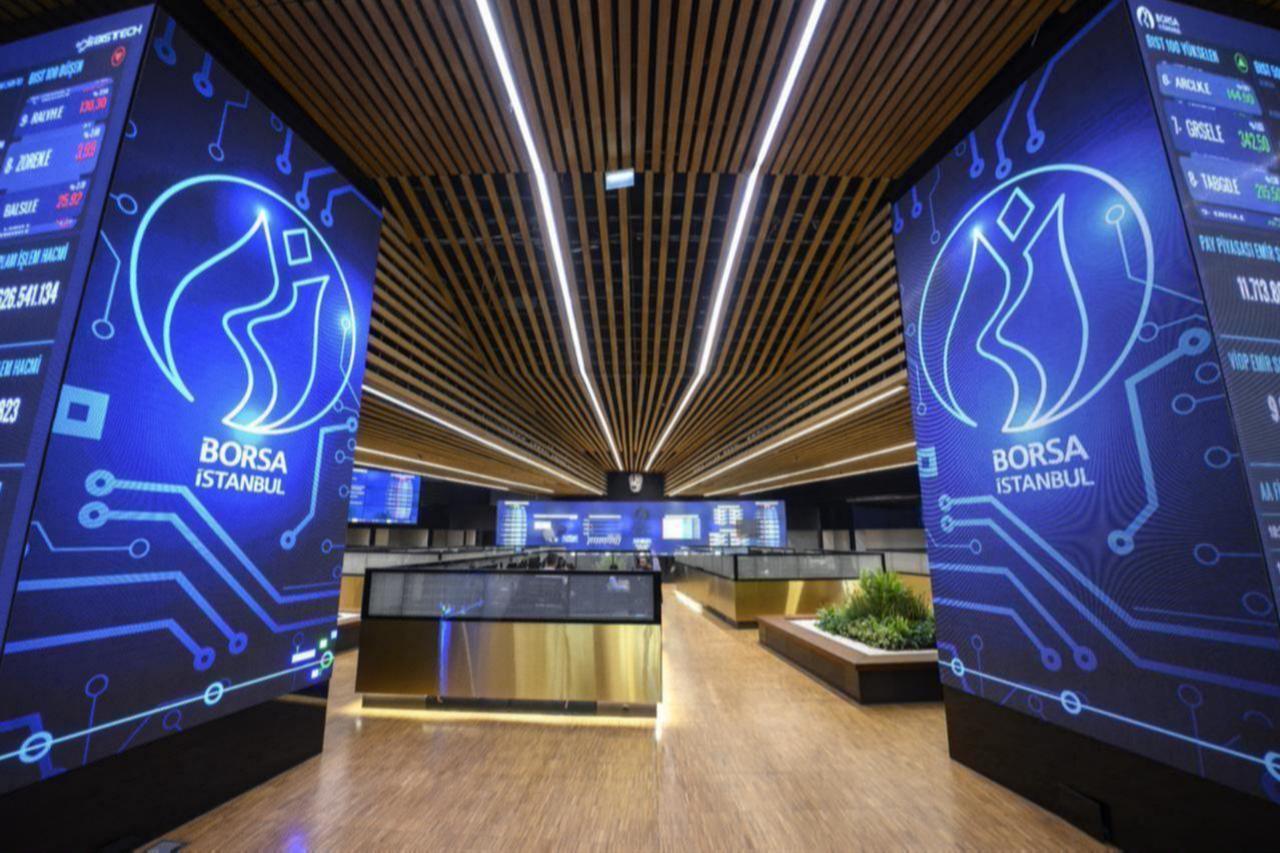
Borsa Istanbul has also decided to move the company's shares from its Main Market to the Watchlist Market following the court's provisional moratorium decision. Trading was suspended on Oct. 20, with shares scheduled to resume trading on the Watchlist Market on Oct. 21.
"The insufficient availability of the anticipated financial and operational cooperation from public institutions in connection with our ongoing projects and business activities has further increased pressure on our cash flows," RAL Yatirim Holding said.
RAL Yatirim Holding reported ₺9.2 billion ($185.6 million) in total equity in its consolidated financial statements as of the end of the first half of the year. Investment properties accounted for 28.5% of total assets, while property, plant and equipment, largely comprising ongoing and completed projects and investments, represented 50.3%.
The company's consolidated balance sheet showed ₺3.6 billion in bank loans, of which Ral Enerji, an energy subsidiary in which the holding owns a 51% stake, borrowed approximately ₺2.5 billion, primarily to finance energy investments.

RAL Yatirim Holding said its direct debt at the holding-company level remained limited compared with its total assets and equity. It added that concordat protection aims to preserve its business value, maintain operations and investments, and protect the interests of investors, employees, business partners and creditors.
"We regard the concordat process initiated within this framework not as a step towards the cessation of our Company's operations, but rather as a legal and financial protection mechanism designed to preserve our existing asset base, facilitate the restructuring of our financial obligations and enable the uninterrupted continuation of our business activities," the company noted.
Türkiye is pursuing a broader investigation into suspected market manipulation that escalated after a mid-September market rout triggered by several investment funds’ failure to meet investor withdrawal requests.
Authorities have arrested 85 of the 207 people targeted in the probe, including executives from portfolio management companies Tera and Pusula, both of which managed funds caught up in the redemption crisis.
Those remanded in custody include Tera Yatirim Holding Chairman Emre Tezmen, board members Emre Alkin and Kerem Alkin, Tera Portfoy General Manager Alper Ozturk, and Pusula Holding Chairman Serdar Turhan.
The investigation has also reached former Capital Markets Board (CMB) Chairman Ibrahim Omer Gonul, with the Treasury and Finance Ministry granting permission to investigate him after he was initially questioned.
The number of individuals whose assets had been frozen had reached 42 by early October, while authorities issued seizure orders covering property belonging to 63 individuals and 12 legal entities.
Authorities also seized assets from the bank accounts, cryptocurrency wallets, and safe-deposit boxes of 67 individuals and companies, along with shareholdings linked to 27 individuals and companies.
Separately, precautionary measures were imposed on 109 individuals and companies linked to the investigation, restricting their ability to sell or transfer certain assets without prosecutors' approval.


 Set as preferred source
 Set as preferred source


 2 min read

 1 min read